

From One Flip to the Next: Building a Repeatable Deal Cycle
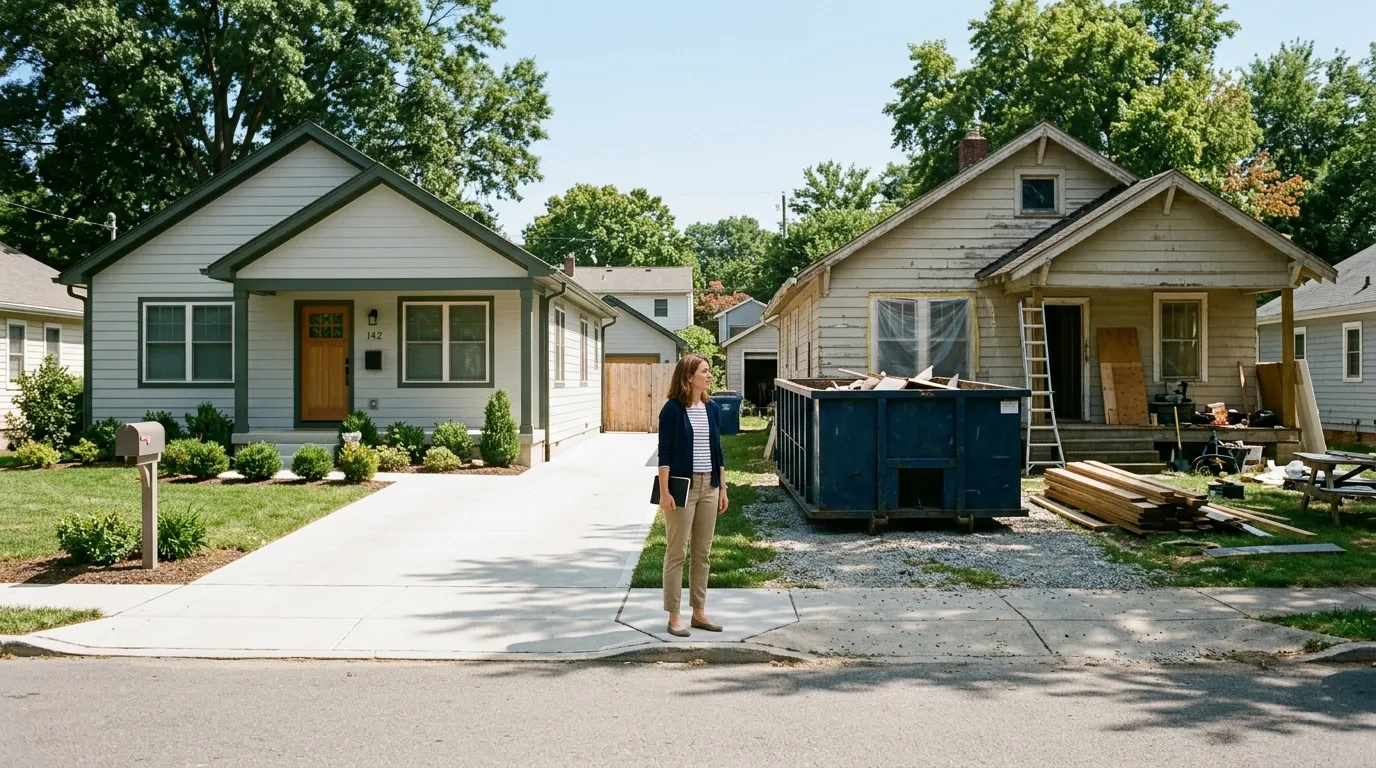
A flip is a project with a start and a finish. A deal cycle is what happens when the finish of one project has to pay for the beginning of the next one. Acquisition, improvement, payoff, redeployment. That fourth step is the one almost nobody budgets, and it quietly eats more of the calendar than the drywall does.
Everything below is business-purpose credit on investment property. The house is inventory, not a residence, and this is not a consumer mortgage.
The market is not making step four easier. In July 2026 there were 1,462,921 sellers against 966,752 buyers in the US housing market, a 51.3% seller surplus and close to December's record 51.8% (Redfin, Buyers vs. Sellers Report, August 2026). Selling has slowed. Buying has loosened. Your capital sits in the space between those two facts.
So here is the honest version: what recycling capital actually costs you, what a lender reads differently on file two, and when to open the next acquisition against a payoff that has not landed yet.
> Key Takeaways
> - Repeat flip financing is decided in the gap between projects, not inside one. In July 2026 sellers outnumbered buyers by 51.3% nationally, near December's record (Redfin, August 2026).
> - The typical Q1 2026 flip was held 165 days and 61.1% were bought with all cash (ATTOM, June 2026). Cash buys one cycle at a time.
> - Lenders publish experience tiers. RCN Capital's public fix and flip grid moves the ARV ceiling from 70% at 0 to 2 completed projects to 75% at 10 or more (RCN Capital).
> - Kiavi's published Preferred criteria start at three exits in the last 24 months and reduce borrower review to one file every 12 months (Kiavi).
> - Eos Loan is a direct lender offering business-purpose financing with flexible terms and no dealer fee, subject to approval and eligibility.
Talk to our team about financing your next project
What does a deal cycle actually look like between projects?
A deal cycle is acquisition, improvement, payoff, then redeployment of the capital that comes back. The typical Q1 2026 flip spent 165 days from purchase to resale, up from 160 the quarter before (ATTOM, Q1 2026 US Home Flipping Report, June 2026). Redeployment adds weeks on top of that figure, not inside it.
That distinction is the whole point. The 165 days is measured closing to closing, so it starts after you have already found, negotiated and closed the property, and it ends the day the sale funds. The search that preceded it and the search that follows it are both outside the number. If you want the inside of that window handled properly, we broke it out in the full project schedule, stage by stage.
Now the part that catches people. The redeployment step is unfunded by definition. Proceeds arrive at the payoff, and the next property has to be competed for, contracted and closed before that money exists in your account. So the interval is not dead time you are waiting through. It is a stretch when you need capital and do not yet have it.
Investors who have done exactly one project usually discover this in month six, with a signed contract on the sale and nothing lined up behind it. That is not a planning failure. It is what happens when the cycle gets treated as one project repeated instead of a continuous business.
How does capital recycling decide how many deals you can run?
By setting a hard ceiling on turns per year. In Q1 2026, 61.1% of flipped homes were bought with all cash, leaving 38.9% financed (ATTOM, Q1 2026 US Home Flipping Report, June 2026). All cash removes a payment, and it also caps deal count at whatever a single bucket of capital can cycle through, which at a 165-day hold plus closing time is roughly two a year.
That is the trade nobody states plainly. Cash costs you nothing monthly and costs you the second deal.
Read that chart as arithmetic, not as a promise. A sequential lane closes, works, sells, then spends another 30 to 60 days finding and closing the next property, so each turn runs about 210 days. A financed lane commits a share of the capital per project instead of the whole amount, which lets a second project open while the first is still in work, and it starts the next acquisition before the current payoff clears. Same money, different cadence.
The counterweight is real and I am not going to bury it. Financing adds a payment, and two projects means two payments accruing on the calendar whether or not anyone is on site. That is a budget line with its own mechanics, covered in what each of those days costs you. Note too that ATTOM's typical Q1 2026 gross profit of $66,000 on a 25.4% return is gross, which means it excludes the improvement budget entirely.
If you have not run one of these yet, start with how the first one gets funded and come back here after the payoff.
What does a lender see differently on your second and third file?
Completed projects are an underwriting input with a published price. RCN Capital's public fix and flip grid ties the after-repair-value ceiling directly to project count: 70% of ARV at 0 to 2 completed projects in the last three years, 72.5% at 3 to 5, and 75% at 10 or more (RCN Capital, Fix and Flip Program Criteria, retrieved August 2026). Experience is not a soft factor. It is a column.
Purchase-side leverage moves along the same tiers in that published grid, from 80% of purchase price at the entry band up to 95% at the top one. In practical terms, more completed projects means less of your own cash locked into each acquisition, which is the same thing as more turns per year. How that ceiling gets set in the first place is its own subject, handled in how ARV sets the ceiling.
Kiavi publishes a different mechanism for the same idea. Its Preferred criteria start at three exits in the last 24 months, and qualifying investors get one required borrower underwrite every 12 months rather than a fresh review on every deal (Kiavi, Solutions for Professional Real Estate Investors, retrieved August 2026). The benefit there is time, not price.
Here is the part the grids never explain. The counting rules matter more than the count. Most programs look at a trailing window, commonly 24 or 36 months, and require verifiable documentation of each project. A deal you completed four years ago may count for nothing. A deal you completed last year that you cannot document may also count for nothing. Two investors with identical track records can land in different tiers purely on paperwork.
And what does not change? The property is still underwritten on its own merits, the scope of work is still reviewed, and every file is subject to approval and eligibility. A history raises your ceiling. It does not pre-approve the next deal.
See how business-purpose financing fits your deal
What should you be documenting on deal one so deal two moves faster?
Everything that proves the project existed and closed. Lenders that publish experience tiers also publish the requirement that project history be verifiable, and in practice that means closing documents, not a spreadsheet of addresses. Kiavi's three-exits threshold is a counting rule, and you can only count what you can evidence (Kiavi, retrieved August 2026).
Build the file while deal one is still open, because retrieving it later is far harder:
- Settlement statements for both the purchase and the sale, in the entity's name.
- The final scope of work with costs as built, not the original estimate.
- The payoff letter from the lender on project one.
- Entity formation documents and the operating agreement.
- The contractor and vendor list, with the general contractor's license and insurance.
- Dated photographs at start, mid-work and completion.
Keep the borrowing entity consistent across projects. When the same entity holds title each time, the history attaches to one name instead of scattering across three. When it changes every deal, someone has to reconstruct the connection, and that someone is going to be you, at the worst possible moment.
!An investor and a contractor reviewing project documents outside a residential property in daylight.
The draw record from project one belongs in that folder too. It shows the work was inspected and released against actual completion, which is a stronger statement about how you run a job than any summary you could write yourself. The mechanics are in how the build budget is released against completed work.
> What I see from this side of the desk: across 30k+ proposals processed, the difference between a first file and a second file is almost never credit. It is whether the borrower can produce a clean settlement statement, a final scope of work and a payoff letter from the last project without going hunting for them. The investors who have that folder ready move through review in a fraction of the time. That is an observation about files, not a policy or an approval rule.
When should the next acquisition close relative to the current payoff?
When the current project no longer needs your capital, not when the sale funds. The two sides of the cycle have stopped moving together. In July 2026 there were 1.54 million existing homes for sale, a 4.6-month supply and a median 29 days on market (NAR, Existing-Home Sales, August 2026), while sellers outnumbered buyers by 51.3% (Redfin, August 2026).
Read those two together and the operational picture is clear. Acquiring is easier and more patient than it was, with more listings and less competition per listing. Disposing is slower and more crowded. New construction is part of that crowd: 488,000 new houses were for sale at the end of July 2026, a 9.6-month supply, up from 8.5 months in June (US Census Bureau, New Residential Sales, August 2026).
So sequence on triggers, not on dates. Three of them are worth writing down:
1. The current project is under agreement with contingencies cleared. Not listed. Not "getting interest." Cleared.
2. The remaining draw schedule on project one is fully funded and does not depend on sale proceeds arriving.
3. The second deal underwrites on its own, without counting a dollar of unrealized proceeds from the first.
The failure mode is committing earnest money on deal two against proceeds that have not landed. In a market with a 51.3% seller surplus, the date your sale funds is the least predictable number in the whole model, and it is the one people anchor everything else to. If the exit itself is still an open question, that belongs upstream of the loan, which is why we treat the exit as a decision made before financing.
What breaks first when two projects overlap?
Working capital, not credit. Improvement budgets are released against completed work, so both projects need cash available ahead of the reimbursement, at the same time, from the same account. The credit decision is rarely the binding constraint. The checking balance in week six is.
Here is the order things actually break, from most to least common:
1. Cash ahead of draws, doubled. Two jobs both waiting on inspection and release is two payables cycles running against one bank account.
2. Contingency. It has to be sized per project and held per project. A shared reserve is a reserve for whichever job fails first, and nothing for the second.
3. Contractor capacity. One crew split across two sites lengthens both schedules. The vendor list you built on deal one is worth more than the price you negotiated.
4. Exposure limits and personal guarantees. These are set per borrower, not per property, so the second file can meet a ceiling the first one never touched.
Then the quiet one. Two properties held at once means two sets of taxes, insurance, service accounts and payments accruing on the calendar, whether or not anyone is working. That doubling is easy to model and easy to forget, and it is the same line covered in the budget and carry breakdown.
None of this changes what the credit is. It stays business-purpose credit on investment property, and the classification rules behind that are worth knowing before you sign a second one: what a business-purpose loan is, and why it is not a consumer product.
How does a direct lender fit a cycle that keeps repeating?
By keeping the same team on your file. Eos Loan is a direct lender. We underwrite and fund with our own capital, so the people who read your second application are the people who read your first, and there is no handoff between parties at the moment a handoff hurts most. To date we have originated $4B+ and processed 30k+ proposals across our lending programs.
We finance business-purpose residential real estate projects across fix and flip, fix and keep and fix and hold, with flexible terms, a straightforward digital application, and no dealer fee. Every application is subject to approval and eligibility.
What a returning borrower brings to that conversation is a documented history: the closings, the scope as built, the payoff. What still gets underwritten fresh, every time, is the property, the scope of work and the exit. That is the honest split, and anyone telling you the second deal is automatic is selling something. You can see the full set of real estate financing solutions, or start from the full guide to fix and flip financing if the structure itself is still new.
Ask about flexible terms for fix and flip projects
Prefer to talk it through? Call +1 833-989-3737.
---
{ question: "Is it easier to get financing for a second flip?", answer: "Often yes on leverage. Published experience grids raise the ceiling with completed projects: RCN Capital's public fix and flip tiers move from 70% of after-repair value at 0 to 2 projects to 75% at 10 or more. The property is still underwritten on its own merits, and every file remains subject to approval and eligibility." }, { question: "How many flips can you run at the same time?", answer: "There is no fixed number. The binding limits are working capital available ahead of draw reimbursements, contractor capacity across sites, and per-borrower exposure limits. None of those is a rule about project count. In practice, cash timing breaks before credit does." }, { question: "What counts as flip experience to a lender?", answer: "Verifiable completed projects, usually inside a trailing 24 to 36 month window, evidenced by settlement statements and payoff documentation rather than a list of addresses. Kiavi's published Preferred criteria, for example, start at three exits in the last 24 months." }, { question: "Can you buy the next property before the current one sells?", answer: "Yes, and it is common. The test is whether the second deal underwrites without counting proceeds that have not landed. In July 2026 sellers outnumbered buyers by 51.3% nationally (Redfin, August 2026), so the sale date is the least predictable input in the model." }, { question: "Does a repeat borrower go through underwriting again?", answer: "Usually yes on the property, the scope of work and the exit. Some lenders reduce the borrower-level review for returning investors; Kiavi publishes one required underwrite every 12 months for its Preferred tier. Eos Loan reviews every file, subject to approval and eligibility." } ]} />The interval is the business
A flip is a project. A deal cycle is a business, and the difference between them lives in the weeks nobody bills for.
The investors who turn one project into a practice are not the ones with the best contractor or the sharpest purchase. They are the ones who treated the gap as part of the work: capital positioned before the payoff, the next acquisition triggered by conditions instead of hope, and a folder of closing documents that makes file two read like a continuation rather than a fresh start.
That folder is the piece you can act on this week, while deal one is still open. Everything else in the cycle gets easier once it exists.
---
About the author: Eduardo Donadi is the CEO of Eos Loan, a US direct lender financing essential projects including business-purpose real estate, truck fleet expansion, battery energy storage, EV chargers, and water filtration. He works directly with investors on how fix and flip, fix and keep and fix and hold projects get structured and funded.
---
Sources
1. Redfin. "There Are 51.3% More Sellers Than Buyers in the US Housing Market." Published August 2026. Retrieved 2026-08-27. https://www.redfin.com/news/buyers-vs-sellers-july-2026/
2. ATTOM. "Q1 2026 US Home Flipping Report." Published June 2026. Retrieved 2026-08-27. https://www.attomdata.com/news/market-trends/flipping/q1-2026-home-flipping-report/
3. National Association of Realtors. "Existing-Home Sales Report, July 2026." Published August 2026. Retrieved 2026-08-27. https://www.nar.realtor/newsroom/nar-existing-home-sales-report-shows-1-7-decrease-in-july
4. US Census Bureau and US Department of Housing and Urban Development. "New Residential Sales, July 2026." Published August 2026. Retrieved 2026-08-27. https://www.census.gov/construction/nrs/pdf/newressales.pdf
5. RCN Capital. "Fix and Flip Loan Program Criteria." Retrieved 2026-08-27. https://rcncapital.com/fix-and-flip
6. Kiavi. "Solutions for Professional Real Estate Investors." Retrieved 2026-08-27. https://www.kiavi.com/solutions/pro-real-estate-investors