

Fix and Flip Financing: A Business-Purpose Loan Guide for Investors
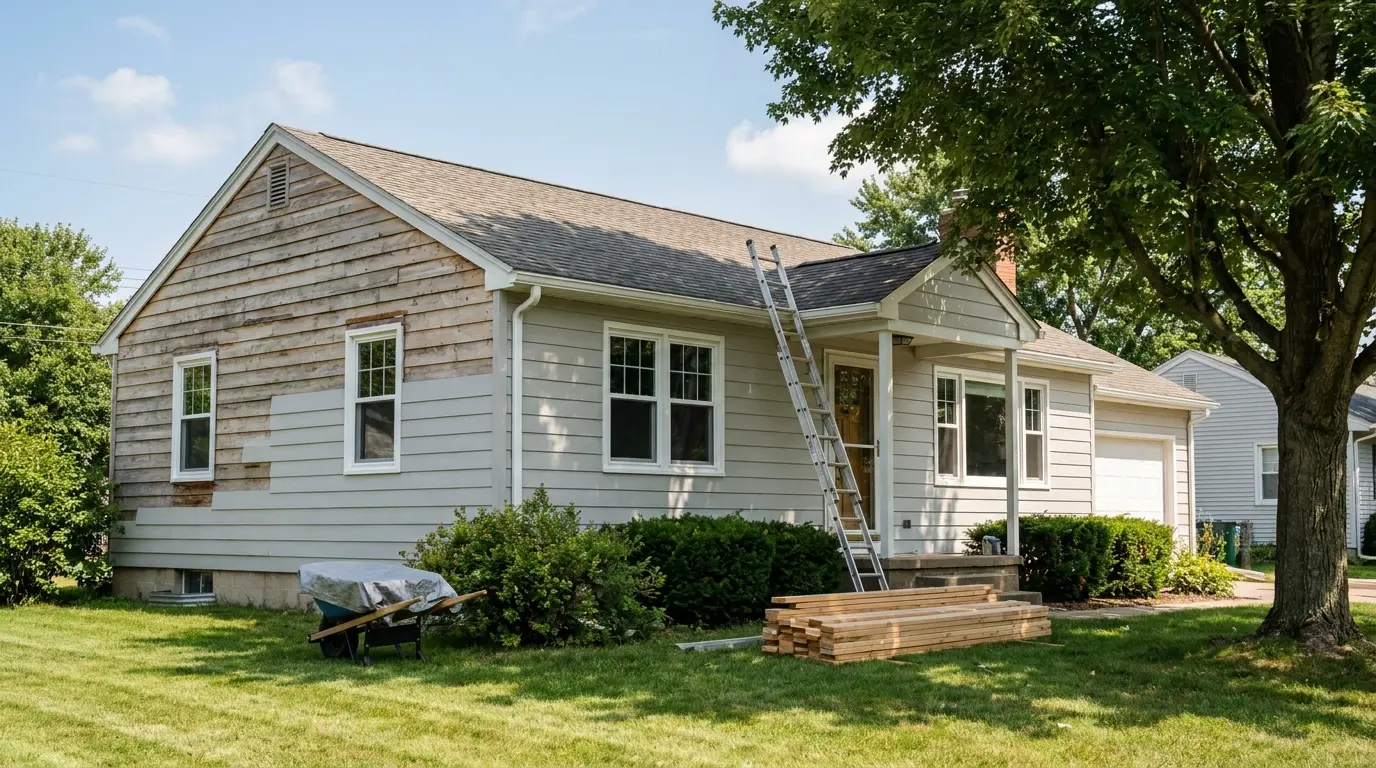
Fix and flip financing is a business-purpose loan. An investor borrows to buy a residential property, pay for the improvement work, and repay at the exit. It is not a consumer product and it is not for the house you live in. In 2025, investors flipped 297,045 US homes, 7.4% of all home sales, at a 25.5% gross return, the lowest since 2008 (ATTOM, March 2026).
That return number carries a catch most pages skip. It is gross. It is measured before the work is paid for.
Meanwhile the market has stopped doing the heavy lifting. Prices are creeping, not climbing, and the typical project sits for roughly five and a half months. Every extra week eats the spread. Paying all cash avoids a payment, but it locks up the capital that funds your next acquisition.
Here is how the money actually works: what fix and flip financing covers, what a lender evaluates, how fix & flip, fix & keep and fix & hold change the structure, and how to size a deal against the clock instead of against a hopeful spreadsheet.
> Key Takeaways
> - Investors flipped 297,045 US homes in 2025, 7.4% of all home sales, at a 25.5% gross return, the lowest since 2008 (ATTOM, March 2026).
> - Gross profit is measured before renovation costs and other expenses, which ATTOM notes typically run 20 to 33 percent of a property's after-repair value.
> - 38.9% of Q1 2026 flip acquisitions involved financing, up from 36.9% in 2024, because capital velocity beats owning one deal outright (ATTOM, June 2026).
> - The exit you choose, flip, keep or hold, decides the financing structure. Eos Loan is a direct lender with flexible terms, subject to approval and eligibility.
Talk to our team about financing your next project
What is fix and flip financing?
Fix and flip financing is a business-purpose loan used to acquire a residential property and fund the improvement work, repaid when the investor exits the deal. In Q1 2026, investors flipped 64,348 US homes, 8.0% of all home sales, up from 7.4% across 2025 (ATTOM, June 2026). This is a normal, measurable share of the market.
!A single-family house under construction in bright daylight with a builder reviewing plans on site.
Two things sit inside the loan. The first is acquisition: what you pay for the property. The second is the scope of work: the budget that turns a tired house into something a buyer or a tenant will pay for. Financing both is the point. Splitting them is how investors end up asset-rich and reserve-poor halfway through a project.
"Business purpose" is a structural distinction, not marketing language. The credit is extended for an investment use, secured by a property you do not occupy, and underwritten against the deal's economics rather than a household budget.
Who uses it? First-deal investors buying one house. Small operators running four to ten projects a year. Buyers who intend to sell, and buyers who intend to rent. The exit is what separates them.
Flipping is not evenly spread. Georgia led at 11.1% of all sales in Q1 2026, with Ohio at 10.8% and Texas at 9.9%, against the 8.0% national figure (ATTOM, June 2026). In those states you compete for inventory with more investors, so acquisition discipline matters more.
Eos Loan works with investors on business-purpose financing for residential real estate projects across all three exits, subject to approval and eligibility.
Why do investors finance instead of paying cash?
Cash still dominates, but its share is slipping. 61.1% of homes flipped in Q1 2026 were bought with cash, which leaves 38.9% involving financing, up from 37.7% across 2025 and 36.9% in 2024 (ATTOM, June 2026). The financed share is rising because investors are protecting working capital.
The real reason is velocity, not a shortage of money. Cash sunk into one house cannot buy the next one. An investor with $400,000 can own one project outright or hold a position in several while keeping a reserve. The second version compounds; the first waits.
There is also a timing mismatch built into every project. You pay for the property and the work now. You get paid at the exit, months later. Financing bridges that gap so the operating account is not the thing absorbing it.
Then there is the reserve. The single most common reason a project runs long is the surprise behind the wall: the failed drain line, the panel that will not pass inspection, the roof that was not in the budget. An investor with reserves solves that in a week. An investor who spent everything at closing solves it in a month, and that month has a cost.
Worth watching as context: real estate investors bought 19% of all US homes sold in Q1 2026, with investor purchases down 6% year over year to the lowest level since 2020 (Redfin, May 2026). Fewer investors bidding is a less crowded acquisition market for the operator who can move on a property.
What do flip margins actually look like in 2026?
The typical flipped home returned 25.4% gross in Q1 2026 on a $66,000 gross profit (ATTOM, June 2026). That is up from 24.7% the prior quarter, and far below the 32.1% recorded in 2024 (ATTOM, March 2026). Margins are compressed and the word "gross" is doing heavy work.
!A contractor crew working on a residential rooftop in bright daylight.
Here is the full-year arithmetic. Across 2025 the median flip was bought at $259,019 and resold at $325,000, for $65,981 in gross profit (ATTOM, March 2026).
Now the part competitors leave out. Those gross profit figures do not deduct renovation costs and other expenses, which ATTOM notes typically run 20 to 33 percent of a property's after-repair value. On a $325,000 after-repair value, that is roughly $65,000 to $107,000 of work and expense sitting against a $65,981 gross number.
At the top of that range, the median 2025 flip cleared nothing. At the bottom of it, the operator kept something worth the risk. The difference is not luck. It is the accuracy of the scope of work and the discipline of the acquisition price.
That is not a reason to avoid the business. It is the reason to underwrite it honestly. A deal that only works at a 20% expense ratio and a perfect sale price is a wish. A deal that still clears at 30% and a soft sale is worth funding.
How does the exit change the financing?
The exit decides the structure, not the property. Fix & flip repays from a sale. Fix & keep repays from the investor holding the improved property. Fix & hold repays from rental income once the property is leased. Same purchase, same scope of work, three different lengths of time the money has to stay in the deal.
Fix & flip
Buy, improve, sell. Short-cycle financing built for a fast, clean exit. The entire plan depends on the sale closing near the projected after-repair value and near the projected date. Miss either one and the carry starts eating the margin. This is the highest-velocity version and the least forgiving of a slow listing.
Fix & keep
Buy and improve, then keep the property rather than selling into a soft window. Financing here has to carry the project past the completion of the work instead of ending at a sale event. Investors choose this when the improved property is worth more to them held than sold, or when the market gives them a reason to wait.
Fix & hold
Buy, improve, rent it out. Repayment shifts from a one-time sale to monthly rental income, which changes what the lender wants to see: the lease-up assumption, the rent supported by comparable units, the operating costs. This is how investors build income properties instead of a series of one-off exits.
Picking the exit before you apply is not paperwork. It is the whole underwriting conversation. Naming a realistic second exit makes the file stronger, not weaker. A project priced to sell that can also carry as a rental has two ways to repay. One that only works at the top of the comparable range has one.
Terms are flexible and sized to the project and the exit you choose, subject to approval and eligibility. Eos Loan finances all three modalities: fix & flip, fix & keep and fix & hold.
See how business-purpose financing fits your deal
What do lenders look at on a business-purpose real estate loan?
Underwriting reads the deal and the operator together: the property and its after-repair value, the scope and budget of the work, your track record, the exit plan, and how much of your own capital sits in the project. Every application is subject to approval and eligibility, and no lender promises a decision in advance.
!A close-up of project paperwork and a contract on a desk in daylight.
The property. It is the collateral, so the after-repair value has to be supported rather than asserted: comparable sales in the same submarket, at the same finish level, closed recently. A value pulled from the best sale on the street will be marked down.
The scope of work. A written scope with line items and a budget is the strongest document in most files, and a vague one is the most common weak point. "Full interior refresh, roughly $60,000" tells a lender nothing about what happens when the plumbing bid comes in high.
Experience. A track record helps. If you do not have one yet, bring the things that stand in for it: a general contractor under contract, a timeline that matches the work, and reserves you can prove. Credit history is one input among several, read alongside the deal rather than as a single pass or fail.
Documentation to have ready. Purchase contract, scope and budget, comparable sales supporting the after-repair value, entity documents, and proof of reserves. Assembling those before you apply is the difference between a clean file and three weeks of back and forth.
> What I see in the files: the investors who move through underwriting cleanly are almost never the ones with the largest down payment. They are the ones who show up with a written scope of work, an after-repair value they can defend with real comparable sales, and a named second exit, all before anyone asks for them. That pattern holds across first-deal buyers and operators on their thirtieth project. It is an observation about preparation, not an approval rule.
How do you size a deal against the holding-cost clock?
The question is not "what is the spread between purchase price and after-repair value." It is "does the spread survive the holding period." The typical flip took 165 days from purchase to sale in Q1 2026, and 163 days across 2025 (ATTOM, June 2026). That is the number your carry runs against.
!A wide daylight view of an ordinary residential street with driveways and single-family houses.
Start with what the market is contributing, because it is almost nothing. In June 2026, US single-family home prices rose 1.2% year over year (Cotality Home Price Index, formerly the CoreLogic HPI, August 2026). In July 2026, NAR put the median existing-home price at $434,100, up 2.0% year over year (NAR, August 2026). Over a 165-day hold, national appreciation contributes well under one percent of value.
So the margin has to be created by the work and protected from the clock. That is the whole game in 2026, and it is why the financing structure matters more than the sticker price of the property.
Now run the clock. The loan payment, property taxes, insurance, and the bills that keep the power and water on run for the full hold, not for the optimistic 90-day plan the spreadsheet assumed. That is 165 days of carry on a project underwritten for 90. Where does the extra come from? Usually from the profit.
The listing window is not the project window either. NAR's July 2026 data shows a 4.6-month supply of existing homes and a 29-day median time on market (NAR, August 2026). Twenty-nine days is how long a listed house sits. It says nothing about the permit that took six weeks or the cabinet order that slipped a month.
The practical rule: underwrite the deal at the 165-day number, not at the 90-day hope, and check that the second exit still works if the sale slips a quarter. If it does, you have a project. If it only works at 90 days and a perfect price, you have exposure.
Investors who finance equipment recognize this discipline. It is the same logic behind sizing a business-purpose payment against what the asset actually earns, whether the asset is a house or a truck.
How does financing with a direct lender work?
Eos Loan is a direct lender. The company originates, underwrites, and services the credit itself, so you work with one team from application through funding instead of being handed between an intermediary and whoever ends up holding the paper. That distinction gets real when a closing date is fixed and someone has to make a decision.
Eos Loan has originated $4B+ to date and processed 30k+ proposals across essential projects, including business-purpose residential real estate, battery energy storage, EV chargers, water filtration, and truck fleets. You can read more about who we are and how the company is structured.
What that changes in practice is concrete. One point of contact instead of a relay. Decisions made in-house. No handoff in the middle of a deal, which is the moment handoffs hurt most. A straightforward digital application and a support team that knows your file.
Eos Loan charges no dealer fee. Other lenders in this space do, and understanding how a dealer fee works elsewhere is worth your time. Eos Loan does not have one. If you want the general mechanics, we explain the difference between a direct lender and other lending models separately.
Terms are flexible and sized to the project and the exit, subject to approval and eligibility. There is no self-serve signup here and no rate table, because the structure follows the deal.
---
Ask about flexible terms for fix and flip projects
Or call +1 833-989-3737 to talk a deal through with our team. More common financing questions are answered on our FAQ page.
---
{ question: "What is fix and flip financing?", answer: "A business-purpose loan used to acquire a residential property and fund the improvement work, repaid at the exit. It is not a consumer product and not for an owner-occupied property. Flips were 8.0% of all US home sales in Q1 2026 (ATTOM, June 2026). Subject to approval and eligibility." }, { question: "What is a business-purpose real estate loan?", answer: "Credit extended for an investment or business use rather than for a property the borrower occupies. The purpose of the loan, not the property type, is what makes it business purpose. A single-family house can secure either kind of credit depending on how the borrower will use it." }, { question: "Can you finance both the purchase and the improvement work?", answer: "Yes, and that is the structure investors typically use. It is why the scope of work and the after-repair value are underwritten alongside the purchase price rather than treated as separate questions. Terms are flexible and sized to the project, subject to approval and eligibility." }, { question: "What is the difference between fix and flip, fix and keep, and fix and hold?", answer: "The exit. Fix and flip repays from a sale. Fix and keep repays from the investor holding the improved property. Fix and hold repays from rental income once the property is leased. Same project and same work, three different lengths of time the money stays in the deal." }, { question: "How long does a typical flip take?", answer: "The typical US flip took 165 days from purchase to sale in Q1 2026, and 163 days across 2025 (ATTOM, June 2026). Underwrite the carry at that number rather than at 90 days, and check that the deal still works if the sale slips by a quarter." } ]} />The number that decides the deal
Flipping is a normal share of the US housing market, and it is financed more often each year. What changed is that the market no longer pays for the project. The margin has to be built by the work and defended against the calendar.
- Flips were 7.4% of all US home sales in 2025 and 8.0% in Q1 2026. This is a real market, not a fringe activity.
- Gross returns are the lowest since 2008, and gross is measured before the work is paid for.
- The financed share of acquisitions keeps rising because capital velocity matters more than owning one deal outright.
- The exit, flip, keep or hold, decides the structure of the credit.
- The deciding number is whether the spread survives 165 days, not 90.
Before you sign a purchase contract, write down the after-repair value you can defend, the scope of work at a real budget, and the carry at 165 days. If the deal still clears, business-purpose financing for residential projects is a conversation with our team, not a form.
---
About the author: Eduardo Donadi is the CEO of Eos Loan, a US direct lender financing essential projects including business-purpose residential real estate, battery energy storage, EV chargers, water filtration, and truck fleets. He works directly with investors and operators on how acquisitions and improvement budgets get structured and funded.
---
Sources
1. ATTOM. "2025 Year-End US Home Flipping Report." March 2026. Retrieved 2026-08-27. https://www.attomdata.com/news/market-trends/flipping/2025-year-end-home-flipping-report/
2. ATTOM. "Q1 2026 US Home Flipping Report." June 2026. Retrieved 2026-08-27. https://www.attomdata.com/news/market-trends/flipping/q1-2026-home-flipping-report/
3. ATTOM. "Home Flipping Trends by State." Q1 2026 data. Retrieved 2026-08-27. https://www.attomdata.com/news/market-trends/flipping/home-flipping-trends-by-state/
4. Redfin. "Investor Report, Q1 2026." May 2026. Retrieved 2026-08-27. https://www.redfin.com/news/investor-report-q1-2026/
5. Cotality. "Cotality Home Price Index (formerly the CoreLogic HPI), June 2026." August 2026. Retrieved 2026-08-27. https://finance.yahoo.com/real-estate/articles/cotality-u-home-prices-enter-141900083.html
6. National Association of Realtors. "Existing-Home Sales Report, July 2026." August 2026. Retrieved 2026-08-27. https://www.nar.realtor/newsroom/nar-existing-home-sales-report-shows-1-7-decrease-in-july