

How to Fund Your First Flip: A Step-by-Step Walkthrough
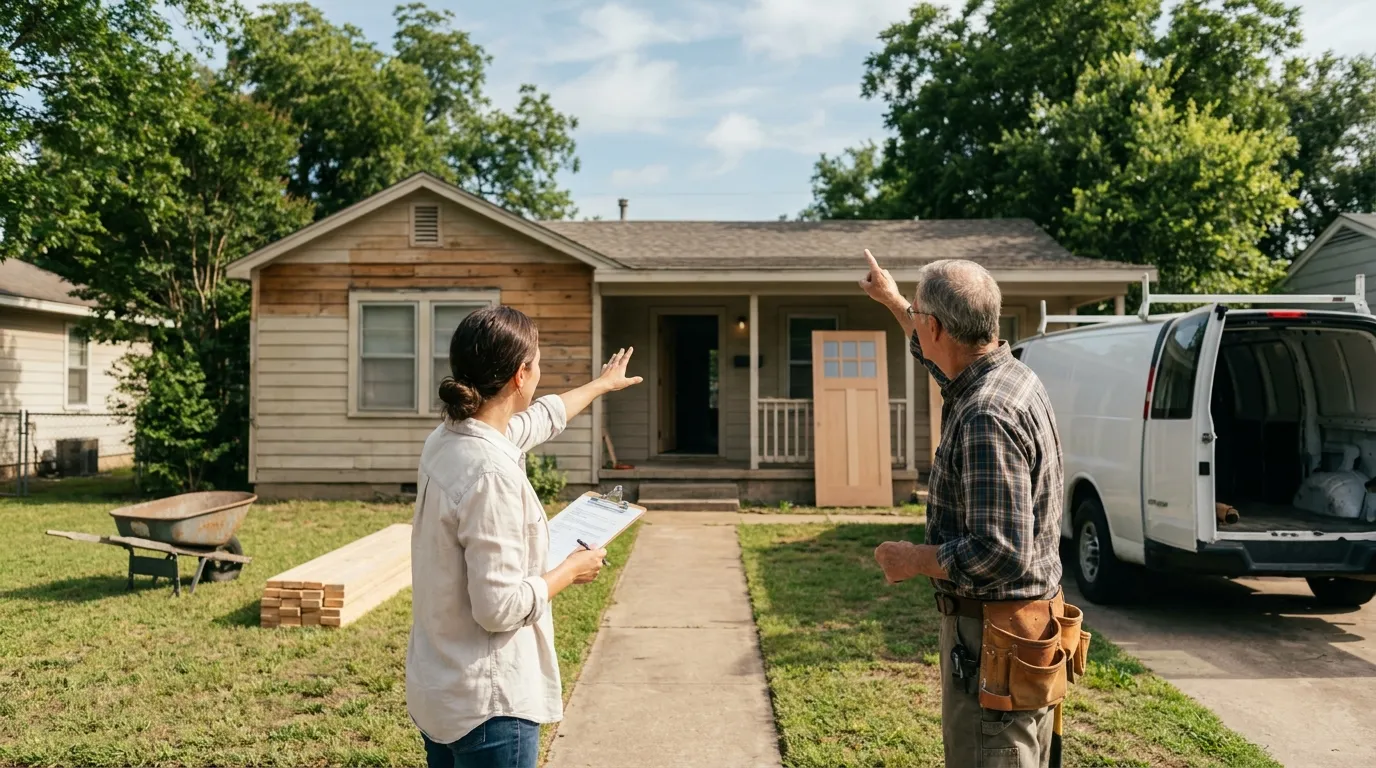
When you fund your first flip, you are financing a business-purpose project: a property you buy to improve and resell, never one you intend to occupy. In the first quarter of 2026, 64,348 US homes were flipped, about 8% of all home sales, and 38.9% of them were purchased with financing rather than cash (ATTOM, Q1 2026 US Home Flipping Report, June 2026).
So borrowing to flip is the ordinary path, not the exotic one. Nearly two of every five flips last quarter involved a lender.
The beginner mistake is treating funding as a single question: can I get a loan for the purchase? It is actually three separate money problems. The acquisition. The construction budget. And the holding costs that accrue every day until the property sells. Solve only the first and you can still run out of cash in month two.
Here are the seven steps, in order, what each one asks of you, and what a business-purpose lender is really reading when it opens your file.
> Key Takeaways
> - In Q1 2026, 64,348 US homes were flipped and 38.9% were bought with financing (ATTOM, June 2026).
> - A flip is three money problems: the acquisition, the construction budget, and daily holding costs.
> - ATTOM's published gross profit excludes construction costs and other expenses, which flipping veterans estimate at 20% to 33% of after-repair value.
> - Construction budgets are local, not national: Q1 2026 averages ran from $58,857 in Charlotte to $431,250 in Denver (ATTOM and Backflip, July 2026).
> - Eos Loan is a direct lender for business-purpose real estate projects, with flexible terms, subject to approval and eligibility.
See how business-purpose financing fits your deal
Step 1: What are you paying for when you fund your first flip?
Three things, not one. ATTOM states plainly that its published gross flipping profit is the difference between purchase price and resale price, and excludes construction costs and other expenses, which flipping veterans estimate typically run between 20% and 33% of a property's after-repair value (ATTOM, Q1 2026 US Home Flipping Report, June 2026).
That caveat is the whole post in one sentence. The typical Q1 2026 flip showed a gross profit of $66,000 on a 25.4% gross return (ATTOM, June 2026). Subtract a construction budget and the carrying costs, and take-home looks very different from the headline.
So separate the money into three buckets before you do anything else. Acquisition is the price you pay the seller plus closing costs. Construction budget is the scope of work, the permits, and the contingency you have not spent yet. Holding costs are interest, insurance, property taxes, power and water, and security, and they run whether or not anyone is swinging a hammer that week.
Different sources usually solve different buckets. That is why a beginner who has only solved the purchase price is not funded, just optimistic.
!A single-family house under construction in daylight, with plans being reviewed on site.
Step 2: Why does the entity come before the offer?
Because business-purpose financing is underwritten to a business, not to a consumer. The entity, the bank account, and the documents come before the offer, not after it. Aging inventory is part of why: the median age of an owner-occupied US home reached 42 years and 47% were built before 1980 (NAHB analysis of Census American Community Survey data, NAHB, March 2026).
Old properties surface work that was not visible during the walkthrough. Lenders know that, so they want to see a business that can absorb it.
Practically, that means an operating entity with an EIN, a business bank account that is not your personal checking, and a folder ready before the first call. Put in it: entity documents, recent business bank statements, a line-item scope of work, proof of the cash you are bringing, and the insurance binder for the property.
Talk to your own attorney and accountant about which structure fits your situation. That part is genuinely counsel territory, not something to copy from an article.
Business-purpose classification is also what separates this from a consumer product, and the full guide to fix and flip financing covers where that line sits across fix and flip, fix and keep, and fix and hold.
Step 3: Size the purchase and the construction budget separately
They are two independent numbers, and a lender reads them independently. In Q1 2026, average flip purchase prices ranged from $370,335 in Atlanta to $647,456 in Boston, while average construction budgets in the same data ran from $58,857 in Charlotte to $431,250 in Denver (ATTOM and Backflip, July 2026).
Look at that spread. A "typical" construction budget is not a national number, it is a metro number, and a blended all-in figure hides which half of your deal is fragile.
Get the construction number from a contractor as a line-item scope of work, not as a round guess. Build the contingency in from the start, because input prices keep moving: the price index for inputs to new residential construction rose 6.2% year over year in June 2026, with goods up 6.9% and services up 5.2% (NAHB analysis of BLS Producer Price Index data, NAHB, July 2026).
The after-repair value is the number a lender sizes against, since it is what the finished property is expected to be worth. The pillar walks through that math. This step only asks that your ARV come from comparable sales rather than from hope.
> What I see: first-time investors almost always arrive with the purchase price solved and the construction budget guessed. The files that move through underwriting cleanly are the ones carrying a line-item scope from a real contractor instead of a round number. That is a pattern I have watched across applications, not an approval rule, and every file is still subject to approval and eligibility.
Step 4: What is a business-purpose lender actually looking at?
The deal and the borrower together. The property is the collateral and the exit is the repayment source, so the weaker your track record, the more the property and the cash you bring have to carry the file. Inexperience is common on a first deal and it is not automatically disqualifying. Every application is subject to approval and eligibility.
Expect five things to get read closely: the property and its after-repair value, the scope of work and the contractor behind it, your credit history, your liquidity after closing rather than at closing, and the realism of the exit.
That fourth one catches beginners. Reserves are the cash left over once the deal has funded, and reserves are what pay for the surprise behind the wall.
Credit history is one input among several here, never the whole decision. We wrote up how credit score factors into a financing decision separately if you want the mechanics.
If you have no track record, you offset it: a tighter scope, a smaller first project, more cash down, and a general contractor with a documented history of finishing work like yours.
Ask about flexible terms for fix and flip projects
Step 5: Who funds the deal, and when does it have to be committed?
Before the offer, every time. The seller is comparing you to buyers who do not need a lender at all, and competition is real even in a slow market: investors purchased 19% of homes sold in Q1 2026, down from 20% a year earlier, with total investor purchases falling 6% year over year to their lowest level since 2020 (Redfin, Investor Report Q1 2026, May 2026).
Who you borrow from changes what happens when something goes wrong mid-project. Eos Loan is a direct lender, not a marketplace, a broker, or a platform that connects you to lenders, which means the team that underwrites your file is the team you call in week nine. If that distinction is new to you, here is the difference between a direct lender and an intermediary.
Scale is a fair question to ask any lender. Eos Loan has originated $4B+ to date across 30k+ proposals processed, financing essential projects nationwide.
Ask about fees before you sign anything. Some lending programs build in a dealer fee, and it is worth understanding how dealer fees work in lending programs so you can read a term sheet properly. Eos Loan charges no dealer fee.
Terms are flexible and sized to the deal, subject to approval and eligibility. Our page on business-purpose financing for real estate projects covers the product side without the essay.
Step 6: How does the money actually reach the project?
Not all at once, and this is the surprise that costs first-timers the most. The acquisition funds at closing. The construction budget is typically released in stages against work already completed, which means you pay the contractor first and get reimbursed after, not the reverse.
The rhythm is simple to describe and easy to underestimate. You finish a defined stage of the scope of work, request a draw, an inspection confirms the work, and funds release. Then you do it again.
!Two people reviewing a line-item scope of work and project paperwork at a bright desk in daylight.
Draws stall for boring reasons: work that is not actually finished, missing invoices, a permit that never got pulled. Each stall is days of holding costs you still owe.
So negotiate your contractor's payment terms against the draw rhythm before the work starts. If they want half at signing and your funding reimburses on completion, you are covering that gap personally. The full guide to fix and flip financing sets out how draw structures fit the three modalities.
Step 7: Plan the payoff before you fund your first flip
The exit repays the loan, so the exit gets planned first. The typical flip took 165 days from purchase to sale in Q1 2026, up from 160 days in Q4 2025 (ATTOM, June 2026), and every one of those days carries interest, insurance, property taxes, power and water, and security.
Treat the timeline as a budget line, not a schedule note. Payoff periods vary widely by market, which is why a national average is a poor planning input.
The selling environment decides whether 165 days becomes 220. In April 2026, 35.4% of US home sellers cut their asking price, by an average of 4% (Redfin, May 2026). In July 2026, existing-home inventory stood at 1.54 million units, a 4.6-month supply, with a median price of $434,100 (NAR, August 2026).
So write the backup exit down before you borrow. If the sale stalls, what happens? Holding longer, leasing the property, or accepting a lower number are all answers, and each one changes what structure you should have asked for on day one. Term length is part of that conversation, and what term length does to a monthly payment is worth reading before you sign.
!A wide daylight view of a quiet residential street of single-family houses with driveways.
Be honest about the margin you are chasing. The full-year 2025 gross return of 25.5% was the lowest recorded since 2008 (ATTOM, 2025 Year-End US Home Flipping Report, March 2026). Thinner margins are exactly why the funding structure has to be right on the first deal.
---
Talk to our team about financing your next project
Or call +1 833-989-3737 to walk through a first deal with our team. More common financing questions are answered on our FAQ page.
---
question: "How much money do you need to fund your first flip?",
answer: "There is no single number, because a flip has three costs: the acquisition, the construction budget, and daily holding costs. ATTOM notes its published gross profit excludes construction costs and other expenses, which flipping veterans estimate at 20% to 33% of after-repair value (ATTOM, June 2026)."
},
{
question: "Can you get financing for your first flip with no experience?",
answer: "Yes, and it is common. With no track record, the file leans harder on the property, the scope of work, the contractor behind it, and the cash you bring to closing. A smaller first project also helps. Every application is subject to approval and eligibility."
},
{
question: "Do you need an LLC to fund a flip?",
answer: "Business-purpose financing is underwritten to a business, so most investors use an operating entity with an EIN and a business bank account. Which structure fits your situation is a question for your own attorney and accountant, not for an article."
},
{
question: "How long does a flip take?",
answer: "The typical US flip took 165 days from purchase to sale in Q1 2026, up from 160 days in Q4 2025 (ATTOM, June 2026). Metro payoff periods in the ATTOM and Backflip analysis ran from about 90 days in Dallas-Fort Worth to 154 days in Austin."
},
{
question: "What is the difference between funding a flip and buying a property to live in?",
answer: "Classification and repayment. A flip is a business-purpose project, usually held in an entity, and the loan is repaid by the sale rather than by occupancy. Underwriting looks at the deal alongside the borrower. The pillar guide sets out how the modalities differ."
}
]} />
Three money problems, not one
The steps that fund your first flip run in order, and the sequence only works if you stop treating the purchase price as the whole question.
- The acquisition, the construction budget, and the holding costs are three separate problems.
- The entity, the bank account, and the document folder come before the offer.
- Size the purchase and the construction budget independently, with a line-item scope behind the second one.
- Underwriting reads the deal and the borrower together, and reserves matter more than beginners expect.
- The construction budget is usually reimbursed against completed work, so plan for the gap.
Write the exit down before you borrow. If the numbers only work at the top of the market and on the fastest timeline, the deal is not funded, it is wished for. When it does work, business-purpose financing for real estate projects is a conversation, not a form.
---
About the author: Eduardo Donadi is the CEO of Eos Loan, a US direct lender financing essential projects including business-purpose real estate, truck fleet expansion, battery energy storage, EV chargers, and water filtration. He works directly with investors on how fix and flip, fix and keep, and fix and hold projects get structured and funded.
---
Sources
1. ATTOM. "Q1 2026 US Home Flipping Report." June 2026. Retrieved 2026-08-27. https://www.attomdata.com/news/market-trends/flipping/q1-2026-home-flipping-report/
2. ATTOM and Backflip. Special analysis of Q1 2026 fix-and-flip returns. July 2026. Retrieved 2026-08-27. https://www.attomdata.com/news/market-trends/flipping/special-analysis-how-pricing-renovation-costs-and-timing-shaped-returns-in-q1-2026/
3. ATTOM. "2025 Year-End US Home Flipping Report." March 2026. Retrieved 2026-08-27. https://www.attomdata.com/news/market-trends/flipping/2025-year-end-home-flipping-report/
4. Redfin. "Investor Report, Q1 2026." May 2026. Retrieved 2026-08-27. https://www.redfin.com/news/investor-report-q1-2026/
5. Redfin. "Home Sellers Cutting Asking Prices, April 2026." May 2026. Retrieved 2026-08-27. https://www.redfin.com/news/price-drops-april-2026/
6. National Association of Realtors. "Existing-Home Sales Report, July 2026." August 2026. Retrieved 2026-08-27. https://www.nar.realtor/newsroom/nar-existing-home-sales-report-shows-1-7-decrease-in-july
7. NAHB analysis of US Bureau of Labor Statistics Producer Price Index data. "Building Material Prices Continue to Rise Despite Energy Price Declines." July 2026. Retrieved 2026-08-27. https://eyeonhousing.org/2026/07/building-material-prices-continue-to-rise-despite-energy-price-declines/
8. NAHB analysis of US Census Bureau American Community Survey data. "How Old Is Today's Housing Stock?" March 2026. Retrieved 2026-08-27. https://www.nahb.org/blog/2026/03/how-old-is-todays-housing-stock