

Fix and Hold: Financing a Project You Intend to Rent
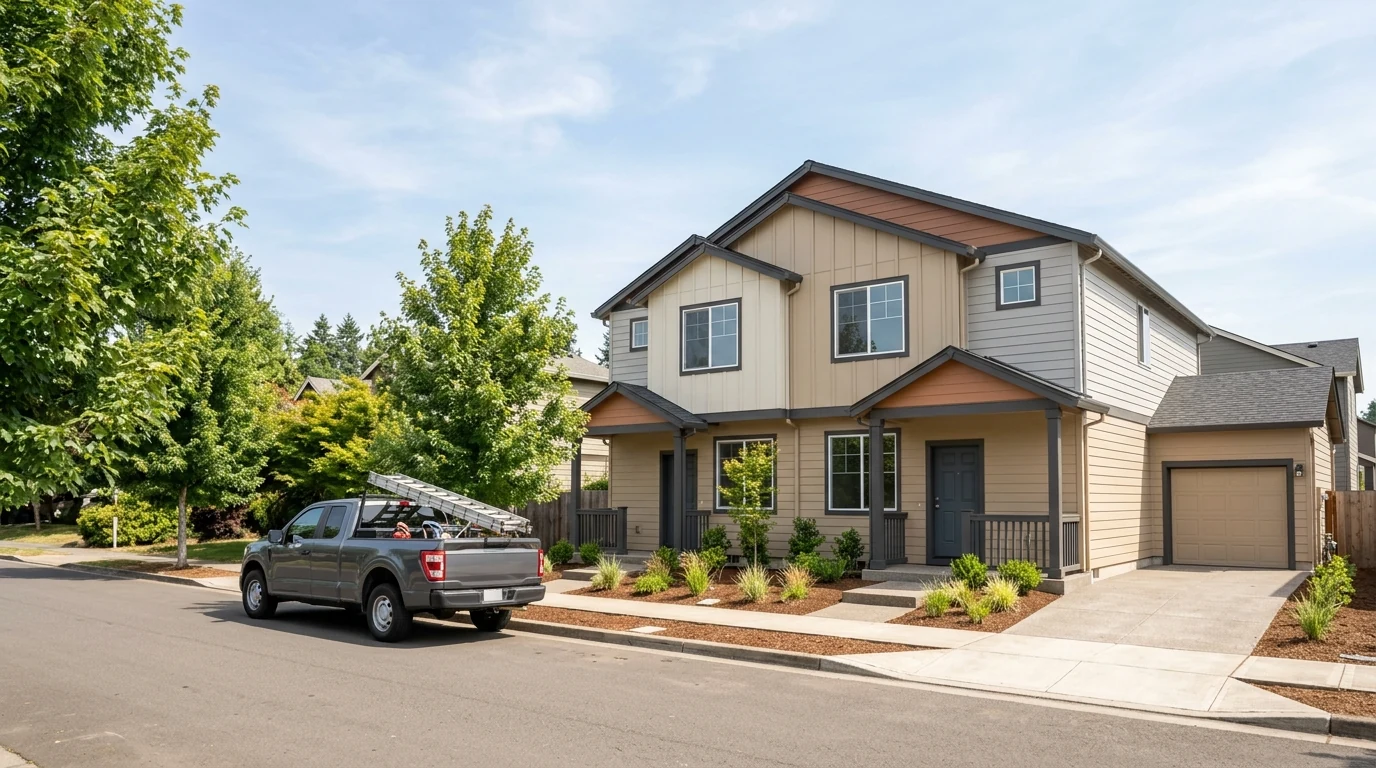
This is a business-purpose project on an investment property, and the exit is a tenant instead of a buyer. Nobody is moving in, and none of it is a consumer product.
The final inspection is not the moment the property starts paying for itself. There is a gap between the day the work is signed off and the day the first rent lands. It has a length, and you are the one carrying it.
If you are still deciding between the two paths where you do not sell, the comparison between a fix and keep and a fix and hold sits in its own guide. This one picks up after that decision is made.
What follows is the conversion, stage by stage. What changes when the exit is a tenant, how long lease-up runs and who funds it, how projected rent is evidenced, when a rent roll actually exists, and how project financing hands off to hold financing.
> Key Takeaways
> - A project becomes an income property on the date a tenant signs, not the date the work passes final inspection. The weeks in between are carried by you.
> - Single-family homes now make up 31% of US rentals and only 13.7% of single-family homes are renter-occupied, both record lows (Redfin, January 2026).
> - Projected rent is evidenced by an appraiser's Single Family Comparable Rent Schedule (Freddie Mac Form 1000 / Fannie Mae Form 1007), and a signed lease outranks a pro forma every time.
> - US single-family rents rose 2.2% between February and May 2026 against 1.4% over the same months in 2024 (Cotality, July 2026), so lease-up timing is a budget decision.
> - Eos Loan is a direct lender. Terms are flexible and sized to the plan, with no dealer fee, subject to approval and eligibility.
See how business-purpose financing fits your deal
What changes when the exit is a tenant instead of a sale?
A sale ends your ownership and repays the loan in a single event. A tenant does neither. In January 2026, Redfin reported that single-family homes make up 31% of US rentals and that just 13.7% of single-family homes are renter-occupied, both record lows (Redfin, "The Single-Family Rental Is on the Decline", January 2026).
The asset changes category, and that is the part investors underestimate. During the work, the house is inventory. It is valued on what it will sell for, and every dollar you spend is aimed at a closing table. After the conversion it is an operating asset, valued on what it earns.
Three consequences follow, and they show up in the file rather than in the drywall.
- The repayment source becomes recurring instead of single-event, so a lender is reading a monthly number rather than a one-time number.
- The underwriting question moves from sale comps to rent evidence, which is a different document set entirely.
- Insurance, taxes and maintenance stop being temporary carry and become permanent operating costs that sit against the rent forever.
- Flooring and paint specified for turn cost across several tenancies, rather than for one listing photo.
- Fixtures and hardware chosen for replacement availability, not for how unusual they look.
- HVAC and water heater service records kept from day one, because an operating asset has a maintenance history and a sale does not need one.
- Appliance warranties checked for whether they transfer or simply expire during the tenancy.
- Metering, access, keys and locks treated as an operating decision instead of a punch-list item.
- Landscaping scoped to what a tenant will realistically maintain, which is less than you would maintain.
- Evidence of completion: final inspection, certificate of occupancy where the jurisdiction issues one, final lien waivers.
- Rent evidence: the signed lease if you have one, the appraiser's rent schedule if you do not.
- Insurance rewritten for a tenanted property instead of a vacant one under construction.
- Entity documents current, with the property titled where you said it would be titled.
- Tax and insurance figures updated to the post-improvement assessment, not the purchase-year one.
- Your own record: completed projects, and how the last one actually performed.
- A named lease-up window, with a season attached to it.
- A named rent evidence plan: appraiser's schedule, signed lease, or both.
- A carry budget that runs past final inspection instead of stopping at it.
- A finish spec decided for a tenant, not for a listing photo.
- A handoff date on the calendar, with the document list already assembled.
That reclassification is the whole story of the conversion. It is also why we underwrite this as business-purpose financing for residential real estate projects rather than as anything a consumer would recognize.
When does a project become an income property?
On the date a tenant signs, not the date the work passes inspection. Between those two dates the property is finished and earning nothing. In Q2 2026 the national rental vacancy rate was 7.3% (US Census Bureau, Housing Vacancy Survey, July 2026), a reminder that empty is a normal state rather than a failure.
There are five events in the conversion, and they happen in this order.
1. Final inspection, plus a certificate of occupancy where the jurisdiction issues one.
2. Make-ready: cleaning, keys and locks, appliances installed, utilities transferred into the owner's account, photographs taken.
3. Listed at a named asking rent.
4. Application, screening, signed lease.
5. First rent received and deposit held.
!A finished, unfurnished living room in a small house, lit by daylight through large windows.
Here is the mismatch that costs money. Most investors budget to event one, because that is the event the contractor is paid for and the event the schedule was built around. Hold financing cares about events four and five, because that is where the repayment source appears.
If you are used to a schedule that ends at a closing, compare it with the flip calendar stage by stage. The shapes look similar until the end, where one stops at a sale and this one keeps going.
How long is the lease-up period, and who pays for it?
You do. Lease-up is unfunded carry sitting between two funding events, and its length is seasonal. In 2026, US single-family rents rose 2.2% between February and May, compared with 1.9% over the same months in 2025 and 1.4% in 2024 (Cotality, "Annual Single-Family Rent Growth Remains Below Trend", July 2026). That is spring leasing season showing up in the data.
What does the window actually cost? The loan payment keeps running. So do property taxes, insurance priced for a vacant property rather than a tenanted one, utilities now in your name, lawn or pool service, and the listing and screening costs. None of that is exotic. All of it is real, and none of it is offset by rent yet.
Then there is the tradeoff nobody puts in the budget. Dropping the asking rent to fill the unit faster lowers the exact number that hold financing gets sized on. Holding out for the rent you wanted costs more weeks of carry. Neither option is free, and the decision belongs in the plan before demolition starts, not in a panic in week six.
The common error is simpler than any of that. Investors size the carry budget to the construction schedule, when the carry budget has to cover the construction schedule plus lease-up. Borrowers who have done this before build the vacant weeks in as a line item. First-time holders almost never do, which is the same lesson draw funding teaches: holding costs accrue on the calendar, not on the scope of work.
Ask about flexible terms for fix and hold projects
How is projected rent actually evidenced?
With a document, not a spreadsheet. The market-standard instrument is the Single Family Comparable Rent Schedule, Freddie Mac Form 1000 and Fannie Mae Form 1007, prepared by the appraiser as an attachment to the appraisal on a one-unit investment property. It carries comparable rents, the local rent range, an estimate of single-family rental vacancy in that market, and the trend in both.
Rent evidence comes in three tiers, and they are not interchangeable.
1. Your pro forma. A forecast you wrote. Useful for planning, weightless as evidence, because nobody independent touched it.
2. The appraiser's rent schedule. Comparable rents adjusted for differences, plus the appraiser's own commentary on the local range, vacancy and trend. That commentary is the part investors skip and lenders read closely.
3. A signed lease. An identified tenant, a start date, a contract rent. It is the strongest thing you can hand over, because the market already voted.
Fannie Mae's guide is explicit that the rent schedule must support the income reflected on the lease (Fannie Mae Selling Guide, B3-3.1-08, Rental Income). So tiers two and three get checked against each other rather than treated as alternatives. A lease at a number the comps do not support raises a question instead of settling one.
One point of classification, because those forms come from a world investors sometimes confuse with this one. They are the industry's standard vocabulary for evidencing rent, and they get used well outside consumer lending. A business-purpose loan on an investment property is not a consumer mortgage, and nothing in this section changes that. If the distinction matters to your entity or your accountant, we set out why this credit is classified as business purpose separately.
Then there is geography. A national rent number cannot evidence your house. In May 2026, single-family rents grew 4.8% year over year in Chicago and fell 0.5% in Houston, and 13 of the 50 largest US metros posted annual declines (Cotality, July 2026).
Rent evidence sets the income side of the file. The value side works the same way it does on any project, where after-repair value sets the maximum a lender will advance. On a hold, the two have to agree with each other.
What is a rent roll, and when do you actually have one?
A rent roll is a record of leases that exist. A rent schedule is a forecast of leases that do not. On a first conversion you have the second and not the first, and turning up expecting to hand over a rent roll is the most common paperwork surprise on this path.
!A close-up of signed lease paperwork and a rent ledger on a desk in daylight.
Once it exists, a single-property rent roll holds the property address and unit, the tenant name, lease start and end dates, the contract rent, the deposit held, payment status, and any concession granted at signing. On one house that is a single line. It still matters, because it is the first month of operating history the property has ever had, and history is what makes the second deal easier than the first.
Now the part that is almost never said out loud. The number on a rent roll is a new-lease number. Headline rent inflation is not. Official CPI rent measures the whole occupied stock, including sitting tenants on renewals, which is exactly why the Bureau of Labor Statistics maintains a separate research series for new tenant rent (BLS, New Tenant Rent methodology, 2025 methodology update).
When you evidence your rent, you are in the new-lease population, not the renewal population. Those two move at different speeds, and sometimes in different directions. An investor quoting a headline rent inflation figure at an underwriter is answering a question nobody asked.
Practical note: start the rent roll at the first lease, not at the second property. The record costs almost nothing to keep now and is worth real money later.
How does the tenant exit change the scope of work?
It moves budget from what photographs well to what survives a tenant, and it moves some of that spend earlier in the draw schedule. In June 2026, input prices to new residential construction were up 6.2% year over year (NAHB analysis of BLS producer price data, Eye on Housing, July 2026), so substituting your way out of a spec decision is not free either.
The specific line items that change on a hold:
!A wide daylight view of a residential street of finished single-family homes with driveways.
Each of those choices changes the sequence of the work, and the sequence of the work is the draw schedule. That is the financing consequence. A schedule your lender and your contractor both agreed to in writing is straightforward to adjust when the spec shifts. A schedule everyone assumed is not. If the mechanics are new, the construction budget releases in stages against completed work, and each stage gets verified before the next one funds.
What does the handoff from project financing to hold financing involve?
Two loans doing two different jobs. Project financing is sized to the work and repaid at the exit. Hold financing is sized to the income and repaid over time out of it. The handoff between them is a date on your calendar with a document list attached, and it should be scheduled before the work is finished rather than discovered after.
Assemble this before final inspection, not after:
What stalls a handoff is rarely the deal. It is paperwork that does not match itself, the same pattern draws already taught you. An address written three different ways across three documents. A lease naming an entity that is not the borrower. An insurance binder still describing the property as vacant. Each one is a day, and days are carry. Credit history matters here too, and how credit history factors into an approval decision is worth reading before you apply rather than after.
Eos Loan is a direct lender, so the conversation about the handoff happens with the same party that funded the work, not with a servicer who inherited the file. Terms are flexible and sized to the plan rather than published as a fixed schedule. Eos Loan charges no dealer fee. Every structure is subject to approval and eligibility, and this is general information rather than legal or tax advice.
If the underlying product questions are still open, the pillar covers business-purpose financing for an investor project end to end.
Talk to our team about financing your next project
Or call +1 833-989-3737 to walk through a conversion with our team. More common financing questions are answered on our FAQ page.
---
question: "Do you need a signed lease before the loan closes on a fix and hold?",
answer: "Not necessarily. Where there is no tenant yet, projected rent is evidenced by an appraiser's Single Family Comparable Rent Schedule, Freddie Mac Form 1000 and Fannie Mae Form 1007. Where a lease does exist, the two documents get checked against each other. Subject to approval and eligibility."
},
{
question: "What proves projected rent to a lender?",
answer: "The appraiser's rent schedule, and a signed lease when one exists. Fannie Mae's Selling Guide states at B3-3.1-08 that the form must support the income reflected on the lease. Your own pro forma is a planning tool rather than evidence, because nobody independent prepared it."
},
{
question: "How long does lease-up take after the work is finished?",
answer: "It varies by market and season, and it is unfunded time either way. US single-family rents rose 2.2% between February and May 2026 against 1.4% over the same months in 2024 (Cotality, July 2026), so the leasing calendar is worth planning around. Budget carry past final inspection, not to it."
},
{
question: "Is a rent roll required on a single-family property?",
answer: "A rent roll only exists once a lease does. Before that, the appraiser's rent schedule does the job. On one house the rent roll is a single line covering tenant, dates, contract rent and deposit, and it is still worth starting at the first tenancy rather than the second property."
},
{
question: "Does changing the exit from a sale to a rental mid-project change the financing?",
answer: "It changes the repayment source, and the repayment source is what gets underwritten. Raise it as soon as the decision is made rather than at the end of the job. Any change is subject to approval and eligibility."
}
]} />
The date that actually matters
A project you intend to rent has two completion dates. The day the work is done, and the day a tenant signs. Only the second one starts the income, and everything in the conversion is about shortening and funding the distance between them.
Decide all five of these before demolition:
Get those on paper and the conversion is administrative. Skip them and it is expensive. When your answers are ready, business-purpose financing for residential real estate projects is a conversation, not a form.
---
About the author: Eduardo Donadi is the CEO of Eos Loan, a US direct lender financing essential projects including business-purpose real estate, truck fleet expansion, battery energy storage, EV chargers, and water filtration. He works directly with investors on how fix and flip, fix and keep and fix and hold projects get structured and funded.
---
Sources
1. Redfin. "The Single-Family Rental Is on the Decline." Published January 2026. Retrieved 2026-08-27. https://www.redfin.com/news/press-releases/the-single-family-rental-is-on-the-decline/
2. Cotality (formerly CoreLogic). "Annual Single-Family Rent Growth Remains Below Trend." May 2026 data, published July 2026. Retrieved 2026-08-27. https://www.cotality.com/press-releases/annual-single-family-rent-growth-remains-below-trend
3. US Census Bureau. "Housing Vacancy Survey, Q2 2026." Published July 2026. Retrieved 2026-08-27. https://www.census.gov/housing/hvs/current/index.html
4. Freddie Mac. "Form 1000, Single Family Comparable Rent Schedule" (Fannie Mae Form 1007). Form in force. Retrieved 2026-08-27. https://sf.freddiemac.com/docs/pdf/forms/1000.pdf
5. Fannie Mae. "Selling Guide, B3-3.1-08, Rental Income." Updated October 2025. Retrieved 2026-08-27. https://selling-guide.fanniemae.com/sel/b3-3.1-08/rental-income
6. US Bureau of Labor Statistics. "New Tenant Rent Index Methodology Update." Published 2025. Retrieved 2026-08-27. https://www.bls.gov/pir/ntr/methodologyupdate2025.htm
7. National Association of Home Builders, Eye on Housing. "Building Material Prices Continue to Rise Despite Energy Price Declines." Published July 2026. Retrieved 2026-08-27. https://eyeonhousing.org/2026/07/building-material-prices-continue-to-rise-despite-energy-price-declines/