

PFAS Drinking Water Rules and Water Filtration Financing: What Dealers Should Know
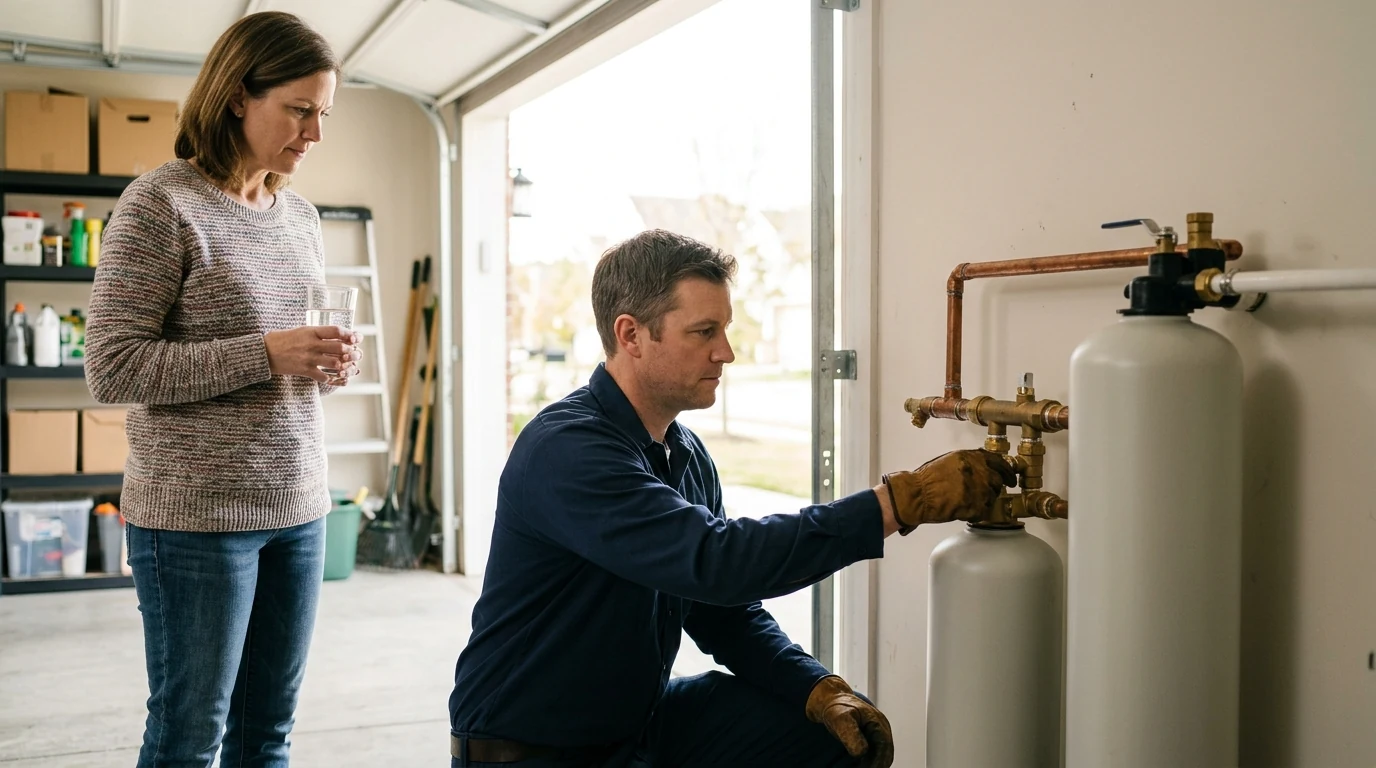
A public water system mails its annual water quality report. Two paragraphs mention PFAS. The next morning, the phone at the local water treatment dealer starts ringing, and not one of those callers set money aside for a filtration system this year.
That is the shape of PFAS demand: sudden, clustered by zip code, triggered by a letter nobody asked for. The rule behind those letters keeps moving too. EPA finalized enforceable PFAS limits in April 2024, then on May 18, 2026 proposed two significant changes to them. Dealers are now fielding regulatory questions on the exact jobs the notification created, and a wrong answer costs credibility at the worst moment.
Here is what the rule requires, what the May 2026 proposals do and do not change, who it leaves out entirely, what treatment costs at the household level, and how financing converts an unbudgeted shock cost into a monthly payment.
Updated August 10, 2026 with EPA's May 18, 2026 proposed compliance extension and rescission rules, the July 2026 comment period, and current household cost data.
> Key Takeaways
> - EPA's April 2024 PFAS rule set enforceable limits of 4.0 parts per trillion each for PFOA and PFOS, with monitoring due by 2027 and compliance by 2029 (EPA, 2024).
> - On May 18, 2026 EPA proposed an optional two-year extension to April 2031 and proposed rescinding the determinations for four other PFAS. Both are proposals, not final rules.
> - The regulation binds public water systems only. EPA estimates more than 23 million households drink from private wells that no federal rule requires anyone to test.
> - Customers see their PFAS numbers starting in 2027, years before treatment is installed, and that gap is the private-side selling window.
Add financing to your installs, talk to our team
What Does the EPA PFAS Drinking Water Rule Actually Require?
In April 2024, EPA finalized the PFAS National Primary Drinking Water Regulation. It set enforceable maximum contaminant levels of 4.0 parts per trillion each for PFOA and PFOS, 10 ppt each for PFHxS, PFNA, and HFPO-DA (the GenX chemicals), and a Hazard Index of 1 for mixtures (EPA, 2024).
A part per trillion is hard to picture, so give customers the plain version: roughly one drop in about 20 Olympic swimming pools. EPA set the health goal for PFOA and PFOS at zero, a non-enforceable target, while the enforceable limit landed at 4.0 ppt (EPA, 2024). When a customer asks whether any amount is safe, that gap between goal and standard is the honest answer.
Who the rule binds matters just as much. It applies to public water systems, not to households and not to the equipment a dealer installs. Systems have three years to complete initial monitoring, meaning by 2027, and must report those levels to customers in Consumer Confidence Reports beginning with 2027 reports. They then have five years, until 2029, to install treatment if results exceed the limits (EPA, 2024). EPA expects the regulation to prevent PFAS exposure in drinking water for approximately 100 million people.
The federal PFAS limits are specific, enforceable, and narrow in who they bind. PFOA and PFOS carry a 4.0 ppt maximum contaminant level, three other compounds carry 10 ppt, and mixtures carry a Hazard Index of 1 (EPA, 2024). Every one of those obligations lands on a public water system. None of them lands on a homeowner, a well owner, or the dealer installing equipment.
What Changed in May 2026, and What Is Still in Force?
On May 18, 2026, EPA announced two proposed rules. The first keeps the 4.0 ppt limits for PFOA and PFOS but would let eligible systems request an optional two-year extension, pushing compliance from 2029 to April 2031 (EPA, 2026). The second proposes rescinding the determinations for PFHxS, PFNA, HFPO-DA, and the Hazard Index mixtures that include PFBS (EPA, 2026).
Read the extension proposal carefully before repeating it to a customer. It does not lower the standard. It offers an exemption framework for systems that cannot meet the deadline, with conditions attached. Systems at or above 12 ppt would have to take interim actions to reduce exposure, and any system using an extension would have to tell customers annually, through public notification and Consumer Confidence Reports, why the exemption is in place and how it plans to comply by the end of it (EPA, 2026).
Both proposals went through the same window: a public hearing on July 7, 2026 and a comment period that closed July 20, 2026 (EPA, 2026). Neither is final. That is the sentence a dealer most needs to get right, because the difference between "the deadline is 2031" and "EPA has proposed moving the deadline to 2031" is the difference between a credible advisor and someone the customer stops trusting. Until a final rule says otherwise, the enforceable date remains 2029.
Why Does a Water System Deadline Create Private-Side Demand Right Now?
Because the results go public years before the treatment goes in. Systems complete initial monitoring by 2027 and report those levels to customers starting with 2027 Consumer Confidence Reports, while treatment may not be operating until 2029 or, if the extension is finalized and requested, April 2031 (EPA, 2024). Everything that happens in that gap is a household decision.
The scale of what is about to be disclosed is not small. In 2023, the U.S. Geological Survey estimated that at least 45% of the nation's tap water contains one or more PFAS compounds (USGS, 2023). EPA's fifth Unregulated Contaminant Monitoring Rule program has been collecting nationwide results since 2023, and as of January 15, 2026 the released data represented approximately 95% of the total results EPA expects to receive (EPA, 2026). Most dealer territories in the country will see at least one reported detection.
> Pattern we observe: PFAS work does not arrive evenly across a territory. It arrives in bursts. One Consumer Confidence Report or one local news segment produces a cluster of calls inside a few zip codes over about two weeks, and dealers who already have a financing program enrolled capture that cluster. Dealers who do not spend those two weeks setting one up while the calls cool off. We frame this as an observed pattern across partners, not a promise of results.
Here is the read almost nobody in this news cycle has published. The compliance extension has been covered as a rollback, which is bad news for water systems and their ratepayers. For the private side of the market, it is the opposite. Every additional year a system is not yet treating is another year in which the person deciding whether to filter is the household at the tap. A longer public timeline lengthens the private selling window rather than shortening it. That is worth building a territory plan around, not worrying about.
The mechanics of turning one of those calls into revenue are the same mechanics as any water job, just compressed. For the full sequence, see how a water test becomes a financed install.
Does the PFAS Rule Cover Private Wells?
No. The federal regulation applies to public water systems only. EPA states plainly that "the quality and safety of drinking water from private domestic wells are not regulated by the Federal Government under the Safe Drinking Water Act," and estimates that more than 23 million households rely on private wells for drinking water (EPA).
Operationally, that means no required monitoring, no maximum contaminant level to violate, no Consumer Confidence Report, and no compliance deadline. A well owner three miles from a system that just reported a detection gets no letter at all. Whatever they learn, they learn because they paid for a test.
That makes well owners the most self-directed buyer in the water category. No regulator sets their timeline and no water system fixes the problem for them, so once they decide to act they act fast, usually without a budget line for it. The dealer play is a certified laboratory test that includes PFAS specifically, because consumer test strips do not detect it, then a recommendation driven entirely by what the lab reports.
For the deeper version of this buyer profile, see well water treatment financing, and for the transaction-triggered version of the same conversation, financing after a failed well inspection.
What Does PFAS Treatment Cost at the Household Level?
EPA notes that a home filter "can cost as little as $20 or more than $1,000 (not including maintenance costs)," and identifies three technologies that reduce PFAS: granular activated carbon, reverse osmosis, and ion exchange resins (EPA, 2024). Dealer-installed systems sit at the top of that range and above it.
Scope drives the number more than technology does. An under-sink reverse osmosis unit protecting the drinking tap runs roughly $300 to $950 installed, while a whole-house point-of-entry reverse osmosis system runs $1,000 to $4,800 or more, averaging around $2,200 (Angi, 2026). A whole-house filtration system averages about $2,274 installed (Angi, 2026). Choosing between those scopes is the single biggest price lever on the quote, and it is covered in detail in our point-of-use versus whole-home water filtration comparison and in the reverse osmosis system costs and financing terms guide.
Certification is where the quote earns trust. EPA points buyers toward filters certified to NSF/ANSI 53 or NSF/ANSI 58 for PFAS reduction, and then adds a caveat most sellers skip: "the current certification standards for PFAS filters (as of April 2024) do not yet indicate that a filter will remove PFAS down to the levels EPA has now set for a drinking water standard" (EPA, 2024). Say that out loud on the sales call. It costs nothing and it separates you from every brochure the customer has already read.
Then there is the recurring cost. Media and membranes have replacement schedules, and EPA warns that "not replacing a filter by the manufacturer's recommend schedule can increase your risk of exposure to PFAS" (EPA, 2024). That is not a footnote, it is the argument for attaching a service plan to the sale. See warranty and service plan financing for how dealers package that.
Offer your customers flexible financing on essential projects
How Does Financing Convert a PFAS Detection Into a Closed Job?
A PFAS detection is an unbudgeted expense arriving on somebody else's schedule. Nobody sets aside $2,500 for a contaminant they learned about from a mailer. Urgency runs high, budget readiness runs at zero, and the space between the two is where most of these deals quietly die.
Financing changes the question being asked. "Can I pay for this right now" almost always ends in "let me think about it." "Does this monthly payment fit" gets answered in the same visit, while the lab result is still on the counter. So the payment belongs next to the system specification on the quote, presented as a standard option rather than produced later as a rescue after the customer flinches at the total. Our guide on how to talk to customers about financing covers the script.
Bundling is the other lever, and PFAS creates a natural one. A detection at the drinking tap plus hardness across the rest of the house is a legitimate two-system recommendation, not a padded ticket. One monthly payment on the combined job is what usually makes the second system reachable, raising average ticket size without pushing anyone past what the lab result supports.
Eos Loan is a direct lender, funding the loan itself rather than routing applications to third parties, with flexible terms sized to the project and funding to the dealer after install, subject to approval and eligibility. Eos Loan charges no dealer fee, so the margin on a job the regulation created stays with the dealer who did the work. Many point-of-sale programs deduct a dealer fee from the funded amount, quietly reducing net proceeds on every financed ticket, and a PFAS burst is exactly when a dealer writes the most tickets.
Speed is the last piece, because this demand is clustered rather than steady. An enrolled program captures the burst that follows a notification. An unenrolled one watches it pass. For the full program mechanics, see the water treatment dealer financing guide, and for facility managers reading the same letter about a building rather than a house, commercial water filtration financing.
How Should Dealers Talk About PFAS Without Overstating It?
Accuracy is the sales asset here. Your customer has already read the utility notice and will catch an exaggeration, and a dealer who overstates what a system removes is scheduling a warranty argument for next year. EPA's own position is that current certification standards do not yet confirm filters reduce PFAS to the new standard levels (EPA, 2024), so there is no version of this pitch where "removes all PFAS" is a defensible claim.
Four rules keep the conversation clean. Say exactly what the certification says, NSF/ANSI 53 or 58 for the specific claim tested, and nothing beyond it. Never describe a proposed rule as current law, which as of this writing means the 2031 date is a proposal and 2029 is the deadline in force. Never imply a household system makes a home "compliant" with the PFAS rule, because the rule does not bind households at all. And lead with the laboratory result rather than with fear, since a certified test is the only authority your recommendation actually needs.
Skip health claims entirely and point customers to EPA and their state drinking water program for those questions. The same discipline applies on the money side of the conversation, where what you say about terms and approvals is regulated too. See financing disclosures contractors should know for the specifics.
See how Eos Loan financing helps you close more projects
Or call +1 833-989-3737 to talk through a financing program for your business.
Frequently Asked Questions
question: "What are the EPA's PFAS limits for drinking water?",
answer: "EPA's April 2024 rule set enforceable limits of 4.0 parts per trillion each for PFOA and PFOS, 10 ppt each for PFHxS, PFNA, and HFPO-DA (GenX), and a Hazard Index of 1 for mixtures. In May 2026 EPA proposed rescinding the last four determinations while keeping the 4.0 ppt PFOA and PFOS limits."
},
{
question: "When do water systems have to comply with the PFAS rule?",
answer: "Public water systems must complete initial monitoring by 2027 and meet the maximum contaminant levels by 2029. In May 2026 EPA proposed an optional two-year extension to April 2031 for eligible systems. That extension is a proposal, not a final rule, and systems using it would have to notify customers annually."
},
{
question: "Does the EPA PFAS rule apply to private wells?",
answer: "No. The rule applies only to public water systems. EPA states private wells are not regulated federally under the Safe Drinking Water Act and estimates more than 23 million households rely on them. Well owners who want PFAS numbers must order a certified laboratory test themselves."
},
{
question: "How much does it cost to remove PFAS from home drinking water?",
answer: "EPA notes home filters range from about $20 to more than $1,000 before maintenance. Dealer-installed systems cost more: an under-sink reverse osmosis unit runs roughly $300 to $950 installed and a whole-house system averages about $2,200 to $2,274, according to Angi's 2026 cost data."
},
{
question: "Can a homeowner finance a PFAS filtration system?",
answer: "Yes. Water filtration projects can be financed through a dealer offering a point-of-sale program, spreading the cost over flexible terms instead of one payment, subject to approval and eligibility. Eos Loan is a direct lender and charges no dealer fee, so the installer keeps full margin on the job."
}
]} />
What This Means for Your Territory
The regulatory picture is simpler than the headlines suggest. EPA's enforceable PFAS limits are 4.0 ppt for PFOA and PFOS, set in April 2024. In May 2026 the agency proposed extending compliance to April 2031 and rescinding four other determinations, and both remain proposals rather than law. Monitoring results reach the public starting with 2027 reports, years before treatment is installed, and that lag is what pushes households to solve the problem themselves. The rule never touches private wells, leaving more than 23 million households to decide on their own.
Installed treatment lands in the low thousands for most homes, an amount nobody planned for and financing can turn into a monthly payment, subject to approval and eligibility. Build the program before the next notification letter goes out, not during it. And whatever the news cycle is doing that week, keep pointing back to the certified laboratory result. It is the only authority any recommendation needs.
---
This is general information, not tax advice, and not legal or health advice. Water filtration systems are generally not eligible for residential clean-energy tax credits. Consult a qualified tax professional for your situation and your state drinking water program for water quality questions. All financing is subject to approval and eligibility.
---
Sources
- EPA, "Per- and Polyfluoroalkyl Substances (PFAS)" drinking water regulation page, retrieved 2026-08-10, https://www.epa.gov/sdwa/and-polyfluoroalkyl-substances-pfas
- EPA, "Proposed PFOA and PFOS Compliance Extension Rule," retrieved 2026-08-10, https://www.epa.gov/sdwa/proposed-pfoa-and-pfos-compliance-extension-rule
- EPA, "Proposed PFAS Rescission Rule," retrieved 2026-08-10, https://www.epa.gov/sdwa/proposed-pfas-rescission-rule
- EPA, "Private Drinking Water Wells," retrieved 2026-08-10, https://www.epa.gov/privatewells
- EPA, "Reducing PFAS in Your Drinking Water With a Home Filter," retrieved 2026-08-10, https://www.epa.gov/cleanups/reducing-pfas-your-drinking-water-home-filter
- EPA, "Fifth Unregulated Contaminant Monitoring Rule (UCMR 5) Data Finder," retrieved 2026-08-10, https://www.epa.gov/dwucmr/fifth-unregulated-contaminant-monitoring-rule-data-finder
- U.S. Geological Survey, "Tap Water Study Detects PFAS 'Forever Chemicals' Across the US," 2023, retrieved 2026-08-10, https://www.usgs.gov/news/national-news-release/tap-water-study-detects-pfas-forever-chemicals-across-us
- Angi, "Reverse Osmosis Water Filter Cost," 2026, retrieved 2026-08-10, https://www.angi.com/articles/reverse-osmosis-water-filter-cost.htm
- Angi, "How Much Does a Whole House Water Filtration System Cost?", 2026, retrieved 2026-08-10, https://www.angi.com/articles/whole-house-water-filtration-system-cost.htm