
Reverse Osmosis System Financing: Costs and Loan Terms Explained
A water test comes back with PFAS or lead flagged. The fix is a reverse osmosis system, and the price the dealer quotes depends heavily on whether it treats one tap or the whole house. Cost estimates for RO systems online range anywhere from $300 to $8,000, which makes it hard for a homeowner, or the dealer pitching the job, to know what a normal price looks like or whether it can even be financed.
This guide breaks down real installed cost ranges by RO system type, explains how RO financing works through a water treatment dealer, what loan terms to expect, and how to vet a financing partner before signing anything. All financing is subject to approval and eligibility.
> Key Takeaways
> - Under-sink reverse osmosis systems cost roughly $300 to $950 installed; whole-house RO/point-of-entry systems run $1,000 to $4,800 or more, averaging around $2,200 (Angi, 2026).
> - Both scopes can be financed through a water treatment dealer with a monthly payment, subject to approval and eligibility.
> - RO reduces PFAS in drinking water by roughly 90-99% when the system is well-built and properly maintained (EPA, 2024).
> - Vetting the lender matters as much as vetting the system. A 2024 FTC action against a major water-treatment financing company led to $43.6 million in relief.
Offer your customers flexible financing on essential projects
How much does a reverse osmosis system cost installed?
Under-sink RO systems cost roughly $300 to $950 installed, while whole-house RO/point-of-entry systems run $1,000 to $4,800 or more, averaging around $2,200 (Angi, 2026). That range is wide because RO isn't one product. It's two very different scopes wearing the same name.
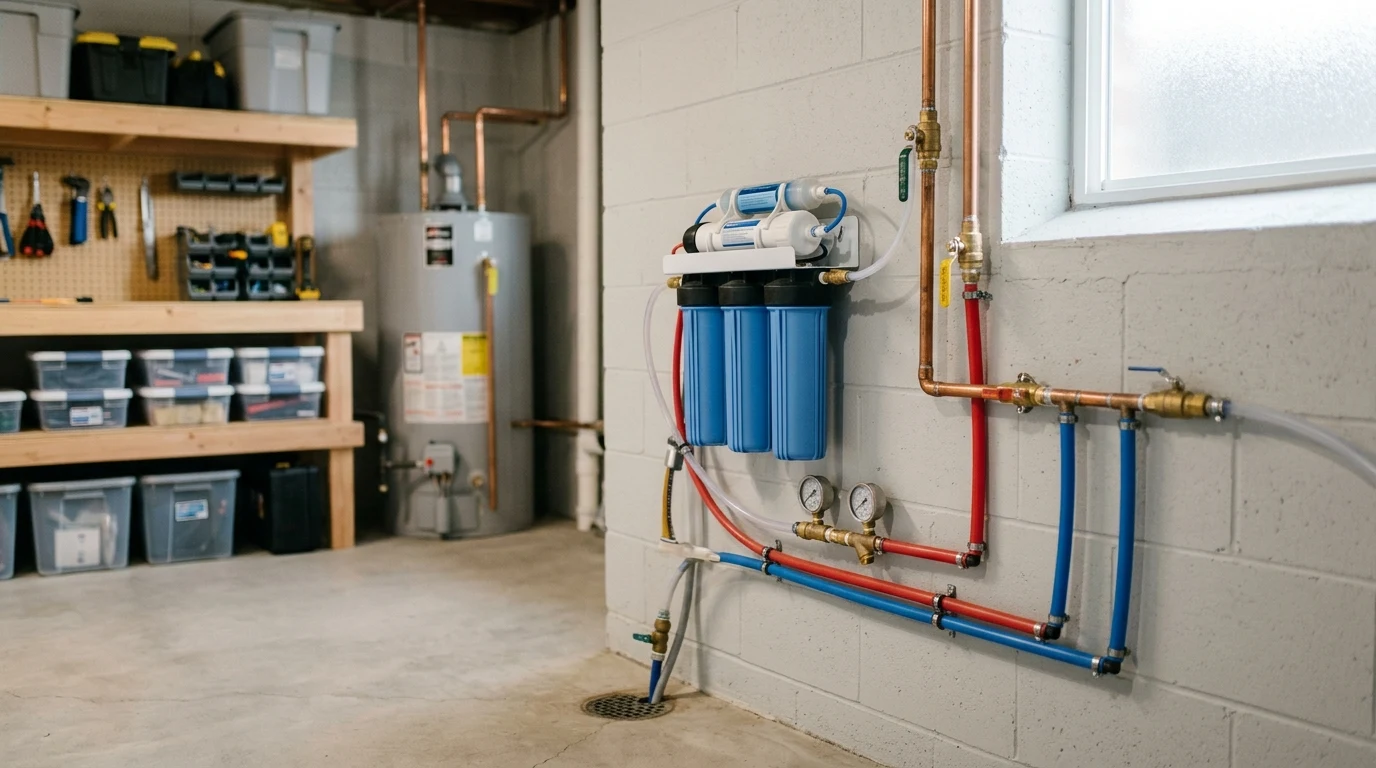
An under-sink, point-of-use unit treats water at a single tap, usually the kitchen sink. It sits under the cabinet, uses a small storage tank, and is the cheaper, faster install of the two. A whole-house, point-of-entry system treats every tap in the home. It typically adds a 150 to 500 gallon storage tank plus a booster pump, which is most of the added cost over an under-sink unit.
Within each scope, price moves with the number of filtration stages, membrane quality, tank size, and whether a UV stage is added for microbial protection. If an RO unit is added to an existing whole-home softener job rather than sold as a standalone project, it typically adds $300 to $700 on top of that job (Angi, 2026).
Some sources place large, multi-stage whole-house systems as high as $4,500 to $8,000 or more. That's worth flagging explicitly: it's the top of the range for larger or commercial-adjacent installs, not the typical residential job. Most homeowners land in the $1,000 to $4,800 band above.
Wondering how RO stacks up against other whole-home approaches? Our point-of-use vs whole-home water filtration comparison walks through the broader category beyond RO alone.
Can you finance a reverse osmosis system?
Yes. Reverse osmosis systems, both under-sink and whole-house, qualify for water treatment financing through a dealer, subject to approval and eligibility. The mechanics are simple: the customer applies at the point of sale (often right at the water test appointment), gets a monthly payment quote, and the dealer gets funded after install.
Financing matters more for whole-house RO than for an under-sink unit, given the price gap between the two scopes. A $500 add-on rarely stalls a sale. A $2,200 standalone project often does, until the customer sees a monthly number instead of a total.
Eos Loan is a direct lender, which means it funds the loan itself rather than routing the application through third-party lenders. Eos Loan also charges no dealer fee, so your margin on the job stays intact whether the customer pays cash or finances. For the full mechanics of how a water treatment dealer program works, see the water treatment dealer financing guide.
Isn't financing overkill for a $500 add-on? Not really, it costs nothing to offer, and some customers will always prefer spreading even a small amount over a few months rather than paying it up front.
Add financing to your installs, talk to our team
What loan terms are typically available for RO system financing?
RO system financing is offered with flexible terms sized to the project cost, from a small under-sink add-on to a multi-thousand-dollar whole-house install, subject to approval and eligibility. Water treatment doesn't have one confirmed term-length figure the way battery energy storage does (Eos Loan's battery program runs 6 to 240 months); term length for water is described as flexible because the cost range across the category is so wide.
That flexibility exists because a $500 line item and a $4,000 standalone project shouldn't be priced or termed the same way. Shorter terms fit smaller add-ons. Longer terms make a bigger whole-house build accessible on a monthly budget the customer can actually plan around.
One thing to watch for as a dealer or a buyer: some competitors advertise short promotional zero-interest windows, for example "6 months same-as-cash." These differ from standard installment terms and are a competitor tactic worth understanding, not something to assume every program offers or matches.
No specific rate is promised anywhere in this process, and no lender should guarantee approval before reviewing an application. If a financing pitch sounds too clean on either point, that's worth a second look.
How does system scope change the price and the financing conversation?
The jump from an under-sink RO unit to a whole-house RO/point-of-entry system is roughly 3x to 6x in installed cost, and that gap is exactly where a monthly payment changes whether the customer says yes. At $500, most people just pay it. At $2,200, the total starts a conversation about whether now is the right time.
What we see across our dealer network is that RO gets sold two ways: as a $300 to $700 add-on to a whole-home softener job, or as its own $2,000 to $4,000-plus whole-house project after a bad PFAS or lead test. The financing conversation looks completely different depending on which one it is. We frame this as an observed pattern across partners, not a guarantee of results for any one dealer.
Once the quote crosses roughly $1,000, present the monthly number, not just the total. That's the single biggest lever a dealer has over whether the customer books the job today or "thinks about it" for another month. For a broader system-type comparison beyond RO specifically, see our point-of-use vs whole-home water filtration guide.
Add financing to your installs, talk to our team
Does a reverse osmosis system actually remove contaminants like PFAS and lead?
Yes. The EPA describes RO as highly effective, reducing PFAS in drinking water by roughly 90-99% when the system is well-built and properly maintained (EPA, 2024). That effectiveness is a big part of why RO demand exists in the first place: PFAS was detectable in at least 45% of US tap water samples tested nationally (USGS, 2023).
Most reverse osmosis cost content treats RO purely as a product purchase and stops at the price tag, without ever explaining what "properly maintained" actually requires or how to confirm a system is certified to do what it claims. NSF/ANSI Standard 58 is the certification standard for RO drinking water treatment systems, with a lead pass/fail criterion of 5 ppb for certified units (NSF). Buyers should confirm NSF/ANSI 58 certification (and 53 for the carbon pre or post-filter stage) before buying, not after.
Maintenance is a recurring cost worth mentioning alongside the upfront price. RO filter cartridges typically need replacement every 6 months, and the membrane every 2 to 5 years (Angi, 2026). Skipping that maintenance is how a certified, effective system quietly stops performing at the level the certification promised.
How should you vet a financing partner before signing?
Not every water treatment financing partner is equal. In 2024, an FTC action led to $43.6 million in relief from a major water-treatment financing company over deceptive practices and Fair Credit Reporting Act violations (FTC, 2024). That's a real example of why vetting the lender matters as much as vetting the system itself.
Start with the structure. Eos Loan is a direct lender, meaning it funds the loan directly and never routes an application to third-party lenders. A marketplace or broker model adds a handoff that can slow approval and blur who actually holds the loan. Eos Loan also charges no dealer fee, stated plainly, without any dealer fee attached to Eos Loan itself.
Before signing with any financing partner, a homeowner or dealer should ask a short list of direct questions:
- Who actually funds the loan, the company in front of you or a third party behind them?
- Is there a dealer fee, and if so, who absorbs it?
- How fast is approval, and is that speed disclosed up front or only discovered later?
- What happens on early payoff? Is there a penalty?
- Angi, Reverse Osmosis Water Filter Cost (installed cost ranges, maintenance schedule), retrieved 2026-08-11, https://www.angi.com/articles/reverse-osmosis-water-filter-cost.htm
- Angi, Whole House Water Filtration System Cost (RO add-on to existing softener job), retrieved 2026-08-11, https://www.angi.com/articles/whole-house-water-filtration-system-cost.htm
- HomeGuide, Reverse Osmosis System Cost, retrieved 2026-08-11, https://homeguide.com/costs/reverse-osmosis-system-cost
- US Environmental Protection Agency, Reducing PFAS in Your Drinking Water at Home (90-99% PFAS reduction with RO), retrieved 2026-08-11, https://www.epa.gov/cleanups/reducing-pfas-your-drinking-water-home-filter
- US Geological Survey, Tap Water Study Detects PFAS "Forever Chemicals" Across the US (at least 45% of samples with detectable PFAS), retrieved 2026-08-11, https://www.usgs.gov/news/national-news-release/tap-water-study-detects-pfas-forever-chemicals-across-us
- NSF, NSF/ANSI 58: Reverse Osmosis Drinking Water Treatment Systems (5 ppb lead pass/fail criterion), retrieved 2026-08-11, https://www.nsf.org/knowledge-library/nsf-ansi-58-reverse-osmosis-drinking-water-treatment-systems
- Fortune Business Insights, US Water Purifier Market (RO ~44% share), retrieved 2026-08-11, https://www.fortunebusinessinsights.com/us-water-purifier-market-104696
- Custom Market Insights, US Water Filtration Market ($6.89B in 2024, projected $11.80B by 2033), retrieved 2026-08-11, https://www.custommarketinsights.com/report/us-water-filtration-market/
- Federal Trade Commission, FTC Action Leads to $43.6 Million in Financial Relief From Water Treatment Financing Company (Aqua Finance), retrieved 2026-08-11, https://www.ftc.gov/news-events/news/press-releases/2024/05/ftc-action-leads-436-million-financial-relief-water-treatment-financing-company-aqua-finance
Those four questions take two minutes to ask and can save months of headaches on the back end. A direct lender with a clean fee structure will answer all four without hesitation.
How should installers present RO financing at the point of sale?
Lead with the monthly payment, not the total, once the RO quote crosses roughly $1,000, right at the water test appointment when the contaminant result is still fresh. That's the moment motivation peaks, and it's also the moment most dealers default to reading off a total price instead.
Frame the conversation around the specific test result, PFAS, lead, or high TDS, that justified recommending RO in the first place. An under-sink unit pitched as an easy add-on to an existing softener job rarely needs a hard sell. A whole-house system pitched as its own financed project needs the payment number front and center, not buried after the customer has already started to hesitate.
Across our dealer network, the RO deals that close fastest are the ones where the payment is shown at the same appointment as the test result, not mailed in a follow-up quote a week later. Waiting gives the customer time to shop the price against a big-box retailer's under-sink kit instead of comparing the full installed and certified job. For more on structuring that pitch, see the contractor's guide to offering customer financing.
See how Eos Loan financing helps you close more projects
Or call +1 833-989-3737 to talk through a financing program for your business.
Frequently Asked Questions
question: "How much does a reverse osmosis system cost installed?",
answer: "Under-sink units run about $300 to $950 installed; whole-house systems run $1,000 to $4,800 or more, averaging around $2,200 (Angi, 2026). Larger multi-stage whole-house builds can reach $8,000 at the top of the range."
},
{
question: "Can you finance a reverse osmosis system?",
answer: "Yes, through a water treatment dealer that offers a financing program. Both under-sink and whole-house RO systems qualify, subject to approval and eligibility."
},
{
question: "What loan terms are available for RO system financing?",
answer: "Terms are flexible and scale with project cost, from a small under-sink add-on to a multi-thousand-dollar whole-house install. No specific rate or term length is guaranteed, and financing is always subject to approval and eligibility."
},
{
question: "Does reverse osmosis actually remove PFAS and lead?",
answer: "The EPA describes RO as highly effective, reducing PFAS by roughly 90-99% when properly maintained (EPA, 2024). Look for NSF/ANSI Standard 58 certification, which includes a 5 ppb lead pass/fail criterion for certified units."
},
{
question: "Is a whole-house RO system worth the extra cost over under-sink?",
answer: "It depends on the water test. A single-tap PFAS or taste issue is often solved by an under-sink unit. A whole-house hardness, iron, or broad contamination issue points toward a larger point-of-entry system, and that's also where financing tends to matter most given the 3x to 6x price jump."
}
]} />
The bottom line on reverse osmosis financing
Reverse osmosis pricing isn't one number, it's two scopes with very different budgets attached. Under-sink RO runs $300 to $950 installed. Whole-house RO/point-of-entry systems run $1,000 to $4,800 or more, averaging around $2,200. Both qualify for financing through a water treatment dealer, subject to approval and eligibility, and the system itself holds up: RO reduces PFAS by 90-99% when properly maintained and certified to NSF/ANSI 58.
Vetting the financing partner matters as much as vetting the system. A direct lender with no dealer fee and fast funding protects both the dealer's cash flow and the customer's trust. For the full mechanics of a water treatment dealer program beyond RO alone, see the water treatment dealer financing guide, and for how RO financing fits alongside battery storage and EV charger programs, see financing every essential project.
There is no self-serve signup. Eos Loan works directly with water treatment dealers to build a program around their business.
---
Sources
About the author: Eduardo Donadi is the CEO of Eos Loan, the fintech built to finance essential projects (battery energy storage, EV chargers, and water filtration) for installers, contractors, and resellers across the United States.