

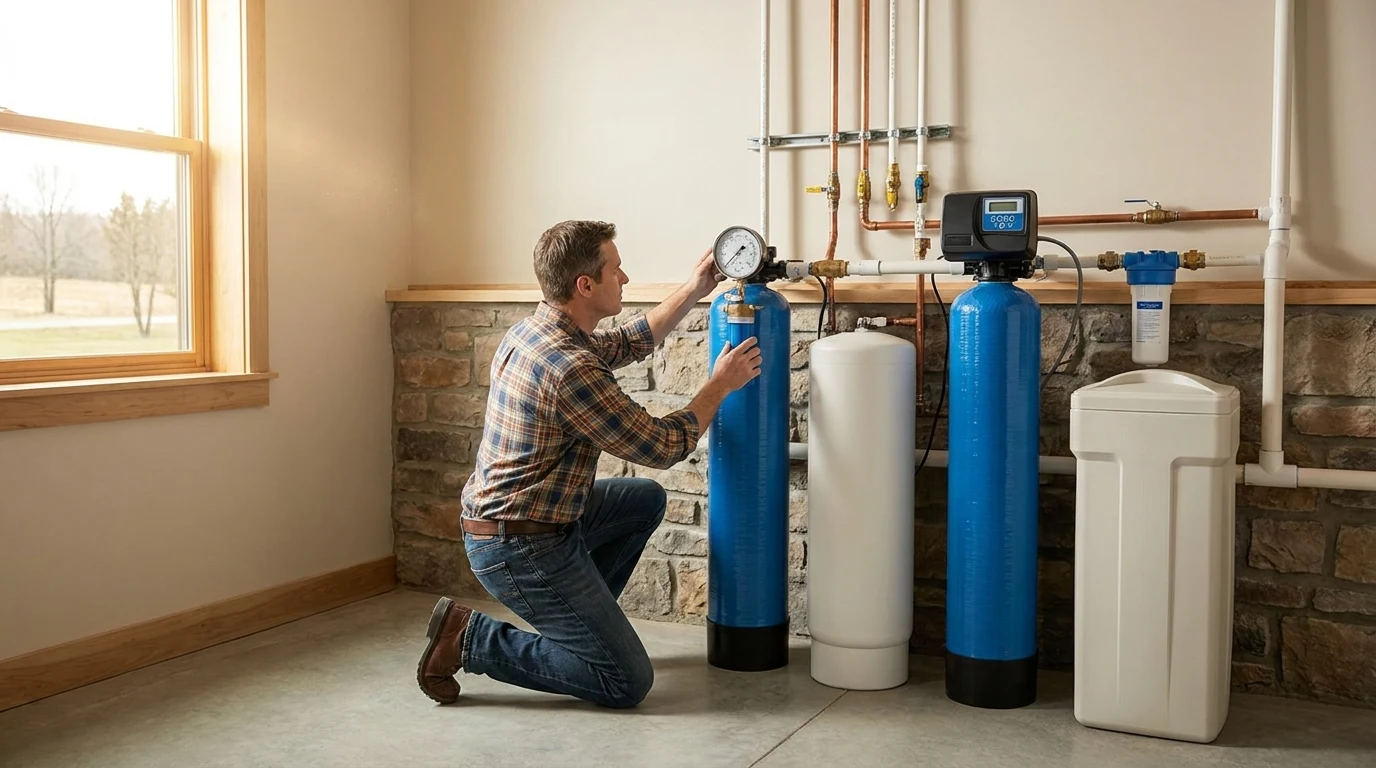
A well test just came back showing iron staining, a sulfur smell, or a coliform hit. Over 23 million US households, about 15% of the population, get their drinking water from a private well instead of a municipal system (EPA, Private Drinking Water Wells, 2026). Private wells aren't regulated the way city water is, so the testing, the treatment decision, and the bill all land on the homeowner alone.
This guide covers what a well water treatment system typically costs, why well water needs a different equipment stack than city water, and how rural homeowners, plus the installers who serve them, can finance the fix instead of paying the full cost in cash.
> Key Takeaways
> - Over 23 million US households rely on private wells for drinking water, and private wells aren't covered by the Safe Drinking Water Act (EPA, 2026).
> - About 1 in 5 sampled private wells carry at least one contaminant above a health-based level (CDC, 2026).
> - Well water treatment systems typically run $1,200 to $3,600 installed, averaging around $2,300, though multi-stage builds can reach $10,000+ (HomeAdvisor, 2025).
> - Dealer financing through a direct lender can fund a well water job within days, faster than most government well water grant or loan cycles.
See how Eos Loan financing helps you close more projects
What Is Well Water Treatment Financing?
Well water treatment financing is a payment plan that lets a rural homeowner pay monthly for a system like a whole-house iron filter, softener, or UV disinfection unit, while the dealer who installs it still gets paid promptly. It's the same underlying mechanism used across other water treatment dealer financing, just sized for well-specific equipment categories rather than municipal-water jobs.
Well water treatment system installs average $2,300, with a typical range of $1,200 to $3,600 (HomeAdvisor, 2025). Both residential and commercial well systems qualify for financing, subject to approval and eligibility. The homeowner applies through the installer, a direct lender funds the loan, and the homeowner repays it over a flexible term instead of writing one large check the day the work finishes.
Isn't that just water treatment financing with a different label? Mostly, yes, but the equipment mix differs enough that it's worth its own guide. For the full mechanics of dealer fees and funding across the water category, see our water treatment dealer financing guide.
Why Do Rural Homeowners Need to Treat Well Water?
Private wells aren't covered by the federal Safe Drinking Water Act, and about 1 in 5 sampled wells contain at least one contaminant at a level that could affect health, so testing and treatment fall entirely on the homeowner (CDC, 2026). City water customers get municipal testing and chlorination by default. Well owners get neither.
The common well-specific issues are iron, sulfur (the rotten-egg smell), hardness, coliform bacteria, nitrates, and in some regions, arsenic. None of these get caught or corrected by a municipal treatment plant, because there isn't one upstream of a private well. That's the core reason a well water system usually isn't a single filter; it's a stack of equipment addressing several issues a city water customer never has to think about.
The EPA recommends annual testing for total coliform bacteria, nitrates, total dissolved solids, and pH, plus a more comprehensive test every 3 to 5 years for heavy metals, pesticides, VOCs, and radon (CDC Guidelines for Testing Well Water, 2026). Two federal actions are raising the stakes further. The EPA lowered the lead action level from 15 to 10 parts per billion, with compliance required by November 1, 2027 (EPA, 2024), and set enforceable PFAS limits with an updated 2025 compliance timeline (EPA PFAS Compliance, 2025). Neither rule applies automatically to a private well, but both are pushing more well owners to test and treat proactively.
How Much Does a Well Water Treatment System Cost?
Costs range from about $200 for a basic sediment filter to $10,000+ for a multi-stage combination system, with iron and sulfur removal, softeners, and combination builds landing in between (HomeAdvisor, 2025). What drives the price up is water chemistry (how much iron, sulfur, or hardness is present), home size, and how accessible the install location is.
Multi-stage systems that address hardness, iron, odor, and bacteria together run $2,500 to $10,000+ (HomeAdvisor, 2025). That's where financing does the most work: a homeowner staring at a five-figure combination build is far more likely to move forward when the number on the page is a monthly payment instead of a lump sum.
Add financing to your installs, talk to our team
What Systems Do Well Water Homes Typically Need?
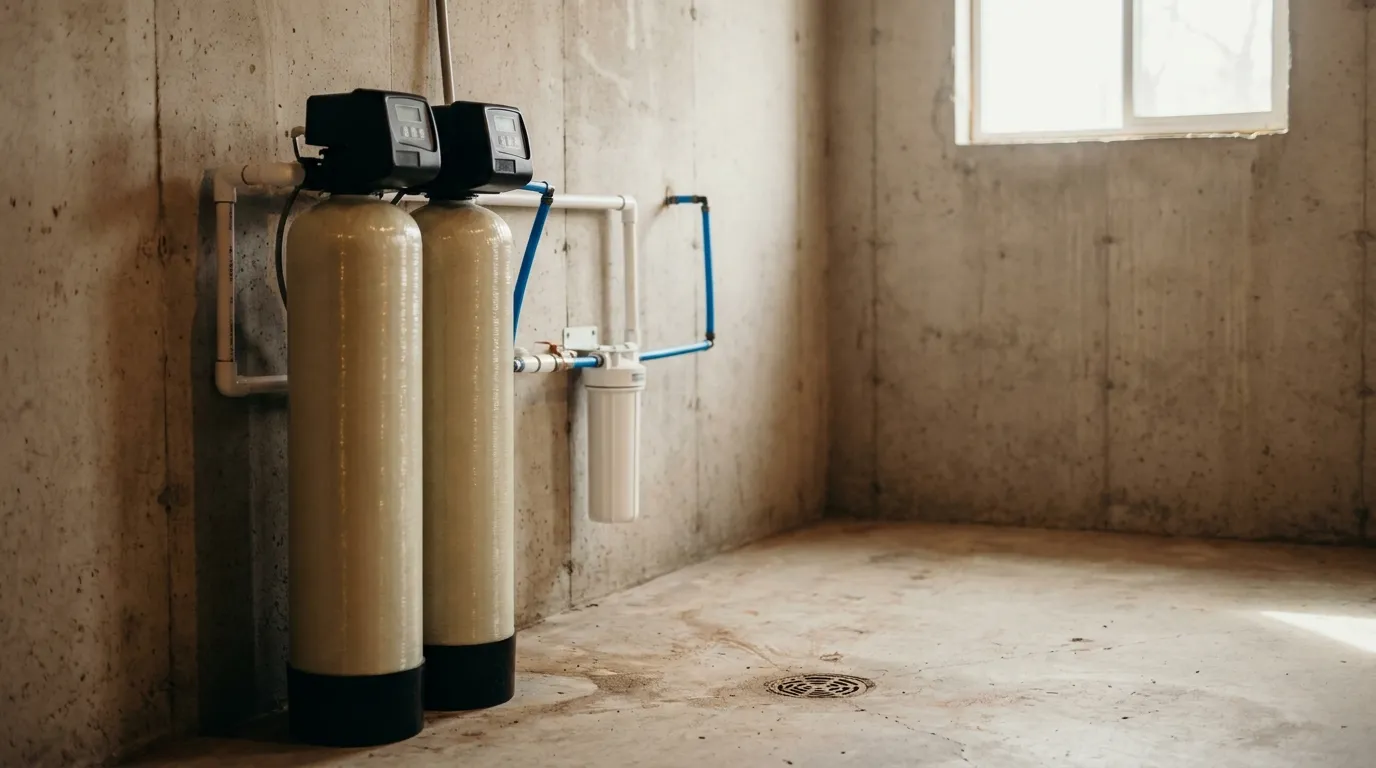
Well water treatment usually stacks multiple system types together, sediment pre-filter, iron/sulfur filter, softener, and UV disinfection, because a well can carry several issues at once that a single municipal chlorination step already handles for city water customers. A city water bill covers disinfection and basic quality testing. A well owner has to buy each piece separately, or bundle them into one job.
Installers who work well-water territory tell us the pattern repeats job after job: a homeowner calls after a failed test, and the scope almost never stops at one filter. A sediment pre-filter protects everything downstream. An iron/sulfur filter comes next, since untreated iron and sulfur will foul a softener's resin bed fast. The softener itself handles hardness. UV disinfection closes the loop on bacteria, since a well isn't chlorinated the way a municipal system is. What starts as "I need an iron filter" often ends as a four-part system, and that's exactly the kind of ticket size that makes a monthly payment plan the difference between a signed job and a stalled one.
For more detail on system types and how the bundling math works, see our whole-home water softener financing guide. If the property also has taste or odor concerns localized to one tap, our point-of-use vs whole-home filtration comparison walks through the coverage differences.
How Does Financing a Well Water System Actually Work?
The homeowner applies through the installer, a direct lender funds the loan, the installer gets paid after the job is done, and the homeowner repays over a flexible term. That's the same mechanism used across other essential-project financing categories, not a well-specific workaround.
Approval is always subject to eligibility, and no responsible lender promises a guaranteed yes. Water treatment terms, well or municipal, are described as flexible rather than fixed to one length, since the right term depends on the system cost and the customer's budget. A direct lender like Eos Loan charges no dealer fee, which keeps the installer's margin math clean from the first quote.
> Our finding: What we hear from installers who serve rural, well-water-heavy territory is that presenting the payment beside the cash price at the moment they hand over the water test report, not after, keeps far fewer deals from stalling. A homeowner reacting to bad test results is deciding on urgency, and a monthly number makes that decision easier to say yes to.
Offer your customers flexible financing on essential projects
USDA Well Water Programs vs. Dealer Financing: What's the Difference?
USDA's Rural Decentralized Water Systems Grant Program and Water & Waste Disposal Loan & Grant Program exist for rural well and wastewater systems, but they run through nonprofit administrators, defined application windows, and revolving-fund caps of up to $200,000 per borrower, while dealer financing through a direct lender can fund a job within days of approval (USDA Rural Development, 2026).
Most online content about "well water financing" defaults straight to government grant programs, which misses the point for a homeowner with a failed test today. USDA's revolving fund program caps loans at $200,000 per borrower and is administered through qualified nonprofits, not a same-week homeowner application portal (USDA Rural Development, 2026). That structure fits a community-scale or nonprofit-administered project well. It doesn't fit a household that needs an iron filter installed this month.
So which path is right? A USDA program can make sense when a community water system or a nonprofit-administered project is involved and the timeline allows for an application cycle. Dealer financing is the faster fit when an individual household needs a system now. This is general information, not financial or legal advice; eligibility for either path depends on the homeowner's specific situation.
How Should Installers Pitch Financing to Well-Water Customers?
Installers who serve well-water territory should present the monthly payment beside the cash price at the same time they present the water test results, since a homeowner reacting to a failed test is deciding on urgency, not just price. Waiting until after the total is quoted gives sticker shock a head start.
Bundling sediment, iron/sulfur, softener, and UV under one monthly payment raises ticket size without a harder pitch, the same bundling logic that applies to whole-home softener jobs. Positioning Eos Loan as a direct lender with no dealer fee keeps that math clean: the installer isn't absorbing a hidden cost to make the bundle work.

Framing this as closing more well-water jobs and raising average ticket size, not just a consumer convenience, is what makes the pitch land with a business owner. For the full playbook across project types, see our contractor guide to offering customer financing.
Become an Eos Loan financing partner
Or call +1 833-989-3737 to talk through a financing program for your business.
Frequently Asked Questions
Can you finance a well water treatment system?
Yes. Well water systems, including iron/sulfur filters, softeners, and UV disinfection units, qualify for the same dealer financing programs used for municipal water treatment jobs, subject to approval and eligibility. Eos Loan is a direct lender, not a broker or marketplace, and charges no dealer fee.
How much does a well water treatment system cost?
Typically $1,200 to $3,600 installed, averaging around $2,300, though multi-stage systems addressing several issues at once can run $2,500 to $10,000+ (HomeAdvisor, 2025). Cost scales with water chemistry, home size, and install complexity.
How often should I test my well water?
The EPA and CDC recommend annual testing for coliform bacteria, nitrates, total dissolved solids, and pH, plus a more thorough test every 3 to 5 years for heavy metals, pesticides, VOCs, and radon (CDC, 2026). Private wells aren't tested by any municipal authority, so this falls entirely on the homeowner.
Is well water treatment eligible for a tax credit?
No. Water treatment systems generally aren't eligible for clean-energy tax credits. This is general information, not tax advice; consult a qualified tax professional for guidance specific to your situation.
What's the difference between a USDA well water grant and dealer financing?
USDA programs run through nonprofit administrators with defined application windows and loan caps of up to $200,000 per borrower. Dealer financing through a direct lender can be approved and funded on the installer's timeline, often within days, subject to approval and eligibility.
The Bottom Line
Private wells carry a contamination risk that municipal water customers never have to think about, and roughly 1 in 5 sampled wells show it (CDC, 2026). Systems commonly run $1,200 to $10,000+ depending on how much needs fixing, and financing turns that range into a monthly payment a rural household can actually say yes to. Government well water programs exist, but they move on a grant cycle; dealer financing moves on the installer's timeline.
If you serve well-water territory and want to add financing to your installs, talk to our team about a program built for essential projects like these.
Or call +1 833-989-3737 to talk through a financing program for your business.
---
Sources
- US Environmental Protection Agency, Private Drinking Water Wells (over 23 million US households, about 15% of the population, rely on private wells), retrieved 2026-07-10, https://www.epa.gov/privatewells
- Centers for Disease Control and Prevention, Private Drinking Water and Public Health (private wells not covered by the Safe Drinking Water Act; about 1 in 5 sampled wells above a health-based contaminant level), retrieved 2026-07-10, https://www.cdc.gov/environmental-health-services/php/water/private-water-public-health.html
- Centers for Disease Control and Prevention, Guidelines for Testing Well Water (annual and 3-5 year testing recommendations), retrieved 2026-07-10, https://www.cdc.gov/drinking-water/safety/guidelines-for-testing-well-water.html
- HomeAdvisor, Well Water Treatment Systems Cost (average $2,300, range $1,200-$3,600; cost tiers by system type), retrieved 2026-07-10, https://www.homeadvisor.com/cost/plumbing/well-water-treatment-systems-cost/
- US Environmental Protection Agency, Lead and Copper Rule Improvements (lead action level lowered from 15 to 10 ppb, compliance by November 1, 2027), retrieved 2026-07-10, https://www.epa.gov/ground-water-and-drinking-water/lead-and-copper-rule-improvements
- US Environmental Protection Agency, PFOA and PFOS Compliance (2024 enforceable MCLs, 2025 updated compliance timeline), retrieved 2026-07-10, https://www.epa.gov/sdwa/proposed-pfoa-and-pfos-compliance-extension-rule
- USDA Rural Development, Rural Decentralized Water Systems Grant Program, retrieved 2026-07-10, https://www.rd.usda.gov/programs-services/water-environmental-programs/rural-decentralized-water-systems-grant-program
- USDA Rural Development, Revolving Funds Financing for Water and Wastewater Projects ($200,000 per-borrower cap, nonprofit-administered), retrieved 2026-07-10, https://www.rd.usda.gov/programs-services/water-environmental-programs/revolving-funds-financing-water-and-wastewater-projects
About the author: Eduardo Donadi is the CEO of Eos Loan, the fintech built to finance essential projects (battery energy storage, EV chargers, and water filtration) for installers, contractors, and resellers across the United States.