

Water Filtration Financing After a Failed Well Inspection
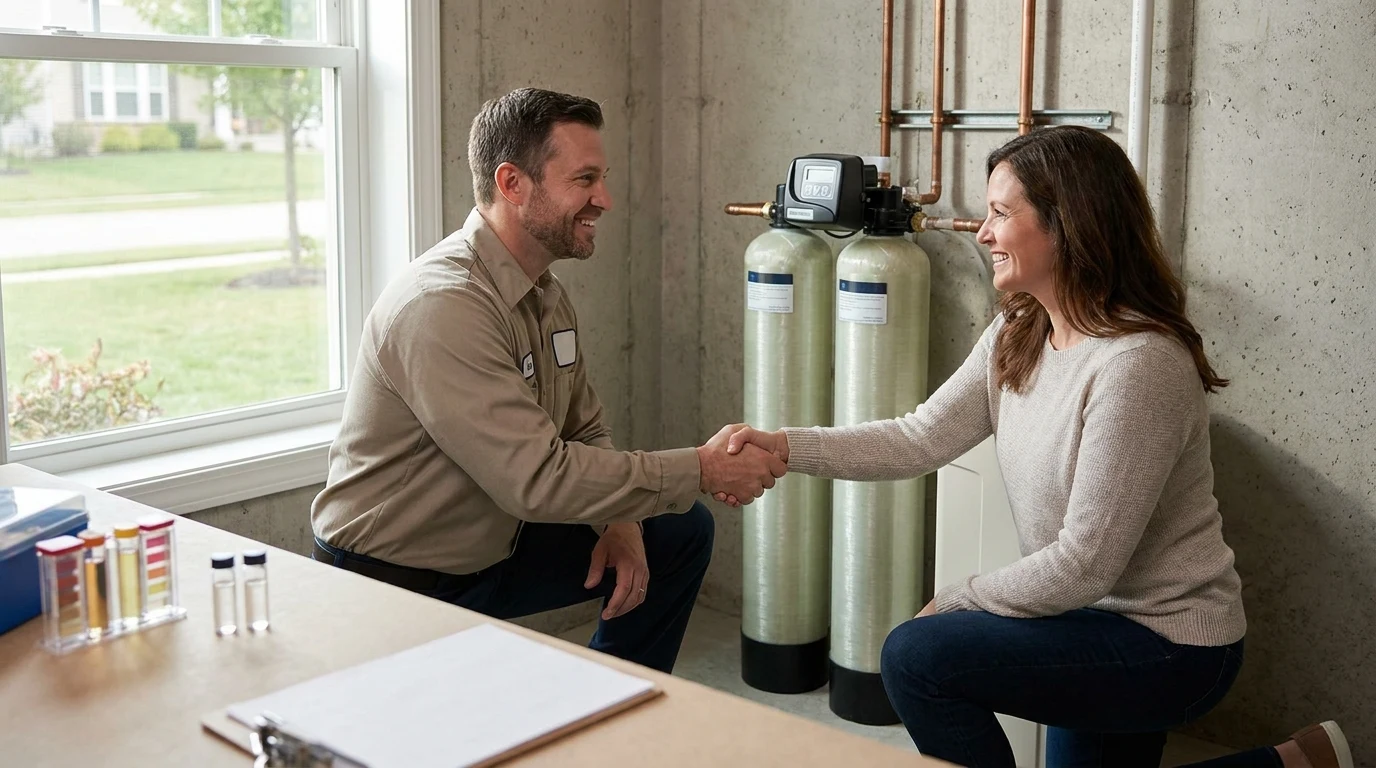
A well water test just came back failing, coliform bacteria, nitrates, or lead over the FHA, VA, or USDA limit, and there's a closing date circled on the calendar. Now someone has to treat the well, document it, and pass a retest before the loan can fund. Nobody wants to write a $2,000-$10,000 check days before a sale that isn't guaranteed to close.
This guide covers why wells fail inspection, what it typically costs to fix, how fast the clock actually moves, and who usually pays. It also covers how financing water filtration after failed well inspection results keeps the deal on schedule instead of derailing it.
> Key Takeaways
> - FHA, VA, and USDA loans require proof the well water is safe before the loan closes, per HUD Handbook 4000.1 (HUD, 2026).
> - About 1 in 5 sampled private wells carry at least one contaminant above a health-based level (CDC, 2026).
> - Fixes range from a $150-$400 shock chlorination to a $1,200-$3,600+ treatment system installed (HomeAdvisor, 2025).
> - Financing through a direct lender can fund the install fast enough to hit the closing date, subject to approval and eligibility.
Financing options for real estate closing timelines
What Happens When a Home Fails Its Well Water Test Before Closing?
FHA, VA, and USDA loans require the private well's water to be shown safe and potable before the loan can close, per HUD Handbook 4000.1 (HUD, 2026). A failing result doesn't kill the sale automatically. It pauses the loan until the well is treated and a passing retest is documented in the file.
Not every closing carries this requirement. FHA, VA, and USDA loans trigger mandatory well water testing whenever the property is served by a private well. Conventional loans and cash purchases generally don't, though a buyer's inspection contingency or a cautious lender can still make testing part of the deal. In practice, that means two buyers on the same street can face very different requirements depending on how the purchase is financed. "Failing" simply means one result on the panel exceeds a health-based limit: coliform bacteria, nitrates, nitrites, or lead. That's a procedural pause, however, not a dead deal. Most failures are fixable well within a typical contract timeline, and it's the paperwork trail (test, treatment, retest) that actually satisfies the underwriter, not the initial failing result itself.
Isn't the buyer just stuck waiting? Not exactly. Once the seller or buyer arranges treatment and a lab confirms a passing retest, the closing team resumes underwriting on the same loan file, no new application required. The delay is measured in days, not a restart of the mortgage process.
Why Do Wells Fail FHA, VA, or USDA Water Tests?
The standard panel tests for total coliform bacteria, nitrates, nitrites, and lead. Any single result above the health-based limit fails the test. Typically, coliform bacteria is the most common failure and usually the easiest to fix; nitrates, arsenic, or persistent lead, on the other hand, point to a harder, more structural problem.
Over 23 million US households, about 15% of the population, get their drinking water from a private well instead of a municipal system. Private wells aren't covered by the Safe Drinking Water Act, so nothing forces regular testing outside a real estate transaction (EPA, Private Drinking Water Wells, 2026). As a result, contamination can sit undetected for years. Roughly 1 in 5 sampled private wells carry at least one contaminant above a health-based level, most often bacteria, nitrates, or metals (CDC, 2026). Common causes include surface water intrusion into an aging well casing, agricultural runoff feeding nitrate contamination, and old plumbing leaching lead into the line. In other words, the closing-triggered test is often the first real look anyone has taken at that water in years.
This isn't the same as a routine annual well check. Instead, a closing-triggered test has a lender, an underwriter, and a contract deadline attached to the result, which changes how urgently the fix has to move. For the full breakdown of causes and testing frequency outside a real estate transaction, see our well water treatment financing guide.
How Much Does It Cost to Fix a Failed Well Water Test?
A bacteria-only failure often clears with shock chlorination, typically $150-$400 done professionally (Penn State Extension, Shock Chlorination of Wells and Springs). A nitrate, hardness, or multi-contaminant failure usually needs equipment instead, running $1,200-$3,600 installed on average (HomeAdvisor, 2025).
A whole-home softener averages $2,273 installed, a useful comparison point when hardness is part of the failure (Angi, 2026). What drives the number up is severity (how far over the limit the result was), home size, and how accessible the wellhead and plumbing runs are. Meanwhile, the retest requirement adds days on top of the dollars. The fix isn't officially done until the lab confirms it, and the closing file needs that documentation either way.
Add financing to your installs, talk to our team
How Fast Can a Failed Well Water Test Be Fixed Before Closing?
Bacteria failures typically need a 72-hour wait after chlorination before a valid retest, and some labs recommend waiting 3-7 days for a more reliable result (Penn State Extension). Equipment installs add their own lead time on top of that, since the system has to be in and running before the retest window even opens.
Contracts typically close in about 30 days once under contract, but 13% of contracts had delayed settlements in the prior three months (NAR REALTORS Confidence Index, 2026). Rushing the retest before the wait period ends is a common mistake; it can produce a false negative and add a second full cycle to the timeline. Realistically, the sequence is treat, wait, retest, document, then the closing team reviews the results, and that full loop needs to fit inside whatever's left of the contract window. For the step-by-step version of this process on the installer side, see our step-by-step water treatment financing workflow.
Who Pays for Water Treatment When a Home Sale Fails Inspection?
There's no single rule; instead, who pays gets negotiated in the purchase contract. The three common outcomes are the seller paying for the fix before closing, the buyer accepting a closing-cost credit and handling it after closing, or the two sides splitting the cost.
Seller-pays keeps the closing date intact, but it means the seller pays out of pocket for a system on a house they may not fully own for another few weeks. A credit-at-closing arrangement, on the other hand, shifts the bill to the buyer, who then owns both the fix and the timeline for getting it done. Sellers, understandably, often resist writing a large check days before a sale that isn't guaranteed to close, especially when the fix runs into four figures. That's precisely the moment financing water filtration after failed well inspection results tends to make the most sense: it removes the out-of-pocket decision from the negotiation entirely.

In our work funding these jobs at Eos Loan, we see a familiar pattern play out again and again. The call comes from a listing agent or the inspector directly. The seller wants a same-day quote. The real question isn't "what system do I need," it's "how do I pay for this without draining my closing proceeds before I even have them." We've found that's a cash-flow problem, not a treatment problem, and it's the one most home-inspection content skips past entirely. In our experience, the installer who can answer the payment question on the same call, rather than promising to follow up the next day, is usually the one who keeps the job. The seller who's told to "wait and see" tends to call two or three more contractors before deciding. For the installer side of pricing a larger job instead of losing it to sticker shock, see our guide on financing larger jobs instead of losing them to price.
How Does Financing Keep the Closing on Schedule?
A direct lender can approve and fund a water treatment install fast enough to fit inside a real estate closing window. As a result, the seller or buyer doesn't have to liquidate cash or delay the sale to cover a $1,200-$10,000 fix, subject to approval and eligibility.
Speed matters more here than in a routine remodel because there's a contractual deadline attached, not just a homeowner's preference. For example, point-of-sale contractor financing often returns a same-day pre-approval decision, with funds typically arriving within 1-2 days of approval (build-folio.com, 2026). That's a general home-improvement financing figure, not one measured specifically for real-estate-triggered water jobs. Still, it's the closest available benchmark for how fast a direct lender can move once an application is submitted.
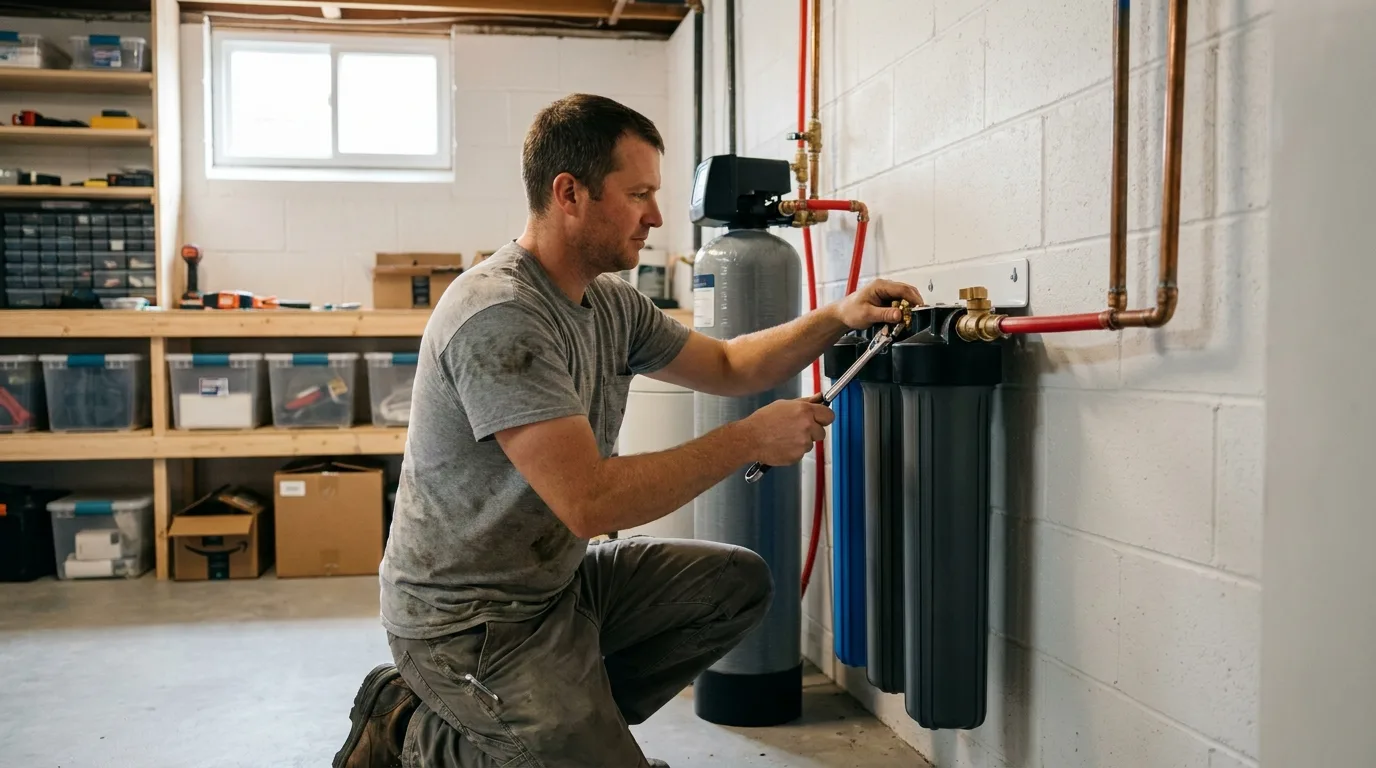
We've read a lot of the content published on failed well tests, and almost none of it addresses the financing gap. Most articles explain what caused the failure and what fixes it, which is useful but incomplete. What's missing is the money question: the seller doesn't want to spend thousands out of pocket on a sale that might not close, and the buyer usually can't roll a pre-closing treatment fix into the mortgage itself. That's the gap we built Eos Loan to close: a direct lender that can approve and fund the install separately, on the installer's timeline rather than the underwriter's. In our experience, that separation, financing that moves on its own schedule instead of the mortgage's, is often the difference between a deal that stalls at the eleventh hour and one that closes on time.
Eos Loan is a direct lender, not a marketplace or broker, and charges no dealer fee, which keeps the installer's quote clean when time is tight and margins matter. Financing terms are flexible rather than fixed to one length, sized to the job and the customer's situation.
Offer your customers flexible financing on essential projects
Or call +1 833-989-3737 to talk through a financing program for your business.
What Should Installers Know About Real-Estate-Triggered Water Filtration Jobs?
These jobs come with a hard deadline the customer didn't choose, so the installer who can quote, finance, and schedule in the same call wins the job over one who requires a multi-day back-and-forth.
The trigger is usually easy to spot: an inspector's report, a referral from a listing agent, or a request routed through the escrow company. Offering financing on the first call matters more here than on a routine sale, because a seller or buyer under a closing deadline doesn't have days to shop financing options. Documentation matters too. Since the closing file needs the retest results and proof of install, keeping that paperwork organized and ready to hand off saves a second round of calls later.
Offering financing at the right moment can improve contractor close rates by 12% (ACCA HVAC Blog), and a deadline-driven job is exactly the moment where that lift shows up most. For more on how timing the financing offer affects close rates generally, see our guide on financing and contractor close rates. Water filtration financing details specific to this product category are also covered on our water filtration solutions page.
Become an Eos Loan financing partner
Frequently Asked Questions
What happens if a home fails a well water test before closing?
The loan, if it's FHA, VA, or USDA, pauses until the well is treated and a passing retest is documented in the file (HUD, 2026). It delays the sale but doesn't automatically kill it; underwriting resumes on the same file once the retest passes.
Can you finance water treatment during a home sale?
Yes. Financing through a direct lender can fund a treatment system fast enough to fit inside a typical closing timeline, subject to approval and eligibility. Eos Loan is a direct lender, not a broker or marketplace, and charges no dealer fee.
How long does it take to fix a failed well water test?
A bacteria-only failure often clears in about a week: treat, wait 72 hours to 7 days, then retest (Penn State Extension). Equipment-based fixes for nitrates, hardness, or multiple contaminants take longer, depending on install lead time.
Do FHA and VA loans require well water testing?
Yes. Per HUD Handbook 4000.1, private wells must be tested and shown to meet local health authority standards, or EPA standards where none exist, before an FHA loan closes (HUD, 2026). VA loans follow a comparable water potability requirement.
Who pays for well water treatment when a home sale fails inspection?
It's negotiated between buyer and seller in the purchase contract. The two common outcomes are a seller-funded fix before closing or a buyer credit applied at closing; there's no automatic default rule.
The Bottom Line
FHA, VA, and USDA loans require potable well water before closing, and about 1 in 5 sampled wells fail that bar (CDC, 2026). Fixes range from a $150-$400 chlorination job to a $1,200-$3,600+ system. The timeline is tight but workable, and who pays gets settled in the contract, not by default. In the end, installers who can quote and finance a real-estate-triggered water treatment job on the same call keep more of these time-pressured deals from falling through, instead of stalling on a payment question nobody had time to answer.
See how Eos Loan financing helps you close more projects
---
Sources
- US Department of Housing and Urban Development, Handbook 4000.1 (private well water potability required before FHA loan closing), retrieved 2026-08-15, https://www.hud.gov/program_offices/housing/sfh/handbook_4000-1
- Centers for Disease Control and Prevention, Private Drinking Water and Public Health (about 1 in 5 sampled wells above a health-based contaminant level), retrieved 2026-08-15, https://www.cdc.gov/environmental-health-services/php/water/private-water-public-health.html
- US Environmental Protection Agency, Private Drinking Water Wells (over 23 million US households, about 15% of the population, rely on private wells), retrieved 2026-08-15, https://www.epa.gov/privatewells
- HomeAdvisor, Well Water Treatment Systems Cost ($1,200-$3,600 installed average), retrieved 2026-08-15, https://www.homeadvisor.com/cost/plumbing/well-water-treatment-systems-cost/
- Penn State Extension, Shock Chlorination of Wells and Springs ($150-$400 professional cost; 72-hour to 7-day retest wait), retrieved 2026-08-15, https://extension.psu.edu/shock-chlorination-of-wells-and-springs
- National Association of REALTORS, REALTORS Confidence Index (about 30-day contract-to-close window; 13% of contracts had delayed settlements), retrieved 2026-08-15, https://www.nar.realtor/research-and-statistics/research-reports/realtors-confidence-index
- Angi, Whole-House Water Filtration System Cost (whole-home softener averages $2,273 installed), retrieved 2026-08-15, https://www.angi.com/articles/whole-house-water-filtration-system-cost.htm
- build-folio.com, Home Improvement Loan Approval Time (same-day pre-approval common, funds within 1-2 days), retrieved 2026-08-15, https://build-folio.com/financing/home-improvement-loan-approval-time/
- ACCA HVAC Blog, Financing Strategies That Boost Closing Ratios and Average Job Sizes (12% close-rate lift), retrieved 2026-08-15, https://hvac-blog.acca.org/financing-strategies-that-boost-closing-ratios-and-average-job-sizes/
About the author: Eduardo Donadi is the CEO of Eos Loan, the fintech built to finance essential projects (battery energy storage, EV chargers, and water filtration) for installers, contractors, and resellers across the United States.