

How Businesses Finance Commercial Water Filtration Systems
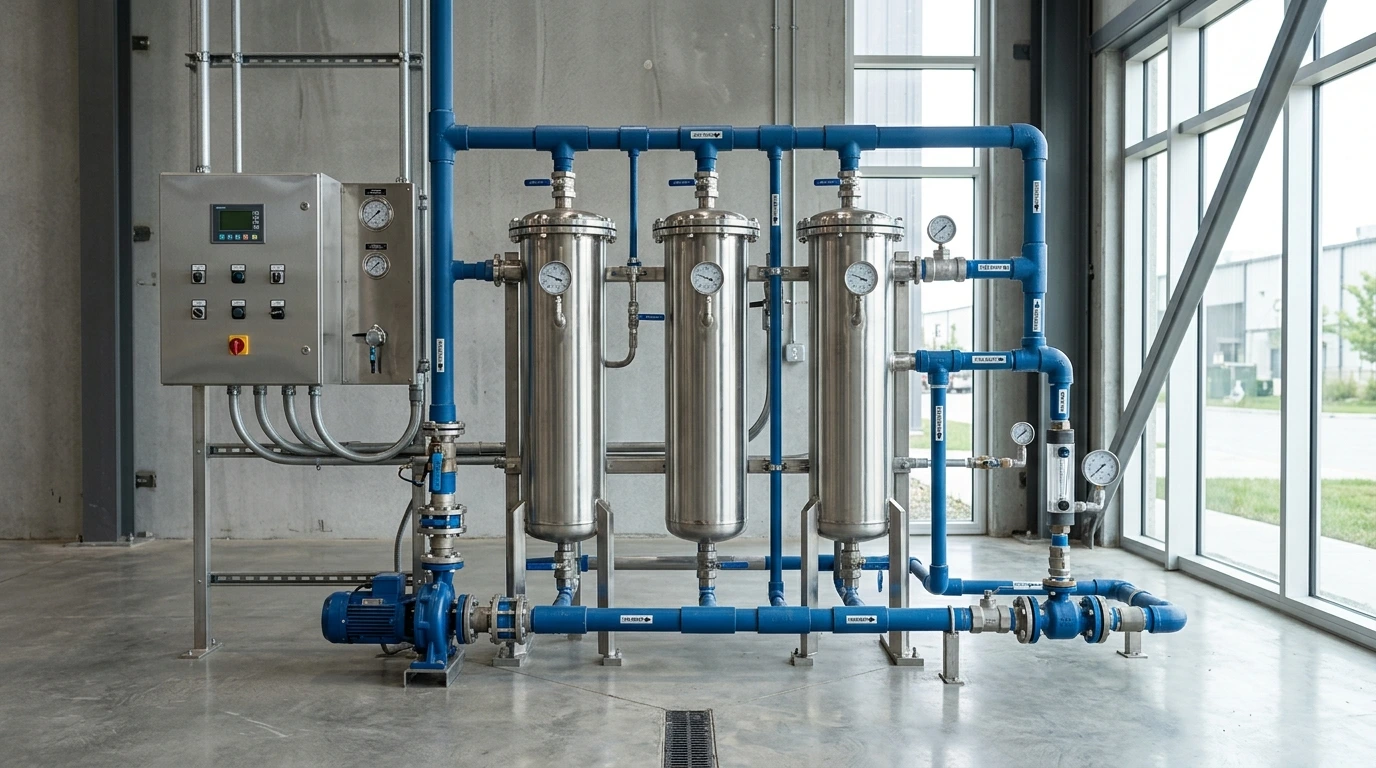
A restaurant gets flagged at a health inspection. The fix is a $45,000 reverse osmosis upgrade. Cash is tied up in payroll and inventory. The dealer quotes the system. The owner asks about monthly payments. The dealer has no answer. The deal dies.
That scenario plays out constantly in commercial water filtration. The projects are larger and more urgent than residential ones, yet most water-treatment contractors still pitch cash or consumer loan products that don't fit commercial buyers. This guide covers what commercial systems cost, which financing structures match each project size, how Section 179 can sharpen the business case, and how dealers can start closing bigger C&I jobs by presenting a payment option alongside the system quote.
> Key Takeaways
> - Commercial water filtration systems range from $1,000 for a basic softener to $280,000 for a food-manufacturer compliance build (Crestmont Capital, 2025).
> - Purpose-built commercial lenders can approve $5,000 to $5 million in 24-48 hours on terms from 12 to 84 months.
> - The 2026 Section 179 deduction limit is $2,560,000, meaning a business can finance the system and still deduct the full cost in year one (Section179.org, 2026).
> - EPA's lead and PFAS rules are turning water treatment from a discretionary upgrade into a compliance requirement for many businesses.
Add financing to your installs, talk to our team
What Does a Commercial Water Filtration System Cost?
Commercial water filtration systems span a wide price range that depends almost entirely on industry, flow rate, and technology stack. According to Crestmont Capital's equipment financing data (2025), projects run from roughly $1,000 for a point-of-use softener to $280,000 for a food-manufacturer compliance system. That cost spread is the first thing a dealer needs to understand before recommending a financing structure.
Here is how project cost breaks down by industry segment:
- Restaurant and food service (RO): $5,000 to $18,000 per location. A quick-service location may only need a point-of-use reverse osmosis unit under the coffee station, while a full-service restaurant needs whole-kitchen treatment.
- Agricultural operations: Around $35,000 for irrigation conditioning or livestock water systems, depending on acreage and flow requirements.
- Hotel and hospitality: Roughly $45,000 for a facility-wide upgrade that treats ice machines, pools, spas, and kitchen supply.
- Medical clinics: Around $120,000 for specialized systems that meet sterilization and patient-care standards.
- Food manufacturers and processors: Up to $280,000 for large-capacity compliance builds that must meet FDA, USDA, or state health department specifications.
- Crestmont Capital, Water Filtration Equipment Financing, retrieved 2026-06-18, https://www.crestmontcapital.com/blog/water-filtration-equipment-financing-leasing
- Precedence Research via GlobeNewsWire, U.S. Water and Wastewater Treatment Market Size to Reach USD 238.36 Bn by 2034, retrieved 2026-06-18, https://www.globenewswire.com/news-release/2025/11/05/3181159/0/en/U-S-Water-and-Wastewater-Treatment-Market-Size-to-Reach-USD-238-36-Bn-by-2034.html
- EPA, Proposed PFOA and PFOS Compliance Extension Rule, retrieved 2026-06-18, https://www.epa.gov/sdwa/proposed-pfoa-and-pfos-compliance-extension-rule
- EPA, Lead and Copper Rule Improvements, retrieved 2026-06-18, https://www.epa.gov/ground-water-and-drinking-water/lead-and-copper-rule-improvements
- Section179.org, Section 179 Deduction Information, retrieved 2026-06-18, https://www.section179.org/
- National Water Service, 5 Best Water Filtration Methods for Commercial Properties, retrieved 2026-06-18, https://nationalwaterservice.com/5-best-water-filtration-methods-for-commercial-properties/
The cost also shifts based on whether the business needs a point-of-use system (treating water at a single tap or machine) or a point-of-entry system (treating all water entering the building). Point-of-entry builds cost more upfront but protect every fixture and piece of equipment in the facility.
Most competitor content lists system prices without connecting cost tiers to financing structure. The connection matters because a $5,000 restaurant job and a $120,000 clinic job don't fit the same program. Sizing the financing to the project is what closes the deal, not quoting a generic rate.
How Does Commercial Water Filtration Financing Work?
Commercial water filtration financing lets a business acquire and install a system now and repay the cost over a fixed term, with the lender funding the contractor at or shortly after installation confirmation. According to Crestmont Capital (2025), purpose-built commercial lenders offer amounts from $5,000 to $5 million on terms from 12 to 84 months, with approval decisions in as little as 24-48 hours.
Three financing structures cover most commercial water projects:
Term loan or installment financing is the simplest structure. The lender pays the contractor at installation, and the business repays over a fixed term at a fixed monthly payment. Ownership of the system transfers immediately. This structure works for any project size and qualifies for Section 179 expensing in year one.
Equipment leasing keeps the asset off the business's balance sheet. Monthly payments tend to be lower than loan payments because the business returns or buys the equipment at end of term. Leasing suits businesses that want to upgrade technology every few years, such as restaurants that may expand or remodel.
BOO/BOOT (Build-Own-Operate/Transfer) applies to large industrial builds. The contractor builds and operates the system; the business pays a service fee or buys the asset at term end. This structure is common for pharmaceutical, semiconductor, and food-processing facilities where the system is too complex for the business to self-operate.
Consumer-program lenders cap approval at $12,000 to $15,000, which leaves most commercial jobs unfinanced. A water-treatment dealer who relies on consumer-only programs is turning away the highest-ticket commercial jobs in their market.
Why Are Businesses Financing Water Filtration Now?
Regulatory pressure is converting a discretionary upgrade into a compliance requirement, and that shift is accelerating commercial financing demand. In 2025, the US water and wastewater treatment market reached $130.31 billion and is projected to grow at a 6.94% CAGR to $238.36 billion by 2034, according to Precedence Research via GlobeNewsWire (2025). The industrial segment held roughly 38% of the US market in 2024 and is projected to grow the fastest.
Two regulatory drivers are forcing the issue for commercial businesses:
EPA PFAS maximum contaminant levels. In April 2024, the EPA finalized enforceable MCLs for PFOA and PFOS. In 2025, the compliance deadline for public water systems was extended to 2031 (EPA, 2025). Businesses that self-supply water or operate in food service, healthcare, and hospitality face parallel pressure from state health codes and facility audits that align with federal standards.
Lead and Copper Rule Improvements. As of December 30, 2024, the EPA lowered the lead action level from 15 to 10 parts per billion, with compliance required by November 1, 2027 (EPA, 2024). For schools, childcare facilities, and healthcare providers, this isn't a future concern; it's an active requirement that demands an answer today. See water filtration financing for schools and daycare facilities for how that deadline plays out for K-12 districts and child-care operators specifically.
Most competitor content frames commercial water filtration as a convenience or an ROI play. The better frame is compliance urgency. A business owner who faces a health department audit or an EPA-aligned state rule doesn't ask "should we do this?" They ask "how do we pay for this?" Financing is the answer.
The ROI case also supports financing. Most commercial properties see payback within 18-24 months from reduced chemical use, fewer equipment repairs, lower bottled-water spend, and reduced appliance wear (National Water Service, 2026). Financing spreads the upfront cost while that payback accumulates.

What Financing Structures Work Best for Each Commercial Project Size?
Project size is the primary selector for financing structure. According to Crestmont Capital (2025), commercial water equipment financing ranges from $5,000 to $5 million, which means a single dealer can close a coffee shop and a food processing plant through the same commercial lending relationship.
Here is how to match structure to project size:
Small commercial ($1,000 to $15,000): Restaurants, offices, small clinics, and retail locations fit a dealer-offered installment program. Approvals are fast, personal credit plays a larger role, and same-day decisions are common for established businesses. Terms run 12 to 60 months.
Mid-tier commercial ($15,000 to $100,000): Hotels, agricultural operations, schools, and medical facilities need commercial equipment financing or a term loan from a lender that operates at this scale. Approval timelines run 24-48 hours. Established businesses (2 or more years, stable revenue) often qualify for no-money-down structures.
Large industrial ($100,000 and above): Food processors, pharmaceutical manufacturers, and large hospitality groups may use a capital lease or a BOO/BOOT agreement. Underwriting shifts from FICO to business financials: revenue, debt service coverage ratio, and industry risk profile.
The lease vs. loan decision also matters for balance sheet management. Leasing keeps the asset off the business's books and makes technology upgrades easier. An installment loan builds ownership immediately and lets the business claim Section 179 expensing in year one.
Eos Loan offers flexible water filtration financing on commercial projects. As a direct lender rather than a marketplace or broker, Eos Loan funds loans itself and charges no dealer fee, which means installers keep full margin on every commercial job they close.
How Does Section 179 Apply to Commercial Water Filtration Equipment?
In 2026, commercial water filtration equipment placed in service during the tax year may qualify for the Section 179 expensing deduction, which allows a business to deduct the full purchase price of qualifying equipment rather than depreciate it over multiple years. The 2026 Section 179 deduction limit is $2,560,000, with a spending cap phase-out beginning at $4,090,000 (Section179.org, 2026).
The combination of financing and Section 179 can improve cash flow in two ways at the same time. First, the business finances the system and preserves working capital by spreading the cost into monthly payments. Second, the business deducts the full equipment cost in year one, which can reduce taxable income significantly depending on the business's tax situation.
"Placed in service" means the equipment must be installed and ready for use by December 31, 2026. Ordering equipment in December and receiving it in January of the following year would miss the deduction for that tax year.
Bonus depreciation also remains available for 2026, though at a reduced percentage from its prior 100% level. Businesses can layer bonus depreciation with Section 179 in some situations, which is why a tax professional's input is essential before structuring the deal around any depreciation strategy.
This is general information, not tax advice. Consult a qualified tax professional about your specific situation and the eligibility of your equipment and business structure.
!A business owner reviewing financial documents and tax forms at a bright modern office desk.
> Dealer observation: When we structure a commercial water job that includes both a financing proposal and a Section 179 note for the business owner to share with their accountant, the conversation shifts from "can we afford it" to "when do we want to place it in service." The tax angle converts a budget objection into a timing question.
How Can Water-Treatment Dealers Offer Commercial Financing?
Water-treatment dealers who add commercial financing to their offer close larger jobs and protect margin. A business customer who can pay $1,400 per month instead of $45,000 upfront is far more likely to approve a full facility build. The difference between winning and losing a commercial job often comes down to whether the dealer can present a payment option before the customer walks away to get additional bids.
Here is a five-step process for dealers who want to close more commercial water jobs with financing:
Step 1: Partner with a lender that covers commercial amounts. Consumer programs cap at $12,000 to $15,000. A commercial water job needs a partner that can approve $50,000 or $150,000 with the same speed. Confirm the lender's maximum program amount before your next site visit.
Step 2: Know your cost range before the site visit. You should be able to quote a monthly payment estimate alongside the system price during the first meeting. If you know the job is a hotel at roughly $45,000, run the payment math before you walk in. A business owner who hears "$782 per month" instead of "$45,000" has a different reaction.
Step 3: Collect basic business information in advance. Commercial underwriting focuses on years in business, approximate annual revenue, and industry type, not just personal credit. Gathering that information before submitting speeds approval and avoids back-and-forth during the close.
Step 4: Present the system spec and the financing option together. Don't deliver the proposal and then say "oh, and we also have financing." Lead with both. The monthly payment is part of the product presentation, not an afterthought.
Step 5: Confirm the funding timeline. Know when you'll receive payment after installation so you can schedule the job confidently. A good commercial lender funds by ACH within one to two business days of installation confirmation.
Eos Loan charges no dealer fee on commercial water filtration jobs. Other lenders may charge a percentage of the project amount as a dealer fee, which compresses your margin or forces you to inflate the system price. With Eos Loan, the price you quote is the price the customer sees. For more on how dealer fees work across programs, see our guide to how dealer fees work.
For the residential side of water treatment dealer financing, the Water Treatment Dealer Financing: The 2026 Guide covers consumer credit programs, FICO bands, and residential funding mechanics. The commercial programs described here operate under different underwriting rules and serve a different buyer profile. For the residential sales workflow this process is based on, see our step-by-step guide from water test to funded install.
For a broader view of building a contractor financing program across all essential project types, the contractor's guide to offering customer financing covers the full framework. For shared or building-wide properties, see our guide to multifamily and property-management water financing.
Offer your customers flexible financing on essential projects
---
See how Eos Loan financing helps you close more projects
Or call +1 833-989-3737 to talk through a financing program for your business.
---
{ question: "What is the minimum credit score to finance a commercial water filtration system?", answer: "Commercial underwriting evaluates business financials, including time in business, annual revenue, and debt service coverage, more than personal FICO alone. Some dealer programs accept FICOs as low as 550 for consumer-adjacent commercial jobs. Established commercial lenders typically prefer two or more years in business for unsecured programs. Subject to approval and eligibility." }, { question: "Can a startup business finance commercial water filtration equipment?", answer: "Newer businesses may face stricter terms or need a personal guarantee. Most commercial programs prefer two or more years in business for unsecured financing. Some programs exist for younger businesses at different structures. Contact lenders directly for eligibility specifics based on your business's financial profile." }, { question: "Does Eos Loan charge a dealer fee on commercial water filtration jobs?", answer: "Eos Loan charges no dealer fee. Other lenders may charge a percentage of the project amount as a dealer fee, which reduces the installer's margin or forces a price markup. Always confirm fee structures in writing before enrolling in any financing program. Eos Loan's no-dealer-fee structure means the dealer keeps full margin on every commercial water job." }, { question: "What types of commercial water filtration equipment qualify for financing?", answer: "Reverse osmosis systems, water softeners, UV sterilization units, carbon filtration systems, deionization systems, whole-facility point-of-entry builds, and large-scale industrial treatment equipment all qualify for commercial equipment financing. Both point-of-use and point-of-entry configurations are eligible." }, { question: "How long does it take to get funded on a commercial water filtration project?", answer: "Approval timelines range from same-day decisions for smaller commercial jobs to 24-48 hours for larger amounts, according to Crestmont Capital (2025). Funding after installation confirmation is typically by ACH within one to two business days, depending on the lender. Confirm funding timelines with your lender before scheduling installation." } ]} />Key Takeaways for Dealers and Business Owners
Commercial water filtration projects range from $1,000 to $280,000 depending on industry and system type. The right financing structure depends on project size: installment programs for small commercial jobs, equipment financing for mid-tier, and capital leases or BOO agreements for large industrial builds.
For business owners, the Section 179 deduction lets you finance the system and deduct the full cost in year one, improving cash flow in two ways at once. Consult a qualified tax professional to confirm eligibility.
For dealers, the close rate on commercial water jobs goes up when you present the monthly payment alongside the system quote. Partnering with a direct lender that charges no dealer fee, like Eos Loan, means you keep full margin on every job you close.
For residential water treatment dealer programs, see the Water Treatment Dealer Financing guide linked above. For financing across all essential project types, see the contractor's guide to offering customer financing linked above.
---
Sources