

Deal Analysis Before Financing: Screening a Flip in an Hour
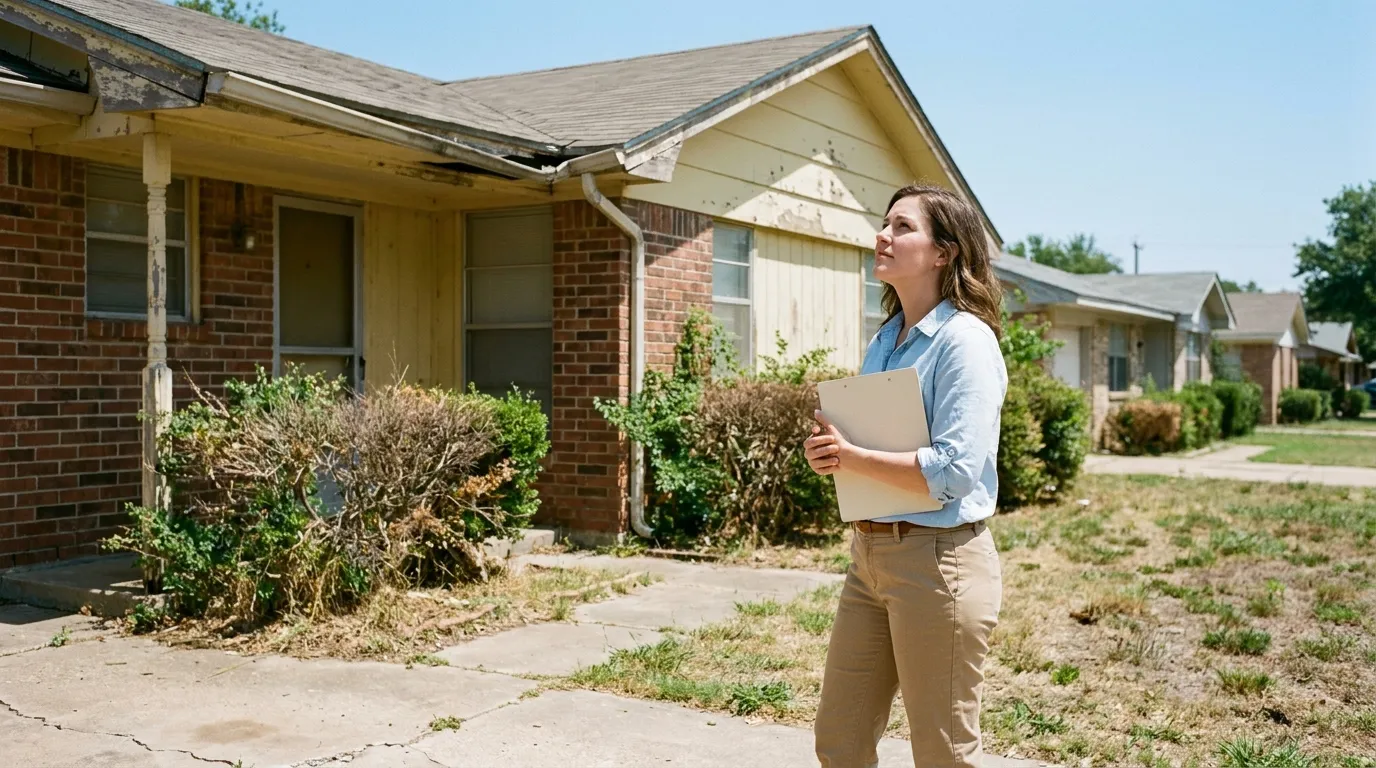
A flip deal analysis is the pass or fail screen you run on a listing before you commit anything to it. Not money, not an inspection, not three weeks of your attention. It applies to business-purpose projects: residential property bought to improve and resell, never a place you plan to live.
In the first quarter of 2026, the average flip in Boston returned 28.4% gross while the average flip in Dallas-Fort Worth returned 4.3% (ATTOM and Backflip, July 2026). Same quarter, same activity, six times the return.
Most investors screen slowly and inconsistently, which means they discover the bad deal in week three instead of minute nine. Here is a one-hour version: four gates, in order, ending in a decision.
> Key Takeaways
> - A flip deal analysis is a pre-commitment screen, not underwriting.
> - Q1 2026 gross ROI ran from 28.4% in Boston to 4.3% in Dallas-Fort Worth (ATTOM and Backflip, July 2026).
> - The spread has to clear the construction budget before it clears anything else.
> - Some conditions end a screen outright: they break the exit, not the price.
> - Eos Loan is a direct lender with flexible terms, subject to approval and eligibility.
Talk to our team about financing your next project
What is a flip deal analysis, and what is it not?
It is a screen, not underwriting. It answers one question, whether a listing deserves more of your time, using free and public information in under an hour. In Q1 2026 average gross ROI on flips ranged from 28.4% in Boston to 4.3% in Dallas-Fort Worth (ATTOM and Backflip, July 2026), so the screen has to be tuned to your market, not to a national average.
Underwriting is the lender's job and it comes later. It tests the loan: the appraisal, the entity, the scope documentation, the exit. Screening is yours and it tests your time. Confusing the two is how investors end up asking a lender to validate a deal they never evaluated.
Measure the screen by noes per hour, not by deals found. A screen that never kills anything is not a screen, it is a formality. If you want the product side instead, our guide to how business-purpose fix and flip financing works covers what a lender actually evaluates.
What can you decide in the first fifteen minutes?
More than most investors expect. Listing history, days on market, price cuts, ownership length, tax assessment, parcel and zoning data, and permit records are public and free, and together they kill a large share of listings before you open a single comp.
In February 2026, 34.2% of home sellers cut their list price, the highest February share in Redfin's records going back to 2012, up from 31.5% a year earlier. Sellers who cut reduced by an average of $40,915, or 7.3% (Redfin, April 2026). Price-cut history is not noise. It is the market telling you, in public, what it already thinks a property is worth.
Run the desk gate in this order:
1. Listing age and cut history. Two cuts and seventy days on market is an answer, not a mystery.
2. Ownership and hold length. A recent arms-length sale at a much lower number changes the seller conversation.
3. Tax assessment and delinquency. A weak comp, and a strong signal about the file behind the property.
4. Parcel data. Lot size, zoning, easements, flood designation. A lot that cannot carry your plan ends the screen here.
5. Permit history. Missing permits on visible past work are a scope problem and a comp problem at once.
Nine minutes in, most listings are already gone. That is the point.
How do you read comps without re-deriving ARV?
At screen stage you are not producing an appraisal-grade number. You are testing whether a defensible after-repair value exists at all: three closed sales, same submarket, similar size and bed and bath count, in the last six months. In July 2026, the median existing home sat 29 days on market with a 4.6-month supply (NAR, August 2026), which tells you how forgiving your resale window is likely to be.
The mechanics of building and defending an ARV, and how a lender converts it into a loan amount, are covered in our guide to after-repair value and loan sizing. At screen stage the question is narrower, and there are only three tests.
- Does a comp set exist? If you have to reach two neighborhoods over or eight months back, the answer is no. Stop.
- Is there a ceiling comp? The highest recent sale on the block caps you. If your plan only works above it, you are betting the block does something it never has.
- Does the resale window look normal? Rising days on market and stacking inventory are exit risk, and exit risk belongs in the number today. Planning the exit before you borrow goes deeper.
- A title or lien cloud, or a property mid-foreclosure with parties still unresolved. You cannot convey what you cannot clear.
- Unpermitted additions counted in the square footage that drives your comps. Your value rests on space an appraiser may refuse to count.
- Structural, foundation, or sewer lateral conditions you cannot price from the sidewalk. An unpriceable number is not a small number.
- Functional obsolescence the block does not buy. One bath, no parking, a layout the street has never sold at your target price.
- A ceiling comp below your required exit. The block already voted.
- Deed restrictions, association constraints, or occupancy that must be resolved before work starts.
- Age-related scope. Pre-1978 stock triggers lead-safe work practices, changing both the schedule and the contractor list.
- Screening is pre-commitment. Underwriting is the lender's, and it comes later.
- Public records kill most listings before comps ever open.
- The spread clears the construction budget first, then the carry, then your margin.
- Red flags that break the exit end the screen. Red flags that raise the price only change the offer.
- Write the walk-away rule before you look, because you will not write an honest one afterward.
Then haircut your resale assumption, using the market's own discount rather than an arbitrary one. Across all February 2026 sellers, including those who never cut, the average reduction was $13,463, or 2.4% (Redfin, April 2026).
What does the spread actually have to clear?
Not zero, and this is where the common screen fails. In Q1 2026, Dallas-Fort Worth flips averaged a $418,856 purchase and a $437,003 resale, a gross spread of $18,147, while the average construction budget in the same data set was $68,680 (ATTOM and Backflip, July 2026).
Read those two numbers together. A screen that asks "does the resale price exceed the purchase price" passes that deal, and that deal is on average underwater before anyone picks up a hammer. ATTOM's gross profit and gross ROI figures exclude improvement costs, which is why a raw spread is not a margin. The spread clears the work first, then the carry, then your margin.
Atlanta shows the same arithmetic from the other side: an average gross profit of $99,921 against an average construction budget of $190,000 (ATTOM and Backflip, July 2026). Bigger spread, bigger scope, same comparison.
The screen-stage arithmetic is an ordered subtraction, not a formula to memorize. Start with your haircut resale assumption. Subtract the scope. Subtract the carry, sized the way sizing holding costs and contingency sets out. Subtract selling costs. Subtract the margin you require to take this risk at all. What is left is the top of your bid, and if it sits below the ask by a distance no seller will move, you are done.
See how business-purpose financing fits your deal
Which red flags end a screen on sight?
The ones that break the exit rather than the price. A discount fixes an expensive house. Nothing discounts a house you cannot sell or cannot fund. In Q2 2026, nearly 1.4 million US homes were vacant, 1.3% of 104.9 million residential properties, and of the 245,376 properties in the foreclosure process, 8,312 had been abandoned before it finished, a 3.4% zombie rate that runs higher among investor-owned properties (ATTOM, August 2026).
Each of these ends the screen rather than adjusting the offer:
Notice what is not on that list: dated cabinets, an ugly roof, a bad smell. Those are prices, and prices are negotiable. A screen that treats them as fatal will never buy anything.
When do you walk away?
Before you look, not after. Write the two or three conditions that end the screen, then hold to them when the address starts to feel like yours. The exit market gives you no cushion: the 30-year fixed rate averaged 6.65% on August 20, 2026 (Freddie Mac Primary Mortgage Market Survey, August 2026), the borrowing cost facing the retail buyer who eventually buys your finished house. It is not an Eos Loan rate.
From the lending side, the files that arrive already dead share a pattern. The investor has spent three weeks on a property and still cannot answer, in one sentence, what it sells for finished and who buys it. The rule you write after you have fallen for an address is a rule you will bend. Write it while the listing is still a row in a spreadsheet.
Here is how we suggest spending the hour: fifteen minutes on the desk gate, twenty on comps, fifteen on condition and red flags, ten on the go or no-go arithmetic. The exact split matters less than having one, because an untimed screen quietly turns into an afternoon.
Beware the maybe. A maybe is usually a no that has not been said out loud yet, and it is the most expensive outcome the screen produces, because it keeps consuming attention a fresh listing would have paid for.
What does the screen look like when a lender is involved?
Fundability is a separate pass, and it is short. A deal can pencil perfectly and still stall, usually on the entity, the exit, the scope documentation, or a title condition. Four confirmations at screen stage keep a proceed from turning into a surprise later.
!Two people reviewing a line-item scope of work and project paperwork at a bright desk in daylight.
1. The property is non-owner-occupied and the purpose is business. That classification is the basis of the product, and why this is business-purpose credit explains where the line sits.
2. The entity exists, or can exist quickly. Waiting on formation while a contract clock runs is a self-inflicted delay.
3. The scope can be written down. Line items and finish levels, not a lump sum, because that document is what the finished value gets judged against.
4. The exit is real. A sale supported by comps, or a hold supported by rent evidence. How the calendar breaks down stage by stage shows where it gets tested.
Eos Loan is a direct lender. We originate, underwrite and service our own credit, so the conversation happens with the party making the decision. Terms are flexible and sized to the plan, every request is subject to approval and eligibility, and Eos Loan charges no dealer fee. Our page for business-purpose real estate financing covers fix and flip, fix and keep and fix and hold, and the step-by-step funding walkthrough picks up where this screen ends.
---
Ask about flexible terms for fix and flip projects
Or call +1 833-989-3737 to walk through a specific property. More common questions about applying are answered on our FAQ page.
---
{ question: "How do you analyze a fix and flip deal?", answer: "Run four gates in about an hour: a public-record desk gate, a comp scan, a condition and red-flag pass, and go or no-go arithmetic. Tune it to your market. In Q1 2026 average gross ROI ranged from 28.4% in Boston to 4.3% in Dallas-Fort Worth (ATTOM and Backflip, July 2026)." }, { question: "How long should a flip deal analysis take?", answer: "Under an hour. A screen uses free public information and decides whether a listing deserves more of your time. Underwriting is a separate and longer process run by the lender, and it tests the loan rather than your calendar." }, { question: "What are the biggest red flags on a flip property?", answer: "Title clouds, unpermitted square footage inside your comps, structural or sewer conditions you cannot price, and a ceiling comp below your required exit. In Q2 2026, 8,312 of 245,376 properties in foreclosure were abandoned before the process finished (ATTOM, August 2026)." }, { question: "What is the difference between deal analysis and underwriting?", answer: "Screening is yours and uses free information to decide whether to keep spending time. Underwriting is the lender's and tests whether the loan works, including the appraised after-repair value, the entity, the scope and the exit. Any financing remains subject to approval and eligibility." } ]} />The hour that decides the quarter
The screen is a machine for producing cheap noes. It is not there to find you a deal, it is there to stop you paying for the wrong one with weeks instead of dollars.
The deal you did not buy in September is what funds the one you do buy in November. More financing guides for essential projects cover the rest of the capital stack.
---
About the author: Eduardo Donadi is the CEO of Eos Loan, a US direct lender financing essential projects and business-purpose real estate projects including fix and flip, fix and keep and fix and hold. He works with investors on how deals get structured, sized and funded.
---
Sources
1. ATTOM Data Solutions and Backflip. "Special Analysis: How Pricing, Renovation Costs and Timing Shaped Returns in Q1 2026." July 2, 2026. Retrieved 2026-08-27. https://www.attomdata.com/news/market-trends/flipping/special-analysis-how-pricing-renovation-costs-and-timing-shaped-returns-in-q1-2026/
2. Redfin. "A Record 34% of February Home Sellers Cut Their List Price." April 9, 2026. Retrieved 2026-08-27. https://www.redfin.com/news/home-price-cuts-2026/
3. National Association of Realtors. "Existing-Home Sales Report Shows 1.7% Decrease in July." August 2026. Retrieved 2026-08-27. https://www.nar.realtor/newsroom/nar-existing-home-sales-report-shows-1-7-decrease-in-july
4. ATTOM Data Solutions. "Q2 2026 Vacancy and Zombie Foreclosure Report." August 2026. Retrieved 2026-08-27. https://www.attomdata.com/news/market-trends/foreclosures/q2-2026-vacancy-and-zombie-foreclosure-report/
5. Freddie Mac. "Primary Mortgage Market Survey, August 20, 2026." Retrieved 2026-08-27. https://www.freddiemac.com/pmms