

Water Filtration Financing for New Construction Builders
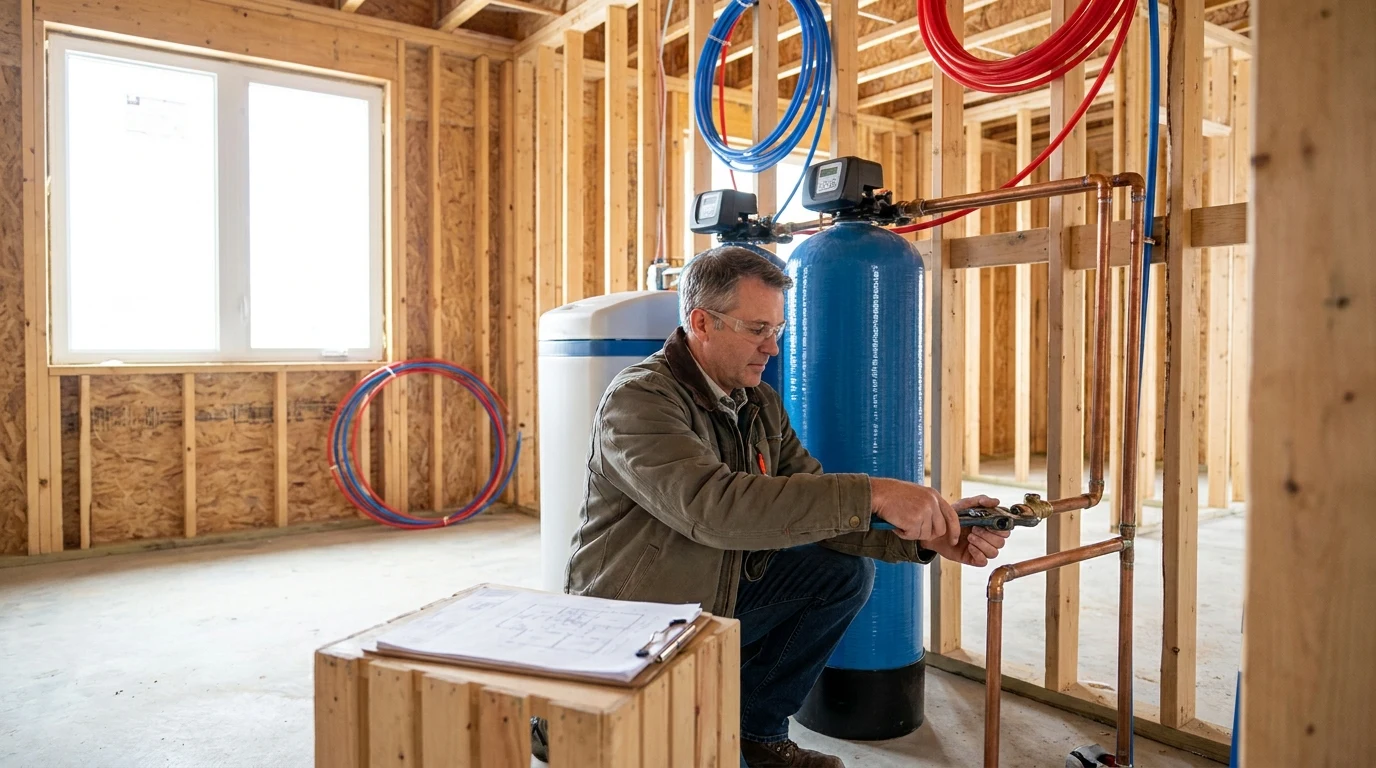
Here is the number that should be in every pre-construction budget meeting: 78% of first-time home buyers rate a drinking water filtration system essential or desirable, and 30% of millennial buyers call it essential specifically, versus 42% who call it desirable (NAHB, 2022). Most builders still quote it as a pricey add at the options desk, and most buyers still decline, and the plumbing never gets pre-run for it.
That decline is expensive in a way builders rarely price out. Retrofitting whole-home filtration after move-in costs 30-50% more than pre-plumbing it at rough-in (All Plumbing Company). This guide covers what buyers actually want, what pre-plumbing costs versus retrofitting, and how financing turns a declined lump-sum option into a signed monthly upgrade without eating a builder's margin.
> Key Takeaways
> - 78% of first-time buyers rate drinking water filtration essential or desirable; 30% of millennial buyers call it essential (NAHB, 2022).
> - Retrofitting after move-in costs 30-50% more than pre-plumbing at new construction (All Plumbing Company).
> - Whole-home equipment runs roughly $1,500-$4,500, with installation labor around $990-$1,245 (Homewyse, 2026).
> - Financing the upgrade as a monthly line item, instead of a lump sum at closing, lets builders and dealers offer it without absorbing the cost or losing the sale, subject to approval.
See how Eos Loan financing helps you close more projects
Why should builders spec water filtration into new construction?
In NAHB's first-time buyer research, 78% of respondents rated drinking water filtration essential or desirable, and 30% of millennial buyers called it essential specifically (NAHB, 2022). That is a demand signal most spec sheets still underprice, and it is not slowing down. The US water filtration market was valued at $6.89 billion in 2024 (Custom Market Insights), a scale that reflects how normal filtration has become as a homeowner expectation rather than a novelty upgrade.
Regulation is part of why buyers ask. The EPA finalized enforceable maximum contaminant levels for six PFAS compounds in drinking water in April 2024, tightening what public water systems must remove (EPA, 2024), though a May 2026 proposed rule would let eligible systems request a compliance extension to 2031 (EPA, 2026). Separately, the Lead and Copper Rule Improvements lowered the action level from 15 to 10 ppb, with compliance required by November 1, 2027 (EPA, 2024). Neither rule mandates in-home filtration at the new-construction spec level directly, but both explain why water quality keeps coming up in buyer conversations.
That combination, rising buyer demand plus a tightening regulatory backdrop, is why filtration reads as a "thoughtful construction" signal even in markets where no code forces the issue. A builder who includes it standard, or at least pre-plumbs for it, is answering a question buyers are already asking before they walk the model home.
What does pre-plumbing filtration cost versus retrofitting?
Retrofitting whole-home water filtration after move-in costs 30-50% more than pre-plumbing it at rough-in (All Plumbing Company). Whole-home equipment runs roughly $1,500-$4,500, and installation labor adds about $990-$1,245 in 2026 (Homewyse, 2026). Those figures land differently depending on when the work happens.
At the framing stage, walls are open and the plumbing crew is already on-site running lines for other systems. Adding a point-of-entry filtration line or a whole-home loop means sharing a trench and an open stud bay that is being used anyway. Retrofit work means opening finished drywall, patching and repainting after the fact, and sometimes rerouting a line that finished cabinetry now blocks. The labor difference, not the equipment itself, is what drives most of that 30-50% premium.
Modeling those two ranges side by side makes the timing argument concrete: a builder pricing filtration at rough-in is working from roughly $2,490-$5,745 in equipment and labor, while the same system added post-drywall lands closer to $3,240-$8,620 once the retrofit premium is applied. That gap is real money on every home in a subdivision, not just a rounding error at the estimate stage.
How can builders finance the upgrade instead of a lump sum?
The mechanism is straightforward: present a monthly payment alongside the upgrade price sheet at the same options meeting where a buyer picks flooring and countertops, instead of asking them to write a bigger check at closing. Eos Loan is a direct lender, not a marketplace or broker, funding the builder, dealer, or buyer directly with no dealer fee, subject to approval and eligibility.
Structurally, financing plugs into a builder's existing options process rather than replacing it. The buyer still sees filtration on the same upgrade menu as everything else. The difference is the price line reads as a monthly figure instead of a lump-sum add, which is the detail that turns a hesitant "maybe next house" into a signed selection sheet. Terms on water filtration stay flexible; unlike battery energy storage, where financing terms confirmed at Eos Loan run 6 to 240 months, no fixed term range is published for water filtration, so describe it as flexible rather than quoting a specific range.
Add financing to your installs, talk to our team
How does financing change the math across a subdivision?
Scale is the context that makes this worth solving at the process level, not just the single-sale level. Single-family housing starts ran at an 882,000 seasonally adjusted annual rate in May 2026 (U.S. Census Bureau, 2026), which is a lot of options-desk conversations happening every month across the country.
> What we're seeing from production builders: A composite scenario illustrates the pattern. A 40-home phase quoting filtration as a $4,000 cash-only closing add typically sees a modest attach rate, buyers decline the sticker price even when they want the feature. The same option, presented as a monthly financed line at the same options meeting, tends to draw a meaningfully higher share of yes answers, because the decision shifts from "can I afford $4,000 more at closing" to "can I afford this monthly." We frame this as a pattern we're seeing across builder conversations, not a guaranteed result for any specific project.
Most competitor content treats "install during construction" and "who pays for it" as two separate questions. They are the same question. The construction-stage cost advantage only converts into a closed upgrade if the payment is also restructured into a monthly figure at the point of sale, the same pattern already used for solar and battery storage upgrades in new builds, and covered across the cluster in financing across battery storage, EV charging, and water filtration.
Offer your customers flexible financing on essential projects
What underwriting factors matter for a builder financing program?
Underwriting in most retail-upgrade structures happens at the individual home buyer's level, not the builder's business credit, since the builder is not the borrower. That distinction matters because it changes what a builder needs to prepare before rolling a program out across a development.
There are two different models a builder might encounter, and they should not be confused. One is the builder financing its own bulk equipment purchase across a subdivision, which runs through commercial or business credit. The other, and the one most relevant to buyer-facing upgrade menus, is a program that lets the individual buyer finance the upgrade on their own consumer credit, subject to approval and eligibility. Builders should ask any financing partner directly which model a given program uses before assuming buyer-level underwriting applies. For the dealer side of underwriting and program setup, our water treatment dealer financing pillar guide covers credit bands and funding mechanics in more depth.
How do builders add this without slowing down closings?
The integration point is the same options or upgrades meeting where flooring, countertops, and other selections already happen, not a separate loan process bolted on afterward. That single detail is what keeps this from becoming a friction point in an already tight closing schedule.
Three practical steps make the rollout smooth. First, train the sales team on one extra line item on the existing price sheet, not a new workflow. Second, keep the base price and the filtration upgrade price legible and separate, so buyers can see exactly what they are adding. Third, lock in the pre-plumb decision before framing closes up, since that is the window where the cost advantage from earlier in this guide is still available. Builders running a mixed clean-energy and water upgrade menu across the same development can see how the pattern extends in our point-of-use vs. whole-home filtration comparison and our whole-home water softener financing guide.
Become an Eos Loan financing partner
Or call +1 833-989-3737 to talk through a financing program for your business.
Frequently Asked Questions
Is whole-home water filtration worth adding to a new construction spec?
Yes, based on buyer demand data. In NAHB's first-time buyer research, 78% rated drinking water filtration essential or desirable, and 30% of millennial buyers called it essential specifically (NAHB, 2022). Pre-plumbing at rough-in also avoids the 30-50% cost premium of retrofitting after move-in (All Plumbing Company).
How much does it cost to pre-plumb water filtration in a new build?
Whole-home equipment typically runs $1,500-$4,500, with installation labor around $990-$1,245 in 2026 (Homewyse). These are builder-option pricing ranges, not a fixed Eos Loan rate or program cost, and actual figures vary by system type and site conditions.
Can a home buyer finance a water filtration upgrade instead of paying cash at closing?
Yes. Point-of-sale monthly financing lets a buyer add filtration as a monthly line item at the options desk instead of a lump sum at closing, subject to approval and eligibility. Eos Loan is a direct lender with no dealer fee; no specific APR or rate is quoted here since rates are underwriting-based.
Do EPA rules require new homes to have water filtration?
Not directly. The EPA's PFAS National Primary Drinking Water Regulation, finalized April 2024, sets enforceable limits for six PFAS compounds in public water systems, and a May 2026 proposed rule would let eligible systems request a compliance extension to 2031 (EPA; EPA). The Lead and Copper Rule Improvements lowered the action level to 10 ppb, with compliance required by November 1, 2027 (EPA, 2024). Neither rule mandates in-home filtration at the new-construction spec level, though both explain rising buyer demand.
{ question: "Is whole-home water filtration worth adding to a new construction spec?", answer: "Yes, based on buyer demand data. In NAHB's first-time buyer research, 78% rated drinking water filtration essential or desirable, and 30% of millennial buyers called it essential specifically (NAHB, 2022). Pre-plumbing at rough-in also avoids the 30-50% cost premium of retrofitting after move-in (All Plumbing Company)." }, { question: "How much does it cost to pre-plumb water filtration in a new build?", answer: "Whole-home equipment typically runs $1,500-$4,500, with installation labor around $990-$1,245 in 2026 (Homewyse). These are builder-option pricing ranges, not a fixed Eos Loan rate or program cost, and actual figures vary by system type and site conditions." }, { question: "Can a home buyer finance a water filtration upgrade instead of paying cash at closing?", answer: "Yes. Point-of-sale monthly financing lets a buyer add filtration as a monthly line item at the options desk instead of a lump sum at closing, subject to approval and eligibility. Eos Loan is a direct lender with no dealer fee; no specific APR or rate is quoted here since rates are underwriting-based." }, { question: "Do EPA rules require new homes to have water filtration?", answer: "Not directly. The EPA's PFAS National Primary Drinking Water Regulation, finalized April 2024, sets enforceable limits for six PFAS compounds in public water systems, and a May 2026 proposed rule would let eligible systems request a compliance extension to 2031 (EPA). The Lead and Copper Rule Improvements lowered the action level to 10 ppb, with compliance required by November 1, 2027 (EPA, 2024). Neither rule mandates in-home filtration at the new-construction spec level, though both explain rising buyer demand." } ]} />The bottom line for builders
Buyer demand for water filtration is high and rising among younger buyers, pre-plumbing during construction beats retrofitting on both cost and disruption, and financing the upgrade at the point of sale raises attach rate without hurting builder margin. Here is what to carry into the next spec-home or development pro forma:
- 78% of first-time buyers rate filtration essential or desirable; 30% of millennials call it essential (NAHB, 2022).
- Retrofitting after move-in costs 30-50% more than pre-plumbing at rough-in (All Plumbing Company); equipment runs $1,500-$4,500 with $990-$1,245 in install labor (Homewyse, 2026).
- EPA's PFAS rule and the Lead and Copper Rule Improvements are tightening the regulatory backdrop even where neither mandates in-home filtration directly.
- Financing the upgrade as a monthly line item, presented at the same options meeting as other selections, turns a declined lump-sum add into a signed upgrade.
- National Association of Home Builders (NAHB), What Home Buyers Really Want (first-time buyer feature preferences, 78% essential/desirable, 30% of millennials essential), retrieved 2026-07-25, https://www.nahb.org/blog/2022/03/top-10-features-for-first-time-home-buyers
- All Plumbing Company, Water Filtration in New Construction (30-50% retrofit cost premium), retrieved 2026-07-25, https://allplumbingcompany.com/blog/water-filtration-new-construction-bluffton-sc
- Homewyse, Cost to Install a Water Filter System (2026 equipment and labor ranges), retrieved 2026-07-25, https://www.homewyse.com/services/cost_to_install_water_filter_system.html
- U.S. Census Bureau, New Residential Construction (single-family housing starts, May 2026), retrieved 2026-07-25, https://www.census.gov/construction/nrc/pdf/newresconst.pdf
- Custom Market Insights, US Water Filtration Market Report ($6.89 billion market size, 2024), retrieved 2026-07-25, https://www.custommarketinsights.com/report/us-water-filtration-market/
- U.S. Environmental Protection Agency, PFAS National Primary Drinking Water Regulation, retrieved 2026-07-25, https://www.epa.gov/sdwa/and-polyfluoroalkyl-substances-pfas
- U.S. Environmental Protection Agency, Proposed PFOA/PFOS Compliance Extension Rule, retrieved 2026-07-25, https://www.epa.gov/sdwa/proposed-pfoa-and-pfos-compliance-extension-rule
- U.S. Environmental Protection Agency, Lead and Copper Rule Improvements, retrieved 2026-07-25, https://www.epa.gov/ground-water-and-drinking-water/lead-and-copper-rule-improvements
Eos Loan is a direct lender covering battery energy storage, EV chargers, and water filtration under one consistent program, no dealer fee, subject to approval and eligibility. To add financed water filtration to your builder upgrade menu, talk to our team about setting up your program. For the dealer side of this same playbook, see how businesses finance commercial water filtration systems and how to offer water filtration financing to customers. There is no self-serve signup; our team sets up your program directly.
---
Sources
---
About the author: Eduardo Donadi is the CEO of Eos Loan, the fintech built to finance essential projects (battery energy storage, EV chargers, and water filtration) for installers, contractors, builders, and resellers across the United States.