
Essential Project Financing: Battery, EV Charger, and Water
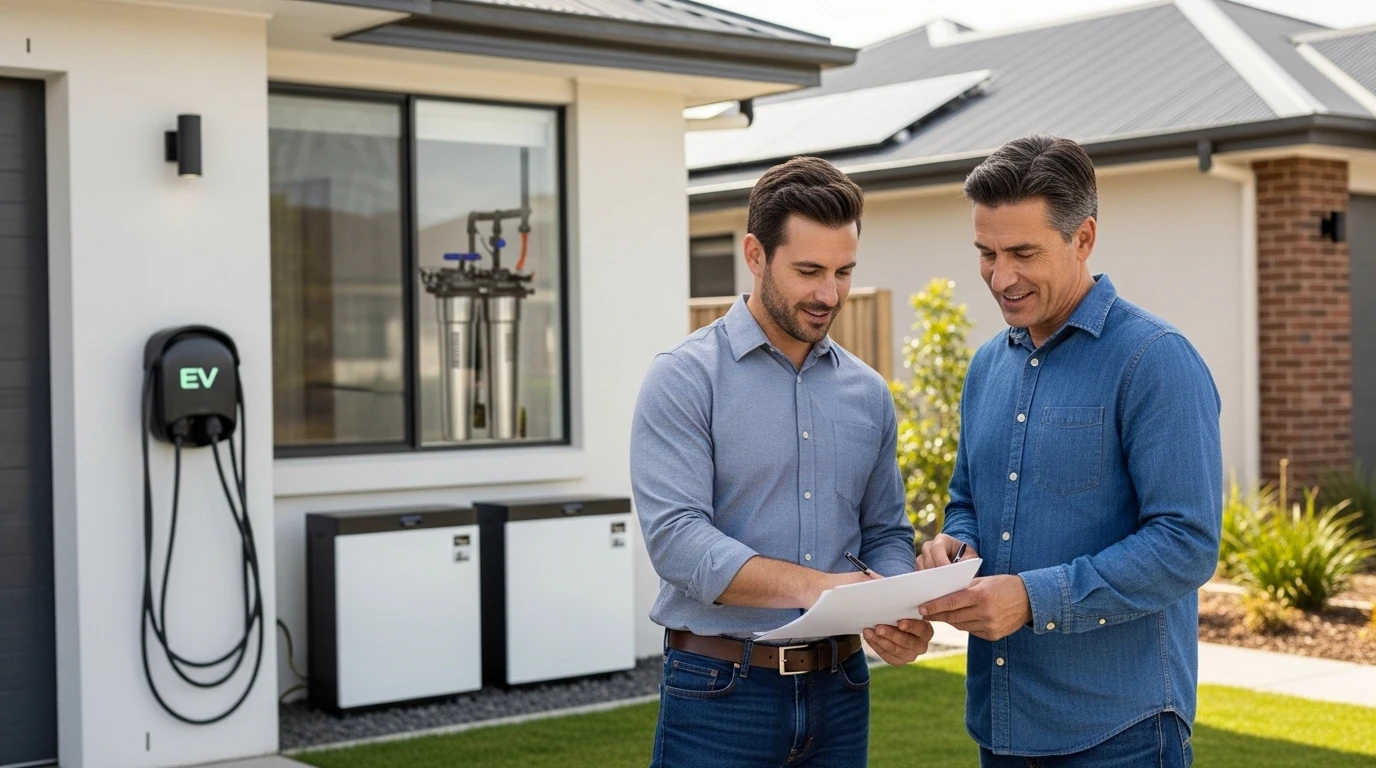
In 2025, US residential battery storage grew 92% year over year (Wood Mackenzie, 2025). EV charger infrastructure topped $5.92 billion in revenue (Grand View Research, 2025). And EPA rules on PFAS and lead are pushing homeowner demand for water filtration at rates water treatment dealers are fielding every week.
Three essential projects. And most contractors are still running three separate financing relationships to close them.
Juggling multiple lender programs means inconsistent approval flows, mismatched terms, and a harder pitch at the kitchen table. This piece explains why consolidating to a single essential-project financing partner changes what you can offer, how you close, and what your program looks like in the field.
> Key Takeaways
> - US residential battery storage reached 2.7 GW in 2025, up 92% year over year (Wood Mackenzie, 2025), with demand growing across all three essential project categories.
> - Contractors offering financing close projects at up to 3x higher rates, yet most multi-vertical contractors manage separate lender programs for each product line (finmkt.io, 2026).
> - Eos Loan is a direct lender that finances battery energy storage, EV chargers, and water filtration under one contractor program with no dealer fee in any vertical, subject to approval and eligibility.
> - Battery storage terms run 6 to 240 months; EV charger and water filtration terms are flexible. No specific APR is quoted here; rates are underwriting-based.
See how Eos Loan financing helps you close more projects
What makes a project "essential"?
An essential project makes a home safer, more functional, and more self-sufficient, independent of the grid, the gas line, and contaminated water. Battery energy storage, EV chargers, and water filtration all meet that definition. The residential water purifier segment holds a 53.97% share of the US water treatment market (Fortune Business Insights, 2025), and residential EV adoption continues to accelerate as automakers expand model availability at every price point.
These three categories share something contractors rarely talk about: the same homeowner is often the buyer for all three. A customer who wants a battery on the wall also plugs in a car. That same customer may be sitting on an EPA PFAS advisory for their municipal water. The essential project frame reflects how that homeowner actually thinks, and it reflects how the most efficient installers now structure their business.
Most lenders and most competitors organize their programs by product. Solar lenders finance solar. EV charger lenders finance EV chargers. Water treatment dealers find a home improvement lender and hope it covers their product category. The "essential project" frame cuts across that silo. It treats the customer's home as a system that needs power resilience, transportation charging, and clean water, and it treats financing as the infrastructure that makes all three possible. That is a non-obvious angle, and no single-vertical competitor can make that claim.
Battery energy storage is the anchor vertical because it sits at the center of home electrification. In 2025, total US energy storage reached 18.9 GW, up 52% year over year, with the residential segment at 2.7 GW up 92% (Wood Mackenzie, US Energy Storage Monitor, 2025). Storage anchors the essential project bundle because it connects to the EV charger (shared power management), and because a homeowner who has battery backup installed is more likely to think about the rest of the home system, including water.
For the full picture on battery storage financing specifically, see our battery energy storage financing guide for installers.
Why are contractors juggling too many lenders right now?
Most installers enter financing through one vertical. A solar contractor adds storage. An electrician adds EV chargers. A water treatment dealer adds filtration. Each time they expand the product line, they often add a new lender, a new approval process, and a new set of dealer fees. Or they discover the first lender does not cover the new category at all. According to finmkt.io's 2026 Home Improvement Financing Report, contractors offering embedded financing see up to 3x higher close rates on large projects and report 18% higher close rates overall (finmkt.io, 2026). A fragmented lender stack works directly against that lift.
The operational cost is real. Separate portals. Separate approval flows. Separate dealer fee structures. When a battery installer adds EV charger financing through a second lender, they now manage two onboarding processes, two sets of program terms, and two points of contact when something goes wrong. When they add water filtration through a third, that is three. The result is that the contractor's sales process gets more complicated at exactly the moment it should be getting simpler.
The customer experience problem is less visible but just as costly. When a homeowner asks about financing a battery and an EV charger on the same appointment, and the installer has to quote two different programs with potentially different rates and terms, the conversation becomes harder to manage. The customer senses complexity. Simple closes fast.
From conversations across the Eos Loan partner base, the contractors who struggle most with multi-vertical closing are not the ones with the wrong product. They are the ones running multiple lender relationships that create inconsistent experiences at the sales table. The ones who consolidate to a single program, a single approval process, and a single point of contact report that the pitch gets cleaner. "I tell the customer: one program covers all three. That is all they need to know." That clarity closes deals.
What are the three essential verticals Eos Loan finances?
Eos Loan is a direct lender that finances battery energy storage, EV chargers, and water filtration through a single contractor program, all with no dealer fee in any vertical, subject to approval and eligibility. The same program, the same terms structure, and the same point of contact covers all three categories. Here is what each vertical looks like.
Battery energy storage. This is the anchor. In 2025, residential battery storage reached 2.7 GW installed capacity in the US, up 92% year over year (Wood Mackenzie, US Energy Storage Monitor, 2025). Eos Loan finances battery storage with flexible terms from 6 to 240 months. The residential clean-energy credit (Section 25D) ended December 31, 2025 (IRS, 2025), so financing is now the affordability lever at every kitchen table. This is general information, not tax advice. Consult a qualified tax professional. For the full breakdown, see our guide to battery energy storage financing for installers.
EV chargers. Home Level 2 installs run roughly $1,400 to $2,200 all-in in 2026 (market cost data), and most of that cost is labor that automaker incentives do not cover. The EV charging infrastructure market reached $5.92 billion in US revenue in 2025 and is projected at a CAGR of 25.7% through 2033 (Grand View Research, 2025). The Section 30C commercial EV charger tax credit is set to expire June 30, 2026 (IRS / One Big Beautiful Bill Act). This is general information, not tax advice. Consult a qualified tax professional. Financing closes the gap on install cost regardless of the incentive status. See our guide to EV charger financing for installers.
Water filtration. The US water purifier market generated $7.30 billion in 2025, with the residential segment accounting for 53.97% of that market (Fortune Business Insights, 2025). EPA PFAS and lead rules are creating demand that water treatment dealers field every week. Financing converts a water test result into a signed contract by spreading the cost into a monthly payment the homeowner can plan around. See our guide to water filtration financing for dealers.
Eos Loan financing across all three verticals means a contractor who quotes battery storage today can add EV charger financing tomorrow without a new lender relationship, and add water filtration financing next month without another one. One enrollment covers every essential project the partner installs.
How does one-program financing change the contractor's pitch?
When a single program covers all three verticals, the contractor pitch changes from three separate financing conversations to one. Nearly 70% of homeowners plan to use financing for major projects, with 48% preferring financing over paying out of pocket (finmkt.io, 2025). The customer already wants a payment plan. What changes is whether the installer can deliver one that covers the whole job.
The kitchen-table scenario looks like this. A homeowner calls about an EV charger. During the visit, the installer notices the panel is already prepped for a battery. The conversation expands: "We can put the charger and the battery on one proposal, one financing program, one monthly number." No second lender, no second application process. The homeowner says yes to both because the monthly payment fits and the process feels simple. That is a materially larger ticket than the EV charger alone, closed in one appointment.
The upsell dynamic runs in every direction. A battery customer learns you also finance water filtration. A water treatment dealer learns you can add EV charger financing to their menu. The no-dealer-fee position works as a pitch differentiator too: installers who partner with Eos Loan can tell customers they work with a direct lender that charges the contractor no dealer fee, unlike some programs that build that cost into the rate. Eos Loan charges no dealer fee across any of its essential project verticals.
The "one program, three projects" conversation does more than raise ticket size. It repositions the installer from a product vendor into a home systems advisor. A contractor who can finance everything a customer needs, through one conversation and one monthly payment, becomes the person the customer calls first for the next project. That relationship value compounds in ways that a single-vertical close does not.
Offer your customers flexible financing on essential projects
What should you look for in a multi-vertical financing partner?
Not every lender that says "we finance home improvement" actually covers all three categories on consistent terms, or at all. Personal loan balances hit a record $253 billion in Q1 2025, with 7% of borrowers using funds for home improvement (finmkt.io, 2025). The market for project financing is large, and so is the number of lenders competing for it. Not all of them are built for the contractor.
The key criteria: coverage (does the lender explicitly fund battery storage, EV chargers, and water filtration, or does it say "other home improvement" and leave you guessing?), dealer fee policy (does it charge a dealer fee in any vertical?), terms consistency (are battery terms the same whether the job is standalone or bundled with EV?), and funding speed (does a bundled project take longer to fund than a single-category job?).
The direct lender versus marketplace distinction matters more than most contractors realize. A marketplace routes your dealer applications to multiple third-party lenders. That means different approval criteria by product, different dealer fees by lender, and no single point of contact when a deal has a problem. A direct lender like Eos Loan funds loans itself, applying consistent criteria across verticals, with one team behind all three programs. The question to ask any lender you evaluate: "Do you fund battery storage, EV chargers, AND water filtration, and is your dealer fee the same across all three?" A direct lender can answer that directly. A marketplace often cannot.
For a deeper look at how direct lenders differ from marketplaces and point-of-sale networks, see our breakdown of point-of-sale vs. marketplace vs. direct lender financing.
How do you add essential project financing to your business in 2026?
Adding a multi-vertical financing program is a single enrollment decision, not three separate ones. With Eos Loan, one application to become a financing partner covers all three essential project categories under one program, with no dealer fee in any vertical, subject to approval and eligibility. You do not need to re-enroll for EV chargers after you enroll for battery storage.
The enrollment process is straightforward. Contact Eos Loan, complete the partner application, receive program terms, and add financing to any battery, EV charger, or water filtration quote from day one. One team covers all three verticals, so your point of contact for a battery deal is the same point of contact for an EV charger or water project. That consistency reduces the onboarding cost of adding a new product line to near zero.
Timing matters right now. The Section 30C commercial EV charger tax credit is set to expire June 30, 2026 (IRS / One Big Beautiful Bill Act). That expiration removes a cost offset that some customers have been counting on. Adding EV charger financing to your program before that deadline gives you a close lever (affordable monthly payment) to replace the incentive after it expires. This is general information, not tax advice. Consult a qualified tax professional.
For the complete playbook on building and running a contractor financing program across multiple product lines, see our contractor's guide to offering customer financing. For shared or HOA-owned properties, see the multifamily water treatment financing guide. For a dated look at how demand across these categories is trending right now, see the Q4 2026 financing outlook.
Become an Eos Loan financing partner
Or call +1 833-989-3737 to talk through a financing program for your business.
---
question: "Can I finance a battery storage system, EV charger, and water filtration project with the same lender?",
answer: "Yes, subject to approval and eligibility. Eos Loan is a direct lender that finances all three essential project categories under one contractor program. Battery energy storage, EV chargers, and water filtration are all covered with no dealer fee in any vertical. One enrollment covers every project type you install."
},
{
question: "Does Eos Loan charge a dealer fee on EV charger or water filtration projects?",
answer: "Eos Loan charges no dealer fee on any of its essential project categories, including battery energy storage, EV chargers, and water filtration. This is a confirmed differentiator from lenders and marketplaces that charge dealer fees on some or all product lines. The no-dealer-fee policy applies across all three verticals under one program."
},
{
question: "What financing terms are available for battery energy storage, EV chargers, and water filtration?",
answer: "Eos Loan offers flexible terms from 6 to 240 months for battery energy storage, subject to approval and eligibility. Terms for EV charger and water filtration projects are flexible; contact Eos Loan directly for specifics on your project type. No specific APR or rate is quoted here as rates are underwriting-based."
},
{
question: "The Section 30C EV charger tax credit expires June 30, 2026. Does financing still make sense after that?",
answer: "Yes. The Section 30C tax credit covered a portion of EV charger install cost; financing covers the full cost over time regardless of incentive status. Installers can quote EV charger financing after the 30C deadline. EV charger infrastructure revenue is projected to grow at 25.7% CAGR through 2033 (Grand View Research, 2025). This is general information, not tax advice. Consult a qualified tax professional."
},
{
question: "What is the difference between a direct lender and a marketplace for essential project financing?",
answer: "A direct lender like Eos Loan funds loans itself, applying consistent criteria and terms across all verticals with one point of contact. A marketplace routes your dealer application to multiple third-party lenders, which means variable terms, different dealer fees per product, and separate approval flows. For multi-vertical contractors, the direct lender model removes the operational friction that grows with each new product category."
}
]} />
---
Sources
- Wood Mackenzie, US Energy Storage Monitor, 2025 Press Release, retrieved 2026-06-17, https://www.woodmac.com/press-releases/2025-u.s.-energy-storage-installations-set-new-record-surpass-2024-by-52
- Grand View Research, US Electric Vehicle Charging Infrastructure Market Report, 2025, retrieved 2026-06-17, https://www.grandviewresearch.com/industry-analysis/us-electric-vehicle-charging-infrastructure-evci-market
- Fortune Business Insights, US Water Purifier Market, 2025, retrieved 2026-06-17, https://www.fortunebusinessinsights.com/us-water-purifier-market-104696
- finmkt.io, AI, AR, and POS Financing: The Home Improvement Trifecta of 2026, retrieved 2026-06-17, https://www.finmkt.io/blog-posts/ai-ar-and-pos-financing-the-home-improvement-trifecta-of-2026
- finmkt.io, Home Improvement Is Now a Top Use of Personal Loans, 2025, retrieved 2026-06-17, https://www.finmkt.io/blog-posts/home-improvement-is-now-a-top-use-of-personal-loans--heres-how-contractors-can-profit
- IRS, Residential Clean Energy Credit (Section 25D), retrieved 2026-06-17, https://www.irs.gov/credits-deductions/residential-clean-energy-credit
- NuwattEnergy, EV Charger Tax Credit 2026 (Section 30C), retrieved 2026-06-17, https://nuwattenergy.com/en/ev-charger-tax-credit-2026