
Water Softener and Whole-Home Financing: A Dealer Guide
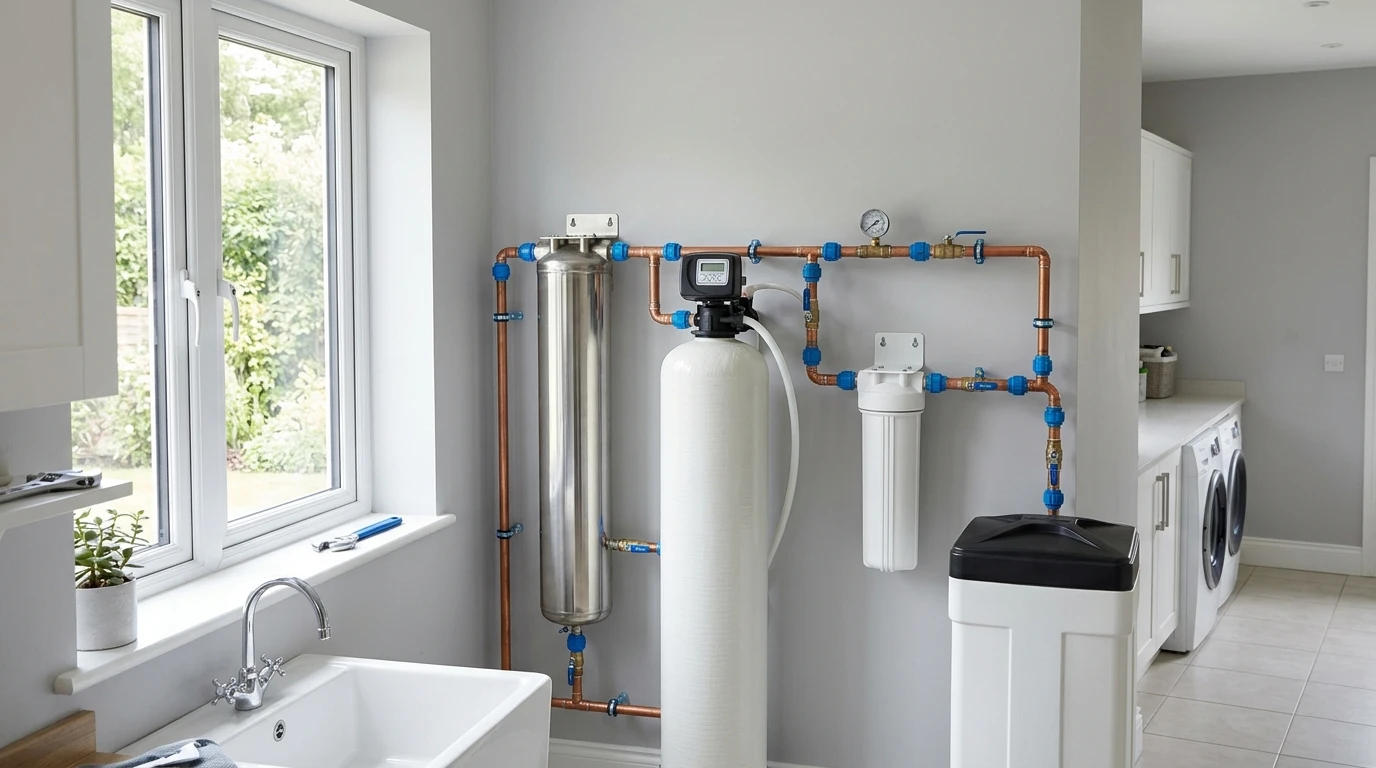
A water test just confirmed the customer's pipes are running hard water. Scale coats the fixtures. The dishwasher is burning through pods. The whole-home softener quote sits on the table. Then they see the $6,000 price and go quiet. Most water softener deals don't die at the water test. They die at the price reveal. The need is clear. The budget is not.
A water softener financing program fixes exactly that gap. Your customer pays a monthly amount they can fit into their budget while you get funded fast after install. This guide covers how a water softener financing program works for dealers, which whole-home systems qualify, how to present a payment plan, how to bundle products to raise ticket size, and what term lengths apply across a wide range of system costs. All financing is subject to approval and eligibility.
> Key Takeaways
> - A water softener financing program turns a $3,000 to $12,000 whole-home system into a monthly payment customers can say yes to, subject to approval and eligibility.
> - The US water softening market is projected to reach $1,190.5 million by 2032 at a 6.5% CAGR (Fortune Business Insights, 2025), signaling strong, growing demand.
> - Bundling a whole-home softener with a point-of-use RO unit under one monthly payment raises average ticket size, a play most competitors don't walk through in depth.
> - Eos Loan is a direct lender that charges no dealer fee, so your margin math stays clean from the first deal.
See how Eos Loan financing helps you close more projects
What whole-home water systems qualify for a financing program?
In 2025, the US water softening market was valued at $763.6 million and is projected to reach $1,190.5 million by 2032 at a 6.5% CAGR (Fortune Business Insights, 2025). That growth represents a large, expanding pool of financeable jobs. A strong program covers the full range of whole-home water equipment, from entry-level softeners to commercial multi-stage builds.
The system types that qualify include:
- Water softeners and salt-free conditioners. Ion-exchange softeners are the workhorse of this category. Salt-free conditioners treat scale without removing minerals. Both qualify.
- Iron and sulfur filters. Often installed ahead of the softener to protect the resin bed. These are natural bundle items on well-water jobs.
- Whole-home multi-stage filtration. Granular activated carbon, sediment pre-filters, and carbon-block systems treating every tap in the house. Larger builds and commercial applications land in this tier.
- Point-of-entry reverse osmosis systems. Whole-home RO for commercial or high-contamination residential jobs is a growing segment.
- Restaurants. Scale damage to commercial dishwashers and coffee equipment is measurable in equipment life and taste. Scale inhibitors and softeners are standard solutions.
- Car washes. Spot-free rinse systems require RO-treated water. A commercial RO build for a car wash is a high-value project.
- Salons and spas. Hard water affects hair-coloring outcomes and equipment. Treatment is an operating expense for the business.
- Small manufacturers. Process water quality affects product quality for breweries, food processors, and light manufacturers.
- Finance the full range: softeners, conditioners, iron filters, multi-stage filtration, and RO units, both residential and commercial, all under one program.
- Present the monthly payment at the water test, not after the price reveal. That is the highest-motivation moment in the sale.
- Bundle the whole-home softener with a point-of-use RO unit under one monthly payment. The combined monthly figure closes faster than two separate line items.
- Choose a direct lender with no dealer fee, so your economics stay clean and your customer's total price stays honest.
- Match term length to system size. Flexible terms are what let one program serve a $400 filter and a $15,000 commercial build.
- Fortune Business Insights, US Water Softening Systems Market ($763.6M in 2025, projected $1,190.5M by 2032, 6.5% CAGR), retrieved 2026-06-18, https://www.fortunebusinessinsights.com/u-s-water-softening-systems-market-109926
- Precedence Research, Water Treatment Systems Market (point-of-use 76.6% share in 2025; global market $45.15B in 2025, 8.15% CAGR through 2034), retrieved 2026-06-18, https://www.precedenceresearch.com/water-treatment-systems-market
- Custom Market Insights, US Water Filtration Market (valued at $6.89B in 2024, 5.5% CAGR), retrieved 2026-06-18, https://www.custommarketinsights.com/report/us-water-filtration-market/
- Angi, How Much Does a Water Softener Cost (installation cost range $800 to $2,500 for unit, $500 to $6,000 installed), retrieved 2026-06-18, https://www.angi.com/articles/how-much-does-water-softener-cost.htm
- Aqua Finance, Dealer Programs (market reference for automated credit-decision speed), retrieved 2026-06-18, https://www.aquafinance.com/dealers/
- US Environmental Protection Agency, Lead and Copper Rule Improvements (lead action level lowered from 15 to 10 ppb, effective December 30, 2024), retrieved 2026-06-18, https://www.epa.gov/ground-water-and-drinking-water/lead-and-copper-rule-improvements
- US Environmental Protection Agency, PFOA and PFOS Compliance Extension Rule (enforceable MCLs for PFOA and PFOS, 2024), retrieved 2026-06-18, https://www.epa.gov/sdwa/proposed-pfoa-and-pfos-compliance-extension-rule
Residential and commercial systems both qualify. A restaurant needing a scale inhibitor and a homeowner needing a softener can go through the same program, subject to approval. That range is what makes one financing relationship worth building.
According to the Fortune Business Insights report on the US Water Softening Systems Market (2025), the category is growing at 6.5% annually, reaching a projected $1,190.5 million by 2032. Dealers who can finance the full system range, not just the entry-level softener, are positioned to capture the higher-ticket jobs where a monthly payment is what makes the difference.
Water treatment systems are generally not eligible for clean-energy tax credits. Do not present Eos Loan financing as a tax credit, rebate, or incentive. It is a loan that lets your customer pay over time. This is general information, not tax advice. Consult a qualified tax professional. For a broader look at all the system categories water dealers can offer, see the water treatment dealer financing guide.
How does a water softener financing program work for dealers?
The dealer workflow runs in four steps: present the payment at the quote, the customer applies, the lender approves and funds, and the dealer receives payment by ACH after install. Industry programs routinely cite credit decisions in roughly 60 seconds, a speed norm referenced by programs such as Aqua Finance (2025), which keeps the homeowner in the buying moment instead of going home to think it over. Speed of funding matters for your cash flow as much as the monthly payment matters for the customer's budget.
Here is what each step looks like in practice:
1. Present the payment at the quote. Show the monthly payment beside the cash price before the customer sees only the lump sum. The payment reframes the conversation from "can we afford this" to "does this fit the month."
2. Customer applies. A soft-pull pre-qualification checks eligibility before you finalize scope, so you don't design a $10,000 system for a customer who qualifies for a $5,000 loan.
3. Lender approves and funds. Approval is subject to eligibility. No responsible program promises guaranteed approval.
4. Dealer paid by ACH. You don't wait for the customer to finish repaying the loan. The lender funds you at install and handles collections over the term.
Eos Loan charges no dealer fee. This is a concrete differentiator. Other programs in the water space carry dealer fees, a percentage discount the dealer absorbs in exchange for the customer payment plan and fast funding. Knowing whether a program has a dealer fee, and what it is, is one of the first questions to ask when you evaluate a program. With Eos Loan, the answer is straightforward: no dealer fee.
A water softener financing program lets dealers collect fast at install while customers pay monthly over the term. Eos Loan is a direct lender that funds its own loans, charges no dealer fee, and operates under one consistent approval standard, subject to approval and eligibility. That single-party structure removes the handoffs that slow down marketplace-routed programs.
For a detailed comparison of direct-lender versus marketplace structures, see our point-of-sale vs. marketplace vs. direct lender breakdown.
How do you raise ticket size by bundling whole-home and point-of-use systems?
Bundling a whole-home softener with a point-of-use RO unit under one monthly payment consistently raises average ticket size for water dealers, and this is the math most competitor content skips. In 2025, point-of-use systems held a 76.6% share of the water treatment market (Precedence Research, 2025), confirming the RO unit is exactly what the homeowner already wants at the kitchen sink. The pairing is natural: the softener protects pipes and appliances, the RO handles taste and contaminants at the drinking tap.
Here is how the arithmetic works at the point of sale:
| Configuration | Typical installed cost | Monthly payment framing |
|---|---|---|
| Whole-home softener only | $3,000 to $8,000 | One monthly figure |
| Under-sink RO unit only | $500 to $2,500 | A separate, smaller figure |
| Softener + RO, bundled | $3,500 to $10,500 | One single monthly payment |
According to cost data from Angi (2025), water softener installation costs typically run $800 to $2,500 for the unit, with whole-home installed costs ranging $500 to $6,000 depending on system size and labor. Point-of-entry whole-home filtration adds to that range. When you quote two line items, customers mentally add the totals and stall on both. When you quote one bundle with one monthly payment, the conversation moves to when to schedule, not whether they can afford it.
A second common bundle is the iron filter plus softener stack, particularly on well water. Iron levels above 0.3 mg/L damage the softener resin without a pre-filter. Quoting both as one financed project protects the system and raises the ticket. The monthly difference between just the softener and the softener-plus-iron-filter stack is often small enough that most customers choose the bundle.
> Our finding: What we observe from water softener dealers who add financing to the quote at the water test, not after the total, is fewer stalled deals. When the hardness numbers are bad, the customer's motivation is highest. That is the moment to show a payment, not a price. We frame this as a pattern observed across partners, not a guarantee of results.
Point-of-use systems commanded a 76.6% market share in 2025 (Precedence Research, 2025), and the RO unit is the add-on most homeowners already want. Bundling it with the whole-home softener under one monthly payment raises your average ticket without requiring a harder sell. The payment is easier to say yes to than two separate prices.
For a deeper look at the point-of-use versus whole-home decision from the buyer's side, see our point-of-use vs. whole-home water filtration guide, which doubles as sales-enablement content you can share with hesitant customers.
How to present a water softener payment plan to customers
The highest-motivation moment in a water treatment sale is right after the test reveals the problem, not after the customer sees the total price. In 2024, the US water filtration market was valued at $6.89 billion at a 5.5% CAGR (Custom Market Insights, 2024), and EPA rules on lead and PFAS contaminants are driving homeowner concern to new levels. The motivation is there. The close depends on framing the payment at the right moment.
Four steps move the conversation from price hesitation to signed agreement:
Step 1: Show the payment on every quote, not just when the customer flinches. When the monthly figure is always visible beside the cash price, customers self-select into financing without you having to pivot mid-pitch. It normalizes the option and saves the awkward "well, we do have financing..." moment.
Step 2: Run a soft-pull pre-qualification before you finalize scope. A soft check, which does not affect the customer's credit score, gives you a sense of what payment the program can support before you design the full system. That keeps your scope honest and avoids the uncomfortable experience of proposing a $9,000 system to someone who qualifies for $4,000. For what credit score you need to finance a water system, including FICO tiers and what else underwriters weigh, share our dedicated breakdown with your team.
Step 3: Keep documents digital. The homeowner should be able to complete the application from their phone while you finish the site visit. Paper applications slow the process and give customers time to reconsider.
Step 4: Follow up on stalled deals from the past 90 days with a financing reframe. A "no" from last quarter is often "not at that price." A monthly payment is a second chance at a deal you already earned technically, and many dealers find this follow-up sequence closes a meaningful share of their prior losses.
A payment presentation centered on the monthly figure, delivered at the water test, keeps the focus on solving the problem rather than arguing about the total. Subject to approval and eligibility. No specific APR or guaranteed approval should appear in your pitch.
For the full customer journey from test to funded install, see our step-by-step financed install workflow.
Add financing to your installs, talk to our team
What term lengths apply to water softener and whole-home financing?
Term lengths for water filtration are flexible, matched to system cost and the customer's monthly budget. Terms for water treatment are described as flexible because the system-cost range is wide: a $400 under-sink RO unit and a $15,000 commercial build both qualify, and the right term for each is very different. No specific APR is quoted here; actual rates are underwriting-based and vary by application.
The trade-off is straightforward. Shorter terms mean higher monthly payments but less total interest paid over the life of the loan. Longer terms mean lower monthly payments and broader accessibility for budget-conscious customers, but more total interest overall. That trade-off is the customer's to make once they know the options.
To show how that range plays out illustratively, here is a chart for a $5,000 whole-home softener financed at two hypothetical scenarios. This is for illustration only: actual terms are subject to approval and eligibility, and Eos Loan does not publish rate schedules.
For a real-world proof of term flexibility, Eos Loan's battery energy storage program runs from 6 to 240 months, which signals the lender's ability to match term to project size. Water treatment terms are described as flexible; consult our team for program details specific to your customer's situation.
Why does term flexibility matter more in water than in some other verticals? The cost range is exceptional. A single-tap filter sits at $400. A commercial multi-stage whole-home build for a restaurant runs $15,000 or more. A program that can serve both extremes with appropriate term lengths covers your entire book of business. For more on financing terms and how to explain them to customers, see our financing terms explained guide.
Should you offer residential and commercial water filtration financing?
In 2025, the global water treatment systems market reached $45.15 billion at an 8.15% CAGR through 2034, a vendor estimate from Precedence Research (2025). That scale reflects both residential and commercial demand, and a financing program that covers both gives a single dealer relationship a much wider total addressable book of business.
Residential whole-home systems are the core of the category. These are the softeners, iron filters, and whole-house filtration systems protecting every tap in the house, from the shower and dishwasher to the laundry and drinking water. Average ticket sizes run $3,500 to $10,000 installed, and financing is what moves these from "maybe later" to "let's schedule it."
Commercial whole-home systems are where the bigger tickets sit. The most common commercial applications include:
These commercial jobs are a natural upsell for any dealer already serving the residential market. The homeowner who needed a softener often owns a small business that needs treatment too. A program that covers both, subject to commercial approval and eligibility, keeps one dealer relationship serving a much wider range of projects.
Eos Loan has originated $4 billion and more in financing and processed 30,000 and more proposals to date. That scale across essential projects, including water filtration, battery energy storage, and EV chargers, gives dealers access to a direct-lender program that has worked at volume across the full residential and commercial range. For a cross-vertical look at how these programs connect, see financing every essential project.
Offer your customers flexible financing on essential projects
Or call +1 833-989-3737 to talk through a financing program for your water business.
Frequently Asked Questions
question: "What systems qualify for a water softener financing program?",
answer: "Whole-home softeners, salt-free conditioners, iron and sulfur filters, whole-home multi-stage filtration, and point-of-use RO units all qualify, for both residential and commercial installs. The US water softening market is projected to reach $1,190.5 million by 2032 (Fortune Business Insights, 2025). Subject to approval and eligibility."
},
{
question: "How do dealers get paid in a water softener financing program?",
answer: "After the customer is approved and the system is installed, the lender funds the dealer by ACH. You do not wait for the customer to repay the loan over the term; the lender handles collections. Funding speed varies by program. With Eos Loan, you deal with one direct lender, not a chain of third parties."
},
{
question: "What is the difference between a water softener payment plan and financing?",
answer: "A payment plan from the dealer is an informal installment arrangement. A financing program through a direct lender funds the dealer at install and puts the customer in a formal loan agreement with fixed terms. The customer repays the lender over the agreed term. Financing protects the dealer's cash flow from day one of install."
},
{
question: "Can I bundle a water softener and an RO unit under one financing application?",
answer: "Yes. Presenting both systems as a single project with one monthly payment raises average ticket size and simplifies the sales conversation. Point-of-use systems held a 76.6% market share in 2025 (Precedence Research, 2025), making the RO unit the most natural add-on to a whole-home softener. Subject to approval and program guidelines."
},
{
question: "Does Eos Loan charge a dealer fee on water softener financing?",
answer: "No. Eos Loan charges no dealer fee. This is a confirmed differentiator from programs that carry dealer fees. For background on how dealer fees work at other lenders and what questions to ask when evaluating a program, see our dealer fees explained guide at /blog/dealer-fees-explained."
}
]} />
The bottom line for water dealers in 2026
A water softener financing program is one of the clearest ways to close more jobs, raise average ticket size, and serve a wider range of customers across residential and commercial projects. The key moves are direct:
Eos Loan is a direct lender that charges no dealer fee, offers flexible terms on water treatment, and has originated $4 billion and more across essential projects, all subject to approval and eligibility. There is no self-serve signup; we work with you directly to build a program for your water business.
---
Sources
About the author: Eduardo Donadi is the CEO of Eos Loan, the fintech built to finance essential projects (battery energy storage, EV chargers, and water filtration) for installers, contractors, and resellers across the United States.