

Does Financed Battery Storage Change a Homeowners Insurance Premium?
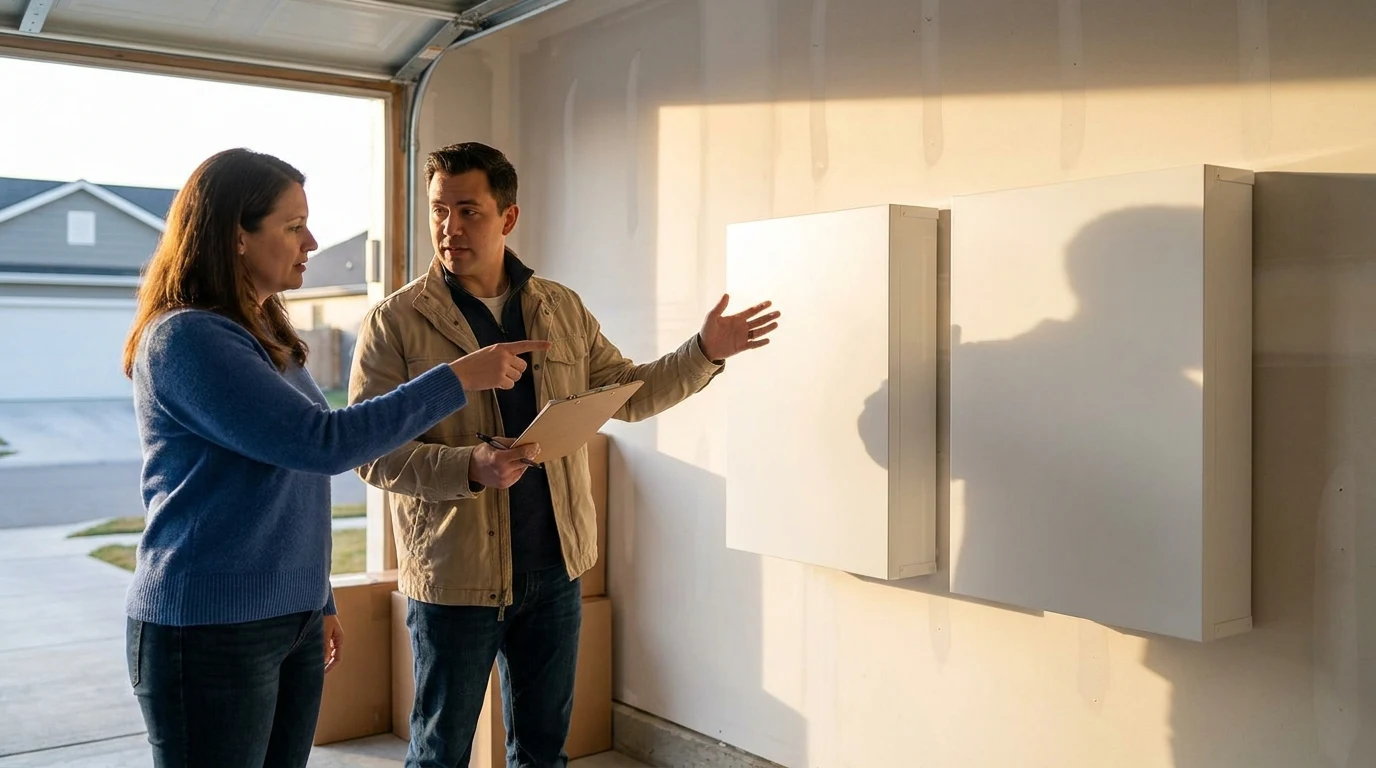
A financed battery storage system does not automatically raise a homeowners insurance premium. Underwriters generally price the addition on certification status and disclosure, not on the hardware's size or brand, and US residential battery storage installations grew 92% year over year in 2025 (Wood Mackenzie, US Energy Storage Monitor, 2026), so the question now touches a fast-growing share of homes.
Buyers often assume a battery works like a pool: an automatic flat surcharge the moment it's installed. That's not quite how insurers treat it. The real picture depends on paperwork more than hardware, and this article walks through what actually moves the number, what to disclose, and how a commercial policy treats the same equipment differently.
> Key Takeaways
> - A UL 9540-certified, permitted, disclosed battery system typically sees little to no premium change under a standard HO-3 policy.
> - Certification (UL 9540), siting compliance (NFPA 855), and disclosure timing are the variables that move the premium, not brand or size.
> - Some carriers discount the property portion of a policy 4-10% for a permanently installed backup power source, the same logic used for generators (Consumer Reports, 2025).
> - Skipping disclosure, not the battery itself, is the real risk: it can affect how a claim is paid after a loss.
Add financing to your installs, talk to our team
Does a Financed Battery System Automatically Raise Your Premium?
No single rule applies across every carrier, but a certified, permitted, professionally installed battery typically sees little to no premium impact under an ordinary HO-3 policy. The bigger driver of rising premiums industry-wide is severe weather, not battery adoption: US homeowners insurance prices are projected to keep climbing in 2026, up roughly 4% after a 12% jump in 2025 and a cumulative 46% rise since 2021 (Insurance Journal, 2026).
That broader trend matters because it's easy to mistake a nationwide premium increase for a battery-specific one. A homeowner who installs a system in the same year their premium rises might reasonably, but incorrectly, connect the two. In most cases they're unrelated; climate-driven claims costs are the dominant factor pushing rates up, not a wall-mounted battery in the garage.
!Homeowner and installer reviewing paperwork at a sunlit dining table
Most content covering this topic bundles solar panels and battery storage together, as if insurers treat them identically. They don't. A solar array is a fixed, passive structure; a lithium-ion battery is an active electrical device with its own ignition risk profile. Isolating the battery-specific variables, certification and disclosure, gives a clearer answer than lumping it in with solar.
Citation capsule: A certified, disclosed battery system typically does not move a standard homeowners premium on its own. The dominant driver of 2026 rate increases is severe weather and claims cost, not residential battery adoption, with prices up roughly 4% in 2026 after a 12% jump in 2025 (Insurance Journal, 2026).
For the full mechanics of how a financed system comes together from quote to install, see the complete 2026 guide to battery storage financing.
What Actually Determines Whether an Insurer Adjusts the Premium?
Underwriters weigh certification and installation quality far more heavily than brand or system size. UL 9540 is the listing standard UL Solutions publishes for energy storage system safety, and it's increasingly the reference point carriers and permitting authorities check before binding or renewing a policy (UL Solutions, 2026). A non-listed system faces more friction at underwriting, not necessarily a guaranteed surcharge, but a harder conversation.
Installation quality is the second variable. NFPA 855 sets the siting, clearance, and fire-suppression rules for stationary energy storage systems, covering things like distance from doors and windows, ventilation, and separation from living space (NFPA, 2025). An installer who follows NFPA 855 siting rules is, in effect, giving an underwriter a cleaner file to review. Isn't that a more useful question to ask a contractor than "what brand do you install?" It gets at the actual risk factor insurers care about.
Citation capsule: Certification status and installation quality, not brand or size, drive how an underwriter treats a financed battery system. UL 9540 is the safety listing standard UL Solutions publishes for energy storage equipment (UL Solutions, 2026), and NFPA 855 governs the siting and clearance rules installers follow to keep a system compliant.
Do Homeowners Have to Tell Their Insurer About a New Battery System?
Most standard homeowners policies expect disclosure of material changes that affect risk, and a financed lithium-ion battery addition generally qualifies. The Insurance Information Institute has long advised homeowners to contact their carrier before a major property change, not after, so coverage can be adjusted alongside the work rather than discovered during a claim (Insurance Information Institute, accessed 2026).
The stakes are real. Lithium-ion ignition sources have become a growing share of the largest property claims a major insurer tracks. Suncorp, an Australian and New Zealand carrier, reported that the share of claims above AUD $500,000 linked to lithium-ion ignition sources doubled over five years, from 9% to 18% (Energy-Storage.news, reporting Suncorp data, 2025). That's international data, not a US figure, but it illustrates why underwriters are paying closer attention to how these systems are installed and documented.
!Close-up of a wall-mounted home battery storage unit showing its certification label in daylight
Citation capsule: Disclosure, not the battery itself, is the real coverage risk. Most standard homeowners policies expect material risk changes to be reported, and failing to disclose a financed battery addition can affect how a claim is handled later (Insurance Information Institute, accessed 2026).
See also how storm-risk pricing is already reshaping homeowners coverage during hurricane season, a related but separate pressure on the same policy.
Can a Battery Backup System Lower a Homeowners Premium?
Yes, in some cases, the same way a standby generator does. Several carriers offer a loss-mitigation discount for permanently installed automatic backup power because it reduces frozen-pipe and spoilage claims during outages. Amica offers a 4-10% discount on the property portion of its homeowners policy for an automatic generator, and regional carriers offer comparable 5-10% discounts depending on location (Consumer Reports, 2025).
A financed battery system is starting to qualify under that same loss-mitigation logic in some states, though this is carrier-specific and never something to promise a customer as automatic. Ask the carrier directly whether a battery qualifies for the same credit a generator would, since not every insurer has extended the discount to battery hardware yet.
Citation capsule: Backup power can earn a loss-mitigation discount, not just a surcharge. Several carriers discount the property portion of a homeowners policy 4-10% for a permanently installed automatic generator, and battery storage is beginning to qualify under the same logic in some states (Consumer Reports, 2025).
Offer your customers flexible financing on essential projects
Does Insurance Work Differently for Commercial Battery Storage?
Yes. Commercial property insurance underwrites a financed battery system through a more formal lens than a residential HO-3 policy. NFPA 855 siting compliance and third-party testing documentation, including UL 9540A large-scale fire testing where applicable, play a bigger role in bindable commercial terms than they do on a typical home policy (NFPA, 2025).
A business with a critical-load installation, think a facility that can't tolerate downtime, faces a more detailed underwriting file than a homeowner: equipment specs, fire suppression plans, and testing documentation all get reviewed before terms are set. That's not a reason to avoid commercial battery storage; it's simply a different process with different paperwork expectations from day one.
!Installer performing a service check on a wall-mounted battery storage unit in daylight
For a deeper look at how that underwriting conversation intersects with financing, see financing a commercial battery storage system and how critical-load businesses finance battery backup.
Citation capsule: Commercial property insurance treats a financed battery system through a separate, more formal underwriting lens than a residential policy. NFPA 855 siting compliance and large-scale fire testing documentation carry more weight in a commercial file than on a typical homeowners policy (NFPA, 2025).
How Does Insurance Cost Factor Into Total Financing Cost?
Treat a possible modest premium change the way you'd treat a warranty or a maintenance plan: a small, knowable line item worth asking about before signing, not a reason to delay a system that lowers outage risk. Ask the installer for UL 9540 documentation early, disclose the install to the carrier before activation, and weigh any premium change against the financed monthly payment rather than the full cash price.
> "Borrowers ask us about insurance more than almost anything else once they understand UL 9540 is part of the conversation. It's rarely the dealbreaker they worried it would be, once they see the paperwork their installer provides." - Eduardo Donadi, CEO, Eos Loan
Across the financing conversations Eos Loan sees from installer partners, borrowers who ask about insurance tend to ask a specific question: whether UL 9540 documentation will be provided with the install. That's a pattern worth noting, not a formal survey, but it lines up with how underwriters say they evaluate these systems.
For the fuller cost picture, see total cost of ownership for a financed battery system and how battery warranties and financing fit together. Learn more about Eos Loan's battery storage financing.
Frequently Asked Questions
Does a Tesla Powerwall or similar battery raise my homeowners insurance?
Not automatically. A UL 9540-certified, permitted install typically sees little to no premium change, while an uncertified or undisclosed system carries more friction at renewal (UL Solutions, 2026).
Do I have to tell my insurance company I added a battery?
Most policies expect disclosure of material risk changes, and a financed lithium-ion battery generally qualifies. Send the contract and spec sheet after install, and ask your carrier whether anything else is needed (Insurance Information Institute, accessed 2026).
What happens if I don't disclose a battery and it causes a fire?
Non-disclosure of a material risk change can affect how a claim is handled after a loss, since the policy wasn't written with full knowledge of the home's actual risk profile. Confirm your specific policy's disclosure terms directly with your carrier.
Can a home battery ever lower my premium?
In some states and with some carriers, yes, under the same loss-mitigation logic used for standby generators. Several carriers discount the property portion of a policy 4-10% for permanent automatic backup power (Consumer Reports, 2025).
Does commercial battery storage get the same insurance treatment as a home system?
No. Commercial property policies apply a more formal underwriting process, including NFPA 855 siting compliance and large-scale testing documentation (NFPA, 2025), as covered above in the commercial property section.
---
Certification and disclosure, not size or brand, decide whether a financed battery system changes a homeowners premium. Some carriers already credit permanent backup power the way they credit a generator, and commercial underwriting runs through a separate, more formal process than a residential policy. A possible premium change is a small, knowable line item, worth asking about before signing, never a reason to skip financing a system that lowers outage risk.
This is general information, not insurance or tax advice. Homeowners and business owners should confirm disclosure requirements and any premium impact directly with their own carrier. Eos Loan financing is subject to approval and eligibility.
See how Eos Loan financing helps you close more projects
Prefer to talk it through? Call +1 833-989-3737.
{ question: "Does a Tesla Powerwall or similar battery raise my homeowners insurance?", answer: "Not automatically. A UL 9540-certified, permitted install typically sees little to no premium change, while an uncertified or undisclosed system carries more friction at renewal (UL Solutions, 2026)." }, { question: "Do I have to tell my insurance company I added a battery?", answer: "Most policies expect disclosure of material risk changes, and a financed lithium-ion battery generally qualifies. Send the contract and spec sheet after install, and ask your carrier whether anything else is needed (Insurance Information Institute, accessed 2026)." }, { question: "What happens if I don't disclose a battery and it causes a fire?", answer: "Non-disclosure of a material risk change can affect how a claim is handled after a loss, since the policy wasn't written with full knowledge of the home's actual risk profile. Confirm your specific policy's disclosure terms directly with your carrier." }, { question: "Can a home battery ever lower my premium?", answer: "In some states and with some carriers, yes, under the same loss-mitigation logic used for standby generators. Several carriers discount the property portion of a policy 4-10% for permanent automatic backup power (Consumer Reports, 2025)." }, { question: "Does commercial battery storage get the same insurance treatment as a home system?", answer: "No. Commercial property policies apply a more formal underwriting process, including NFPA 855 siting compliance and large-scale testing documentation (NFPA, 2025)." } ]} /> --- Sources