

Commercial Battery Storage Financing: Options for Businesses
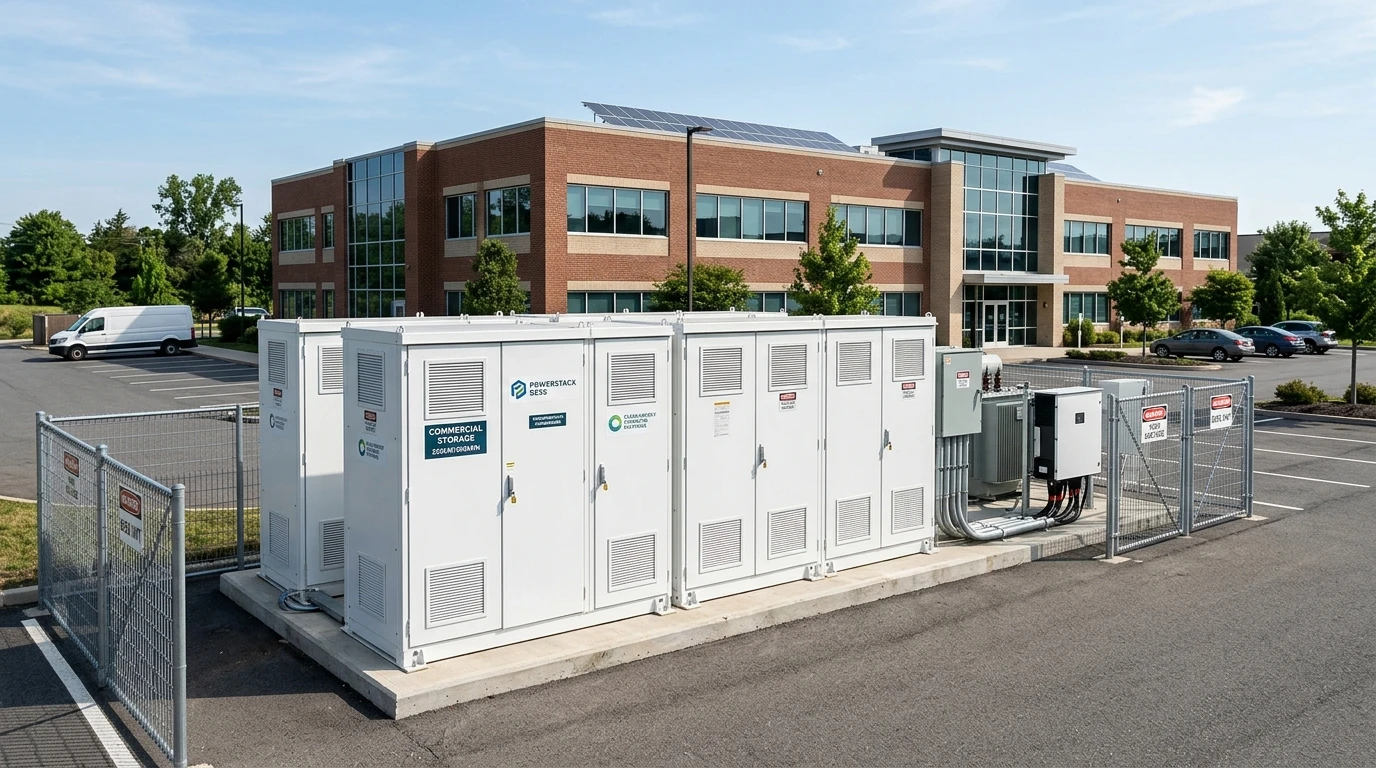
Commercial and industrial businesses are adding battery energy storage at a pace that catches most contractors off guard. Total US storage installations reached 18.9 GW in 2025, up 52% year over year (Wood Mackenzie, US Energy Storage Monitor, 2025), and the commercial side is carrying a meaningful share of that growth. Unlike residential buyers, commercial owners still have an active federal credit in play: the commercial clean-electricity investment credit (Section 48E) generally remains through 2032 per the IRS and statute, while the residential credit (25D) ended December 31, 2025 (IRS, 2025). This is general information, not tax advice. Consult a qualified tax professional.
The problem most contractors run into is framing. Residential and commercial battery storage are not the same conversation. The project scale is bigger, the buyer is a business entity with a CFO or operations manager in the room, and the economics run through demand charges rather than a utility bill a homeowner wants to shrink. Installers who default to residential framing miss what actually moves commercial deals: a monthly payment stacked against the demand-charge savings the system generates.
This guide covers how commercial battery storage financing works, how businesses size and fund projects, what the 48E credit means for commercial economics, and how contractors close larger-ticket storage deals in the C&I market.
> Key Takeaways
> - In 2025, total US energy storage reached 18.9 GW, up 52% year over year (Wood Mackenzie, 2025); commercial and industrial demand is a growing driver.
> - The 48E commercial clean-electricity investment credit generally remains through 2032 (IRS / statute), giving commercial projects a federal lever that residential buyers lost when 25D ended December 31, 2025.
> - Eos Loan finances commercial battery storage as a direct lender with flexible terms from 6 to 240 months, subject to approval and eligibility.
> - Contractors who present financing at the commercial proposal stage close larger-ticket deals by framing the monthly payment against the business's demand-charge savings, not the system price alone.
Offer your customers flexible financing on essential projects
Why is commercial battery storage growing in 2026?
In 2025, US total energy storage installations reached 18.9 GW, up 52% year over year, while residential storage alone hit 2.7 GW, up 92% (Wood Mackenzie, US Energy Storage Monitor, 2025). The commercial and industrial segment is growing alongside residential because the economics work differently for businesses. Demand charges, grid resiliency costs, and the active 48E commercial credit create a compelling case that does not depend on incentives that have already sunset for residential buyers.
Demand charges are the primary ROI driver on the commercial side. Unlike residential electricity bills, where customers mostly pay for kilowatt-hours consumed, commercial utility accounts often include demand charges based on peak usage in a billing period. When a business peaks during expensive grid hours, that peak can drive a large portion of the total bill. Battery energy storage lets a business suppress that peak by drawing from stored energy instead of the grid, reducing the demand charge that follows.
Resiliency is the second driver. A manufacturing floor that loses power during an outage does not just pay for the outage, it pays for idle labor, potential spoilage, and equipment restart costs. A commercial property manager running multi-family housing faces liability when elevators, HVAC, or security systems go dark. Battery storage delivers backup capacity that makes those risks manageable.
The third factor is the continued availability of the 48E commercial credit. The residential 25D credit ended December 31, 2025 (IRS, 2025), and that sunset got most of the press. What received less attention is that the commercial path through 48E generally remains through 2032 per the IRS and the underlying statute. Commercial buyers who understand that distinction have a federal lever that their residential counterparts have lost. This is general information, not tax advice. Consult a qualified tax professional.
How does commercial battery storage financing work?
Commercial battery storage can be financed through a direct lender at the point of sale, letting businesses fund the project and pay over time while the contractor gets paid right away. Eos Loan is a direct lender, which means it funds the loans itself rather than routing the business through third parties or a marketplace that hands the deal off to outside bidders. Terms are flexible, ranging from 6 to 240 months (Eos Loan product data, 2026), subject to approval and eligibility.
The mechanics at the commercial level work similarly to residential point-of-sale financing, with some structural differences. The business applies during the proposal conversation. Once approved, the project moves forward and the contractor receives payment from the lender. The business repays the lender over the agreed term. No capital outlay is required at signing, so the business's working capital stays intact.
What changes at the commercial level is project size and buyer type. Commercial loan amounts are larger because commercial battery storage systems are larger. The buyer is a business entity, typically a commercial property owner, operations manager, or CFO, not an individual homeowner. Underwriting for a commercial account considers commercial creditworthiness rather than a personal credit profile. No specific rate or APR is quoted here; final terms are always subject to approval and eligibility.
One thing that does not change: Eos Loan is never a marketplace, broker, or connector platform. A marketplace routes the business to competing lenders, which removes the contractor from control of the deal and adds friction to a commercial sale that is already more complex than a residential job. A direct lender keeps the financing inside the contractor's proposal, which is where commercial deals close.
A commercial point-of-sale loan through a direct lender lets a business fund battery energy storage with a monthly payment while the contractor receives funds at project completion. Eos Loan, which has originated more than $4B and processed over 30,000 proposals (Eos Loan, 2026), provides this as a direct-lender program across residential and commercial battery storage. Approval is subject to eligibility.
Add financing to your installs, talk to our team
What sizes do commercial battery storage systems come in?
Commercial battery storage systems range from small behind-the-meter units (20 to 100 kWh for a retail location, small office, or light-commercial property) to large-scale C&I installations reaching several hundred kWh or more for manufacturing facilities, commercial real estate, and multi-family properties. Demand charges represent 30 to 70% of the total electricity bill for commercial and industrial accounts on demand-responsive rate structures (EIA, Electric Power Annual, 2024), which makes system sizing a direct function of the business's peak demand profile.
System sizing for a commercial project starts with the utility bill. The installer or engineer pulls the demand data, identifies the peak periods driving the highest demand charges, and sizes the battery to shave that peak. A retail location with a predictable daily load curve is relatively easy to size. A manufacturing facility with variable production shifts needs a more detailed analysis of when and how long the peaks occur.
Common commercial use cases include retail and light commercial (peak-shaving for demand charge reduction, 20 to 80 kWh range), commercial real estate and multi-family (resiliency for common areas and critical systems, 50 to 200 kWh range), and light industrial and light manufacturing (longer-duration backup and demand management, 100 to 500 kWh). Each category has a different financing profile because project size drives loan amount.
For the contractor, sizing the battery correctly is the same conversation as sizing the financing term. A larger system means a larger project cost, and the right term structure turns that larger cost into a monthly payment the business can weigh against its demand-charge savings. A business spending $8,000 a month on demand charges has a very different ceiling for what a monthly financing payment looks like than a homeowner reviewing a utility bill.
Is the commercial battery storage tax credit still available?
Yes, for eligible commercial projects. The commercial clean-electricity investment credit (Section 48E) generally remains available through 2032 per the IRS and the underlying statute (Inflation Reduction Act). This credit covers qualifying clean-electricity investment property, a category in which battery storage is a qualifying component when meeting eligibility requirements. Unlike the residential 25D credit, which ended December 31, 2025 (IRS, 2025), the 48E commercial path did not sunset with the residential program.
What this means for commercial battery storage is that a business installing a qualifying battery energy storage system may have a federal credit available to claim through their tax return for the applicable tax year, subject to meeting eligibility and filing requirements. The business owner, not the lender, claims this credit on their own tax filing. Financing from a lender is not a credit, rebate, or incentive; it is a loan that is separate from any tax benefit the business may or may not qualify for.
The 48E credit applies to business-owned systems meeting IRS requirements. The credit base rate and any enhancement (bonus credit) depend on factors including system specifications, prevailing wage compliance, and other conditions the IRS and statute define. These details are not something Eos Loan or any contractor can determine, and they should never be promised to a customer.
According to IRS guidance and the underlying statute, the Section 48E commercial clean-electricity investment credit generally remains available for qualifying property placed in service through 2032. The residential 25D credit ended December 31, 2025. Commercial battery storage projects that meet eligibility requirements may allow the business to claim a federal credit, an option residential buyers no longer have. Consult a qualified tax professional to determine eligibility and credit value for a specific project.
This is general information, not tax advice. Consult a qualified tax professional. Do not frame Eos Loan financing as a tax credit, rebate, or incentive.
For a deeper look at how the 48E credit works and what qualifies, see the Section 48E commercial storage credit guide. For the broader contractor-facing story on the residential credit sunset and what comes after, see the residential vs. commercial credit comparison in our contractor playbook.
How do contractors offer commercial battery storage financing to business clients?
Contractors serving commercial accounts close larger-ticket deals by presenting financing at the proposal stage, the same payment-led approach that works for residential, scaled to commercial project economics. The difference is that the monthly payment is not framed against a residential utility bill. It is framed against the demand-charge savings the system is expected to generate.
Here is how the conversation differs. In residential, the installer says: "The system costs X. Your monthly payment is Y." In commercial, the installer says: "Your peak demand charge was $Z last month. A system sized for your account would target savings on that charge. The monthly financing payment on that system would be W." That framing does two things: it speaks the language of the CFO or operations manager, and it lets the business evaluate the net monthly cost rather than the system price.
Eos Loan has originated more than $4B and processed over 30,000 proposals (Eos Loan, 2026). That scale means the application process is built for volume across residential and commercial accounts. Contractors who add commercial battery storage to their Eos Loan program do not need a separate financing conversation; the same direct-lender relationship covers both segments.
For the full contractor program framework, including how to structure your sales process and train your team to present financing, see the full contractor financing program guide.
For the battery energy storage solutions that cover both residential and commercial accounts, see battery energy storage solutions.
What does the economics look like for a business?
The ROI case for commercial battery storage combines demand charge reduction, backup power value, potential energy arbitrage, and, for eligible projects, the 48E credit. Monthly financing turns the capital barrier into a monthly payment the business can weigh directly against the savings the system generates. No specific APR or savings figure is quoted here; outcomes depend on the individual project, utility rate structure, and financing terms. Subject to approval and eligibility.
A simplified commercial economics framework works like this. The business starts with its current monthly demand charges, which can be the largest line item on a commercial utility bill for accounts on demand-responsive rate structures. A properly sized battery storage system suppresses the peaks that drive those charges. The reduction in demand charges becomes the measurable monthly savings figure.
The contractor's job is to place the financing payment in the same line as that savings figure. If a business is targeting $3,000 per month in demand-charge reduction and the monthly financing payment on a qualifying system is $2,000, the net monthly position is $1,000 in the business's favor, before accounting for any tax benefit the business may claim with professional guidance. That math is what moves a commercial decision from "interesting" to "let's proceed."
There is also the backup power value, which does not always show up in a spreadsheet but shows up in the risk conversation. A manufacturing operation or commercial property that calculates its cost per outage hour can frame resiliency as a dollar figure too. Financing converts a large capital expenditure into a monthly operating cost, which is a structure that finance and operations teams understand better than a capital appropriations request.
How is commercial battery storage financing different from residential?
Three structural differences separate commercial battery storage financing from residential: project scale (larger systems and larger loan amounts), buyer type (a business entity with commercial creditworthiness versus an individual homeowner), and tax credit eligibility (the commercial 48E path generally remains through 2032, while the residential 25D credit ended December 31, 2025, per the IRS).
Scale matters because demand-charge economics produce a different project sizing conversation than residential load calculations. A retail chain location, a small manufacturing facility, or a multi-family property complex needs a system sized for commercial peak demand, which typically means significantly larger kWh capacity than a residential installation. That larger system comes with a larger loan, and matching the financing term to the project's useful life and the business's cash flow is a different exercise than a residential proposal.
Buyer type matters because commercial creditworthiness is evaluated differently from personal credit. The underwriting for a business entity considers the business's financial profile, not just a personal FICO score. The conversation at the proposal stage is with a decision-maker who thinks in operating costs and capital allocation, not a homeowner evaluating a monthly energy bill.
Credit eligibility matters because it changes the economic framing for the entire project. A commercial buyer considering a battery storage installation in 2026 may still have a federal credit available to them through 48E, which residential buyers no longer do. That distinction changes what the contractor can say about the overall economics, and it changes what the business's accountant may factor into the capital decision. This is general information, not tax advice. Consult a qualified tax professional.
For a detailed comparison of residential battery storage financing structures, see the residential battery storage financing guide for installers. Shared properties add another layer: an HOA board or property manager, not a single business entity, often controls the decision. See multifamily and HOA battery storage financing for that structure.
Become an Eos Loan financing partner
Or call +1 833-989-3737 to talk through a financing program for your business.
Frequently Asked Questions
How do businesses finance commercial battery storage?
Commercial battery storage is financed through a direct lender at the point of sale. The business applies and, subject to approval and eligibility, pays over time with flexible terms from 6 to 240 months (Eos Loan, 2026). Contractors present the financing option at the proposal stage, and the business receives the installation while the lender pays the contractor at project completion. No specific rate is quoted here.
Is the commercial battery storage tax credit still available in 2026?
The commercial clean-electricity investment credit (Section 48E) generally remains available through 2032 per the IRS and statute. The residential 25D credit ended December 31, 2025 (IRS, 2025). This is general information, not tax advice. Consult a qualified tax professional to confirm eligibility and credit value for a specific project.
What is C&I battery storage financing?
C&I stands for commercial and industrial. C&I battery storage financing covers battery energy storage projects for business, commercial property, and industrial accounts. These systems are typically larger than residential, sized to reduce demand charges, and may qualify for the 48E commercial clean-electricity credit through 2032 (IRS / statute), unlike residential systems that lost the 25D credit at the end of 2025. This is general information, not tax advice. Consult a qualified tax professional.
How does financing compare to paying cash for commercial battery storage?
Financing turns a large capital expenditure into a monthly payment, preserving the business's working capital. The monthly financing cost can be weighed directly against the demand-charge savings the system generates. Subject to approval and eligibility; no specific APR or rate is quoted here. Final terms depend on underwriting, project details, and the business's financial profile.
Can contractors offer financing on commercial battery storage projects?
Yes. Contractors working with a direct lender can present point-of-sale financing on commercial battery storage projects at the proposal stage. This approach closes larger-ticket deals by replacing a lump-sum price conversation with a monthly payment conversation framed against the business's demand-charge savings. Eos Loan, which has originated more than $4B and processed over 30,000 proposals (Eos Loan, 2026), covers commercial battery storage under its direct-lender program.
The bottom line for contractors and businesses
Commercial battery storage is a different market from residential, and the contractors who know that difference are the ones booking larger commercial projects. Here is what to carry into every commercial battery storage proposal:
- In 2025, total US energy storage hit 18.9 GW, up 52% year over year (Wood Mackenzie, 2025), and commercial demand is a growing part of that story.
- The 48E commercial credit generally remains through 2032 (IRS / statute); the residential 25D credit ended December 31, 2025. This is general information, not tax advice. Consult a qualified tax professional.
- Financing terms for commercial battery storage are flexible, ranging from 6 to 240 months (Eos Loan, 2026), subject to approval and eligibility.
- Commercial deals close when the monthly payment is framed against the business's demand-charge savings, not the system price alone.
- Eos Loan is a direct lender. It finances the project directly, with no marketplace routing, no dealer fee, and a digital application process built for commercial accounts.
Frame the commercial deal the right way, present financing at the proposal stage, and let the demand-charge math close what the system price alone never would.
About the author: Eduardo Donadi is CEO of Eos Loan, a US fintech direct lender that helps installers and contractors offer point-of-sale financing on essential projects, including battery energy storage, EV chargers, and water filtration.