

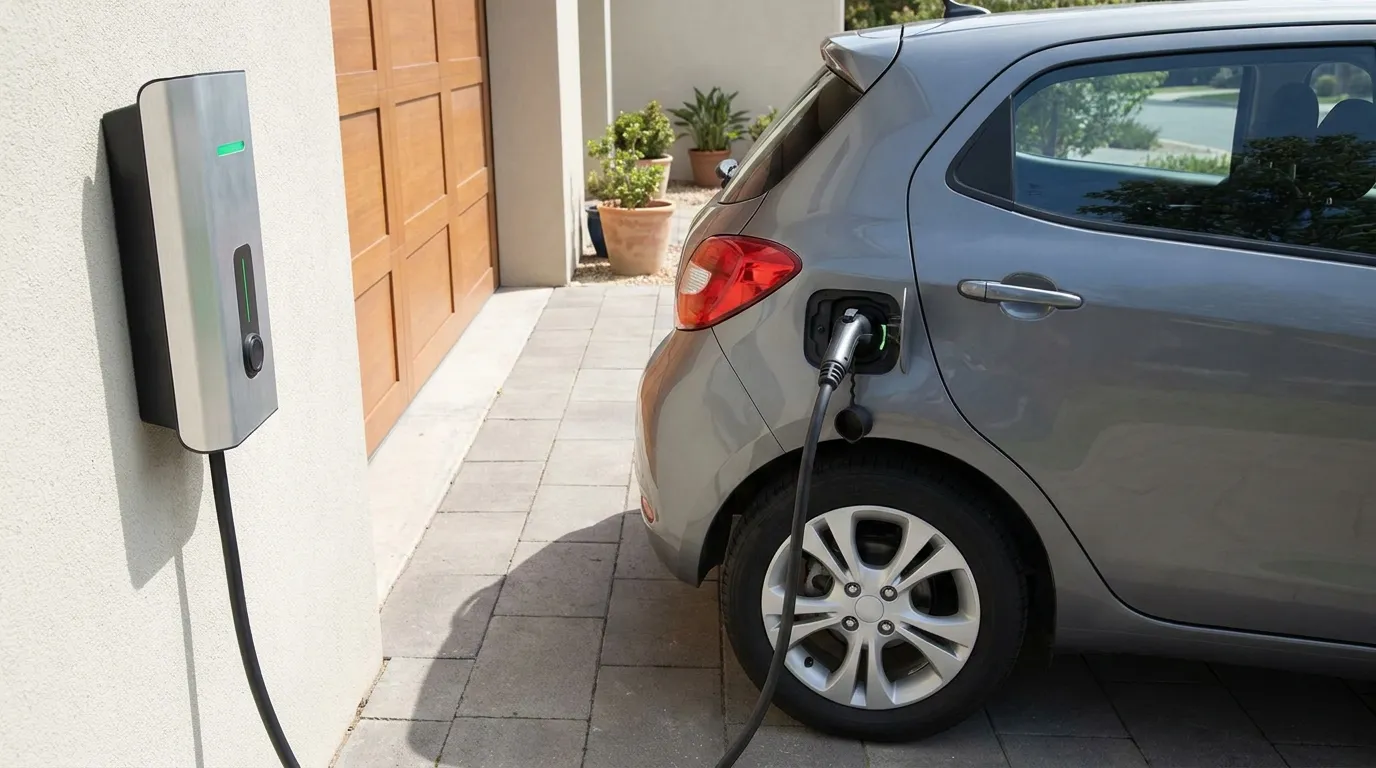
More than 30 states offer at least one EV-related incentive in 2026 (DOE Alternative Fuels Data Center, 2026), but home EV charger rebates specifically range from about $250 in New Jersey to $2,500 with some California utilities, and several states have no dedicated charger rebate at all. Customers and installers alike assume "my state has EV incentives" means the charger install is subsidized. It usually isn't, and even where a rebate exists, it never touches labor, permitting, or a panel upgrade.
This post maps the real state-by-state rebate landscape, explains what the now-expired federal Section 30C credit used to cover, and shows exactly where financing needs to step in, regardless of which state your customer lives in.
> Key Takeaways
> - More than 30 states offer some EV-related incentive in 2026, but far fewer have a dedicated home charger rebate (DOE AFDC, 2026). Amounts range from about $250 to $2,500.
> - No rebate program covers install labor, permitting, or a panel upgrade, roughly 75% of a typical job's cost (CostToCharge, 2026).
> - The federal Section 30C credit expired for property placed in service after June 30, 2026 (IRS, 2026). This is general information, not tax advice.
> - Financing works the same way in every state, rebate or no rebate, and Eos Loan charges no dealer fee.
See how Eos Loan financing helps you close more projects
Which States Offer EV Charger Rebates in 2026?
More than 30 states have at least one EV-related incentive on the books in 2026, but only a subset apply specifically to home Level 2 charger equipment and installation, and most of those are utility programs, not statewide rebates (DOE Alternative Fuels Data Center, 2026). That distinction trips up a lot of homeowners.
Searchers tend to conflate three different categories. The first is an EV purchase rebate, which applies to the vehicle itself, not the charger. The second is a charger-specific rebate, which applies to equipment and sometimes a portion of installation. The third is a utility managed-charging or time-of-use enrollment credit, an ongoing bill credit rather than an upfront payment.
Charger-specific rebates are almost always administered by individual utilities rather than a single statewide program. That's why the amount and eligibility can vary block by block within the same state, depending on which utility serves a given address. The DOE Alternative Fuels Data Center is the canonical, continuously updated source for tracking this, since program budgets and enrollment windows change throughout the year.
For a deeper look at how EV charger financing works day to day, see how EV charger financing works for installers.
What Do EV Charger Rebates Actually Cover, and What Do They Miss?
State and utility EV charger rebates typically cover a portion of hardware cost, from about $150 to $2,500 depending on the program, but they almost never cover install labor, conduit, permitting, or an electrical panel upgrade, which together make up roughly 75% of a typical home install (CostToCharge, 2026).
Consider two real examples. PG&E's residential charging program has offered a rebate covering a meaningful share of equipment purchase price for eligible customers, higher for income-qualified applicants, but the rebate is equipment-only. It doesn't touch labor. New Jersey's Charge Up program offers a $250 in-home Level 2 charger incentive, which covers only a fraction of a $1,400 to $2,200 all-in job (DOE AFDC, 2026). Confirm current terms directly with the utility or state program before quoting a customer, since these figures shift as funding rounds open and close.
This reinforces a coverage-gap concept we've documented before: rebates and OEM incentives cover equipment, never the labor and panel-upgrade share (Eos Loan, EV charger financing vs leasing vs cash, 2026). Roughly 75% of a typical home EV charger install cost is labor, materials, and permit, not the wallbox itself, and that's exactly the share no rebate touches.
What Happened to the Federal Section 30C EV Charger Tax Credit?
The federal Section 30C Alternative Fuel Vehicle Refueling Property Credit, worth up to $1,000 for individuals (30% of cost) and up to $100,000 per item for qualifying business installs, expired for property placed in service after June 30, 2026 (IRS, 2026).
That credit is now closed. Equipment had to be placed in service by June 30, 2026 to qualify, and this post publishes after that date. For historical reference, the credit while it applied ran 30% of cost up to $1,000 for individuals, and 6% (or 30% with prevailing wage and apprenticeship compliance) up to $100,000 per item for businesses (IRS, 2026).
This is general information, not tax advice. Consult a qualified tax professional.
With the federal credit gone, state and utility rebates are the only remaining incentive layer, and they're inconsistent, thin, or nonexistent in many states. That's exactly why financing needs to be the default conversation now, not a fallback you reach for when a customer asks about a rebate.
For the parallel story on the residential side, see how installers adapted when the residential solar credit ended.
Which States Have the Strongest EV Charger Rebate Programs Right Now?
California, Maryland, and Colorado currently have some of the more active charger-specific rebate activity, ranging from utility rebates in the hundreds of dollars to a multimillion-dollar commercial and multifamily EVSE fund, while several large states, including Texas, have no dedicated statewide home charger rebate identified at all (DOE Alternative Fuels Data Center, 2026). Verify current program status and budgets at write time, since funding rounds open and close throughout the year.
Verify current terms directly with each state or utility program before quoting a customer. Amounts and eligibility change frequently.
| State | Program type | Typical rebate | Covers labor/permit? | Source |
|---|---|---|---|---|
| California | Utility programs (PG&E, Vernon Public Utilities, others) | $150-$2,500 depending on utility and income tier | No | DOE AFDC, 2026 |
| New York | Utility charger programs; Drive Clean Rebate applies to the vehicle, not the charger | Varies by utility | No | NYSERDA, 2026 |
| Maryland | EVSE Rebate Program (state) | Program-level fund, recent round targeted at commercial, multifamily, and public sites | No | DOE AFDC, 2026 |
| Colorado | Utility programs (Black Hills Energy, Xcel, United Power) | Around $500 typical | No | DOE AFDC, 2026 |
| New Jersey | Charge Up NJ in-home charger incentive | $250 | No | DOE AFDC, 2026 |
| Massachusetts | Utility programs (National Grid, Eversource); no dedicated state charger rebate | Varies by utility | No | DOE AFDC, 2026 |
| Oregon | Utility programs (PGE, Pacific Power) | Varies by utility | No | DOE AFDC, 2026 |
| Texas | No dedicated statewide home charger rebate identified | N/A | N/A | DOE AFDC, 2026 |
Even the best-funded state program is equipment-only, and most states have no dedicated home charger rebate at all. That's the throughline: financing is the one option that works the same way in every state on this table.
A pattern we see across our own installer base: in states with thin or no rebate programs, like Texas, installers lean on financing for effectively 100% of EV charger deals. In states with active utility rebates, like California, installers still finance the labor, permit, and panel-upgrade share on nearly every job, since no rebate touches that portion either way.
What About Commercial, Fleet, and NEVI-Funded Charging Incentives?
The federal National Electric Vehicle Infrastructure (NEVI) program continues to apportion funding for FY2026, with multiple states opening new funding rounds and others expecting solicitations, but NEVI targets public corridor and fleet charging infrastructure, not individual homeowner installs (DOE Alternative Fuels Data Center, 2026).
NEVI money flows to state departments of transportation and site hosts for public and corridor chargers, sometimes commercial and multifamily sites too, but a residential customer can't apply directly. For installers serving commercial or fleet customers, NEVI-adjacent state solicitations are worth tracking, but the sales cycle, public procurement, corridor siting, runs much longer than a financed retail job.
For the day-to-day business of installing business and multifamily chargers that aren't NEVI-funded corridor sites, financing remains the faster, more predictable close. See financing options for business and fleet EV charging installs for the commercial-specific mechanics.
Can You Combine a State Rebate With EV Charger Financing?
Yes. A state or utility rebate and a financed installation aren't mutually exclusive. The rebate reduces the amount financed, or arrives as a post-install reimbursement, while financing covers the full job upfront so the customer isn't waiting weeks for a rebate check before work begins.
Here's the sequencing that matters. Most rebates are post-purchase or post-installation reimbursements, not point-of-sale discounts, so someone pays the full cost upfront either way. Financing removes that cash-flow gap entirely. The practical script for installers: quote the full project, apply financing for the whole amount, and let the customer apply any eligible rebate as a lump-sum payment toward the loan balance once it arrives, assuming the lender allows extra payments with no prepayment penalty.
Eos Loan charges no dealer fee, so the rebate isn't competing with a hidden cost on the installer's side of the transaction.
> From Eduardo Donadi, CEO of Eos Loan: "The rebate is never the reason a job closes. The reason a job closes is the customer knowing their monthly payment before they leave the room. A rebate that takes eight weeks to process doesn't help you close today."
Add financing to your installs, talk to our team
Should Installers Bundle EV Charger Financing With Battery Storage in States With Weak Rebates?
In states with thin or no EV charger rebate programs, bundling the charger with a battery energy storage system on a single financed ticket often makes more sense than chasing a small state incentive, since it raises deal size and covers both projects on one predictable payment.
The mechanics are straightforward: finance the charger and the battery together on one application, one approval, one monthly payment. That's a practical answer for installers in low-rebate states, Texas and much of the South and Mountain West included. Instead of waiting on a rebate that may not exist, present the bundle.
Section 30C's expiration and the patchwork, non-federal nature of state rebate programs mean 2026 is the first year since 2023 with no federal floor under EV charger costs at all, only a scattered mix of state and utility programs of wildly different generosity. Financing is now the one piece of the payment stack that's consistent nationwide.
For the full mechanics, see how to bundle EV charger and battery storage financing on one application.
Which Path Wins for Your Customers?
Rebates and financing aren't competing options, they're complementary, and the state a customer lives in shouldn't change how confidently you can quote a job.
- More than 30 states offer some EV-related incentive in 2026, but far fewer have a dedicated home charger rebate, and amounts range from about $250 to $2,500.
- No rebate program covers install labor, permitting, or a panel upgrade, roughly 75% of a typical job.
- The federal Section 30C credit expired June 30, 2026; state and utility programs are now the only remaining incentive layer, and they're inconsistent.
- Financing is the one option that works the same way in every state, rebate or no rebate.
- Finance the full job, then apply any rebate afterward as a lump-sum paydown.
- DOE Alternative Fuels Data Center, State Laws and Incentives, retrieved 2026-07-24, https://afdc.energy.gov/laws/state
- DOE Alternative Fuels Data Center, New Jersey Laws and Incentives (Charge Up NJ), retrieved 2026-07-24, https://afdc.energy.gov/laws/12660
- DOE Alternative Fuels Data Center, California Laws and Incentives, retrieved 2026-07-24, https://afdc.energy.gov/laws/all?state=CA
- DOE Alternative Fuels Data Center, Maryland Laws and Incentives, retrieved 2026-07-24, https://afdc.energy.gov/laws/all?state=MD
- DOE Alternative Fuels Data Center, Colorado Laws and Incentives, retrieved 2026-07-24, https://afdc.energy.gov/laws/all?state=CO
- DOE Alternative Fuels Data Center, Massachusetts Laws and Incentives, retrieved 2026-07-24, https://afdc.energy.gov/laws/all?state=MA
- DOE Alternative Fuels Data Center, Oregon Laws and Incentives, retrieved 2026-07-24, https://afdc.energy.gov/laws/all?state=OR
- DOE Alternative Fuels Data Center, Texas Laws and Incentives, retrieved 2026-07-24, https://afdc.energy.gov/laws/all?state=TX
- DOE Alternative Fuels Data Center, National Electric Vehicle Infrastructure Formula Program, retrieved 2026-07-24, https://afdc.energy.gov/laws/12744
- NYSERDA, Charging Station Programs, National Electric Vehicle Infrastructure Program, retrieved 2026-07-24, https://www.nyserda.ny.gov/All-Programs/Charging-Station-Programs/National-Electric-Vehicle-Infrastructure-Program
- IRS, Alternative Fuel Vehicle Refueling Property Credit, retrieved 2026-07-24, https://www.irs.gov/credits-deductions/alternative-fuel-vehicle-refueling-property-credit
- CostToCharge, Level 2 EV Charger Installation Cost Guide, retrieved 2026-07-24, https://costtocharge.com/guides/level-2-ev-charger-installation-cost
- Recharged, How Much Does Home EV Charger Installation Cost?, retrieved 2026-07-24, https://recharged.com/articles/how-much-does-home-ev-charger-installation-cost
Offer your customers flexible financing on essential projects
Or call +1 833-989-3737 to talk through a financing program for your business.
Frequently Asked Questions
question: "Which states have the best EV charger rebates in 2026?",
answer: "California, Maryland, and Colorado have some of the more active charger-specific programs, largely administered through individual utilities rather than a single statewide rebate (DOE Alternative Fuels Data Center, 2026). Program budgets and eligibility change throughout the year, so confirm current status directly with the state energy office or utility before quoting a customer."
},
{
question: "Do EV charger rebates cover installation labor or a panel upgrade?",
answer: "No. State and utility EV charger rebates typically apply only to equipment cost, sometimes a percentage of it. They do not cover labor, conduit, permitting, or an electrical panel upgrade, which together are roughly 75% of a typical home install cost (CostToCharge, 2026)."
},
{
question: "Is the federal EV charger tax credit still available?",
answer: "No. The Section 30C Alternative Fuel Vehicle Refueling Property Credit expired for property placed in service after June 30, 2026 (IRS, 2026). This is general information, not tax advice. Consult a qualified tax professional."
},
{
question: "Can I use a state EV charger rebate and financing on the same project?",
answer: "Yes. Financing covers the full project cost upfront, and any eligible state or utility rebate can typically be applied afterward as a lump-sum payment toward the loan balance, since Eos Loan charges no prepayment penalty. Subject to approval and eligibility."
},
{
question: "What if my state has no EV charger rebate program at all?",
answer: "Financing works the same way regardless of state or local incentive availability. States like Texas currently have no dedicated statewide home charger rebate identified (DOE Alternative Fuels Data Center, 2026), which makes financing, not a rebate, the primary way installers close these jobs."
}
]} />
---
Sources