

Financing After the Solar Tax Credit: A Contractor's Playbook
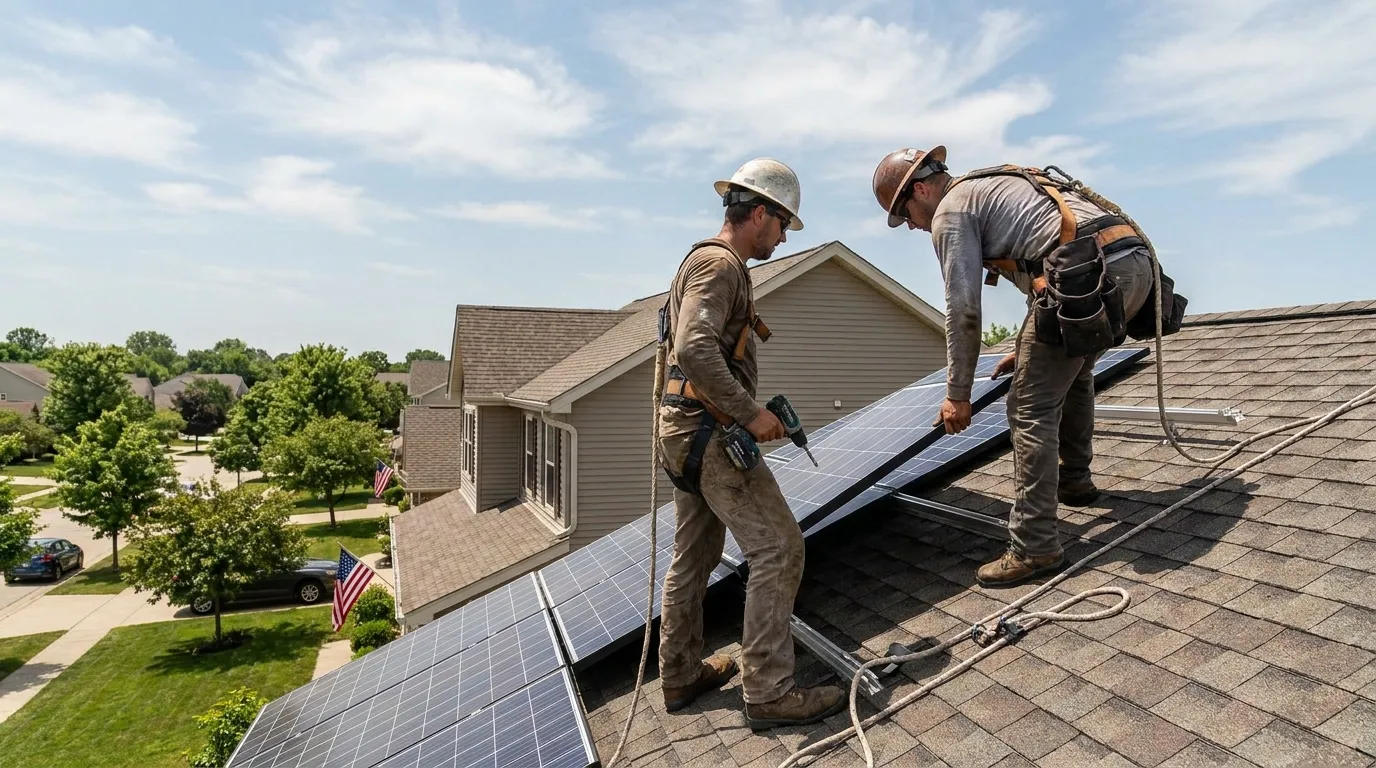
The 30% incentive that closed kitchen-table deals for years is gone. As of December 31, 2025, the residential clean-energy credit (Section 25D) no longer applies to property placed in service after that date, per the IRS. For installers, that changes the conversation, not the demand. Homeowners still want resilience and lower bills. What shifts is the lever you pull to close: from a vanishing incentive to a monthly payment they can actually picture.
This playbook covers three things. What exactly ended, what federal levers still exist for commercial work, and how financing plus standalone battery storage keeps your pipeline moving in 2026.
> Key Takeaways
> - The residential clean-energy credit (Section 25D) ended for property placed in service after December 31, 2025 (IRS, 2025).
> - The commercial 48E clean-electricity investment credit path generally remains through 2032 (IRS / statute).
> - Demand has not stopped: US residential storage hit 2.7 GW in 2025, up 92% year over year (Wood Mackenzie, 2025).
> - The winning move is payment-based selling plus standalone storage. This is general information, not tax advice; consult a qualified tax professional.
Add financing to your installs, talk to our team
What exactly ended on December 31, 2025?
The residential clean-energy credit (Section 25D), the 30% credit homeowners claimed for qualifying solar and battery storage, ended for property placed in service after December 31, 2025 (IRS, 2025). This was the consumer-side credit. A homeowner who turns a system on in 2026 cannot claim it.
!An installer and a homeowner reviewing financing paperwork at a kitchen table in daylight
Let's be precise, because the precision is what earns trust at the kitchen table. The credit equaled 30% of qualified expenditures for eligible residential clean-energy property (IRS, 2025). The trigger was "placed in service," not signed, not financed, not deposited. A system energized in 2026 falls outside the window.
What does this mean for your sales team? The 30% number that anchored hundreds of proposals is no longer a line a homeowner can write down. If your pitch leaned on that figure to justify the price, the pitch needs a new spine.
This is general information, not tax advice. Consult a qualified tax professional.
What's still available, the commercial 48E path?
Commercial projects and many third-party-owned structures can still use the clean electricity investment credit (48E), which the statute generally keeps available through 2032 (IRS / Inflation Reduction Act). The residential 25D consumer credit ended; the commercial federal lever did not.
This distinction matters because most coverage blurs it. A homeowner who buys a system gets no 25D credit in 2026. A business that owns generating property, or a financier in a third-party-owned arrangement, may still access 48E under the statute's general timeline through 2032 (IRS / statute). For installers who do commercial work, or who partner with TPO providers, a federal incentive story still exists for that side of the book.
State and utility programs add another layer, and they vary by market. Some states keep rebates and performance incentives that have nothing to do with the federal credit. Check your local programs before you assume the only lever is gone.
For the consumer projects that make up most residential pipelines, though, the credit is off the table. That is where battery energy storage financing becomes the practical answer, because the value case stands on its own.
This is general information, not tax advice. Consult a qualified tax professional.
How big is the gap the credit leaves, and why financing fills it
The credit reduced a homeowner's effective project cost by up to 30%, so its disappearance is a real number, not a rounding error. Yet demand kept climbing: US residential storage reached 2.7 GW in 2025, up 92% year over year (Wood Mackenzie, 2025). People still want these systems. The job now is making the price feel reachable.
In 2026, that means the close moves from incentive math to monthly-payment math. A homeowner cannot subtract 30% anymore. They can, however, compare a fixed monthly payment against the utility bill they already pay. That comparison is durable. It does not evaporate when a tax provision sunsets.
The broader market tells the same story. Total US storage deployment hit 18.9 GW in 2025, a 52% increase over the prior year (Wood Mackenzie, 2025). When a category grows this fast while a subsidy is sunsetting, the takeaway is clear: the product sells on its own merits, and affordability framing is what unlocks the order.
Here is the practical reframe. Financing does not replace the credit dollar for dollar. It replaces the role the credit played, which was making a large number feel manageable. A loan does that every month, for every customer, regardless of tax law.
See how Eos Loan financing helps you close more projects
Why standalone battery storage is the cleanest pivot
Battery storage carries its own value case, resilience and time-of-use savings, independent of any solar tax credit, which makes it the simplest product to lead with after 25D. Residential storage grew 92% year over year in 2025 (Wood Mackenzie, 2025), and almost none of that growth required a homeowner to model a credit.
!A wall-mounted residential battery storage unit installed in a garage in daylight
Think about what actually sells a battery. Outage protection when the grid goes down. Lower bills by shifting usage away from peak rates. Better economics under shifting net-metering rules that pay less for exported power. None of those drivers lived inside the tax code. They were always about how the homeowner uses energy day to day.
That independence is why storage is your cleanest post-credit lead. You are not asking a customer to bet on a subsidy. You are selling a benefit they feel during the next heat wave or the next blackout.
Financing makes the monthly number small. Eos Loan offers battery energy storage terms ranging from 6 to 240 months, subject to approval and eligibility. Stretching a payment across a longer term shrinks the monthly figure a homeowner weighs against their bill, which is exactly the comparison that closes deals now.
For the bigger picture on why this category keeps expanding, see the home battery growth story.
The contractor's post-credit sales script
Lead with the monthly payment, not the sticker price and not a vanished incentive. Offer financing at the point of sale so the homeowner compares a payment to the utility bill they already pay every month. Eos Loan has originated $4B+ to date across 30k+ proposals (Eos Loan internal data, 2026), so the appetite for financed essential projects did not vanish when the credit did.
Here is a three-step way to handle the "but the credit is gone" objection:
1. Acknowledge it plainly. "You're right, the federal residential credit ended at the end of 2025." Honesty earns the next sentence.
2. Reframe to the payment. "What it really changes is how we structure the cost. Instead of waiting on a tax credit, we can set this at a fixed monthly payment you compare to your current bill."
3. Lead with the benefit that doesn't need a credit. "And storage pays you back in resilience and off-peak savings whether or not any incentive exists."
The other half of the script is ticket size. Once financing is on the table, a single appointment can cover more than one essential project. A homeowner adding battery storage might also want an EV charger in the garage or water filtration for the house. Eos Loan finances all three, which turns one close into a larger one.
One hard rule for your reps: never quote a specific rate, APR, or fee, and never promise approval. Financing is subject to approval and eligibility. Eos Loan is a direct lender, not a marketplace, which means the financing decision and the funds come from one source at the point of sale.
For how this fits a broader sales motion, compare it with financing vs paying cash.
What this means for your pipeline in 2026
Installers who already sold on the monthly payment will feel the least disruption; those who relied on the 30% credit to close need a financing partner now. The market did not shrink, US storage grew 52% in 2025 to 18.9 GW (Wood Mackenzie, 2025), so the work is retraining the pitch, not chasing demand.
!A contractor crew working on a residential rooftop install in daylight
> What I'm hearing from installers in 2026: Since the credit lapsed, the most common report I get is sticker shock at the kitchen table. The reps who adapted fastest stopped opening with the system price. They open with "here's the monthly payment, here's your current bill," and the objection dissolves. The credit's exit turned out to reward the teams that already sold on affordability. Eduardo Donadi, CEO, Eos Loan
Why does a direct lender matter here specifically? Speed and certainty at the point of sale. When a homeowner is ready, you want a financing answer in the appointment, not a referral to a third party. A direct lender owns the decision, which keeps momentum on your side when the credit can no longer do the persuading for you.
The teams that thrive in 2026 will treat financing as the headline, not the fine print. The credit made price easy to ignore. Now the payment has to do that job, and the installers who build their pitch around it will keep their pipeline full.
Become an Eos Loan financing partner
Or call +1 833-989-3737 to talk through a financing program for your business.
Frequently Asked Questions
Did the solar tax credit really end in 2025?
Yes. The residential clean-energy credit (Section 25D) ended for property placed in service after December 31, 2025 (IRS, 2025). A homeowner who energizes a system in 2026 cannot claim it. This is general information, not tax advice; consult a qualified tax professional.
Is any federal solar tax credit still available in 2026?
For commercial work, generally yes. The 48E clean-electricity investment credit path generally remains through 2032 (IRS / statute). The residential 25D consumer credit does not. The distinction is commercial versus residential, so confirm which side a project sits on with a tax professional.
How do I sell solar or storage now that the 25D credit is gone?
Shift the conversation to the monthly payment using point-of-sale financing, and lead with standalone battery storage. Storage value comes from resilience and time-of-use savings, not the credit, and US residential storage still grew 92% in 2025 (Wood Mackenzie, 2025).
Does battery storage still make sense without the tax credit?
Yes. Storage value comes from outage protection and shifting usage off peak rates, both independent of any consumer credit. That is why US residential storage grew 92% year over year in 2025 to 2.7 GW (Wood Mackenzie, 2025), even as the credit was sunsetting.
What financing terms does Eos Loan offer for battery storage?
Eos Loan offers battery energy storage terms ranging from 6 to 240 months (flexible terms), subject to approval and eligibility. EV charger and water filtration projects carry flexible terms as well. Eos Loan is a direct lender, not a marketplace, so financing comes from a single source.
The takeaway for contractors
The headline is simple. The residential 25D credit ended December 31, 2025 (IRS). The commercial 48E path generally continues through 2032 (IRS / statute). Demand for battery storage kept growing through the sunset, up 92% year over year in 2025 (Wood Mackenzie, 2025). The winning move is payment-based selling, with standalone storage as the cleanest lead, backed by a direct lender that decides at the point of sale.
If your team relied on the credit to close, now is the moment to put financing at the center of the pitch. Talk to our team about adding financing to your installs and keep your pipeline moving. This is general information, not tax advice; consult a qualified tax professional.
---
Written by Eduardo Donadi, CEO of Eos Loan. Eos Loan is the fintech built to finance essential projects (battery energy storage, EV chargers, and water filtration) for installers, contractors, and resellers across the United States.
Sources
- IRS, Residential Clean Energy Credit (Section 25D), retrieved 2026-06-05, https://www.irs.gov/credits-deductions/residential-clean-energy-credit
- Wood Mackenzie, US energy storage monitor (2025 full-year figures: 18.9 GW total, +52% YoY; residential 2.7 GW, +92% YoY), retrieved 2026-06-05, https://www.woodmac.com/
- Eos Loan, originations and proposals to date ($4B+ originated, 30k+ proposals processed), internal data, retrieved 2026-06-05