

EV Charger Financing: A Guide for Installers and Their Customers
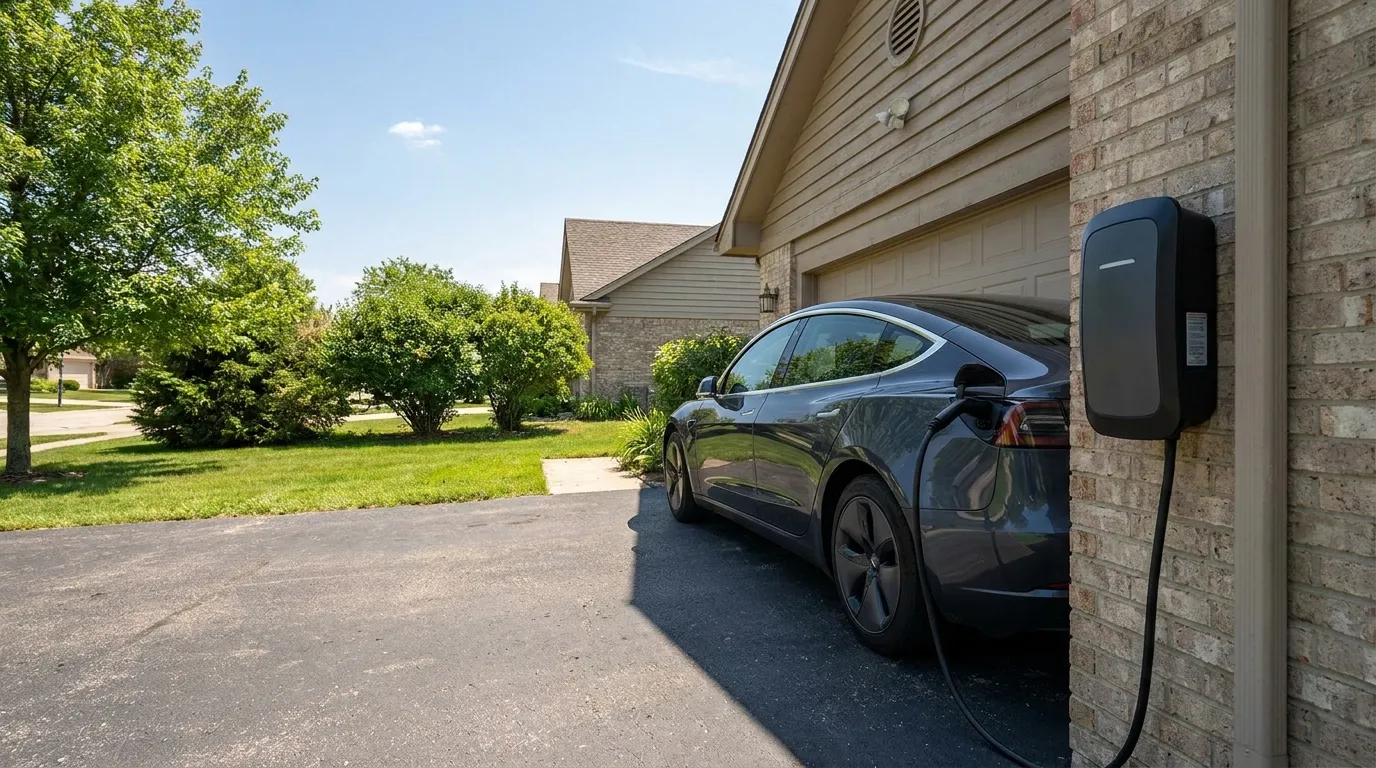
Here is the part of an EV charger quote that kills deals: the install line, not the charger. On a typical $1,800 home Level 2 install in 2026, roughly 75% of the price is labor and materials, not the wallbox itself (market cost data). That is also the part automaker incentives and utility rebates almost never cover, which is exactly where financing earns its keep.
Most online answers about "EV charger financing" point your customer to an automaker lease deal or a utility rebate. Neither one finances the install labor, and neither one is something you, the installer, control. This guide takes the dealer-financing view instead: what EV charger financing actually is, what a home install costs in 2026, why offering it lifts your close rate, the bundle-with-storage play, the closing Section 30C tax-credit window, and how to add it to the sale.
> TL;DR: A home Level 2 EV charger install runs roughly $1,400 to $2,200 all-in in 2026 (market cost data), and a monthly payment turns that sticker price into an easy yes. Offering EV charger financing as a direct-lender program lets installers close more jobs, bundle EV with battery storage, and beat the June 30, 2026 Section 30C tax-credit deadline. Subject to eligibility.
See how Eos Loan financing helps you close more projects
What is EV charger financing?
EV charger financing lets a customer pay for the charger and its installation over time in fixed monthly payments, while you, the installer, get paid upfront by a lender. Price stops being the reason a job stalls. With a direct lender like Eos Loan, one party funds the loan, there are no dealer fees, and terms stay consistent, all subject to approval and eligibility.
The mechanics are simple. You quote the EV charger and the install. The customer chooses a monthly payment instead of one lump sum. The lender funds the loan, pays you, and the customer repays the lender on flexible terms. You keep your cash flow; they keep their budget.
This is different from the two answers most people hear first. An automaker lease incentive discounts a vehicle, not your install. A utility rebate may knock a little off the hardware, but it rarely touches the labor, and you do not control whether it gets approved. Neither one funds the part of the job that actually carries the cost.
EV charger financing is a direct-lender loan that pays the installer upfront and lets the customer repay over time on flexible terms, subject to approval. Unlike an automaker lease incentive or a utility rebate, which the installer does not control and which rarely cover install labor, financing funds the whole project, hardware plus the labor that makes up most of the bill.
One distinction worth getting right: a direct lender funds the loan itself, while a marketplace routes your customer to third-party lenders. For the full picture across every project type you sell, see our contractor guide to offering customer financing.
How much does it cost to install an EV charger?
A home Level 2 EV charger install runs roughly $1,400 to $2,200 all-in for a median job in 2026, with a wider range of about $800 to $3,000 depending on the home (CostToCharge, 2026). If the home needs a 200A panel or service upgrade to support the circuit, add roughly $1,500 to $3,000 on top of that (EcoFlow, 2026).
Here is the number that should shape your pitch. On a typical $1,800 install, only about a quarter of the cost is the wallbox hardware. The other three quarters is labor, materials, and the permit: the electrician's time, the conduit and wire run, the breaker, and the inspection. The further the charger sits from the panel, the more that share grows.
!An electrician mounting a Level 2 wallbox EV charger on a residential garage wall in daylight.
On a typical home EV charger install in 2026, about 75% of the all-in cost is labor, materials, and the permit, and only about 25% is the wallbox itself (CostToCharge, 2026). That labor share is precisely what utility rebates and automaker incentives tend to skip, which is why financing the full project matters more than chasing a hardware discount.
Three things drive the spread. Panel capacity comes first: a full panel often forces an upgrade, which is the single biggest swing in the quote. Run distance is second, since a long conduit run from panel to parking spot adds labor and wire. Indoor versus outdoor mounting is third, because exterior installs need weatherproof gear.
That high scenario, a charger plus a panel upgrade, is where deals stall and where a monthly payment does the most work. On larger commercial or multi-port jobs, the site can also need a utility-side service upgrade rather than just a panel swap; see what happens when the site needs a grid capacity upgrade for how that longer utility process affects the timeline and the financing.
Why offer EV charger financing as an installer?
Financing turns the all-in price into a monthly payment, which lifts both your close rate and your average ticket. When the customer's question changes from "can I afford $4,500?" to "can I fit this payment into my month?", more people say yes, and more say yes to the panel upgrade you would otherwise lose. Demand is climbing too: analysts project the US EV charging market to grow at roughly a 25% compound annual rate through the early 2030s (Grand View Research, 2025).
That market estimate is a vendor projection, and firms differ. Grand View Research and Fortune Business Insights both model strong double-digit growth for EV charging infrastructure through the decade, though their exact figures vary (Fortune Business Insights, 2025). The direction is what matters for your pipeline: more EVs on driveways means more home charging jobs to win.
Financing reframes a large EV charger install as a monthly payment, which lifts close rate and ticket size while the broader market grows at a projected ~25% CAGR through the early 2030s (Grand View Research, 2025). The panel-upgrade objection, often the deal-killer, softens the moment the customer is choosing a payment instead of a lump sum.
For a full breakdown of how fast financing decisions actually come back, and why the install still runs on its own separate timeline, see how long EV charger financing approval takes.
There is a first-person pattern worth sharing here.
> What I'm seeing from installers: Across the Eos Loan partner base, the EV charger is rarely the headline sale. It is the add-on that lifts ticket size after a customer has already said yes to battery storage or solar. The installers who present a monthly payment at quote time, instead of after the customer sees the all-in number, tend to lose fewer of those add-on jobs. I frame this as a pattern we see, not a guarantee of results.
And you get paid upfront. A financed deal pays you in full at install while the customer pays the lender over time, so your cash flow does not wait on their budget. That is the other half of why financing belongs on every EV charger quote, not just the ones where the customer flinches.
Add financing to your installs, talk to our team
Should you bundle an EV charger with battery storage?
Yes, for most clean-energy households. The EV charger is the natural add-on once a customer commits to battery storage or solar, and bundling raises the ticket on a single approval instead of forcing a second sales cycle later. The demand is real: US residential storage reached 2.7 GW in 2025, up 92% year over year (Wood Mackenzie, US Energy Storage Monitor, 2025).
The logic is straightforward. A household installing battery storage already has an electrician on site, a panel being assessed, and a clean-energy mindset. Adding an EV charger to that same job shares the labor, shares the approval, and avoids a second truck roll. One financing relationship covers both projects, which is simpler for you and for the customer.
!An electric car charging in a sunny driveway beside a home with rooftop solar panels.
A multi-vertical financing program is what makes the bundle work cleanly. With Eos Loan, battery energy storage terms run from 6 to 240 months, with flexible terms on EV chargers, so you can put both projects on one consistent approval standard. For the deeper storage playbook, see our battery storage financing guide for installers.
Bundling an EV charger with battery storage raises ticket size on a single approval, and the storage demand is there: US residential storage grew 92% in 2025 to 2.7 GW (Wood Mackenzie, 2025). A customer who finances one essential project is the easiest customer to sell the next, so a program that covers both verticals turns one job into two.
> Our finding: Across the Eos Loan partner base, EV chargers attach most often as a second project on a household that already financed solar or battery storage, not as a standalone first purchase. Installers who run a multi-vertical program, financing storage and EV together, see that cross-sell happen more often than single-vertical sellers. We frame this as a pattern, not a promise.
Is there still a tax credit for home EV chargers in 2026?
There is, but the window is closing fast. The federal Section 30C credit (Alternative Fuel Vehicle Refueling Property Credit) covers 30% of qualifying EV charger property, up to $1,000 for an individual's residential install, but only for property placed in service on or before June 30, 2026, and only in eligible low-income or non-urban census tracts (IRS, 2026). Two limits, a hard date and a geographic test, mean many homes will not qualify.
This is general information, not tax advice. Consult a qualified tax professional.
The contrast with solar is worth flagging for your customers, because it changes the affordability conversation. The residential clean-energy credit (Section 25D), the one that covered solar and battery storage, already ended on December 31, 2025 (IRS, 2025). So for most residential clean-energy work in 2026, the federal credit is either gone or about to be.
The Section 30C EV charger credit covers 30% of qualifying property up to $1,000 for individuals, but only for installs placed in service by June 30, 2026, in eligible census tracts (IRS, 2026). After that date, or outside an eligible tract, the customer's affordability lever is financing, not a credit. This is general information, not tax advice; consult a qualified tax professional.
A clear line to hold: do not describe EV charger financing as a tax credit, rebate, or incentive. It is a loan that lets the customer pay over time. Once the 30C window closes, financing is the affordability tool that still works, which is exactly why it belongs in your pitch now. For the residential angle after the credit, see our financing after the solar tax credit playbook.
How do you choose an EV charger financing program?
Choose on five tests: is the company a direct lender, are dealer fees transparent, how flexible are the terms, how many project types does it cover, and how fast is approval. A direct lender funds loans itself, so you deal with one accountable party and one consistent standard. A marketplace routes your customer to third-party lenders, adding handoffs and variable terms you do not control.
These tests reinforce each other. A direct lender can keep fees transparent because it controls the fee. Multi-vertical coverage only helps if terms are flexible enough to fit both a $1,500 EV charger and a $30,000 storage system. Fast approval only matters if the underwriting standard is consistent enough to trust on every deal.
Here is how Eos Loan maps to those five points. We are a direct lender, not a marketplace or broker. We charge no dealer fees. We offer battery energy storage terms from 6 to 240 months with flexible terms on EV chargers and water filtration, we cover multiple essential project verticals, and approval runs under one consistent standard, subject to eligibility. We have originated more than $4 billion to date across more than 30,000 proposals processed, so the program is built for volume.
Pick an EV charger financing program on five tests, direct lender, no hidden dealer fees, flexible terms, multi-vertical coverage, and fast approval, and weigh them together rather than chasing one feature. Eos Loan is a direct lender with no dealer fees, multi-vertical coverage, and $4B+ originated to date, all subject to approval and eligibility.
How do installers add EV charger financing to the sale?
Present the monthly payment at quote time, on every essential-project quote, before the customer sees the all-in sticker. The deals that stall are the ones where price lands first and payment lands second. Flip the order and the panel-upgrade line item stops being a wall. The market rewards the motion: storage and EV demand are both climbing into 2026 (Wood Mackenzie, 2025).
Script the panel-upgrade line specifically. When a home needs a 200A upgrade, do not bury it as a scary add-on; present the whole job as one monthly payment so the upgrade reads as a few extra dollars a month, not a separate $2,500 shock. That framing recovers jobs that a line-item quote loses.
Cross-sell from the storage conversation. If a customer is already financing battery storage, ask the EV charger question before you leave the kitchen table, while the approval and the electrician are already in play. For the consumer-facing version your customer can read, see our walkthrough on how to offer EV charger financing.
Onboarding is a conversation, not a self-serve signup. To start offering EV charger financing, you contact our team and we set up your program directly; there is no partner registration form to fill out alone.
Become an Eos Loan financing partner
Or call +1 833-989-3737 to talk through a financing program for your business.
Frequently Asked Questions
Can you finance an EV charger installation?
Yes. Through a direct-lender program, your customer pays for the charger and install over time in fixed monthly payments while you get paid upfront, subject to approval and eligibility. That matters because about 75% of a typical install is labor and materials, not the wallbox (CostToCharge, 2026), the part rebates rarely cover.
How much does a home EV charger cost to install in 2026?
A home Level 2 install runs roughly $1,400 to $2,200 all-in for a median job, with a range of about $800 to $3,000 depending on the home (CostToCharge, 2026). A 200A panel or service upgrade can add $1,500 to $3,000 (EcoFlow, 2026). Most of the cost is labor, not hardware.
Is the EV charger tax credit still available in 2026?
The Section 30C credit covers 30% of qualifying EV charger property up to $1,000 for individuals, but only for property placed in service by June 30, 2026, and only in eligible low-income or non-urban census tracts (IRS, 2026). This is general information, not tax advice. Consult a qualified tax professional.
Can I bundle an EV charger with battery storage financing?
Yes. A multi-vertical program finances both, often on a single approval, which raises ticket size without a second sales cycle. With Eos Loan, battery energy storage terms run 6 to 240 months with flexible terms on EV chargers. US residential storage grew 92% in 2025 (Wood Mackenzie, 2025), so the bundle opportunity keeps expanding.
How does an installer start offering EV charger financing?
You contact the lender's team to set up a financing partnership; there is no self-serve registration form. With a direct lender like Eos Loan, one party handles underwriting and funding under a consistent standard, subject to eligibility. The company has originated $4B+ to date across 30k+ proposals processed, so the program is built for installer volume.
The bottom line for 2026
EV charger financing is one of the most direct ways to win the install jobs that price hesitation would otherwise kill. The core moves are clear:
- Lead with the real cost story: most of the install is labor, not the wallbox, and that is what financing covers and rebates do not.
- Present the monthly payment at quote time on every essential-project quote, especially when a panel upgrade is in play.
- Bundle the EV charger with battery storage so one approval covers two projects and raises your ticket.
- Treat the Section 30C window (closing June 30, 2026, eligible tracts only) as a reason to make financing the affordability lever, not a credit you promise.
- Choose a direct lender with no dealer fees and multi-vertical coverage.
- CostToCharge, Level 2 EV Charger Installation Cost guide (home install ~$1,400-$2,200 all-in; ~$800-$3,000 range; labor share), retrieved 2026-06-05, https://costtocharge.com/guides/level-2-ev-charger-installation-cost
- EcoFlow, Level 2 Charger Installation Cost (panel/service upgrade adds ~$1,500-$3,000), retrieved 2026-06-05, https://energy.ecoflow.com/us/blog/level-2-charger-installation-cost
- Internal Revenue Service, Alternative Fuel Vehicle Refueling Property Credit (Section 30C: 30% up to $1,000, in-service deadline June 30, 2026, eligible census tracts), retrieved 2026-06-05, https://www.irs.gov/credits-deductions/alternative-fuel-vehicle-refueling-property-credit
- Internal Revenue Service, Residential Clean Energy Credit (Section 25D ended December 31, 2025), retrieved 2026-06-05, https://www.irs.gov/credits-deductions/residential-clean-energy-credit
- Wood Mackenzie, US Energy Storage Monitor (2025 residential storage 2.7 GW, +92% YoY; total 18.9 GW, +52% YoY), retrieved 2026-06-05, https://www.woodmac.com/
- Grand View Research, Electric Vehicle Charger and Charging Station Market (vendor growth estimate, ~25% CAGR), retrieved 2026-06-05, https://www.grandviewresearch.com/industry-analysis/electric-vehicle-charger-and-charging-station-market
- Fortune Business Insights, Electric Vehicle Charging Stations Market (vendor growth estimate), retrieved 2026-06-05, https://www.fortunebusinessinsights.com/electric-vehicle-ev-charging-stations-market-102058
Eos Loan is a direct lender built for exactly this: no dealer fees, multi-vertical coverage across battery energy storage, EV chargers, and water filtration, and battery energy storage terms from 6 to 240 months with flexible terms on EV, all subject to approval and eligibility. If you want to add EV charger financing to your installs, contact our team. There is no self-serve signup; we work with you directly.
Offer your customers flexible financing on essential projects
---
Sources
About the author: Eduardo Donadi is the CEO of Eos Loan, the fintech built to finance essential projects (battery energy storage, EV chargers, and water filtration) for installers, contractors, and resellers across the United States.