

EV Charger Financing for Car Dealerships: 2026 Cost Guide
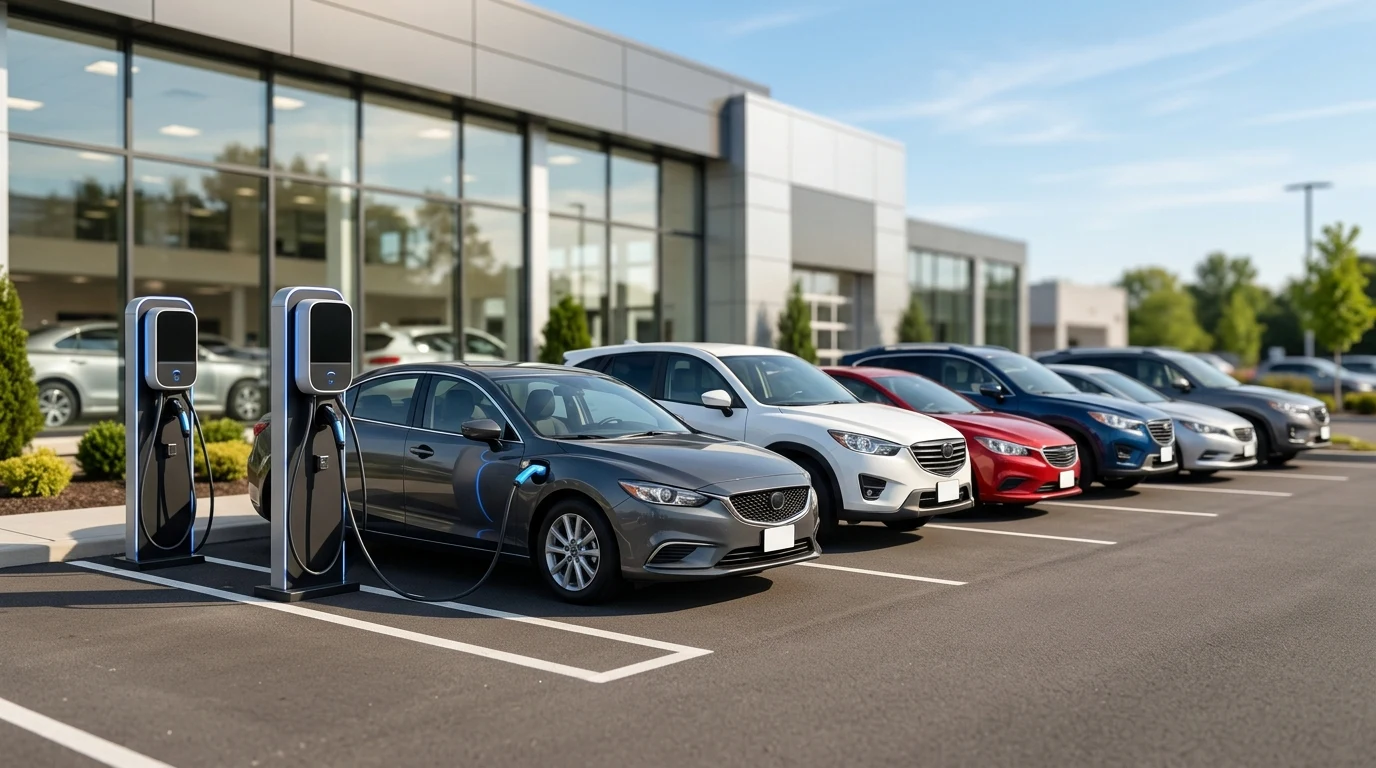
Ford's EV-certification tiers required dealers to invest $500,000 to $1.2 million in DC fast chargers to sell certain EV models (InsideEVs, 2024). That's not a discretionary showroom upgrade. It's forced capex on an OEM deadline. And it lands on the dealership's balance sheet whether or not the timing is convenient.
A DC fast charger is a high-power charging unit, typically 50 kW or above, that can restore significant driving range in minutes rather than hours; it's the equipment most automaker certification tiers actually require.
So installers bidding these accounts need to speak that language. A dealership General Manager evaluating a six-figure charger buildout isn't weighing "nice to have." Instead, they're weighing a compliance deadline against cash reserves. This guide covers why dealerships install chargers, what the tiers actually cost, and how installers structure financing to close these projects.
> Key Takeaways
> - Ford's Model e certification tiers have required $500,000 to $1.2 million in dealer investment (InsideEVs, 2024).
> - Commercial DC fast charger installs run $80,000-$250,000+ per unit in 2026, driven mostly by electrical and civil work (Qmerit, 2026).
> - GM has committed nearly $750 million to dealer and community charging through Ultium Charge 360 (GM, 2021).
> - The federal Section 30C credit no longer applies to property placed in service after June 30, 2026 (IRS), shifting the funding math toward financing.
See how Eos Loan financing helps you close more projects
Why Are Car Dealerships Installing EV Chargers?
Nearly 80% of new-vehicle buyers say the dealership experience influenced their purchase decision (Cox Automotive, 2024). On top of that, automaker certification programs have made charger installation a condition of selling certain EV models at all. Together, that combination turns lot charging from a nice amenity into a sales requirement tied directly to inventory access.
An OEM certification tier is a rank an automaker assigns to a dealership based on how much charging infrastructure and EV-sales investment it has made; higher tiers unlock access to more EV inventory.
Three drivers show up repeatedly in installer conversations. First, OEM certification requirements: Ford's Model e program tied charger investment to the right to order and sell EV inventory. Second, inventory readiness, since new EVs need to hold a charge on the lot for test drives. Third, service-loaner charging, because a service department handing out EV loaners needs somewhere to plug them in overnight.
Ford's Model e Certified tier required roughly $500,000 in investment, including one public DC fast charger. The Certified Elite tier went up to $1.2 million and two DC fast chargers (InsideEVs, 2024). Meanwhile, consumer hesitation around charging access is easing: only 57% of EV-intending shoppers now cite a lack of charging stations as a top adoption barrier, down from 64% in 2019 (Cox Automotive, 2024). Dealer-side charging access is likely part of why that number is moving.
For the underwriting basics behind any of this, see our EV charger financing program for installers, which this guide builds on for the dealership vertical specifically.
How Much Does It Cost a Dealership to Install EV Chargers?
A dealership DC fast charger bay runs $80,000 to $250,000 or more per unit installed in 2026, while a Level 2 lot port runs $3,500 to $15,000 (Qmerit, 2026). The gap between those two numbers is the first thing a dealership finance manager needs to understand before signing off on a scope.
Most of that DC fast charger cost is not the hardware. Instead, electrical and civil work, trenching, panel upgrades, switchgear, conduit runs, typically makes up 50% to 70% of total commercial DC fast charger project cost (EVB, 2026). So a dealership pursuing a Certified Elite-style tier with two DC fast chargers isn't just doubling one line item. In practice, it's often triggering a panel capacity upgrade across the whole property, one that has to support both new units plus the Level 2 ports already on the lot.
For the general per-port cost and Section 30C breakdown outside the dealership context, see our commercial EV charging cost and tax-credit breakdown.
Do Automakers Require Dealers to Install EV Chargers?
Roughly two-thirds of Ford's U.S. dealer network, about 1,920 of its roughly 2,900 dealers, enrolled in the Model e certification program before Ford eased the mandate in July 2024 (InsideEVs, 2024). That easing matters for accuracy: installers pitching this vertical should not present Ford's original mandate as still active in its strictest form.
So GM's program is the current-state example worth leading with instead. Through Ultium Charge 360, GM has committed nearly $750 million to expand home, workplace, and dealer and community charging infrastructure, including up to 10 free Level 2 chargers per certified dealer (GM, 2021). Meanwhile, Ford dealerships still provide public access to more than 3,000 fast charging stations as of 2025 (Ford, 2025). In other words, the infrastructure built under the original mandate is still doing work, even after the requirement itself softened.
A Level 2 charger is a lower-power AC unit, typically 7 to 19 kW, used for overnight or multi-hour charging; dealerships use it for service loaners and lot inventory rather than fast public charging.
The takeaway for installers: OEM requirements vary by automaker and change over time. Confirm current terms with the dealership's OEM representative before bidding a project against an assumed mandate. Don't quote a Certified Elite-style scope if the dealership's brand has already eased its requirement, and don't assume a program has gone away just because one manufacturer adjusted its terms.
How Do Dealerships Pay for EV Charger Installation?
NADA counts roughly 16,990 franchised light-vehicle dealerships operating in the U.S. as of its 2025 annual profile (NADA, 2025). That group spans single-point family dealers and large public dealer groups, so OEM capital requirements land on very different balance sheets. Either way, cash reserves rarely absorb a six-figure certification tier without disrupting the working capital a dealership needs for inventory floor plans and daily operations. A floor plan is the revolving credit line a dealership uses to finance its vehicle inventory, and it's usually the first thing a General Manager protects.
Dealerships generally choose from three funding paths: cash reserves, OEM co-op or incentive funds, or private financing. OEM co-op funds are dollars an automaker contributes toward approved marketing or infrastructure spend, but they're often partial and paid out after the fact, which doesn't help when a certification deadline is fixed. Cash reserves work too, until the dealership needs that capital for something else. That's common in a business that already carries significant floor-plan debt on its vehicle inventory. By contrast, financing turns the certification tier into a monthly payment instead of a cash-flow event.
Most published guides on this topic treat dealership charger installs as a hardware or vendor sales pitch: here's the equipment, here's why you need it. That framing misses the actual financing hook. An OEM certification deadline is forced capex with a hard compliance date attached, which is exactly the scenario where financing outperforms cash reserves or waiting on delayed co-op funds. Dealership charging looks discretionary. It rarely behaves that way once a certification clock is running.
A phased, flexible-term structure smooths a multi-charger buildout for a dealership the same way it does for a fleet depot rollout. See our guide on multi-site, multi-charger financing structure for how that phasing works in practice.
Add financing to your installs, talk to our team
What Should Installers Know Before Bidding a Dealership Project?
Dealership decision-making usually runs through a General Manager or Fixed Operations Director, not a single owner. On top of that, an OEM certification deadline creates a hard timeline that a cash-strapped dealer group cannot simply push back. So who actually signs off? That multi-stakeholder pattern looks a lot like the sign-off chain on a fleet depot project: more than one person needs to say yes before a contract gets signed.
When we've talked with installers bidding dealership accounts, the sticking point usually isn't the charger itself. It's timing the DC fast charger order against the OEM's certification deadline. Lead times on DC fast charger hardware can run months, and a dealership that waits until 60 days before its deadline to start the financing conversation has already put the timeline at risk.
Before bidding, gather the documentation a dealership account typically needs: a site plan, panel capacity assessment, and the OEM certification letter spelling out the tier and deadline. Electrical and civil work still drives 50% to 70% of total commercial DC fast charger project cost, not the hardware itself (EVB, 2026). As a result, that panel assessment often determines the real project scope more than the charger spec sheet does.
Level 2 lot chargers and DC fast chargers also finance differently given the gap in cost and complexity between them. See our breakdown of how equipment tier changes the financing approval for what changes in underwriting between the two.
Is There a Tax Credit for Dealership EV Chargers in 2026?
The federal Section 30C Alternative Fuel Vehicle Refueling Property Credit is a tax credit that previously offset part of the cost of qualifying EV charging equipment; it no longer applies to commercial EV charging property placed in service after June 30, 2026 (IRS, 2025). That date change matters for any dealership project completing after mid-2026, since it removes a funding source that used to offset part of the certification investment.
While active, Section 30C covered up to 30% of project cost for property meeting prevailing wage and apprenticeship requirements, or a 6% base rate without that compliance, capped at $100,000 per item (IRS, 2025). However, the One Big Beautiful Bill Act moved the credit's termination date up from December 31, 2032 to June 30, 2026 for alternative fuel vehicle refueling property (IRS, Instructions for Form 8911, 2025).
So once that credit window closes, financing becomes the more durable lever for funding a certification-tier buildout, since it doesn't depend on a statutory deadline the way a tax credit does. This is general information, not tax advice. Consult a qualified tax professional for how the credit's expiration applies to a specific dealership's timeline and tax situation.
Some dealerships pair a certification buildout with battery storage, either to backstop the added electrical load or to keep service bays running during an outage. If that bundle angle comes up in a bid, our battery storage financing guide for installers covers the underwriting side of that pairing.
---
Become an Eos Loan financing partner
Or call +1 833-989-3737 to talk through a financing program for your business.
Frequently Asked Questions
Do all car dealerships need to install EV chargers?
No. Only dealers pursuing specific OEM EV-certification tiers or actively marketing EV inventory typically install dedicated DC fast chargers. Requirements vary by automaker and have changed over time; Ford eased its Model e mandate in 2024 (InsideEVs, 2024).
How many EV chargers does a typical dealership need?
It varies by OEM tier and lot size. Ford's Model e Certified tier required as few as one public DC fast charger, while Certified Elite required two or more (InsideEVs, 2024), plus Level 2 chargers for service loaners and inventory prep.
Can a dealership finance EV charger installation instead of paying cash?
Yes. Private financing lets a dealership or its installer spread the cost of a DC fast charger buildout over flexible terms instead of paying the full OEM certification investment upfront, subject to approval and eligibility.
What does a DC fast charger cost to install at a dealership in 2026?
Commercial DC fast charger installations typically run $80,000 to $250,000 or more per unit in 2026, with electrical and civil work driving most of that cost (Qmerit/EVB, 2026).
The Deadline Is the Pitch
OEM certification tiers turn dealership EV charger installs into forced, deadline-driven capex, not a discretionary showroom upgrade. Here's what to carry into the next dealership bid:
- Certification tiers have run $500,000 to $1.2 million in dealer investment (InsideEVs, 2024).
- DC fast chargers dominate project cost, and electrical/civil work drives 50-70% of that number, not hardware.
- The Section 30C tax credit window closed for property placed in service after June 30, 2026.
- Financing fits a dealership's cash-flow reality better than cash reserves or delayed OEM co-op funds, subject to approval and eligibility.
Bidding a dealership certification project? Offer your customers flexible financing on essential projects and get the financing conversation started before the certification clock runs out. For the contrast case on a different buyer vertical, see our guide on how retail and hospitality businesses finance EV charging.
---
About the author: Eduardo Donadi is the CEO of Eos Loan, a direct lender specializing in financing for essential projects including battery energy storage, EV chargers, and water filtration. He works directly with electrical contractors and installers on financing structure for dealership certification projects, fleet depots, and everything in between.
---
Sources
1. InsideEVs. "Ford Reportedly Loosens EV Dealer Certification Rules." https://insideevs.com/news/610114/ford-modele-dealership-rules/ Retrieved 2026-08-15.
2. GM. "Ultium Charge 360 Dealer and Community Charging Commitment." https://news.gm.com/home.detail.html/Pages/news/us/en/2021/oct/1026-ultium-charger.html Retrieved 2026-08-15.
3. Ford. "Ford Dealerships Provide Public Access to 3,000+ Fast Charging Stations." https://www.fromtheroad.ford.com/us/en/articles/2025/ford-dealerships-provide-public-access-to-3000-plus-fast-charging-stations Retrieved 2026-08-15.
4. Qmerit. "How Much Does a Commercial EV Charging Station Cost? The 3 Top Factors to Consider." https://qmerit.com/blog/how-much-does-a-commercial-ev-charging-station-cost-the-3-top-factors-to-consider/ Retrieved 2026-08-15.
5. EVB. "How Much Does a DC Fast Charging Station Cost in 2026? Full Commercial Guide." https://www.evb.com/how-much-does-a-dc-fast-charging-station-cost-in-2026-full-commercial-guide/ Retrieved 2026-08-15.
6. NADA. "2025 NADA Data Annual Financial Profile of America's Franchised New-Car Dealerships." https://www.nada.org/media/4695/download?inline= Retrieved 2026-08-15.
7. IRS. "Instructions for Form 8911, Alternative Fuel Vehicle Refueling Property Credit." https://www.irs.gov/instructions/i8911 Retrieved 2026-08-15.
8. IRS. "Alternative Fuel Vehicle Refueling Property Credit." https://www.irs.gov/credits-deductions/alternative-fuel-vehicle-refueling-property-credit Retrieved 2026-08-15.
9. Cox Automotive. "Cox Automotive's Car Buyer Journey Study Reveals Record-High Satisfaction Among New and EV Buyers." https://www.coxautoinc.com/insights/cox-automotives-car-buyer-journey-study-reveals-record-high-satisfaction-among-new-and-ev-buyers/ Retrieved 2026-08-15.
10. Cox Automotive. "As More Americans Choose EVs, Price and Range Continue to Hold Back the Market." https://www.coxautoinc.com/insights-hub/as-more-americans-choose-evs-price-and-range-continue-to-hold-back-the-market-according-to-new-cox-automotive-study/ Retrieved 2026-08-15.