

Level 2 vs. DC Fast Charger Financing: Cost and Approval Differences
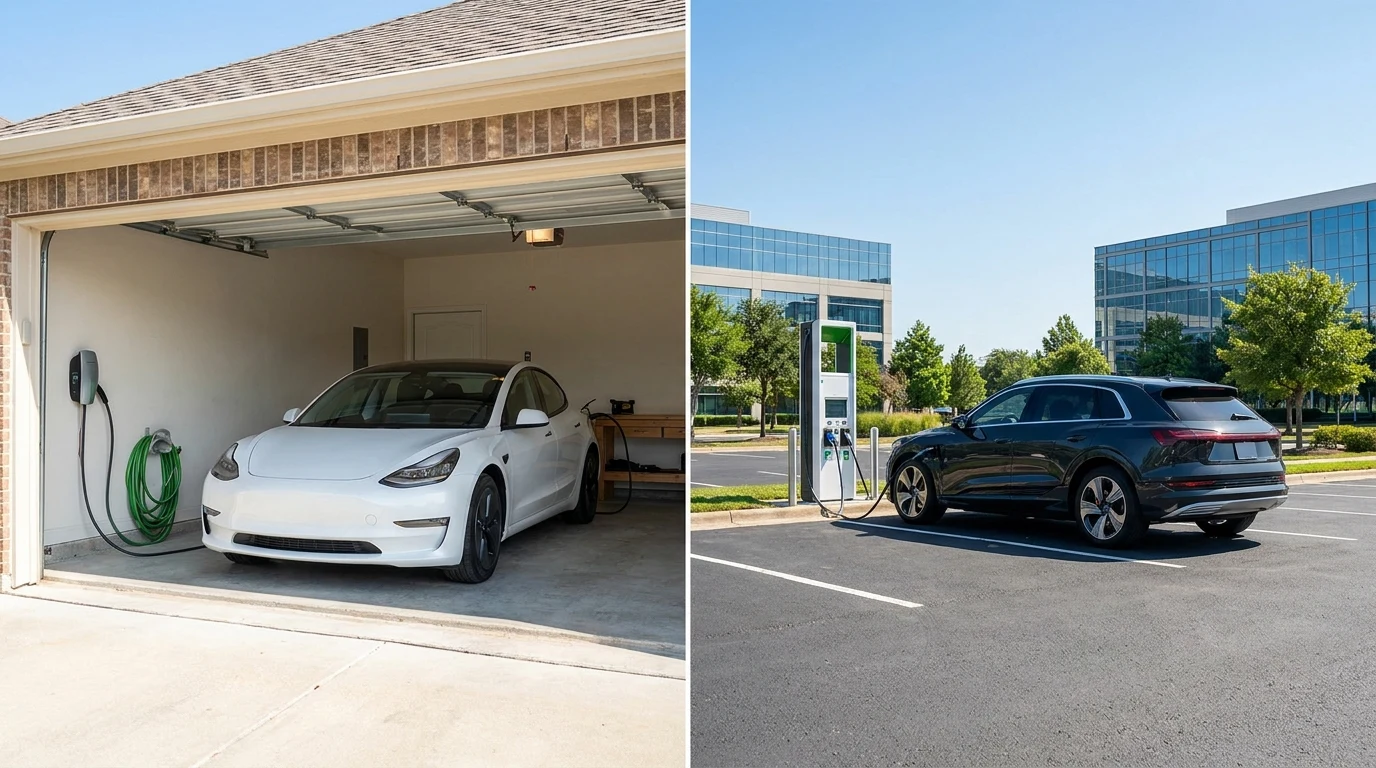
The equipment alone for one DC fast charger can cost more than ten complete Level 2 installs combined (Qmerit, 2026). A commercial Level 2 port runs $3,500 to $15,000 installed. A DC fast charger runs $40,000 to $250,000 or more per unit. Installers and fleet buyers often treat "EV charger financing" as one conversation, but a $10,000 job and a $150,000 job do not shop, quote, or get approved the same way.
This guide breaks down the technical difference between Level 2 and DC fast charging, the real 2026 cost ranges for each, and how ticket size changes the financing and approval path for the customer sitting across the table from you.
> Key Takeaways
> - Level 2 delivers 3.3-19.2 kW and adds roughly 10-20 miles of range per hour; DC fast charging delivers 50-350+ kW and adds up to 180-240 miles per hour (DOE Alternative Fuels Data Center, 2026).
> - Commercial Level 2 ports cost $3,500-$15,000 installed; DC fast chargers cost $40,000-$250,000+ per unit (Qmerit, 2026).
> - Ticket size, not just credit profile, is what shapes which financing conversation a customer gets.
> - The Section 30C federal tax credit applies to both tiers but ends for property placed in service after June 30, 2026 (IRS).
> - Eos Loan is a direct lender with no dealer fee, subject to approval and eligibility.
See how Eos Loan financing helps you close more projects
What Is the Difference Between Level 2 and DC Fast Charging?
Level 2 charging delivers 3.3 to 19.2 kW through AC power that the vehicle converts onboard, adding roughly 10 to 20 miles of range per hour. DC fast charging delivers 50 to 350+ kW directly to the battery, adding up to 180 to 240 miles of range per hour (DOE Alternative Fuels Data Center, 2026). That's the core spec gap driving everything else in this guide.
The technology split matters for where each gets used. Level 2 is the workhorse for overnight charging, workplace lots, and fleet depots where a vehicle sits parked for hours anyway. DC fast charging is built for turnover: highway corridors, retail sites, and any location where a driver needs a meaningful charge in 20 to 45 minutes, not overnight.
Isn't it worth knowing this split before a quote goes out? A fleet manager who assumes "faster charger" always means "better charger" hasn't priced out the electrical infrastructure yet. That's the conversation the next two sections set up.
> The gap most content misses: Most "Level 2 vs DC fast charger" articles stay purely technical, and most "EV charger financing" articles stay generic on credit score and approval time. Few connect the two. Ticket size, which tracks closely with charger type, is what actually determines whether a deal moves like a routine equipment purchase or a larger commercial financing decision.
How Much Does a Level 2 Charger Cost to Install in 2026?
A commercial Level 2 port runs $3,500 to $15,000 installed in 2026, while a home Level 2 install runs roughly $1,400 to $2,200 all-in for a median job (Qmerit, 2026; CostToCharge, 2026). Most of that spread comes from labor and site conditions, not the hardware itself.
Hardware is a small piece of a Level 2 quote. The rest is trenching, conduit runs, mounting, and any panel or service work. A panel or service upgrade, when the existing electrical service can't support the new load, typically adds $1,500 to $3,000 on top of a base install (EcoFlow, 2026). Multi-port commercial sites bring the per-port cost down as electrical infrastructure gets shared across units.
For the full home-install cost breakdown and how EV charger financing works end to end, see the EV charger financing guide for installers.
Add financing to your installs, talk to our team
How Much Does a DC Fast Charger Cost to Install?
A DC fast charger typically costs $40,000 to $150,000 or more per unit, with high-power sites reaching $250,000 or more once electrical infrastructure is included (Qmerit, 2026). Unlike Level 2, the electrical work often costs more than the charger hardware itself.
That's the structural difference from Level 2. A Level 2 install usually taps existing electrical service. A DC fast charger frequently requires a utility service upgrade, a transformer, switchgear, and trenching to bring high-voltage power to the site, work that can dwarf the sticker price of the charger. In 2026, the DOE Alternative Fuels Data Center counted 73,951 public DC fast-charging ports nationwide as of June 1, underscoring how much capital is flowing into this equipment tier (DOE Alternative Fuels Data Center, 2026).
!A DC fast charging bay with canopy and multiple charging stalls at a commercial site in daylight.
> What Eos Loan sees across partner conversations: When an installer quotes Level 2 and DC fast charging in the same proposal, for example a fleet depot mixing both tiers, the DCFC line item tends to trigger more financing questions from the customer than the Level 2 line items combined. That's an observed pattern from partner conversations, not a formal study, but it's consistent enough to plan around.
How Does Charger Type Change the Financing Conversation?
Because Level 2 tickets ($3,500-$15,000) and DCFC tickets ($40,000-$250,000+) sit in different dollar bands, they typically move through financing differently. A Level 2 project often moves like a standard equipment install, while a DC fast charger project usually calls for a larger commercial financing structure with more documentation, given the size of the decision.
Documentation scales with ticket size, not with the technology itself. A Level 2 job usually clears with basic identity and income information. A DCFC project, sitting at commercial scale, more often calls for business financials, site details, and utility documentation as part of underwriting. None of this means Level 2 is "easy" and DCFC is "hard." Every financing decision is subject to approval and eligibility, and credit profile matters at both tiers. What changes is the shape of the conversation and how much paperwork the buyer should expect going in.
> From Eduardo Donadi, CEO of Eos Loan: What separates a Level 2 conversation from a DC fast charger conversation in practice isn't credit risk. It's sign-off. Level 2 deals close fast because the ticket size maps to a routine, consumer-style decision the buyer can make on the spot. DCFC deals slow down because the fleet manager or property owner needs internal approval given the dollar amount, not because the lender is dragging its feet. Installers who understand that difference set the right expectation before the quote goes out.
For the general mechanics of how a financing decision comes together, see how EV charger financing approval time works and how credit score affects EV charger financing. Deeper commercial and fleet-depot detail follows later in this guide.
Level 2 vs. DC Fast Charger: Side-by-Side Comparison
Ticket size is the single variable that connects the technical spec gap to the financing gap: a roughly 10-15x cost difference between commercial Level 2 and DC fast charging translates directly into a different financing structure, not just a bigger invoice.
| | Level 2 | DC Fast Charger |
|---|---|---|
| Power output | 3.3-19.2 kW | 50-350+ kW |
| Range added per hour | ~10-20 miles | Up to 180-240 miles |
| Typical installed cost | $1,400-$2,200 home; $3,500-$15,000 commercial | $40,000-$150,000+, up to $250,000+ |
| Best-fit use case | Overnight, workplace, fleet depot | High-turnover retail, highway corridor |
| Typical financing posture | Standard equipment-scale install | Larger commercial structure, more documentation |
The Section 30C federal tax credit applies to both charger tiers, but it carries a hard deadline: property must be placed in service through June 30, 2026, in an eligible census tract, after Public Law 119-21 moved the termination date up from December 31, 2032 (IRS; IRS Form 8911 Instructions, 2025). Individuals can claim 30% of cost up to $1,000 per item; businesses can claim 6% up to $100,000 per item, or up to 30% up to $100,000 if prevailing wage and apprenticeship requirements are met. This is general information, not tax advice. Consult a qualified tax professional.
Should You Bundle Level 2 and DC Fast Charging in One Financed Project?
Fleet depots and multi-port commercial sites increasingly mix both tiers: Level 2 for overnight and long-dwell parking, DC fast charging for fast-turnover bays. Financing the mixed project as one package can simplify approval compared with financing each tier separately, though results still depend on the specific deal.
A mixed-tier project makes the most sense when both charger types serve one site and one buyer, so the financing conversation gets consolidated into a single underwriting decision instead of two. That's a pattern worth planning for, not a guarantee of a faster or easier approval. For the deeper walkthrough of financing a site with both charger tiers, see financing a fleet depot with mixed charger tiers and for cost-only detail across the full commercial project, commercial EV charging financing for fleets and workplaces.
Eos Loan is a direct lender, not a marketplace or broker routing applications to someone else, and there's no dealer fee attached to either a Level 2 or a DC fast charger deal. Financing terms for EV charger equipment stay flexible and are structured to the project, and every decision remains subject to approval and eligibility.
Offer your customers flexible financing on essential projects
Or call +1 833-989-3737 to talk through a financing program for your business.
Frequently Asked Questions
{ question: "What is the main difference between Level 2 and DC fast charging?", answer: "Level 2 delivers 3.3-19.2 kW via AC power converted onboard the vehicle, adding roughly 10-20 miles of range per hour. DC fast charging delivers 50-350+ kW directly to the battery, adding up to 180-240 miles of range per hour (DOE Alternative Fuels Data Center, 2026)." }, { question: "How much does a DC fast charger cost compared to a Level 2 charger?", answer: "A commercial Level 2 port runs $3,500-$15,000 installed. A DC fast charger runs $40,000-$150,000+, with high-power sites reaching $250,000 or more once electrical infrastructure is included (Qmerit, 2026)." }, { question: "Does the type of charger affect financing approval?", answer: "Ticket size, which correlates closely with charger type, generally shapes how a project gets structured and documented. Approval itself is underwriting-based and subject to eligibility, not determined by charger type alone." }, { question: "Can you finance a DC fast charger the same way as a Level 2 charger?", answer: "Both can be financed through a direct lender, but the larger DCFC ticket size typically calls for a commercial-scale financing structure and more documentation compared with a Level 2 project, subject to approval and eligibility." }, { question: "Is there still a tax credit for EV chargers in 2026?", answer: "The Section 30C federal credit applies to eligible property placed in service through June 30, 2026, in qualifying census tracts, per the IRS. This is general information, not tax advice; consult a qualified tax professional." } ]} />The Bottom Line on Level 2 vs. DC Fast Charger Financing
The technical gap between Level 2 and DC fast charging (3.3-19.2 kW versus 50-350+ kW) is real, but it's the cost gap it creates ($3,500-$15,000 versus $40,000-$250,000+) that actually reshapes the financing conversation. Level 2 tends to move like a standard equipment install; DC fast charging tends to call for a larger commercial structure and more documentation. The Section 30C credit deadline on June 30, 2026, adds urgency to both tiers, and mixed-tier sites can often be financed as one package.
Whichever tier your next quote involves, the customer deserves a financing partner who explains the difference up front instead of surprising them at underwriting. Become an Eos Loan financing partner to offer flexible, no-dealer-fee financing across Level 2 and DC fast charger projects, subject to approval and eligibility. Or call +1 833-989-3737 to talk through a financing program for your business.