

Water Filtration Financing for Breweries and Beverage Manufacturers
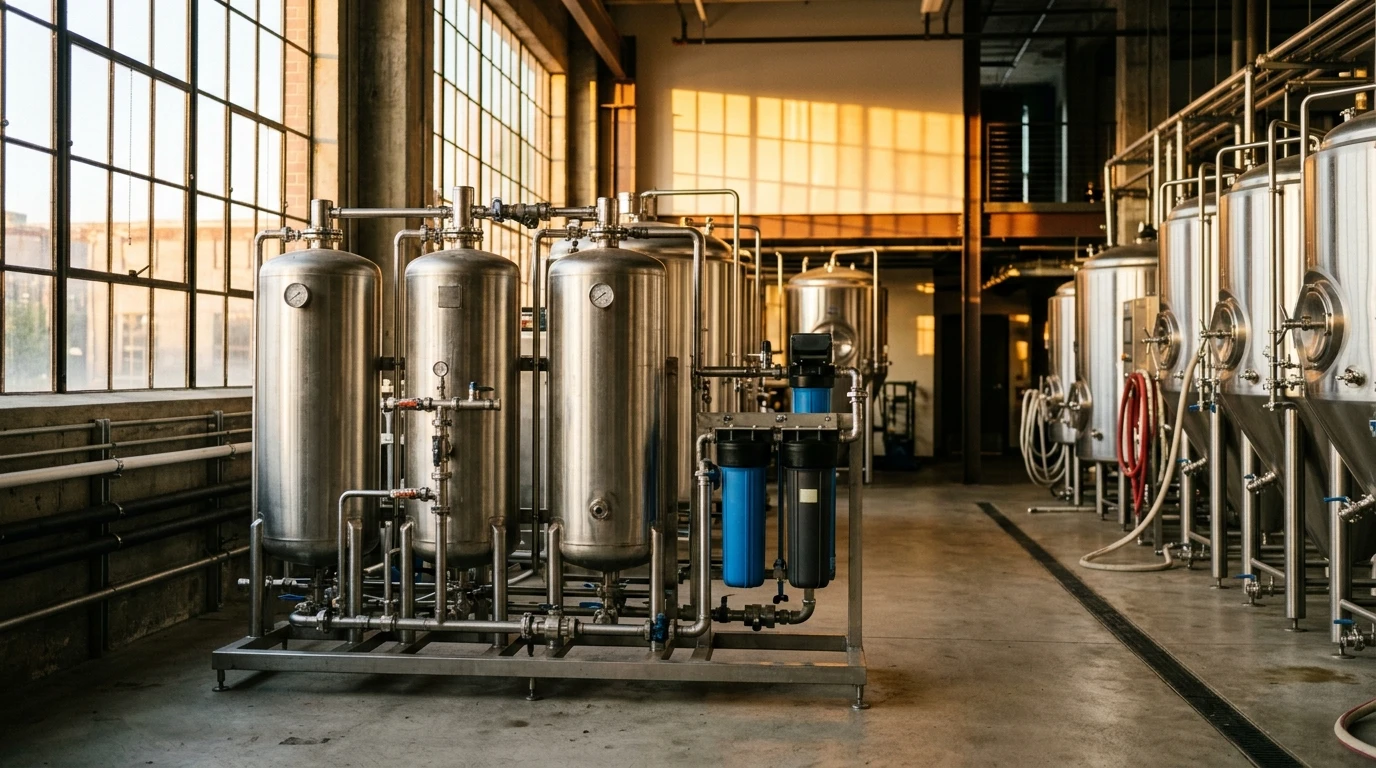
Water is typically more than 90% of beer by volume, and problems like chlorine taste, iron staining, or mineral hardness show up directly in the finished product, not just on a health inspector's checklist. That is the distinction that matters here: for a brewery or beverage plant, water treatment is a production input, not a cleaning add-on.
Even so, many craft breweries and small beverage manufacturers put off water treatment upgrades because a system quote lands in the five or six figures and feels like a want, not a need. This guide covers why water quality is a production-quality issue for breweries and beverage makers, what FDA rules actually apply, what treatment systems cost, and how water treatment dealers finance this equipment for commercial producers.
> Key Takeaways
> - Water quality directly affects fermentation, mouthfeel, and batch-to-batch consistency, not just hygiene. The industry's average water-to-beer ratio runs close to 7 barrels used per barrel produced, while efficiency-focused breweries operate closer to 3 to 4 barrels (Brewers Association benchmarking data, reported by Good Beer Hunting).
> - FDA's modern food CGMP rule requires that any water contacting food or food-contact surfaces be "safe and of adequate sanitary quality" (21 CFR 117.37(a)).
> - Commercial water treatment systems for food and beverage use commonly range from under $1,000 for a small unit to $250,000 or more for a large industrial system (U.S. Water Systems; Crestmont Capital).
> - Craft brewing contributed $71.8 billion to the US economy in 2025 even as closures outpaced openings for a second straight year (Brewers Association, 2025), which is exactly the kind of margin pressure that makes flexible financing terms matter.
See how Eos Loan financing helps you close more projects
Why Does Water Quality Matter for Breweries and Beverage Manufacturers?
Mineral content, chlorine or chloramine, iron, and microbial load all shape fermentation, mouthfeel, and shelf stability, which is why water treatment belongs in the production-quality column, not the hygiene column. A brewer can follow the same grain bill and yeast strain twice and still get two different beers if the water chemistry shifts between batches. That is the core difference from a restaurant dish pit or a school drinking fountain: bad water here does not just fail an inspection, it changes the product a customer pays for.
This is what separates breweries and beverage manufacturers from the other commercial water verticals already on this blog. A restaurant treats water filtration mainly to protect an ice machine's warranty and pass a health code line item. A brewery treats water because the water is an ingredient, and an off-flavor batch or a stalled fermentation is downtime and lost product, not a compliance note. Dealers selling into this vertical should lead with batch consistency and brewhouse downtime cost, not a hygiene pitch.
Industry benchmarking puts the average water-to-beer ratio across breweries of all sizes at roughly 7 barrels of water used for every barrel of beer produced, once cleaning and process water are counted. Efficiency-focused breweries run closer to 3 to 4 barrels per barrel, according to Brewers Association sustainability benchmarking data as reported by Good Beer Hunting. That gap is mostly a water treatment and process-efficiency story, and treated, consistent source water is the starting point for closing it.
None of this is theoretical for a brewer. Chlorine and chloramine can produce medicinal off-flavors on their own. Excess iron stains equipment and can throw off color and clarity. High hardness changes mash pH and extraction, which shifts flavor and efficiency batch to batch. A treatment system is what keeps the water variable constant so every other variable in the recipe can do its job.
What Does the FDA Require for Water Used in Beverage Manufacturing?
FDA's modern food safety rule, 21 CFR Part 117, requires that "any water that contacts food, food-contact surfaces, or food-packaging materials must be safe and of adequate sanitary quality" (21 CFR 117.37(a)). Part 117 is the current Current Good Manufacturing Practice and preventive-controls rule for human food facilities, and it replaced the older Part 110 framework as FDA phased it out starting in 2015. Breweries and beverage manufacturers producing a food product fall under this framework for their process water.
This is a facility-level food safety requirement, separate from the Alcohol and Tobacco Tax and Trade Bureau's role. The TTB regulates alcohol production, labeling, and excise tax; it does not set water quality standards. A taproom or production brewery should treat FDA's water safety requirement and any state or local plumbing code as the operative standards, and confirm applicability with its own counsel or consultant rather than assume TTB oversight extends to water quality.
A separate, narrower FDA rule, 21 CFR Part 129, applies specifically to companies bottling and selling water itself as a packaged product. That rule sets a minimum annual chemical-contaminant test and weekly microbial testing of source water (21 CFR 129.35(a)(3)). It is not a blanket requirement for every brewery, but it is directly relevant to any beverage manufacturer whose product line includes bottled or canned water. Either way, the practical takeaway is the same: a documented, maintained treatment system is what keeps a producer ready for a test result or an audit, instead of scrambling after one.
Add financing to your installs, talk to our team
How Much Does Brewery Water Treatment Equipment Cost?
Commercial-grade water treatment for breweries and beverage plants spans a wide range because system size follows production volume, not a flat price list. A small commercial reverse osmosis unit sized for 200 to 16,000 gallons per day runs from roughly $899 to $12,325 (U.S. Water Systems, 2026), while a high-capacity industrial treatment system for a larger producer can run $250,000 or more (Crestmont Capital, 2025).
Capacity is what drives the number more than anything else. A small taproom brewery testing recipes on a pilot system needs a fraction of the treatment capacity a regional producer running multiple shifts does. Vendors generally quote commercial RO systems by gallons-per-day throughput, and the price climbs with that throughput, plus any added stages for iron removal, softening, or remineralization to hit a target mineral profile for a specific beer style.
None of these figures represent an Eos Loan rate, fee, or quote. They are vendor-published equipment price ranges included so a dealer or buyer has a realistic starting point before requesting a formal quote. Whatever the equipment cost lands at, financing is sized to that quote and the producer's capacity needs, not to a fixed published number.
How Does Financing Work for a Brewery Water Treatment Project?
Eos Loan is a direct lender that funds water filtration financing equipment for commercial producers with flexible terms sized to the brewery's capacity and the dealer's quote. We are not a marketplace, a broker, or a platform that routes an application to other lenders. One party prices the deal, underwrites it, and funds it.
The flow matches how this works across the rest of the water treatment vertical. The dealer quotes the system, sized to the brewery's production volume and water test results. The customer applies and is approved, subject to eligibility. The dealer installs the equipment and submits proof of completion. Eos Loan funds the dealer, often within a day or two, while the brewery repays the loan over flexible terms sized to the project rather than a fixed month count.
That speed matters in this vertical specifically. A brewery dealing with a failed batch or an aging system does not have weeks to wait on a financing decision before the next brew day. A fast, disclosed process keeps the equipment quote moving instead of stalling in a budget committee. For the general mechanics of how dealer fees and funding work across the water treatment category, see our water treatment dealer financing guide.
Is Brewery Water Treatment Financing Worth It for a Small Craft Brewery?
For a producer where a contaminated batch, an off-flavor run, or brewhouse downtime costs far more than a monthly payment, financing converts one large cash outlay into a manageable operating cost while the business keeps running. That math gets more persuasive, not less, when the broader industry is under real margin pressure.
Craft brewing contributed roughly $71.8 billion to the US economy in 2025 and supported more than 415,000 total jobs, including over 189,000 positions directly at breweries and brewpubs (Brewers Association, 2025). At the same time, the industry counted 9,778 operating small and independent breweries in 2025, with 268 new openings against 434 closures, the second straight year closures outpaced openings (Brewers Association, 2025 Year in Beer, 2025).
Read that pairing carefully: it is not a doom signal for the category. A $71.8 billion industry with hundreds of thousands of jobs attached is still a large, active vertical. What the closure data shows is a margin-pressured industry where an unplanned five-figure or six-figure cash outlay lands harder than it did five years ago, which is exactly the environment where a monthly payment beats a lump sum.
How Do Dealers Offer This to Brewery and Beverage-Plant Customers?
Treat a brewery or beverage plant account like any other commercial water job: quote the system, present the monthly payment beside the cash price, and let the lender handle underwriting while the dealer stays focused on the install. The sales motion is the same one that works for any commercial water account. The documentation may differ slightly, since a business applicant typically provides business financials rather than a homeowner's personal credit file alone.
Across the commercial water deals I have reviewed as CEO of Eos Loan, the pattern that keeps repeating is a dealer installing a multi-stage RO system ahead of a mid-size brewhouse, where the conversation only became urgent after a batch went sideways. The lesson for a dealer is straightforward: the sale gets easier once the brewer connects a treatment quote to a specific batch problem, not a hypothetical future one.
For the general mechanics of financing commercial water accounts, including documentation and credit bands, see our commercial water filtration financing guide. For equipment-level cost and term detail on reverse osmosis systems specifically, see reverse osmosis system financing costs and terms, and for the step-by-step process of adding financing to a quote, see how to offer water filtration financing.
Offer your customers flexible financing on essential projects
Or call +1 833-989-3737 to talk through a financing program for your brewery or beverage-plant accounts.
Frequently Asked Questions
{ question: "Do breweries need special water filtration?", answer: "Yes. Mineral content, chlorine, iron, and microbial load all affect fermentation, mouthfeel, and batch-to-batch consistency, so most breweries beyond a small pilot scale run dedicated treatment. FDA's food CGMP rule requires water contacting food to be safe and of adequate sanitary quality (21 CFR 117.37(a))." }, { question: "Does the FDA regulate water used in beverage manufacturing?", answer: "Yes. 21 CFR Part 117, the modern food CGMP rule, requires water that contacts food or food-contact surfaces to be safe and of adequate sanitary quality. Companies bottling water as a standalone product also fall under 21 CFR Part 129, which sets a minimum annual chemical test and weekly microbial testing of source water." }, { question: "How much does brewery water treatment equipment cost?", answer: "Vendor-published ranges run from about $899 to $12,325 for a small commercial reverse osmosis unit (200-16,000 GPD) up to $250,000 or more for a large industrial system, scaled to production capacity (U.S. Water Systems, 2026; Crestmont Capital, 2025)." }, { question: "Can brewery water treatment equipment be financed?", answer: "Yes. Eos Loan finances this equipment directly as a lender, with flexible terms sized to the project and the dealer's quote, subject to approval and eligibility. There is no fixed published rate and no dealer fee charged by Eos Loan." }, { question: "How is brewery water treatment financing different from restaurant water filtration financing?", answer: "Breweries treat water as a direct production input that shapes the finished product, while restaurant filtration is mostly a hygiene and equipment-warranty decision. See our water filtration financing for restaurants guide for that use case in detail." } ]} />The Bottom Line for Breweries and Beverage Manufacturers
Water treatment for a brewery or beverage plant is a production decision first, not a cleaning line item. Here is what to carry into the next conversation:
- Mineral content, chlorine, iron, and microbial load directly shape fermentation and flavor, and the industry's average water-to-beer ratio still runs well above what efficient breweries achieve.
- FDA's 21 CFR Part 117 requires food-contact water to be safe and of adequate sanitary quality, a facility-level standard separate from TTB's alcohol jurisdiction.
- Equipment cost spans roughly $899 for a small unit to $250,000 or more for a large industrial system, scaled to production volume.
- Craft brewing remains a $71.8 billion industry even amid real closure pressure, which is exactly the backdrop where flexible financing terms convert a stalled upgrade into a signed job.
- Brewers Association, Economic Impact of the Craft Brewing Industry ($71.8 billion contribution, 415,000+ jobs in 2025), retrieved 2026-09-30, https://www.brewersassociation.org/statistics-and-data/economic-impact-data/
- Brewers Association, The 2025 Year in Beer (9,778 operating breweries, 268 openings vs. 434 closures), retrieved 2026-09-30, https://www.brewersassociation.org/association-news/the-2025-year-in-beer/
- Good Beer Hunting, reporting on Brewers Association sustainability benchmarking data (industry water-to-beer ratio), retrieved 2026-09-30, https://www.goodbeerhunting.com/blog/2020/1/27/changing-tides-how-breweries-are-combating-water-shortages-and-working-towards-sustainability
- U.S. Food and Drug Administration, 21 CFR Part 117.37, Current Good Manufacturing Practice for human food (water safety requirement), retrieved 2026-09-30, https://www.law.cornell.edu/cfr/text/21/117.37
- U.S. Food and Drug Administration, 21 CFR Part 129.35, bottled water source water testing requirements, retrieved 2026-09-30, https://www.law.cornell.edu/cfr/text/21/129.35
- U.S. Water Systems, Commercial Water Treatment for Beer and Craft Beer Brewing (equipment pricing), retrieved 2026-09-30, https://www.uswatersystems.com/commercial/applications/beer-and-craft-beer-brewing
- Crestmont Capital, Water Purification Equipment Financing and Leasing (cost ranges), retrieved 2026-09-30, https://www.crestmontcapital.com/blog/water-purification-equipment-financing-leasing-clean-solutions-for-your-business
Eos Loan is a direct lender built to fund water treatment equipment for breweries and beverage manufacturers, with flexible terms and no dealer fee, subject to approval and eligibility.
Become an Eos Loan financing partner
Or call +1 833-989-3737 to talk through a financing program for your business.
---
Sources
About the author: Eduardo Donadi is the CEO of Eos Loan, the fintech built to finance essential projects (battery energy storage, EV chargers, and water filtration) for installers, contractors, and resellers across the United States.