

When a Battery Storage Project Includes a Roof: Financing the Bundle
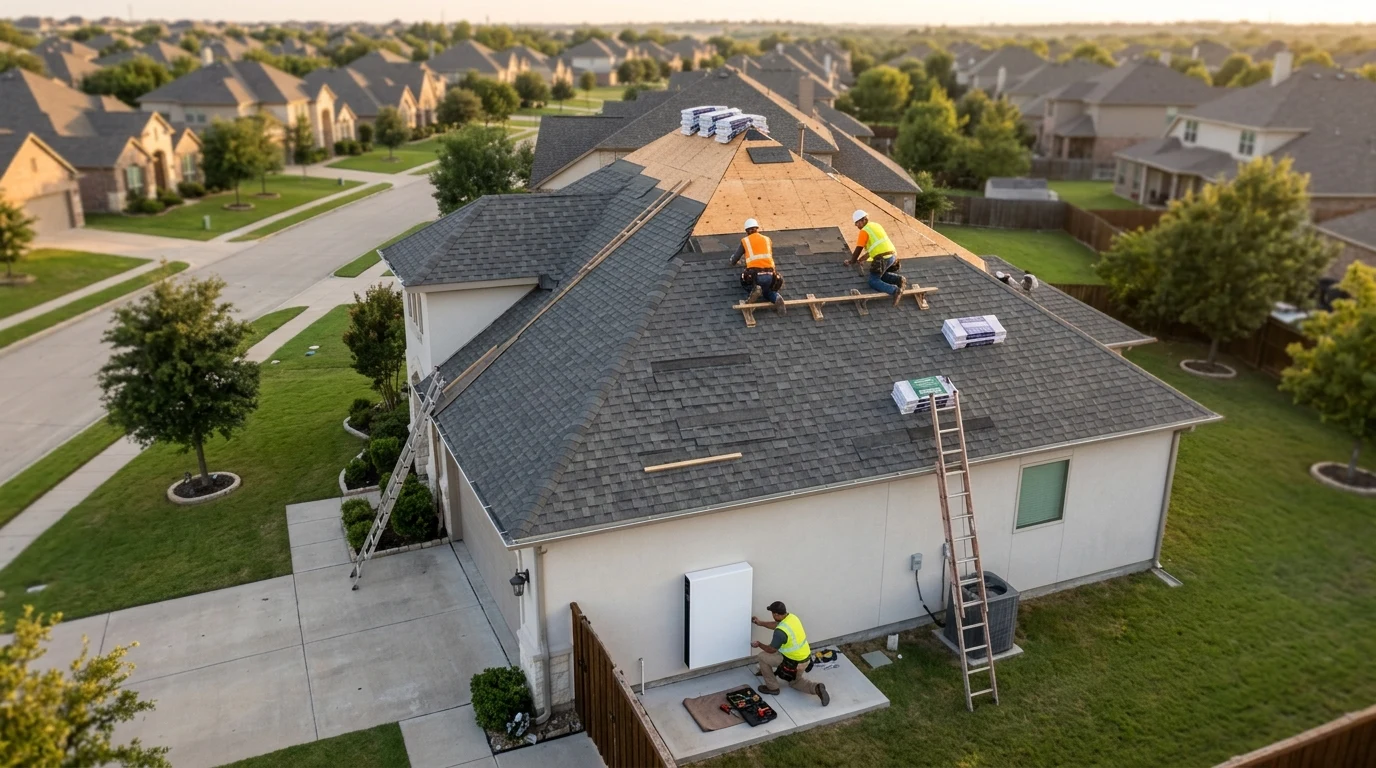
In 2024, SolarReviews' third annual solar industry survey found that roofing upgrades or replacement showed up on just 15% of installations, down from 21% the year before (SolarReviews, 2025). That's a smaller share than most installers assume. It's also cold comfort on the specific job where the roof problem shows up anyway.
When a battery sits behind solar that's mounted on an aging shingle roof, the panel-removal conversation at survey sometimes turns into a roof-condition conversation nobody scripted for. This guide covers what triggers that, what the roof line costs in 2026, and how to fold it into one financed battery storage project instead of a second sale, the same pattern already working for electrical panel upgrades.
> Key Takeaways
> - Roofing work showed up on 15% of solar installs in 2024, down from 21% in 2023, so it's the exception rather than the rule (SolarReviews, 2025).
> - A full asphalt shingle roof replacement runs $6,885 to $23,993 for a typical 2,000 square foot home, at $3.44 to $12 per square foot (This Old House, updated March 2026).
> - Eos Loan finances battery energy storage, not roofing as a standalone product. A roof line only belongs on the proposal when it's genuine scope inside the battery project, the same pattern already used for electrical panel upgrades.
> - Battery energy storage financing terms run 6 to 240 months, subject to approval and eligibility, and a longer term absorbs a multi-thousand-dollar roof line with a smaller monthly change than most installers expect.
See how Eos Loan financing helps you close more projects
Why would a battery storage job ever need roof work?
The battery itself is usually wall or floor mounted, so it isn't what's sitting on the roof. The solar array feeding it is, and that array rests on whatever decking, shingles, and flashing were already there. The roof problem surfaces because someone finally looked closely at what the panels are about to sit on, or sit on again.
Solar panels last about 25 to 30 years, similar to a roof's own lifespan, which is exactly why timing matters. Replacing an aging roof at the same time as installing solar, rather than after, avoids removing and reinstalling the array later and the added cost that comes with it (Energy.gov, Replacing Your Roof? It's a Great Time to Add Solar).
!A roofing contractor working on a residential asphalt shingle roof installation in daylight.
On a new solar-plus-storage system, the roof gets inspected before the mounts go on, so a marginal roof gets caught early. On a battery retrofit added behind solar that's already up there, the roof hasn't been looked at closely since the original install, sometimes years back. That's the scenario where a crew pulls panels for the retrofit and finds cracked flashing or a shingle mat past its service life underneath them. The battery didn't cause it. Taking the panels off to make room for the retrofit is just the first time anyone's checked.
Two separate problems can trigger the conversation: a roof section that's simply old relative to the system going back on it, or localized flashing and decking damage found right at the mounting points once panels come off. The first is a scope decision. The second is closer to a repair that was always going to be needed, just discovered later than it should have been.
How often does roof work actually show up on a battery or solar-plus-storage job?
Not often, and the share is shrinking. SolarReviews' 2025-published survey of installers found roofing upgrades or replacement tied to 15% of 2024 solar installations, down from 21% in 2023 (SolarReviews, 2025). That's a meaningful drop in one year, not a rounding error.
Why the decline? Customers appear to be self-selecting. Homeowners with an obviously tired roof seem to be waiting, replacing the roof on its own schedule, or skipping solar for now rather than bundling a roof job into a panel decision they're already nervous about. That's a reasonable read of a survey trend, not a confirmed cause, but it fits the direction of the number.
That self-selection cuts a specific way for installers. As roof work becomes rarer on solar jobs, crews see it less often and stay less rehearsed at pricing and presenting it. The cases that do surface are more likely to be genuine structural or flashing issues than upsell padding, and they land on teams who haven't scripted the conversation in a while. Rare and real is a harder combination to handle smoothly than common and routine.
Add financing to your installs, talk to our team
What does the roof line item cost in 2026?
A full asphalt shingle roof replacement runs $3.44 to $12 per square foot, putting a typical 2,000 square foot home at $6,885 to $23,993 total (This Old House, updated March 2026). That's the number when the whole roof has to come off, not just the section under the array.
!A residential rooftop with solar panels and visible mounting hardware in bright daylight.
Targeted repair is a different budget entirely. The same publisher prices a chimney or roof flashing repair, the kind triggered by a mounting point rather than a full tear-off, at $200 to $500 (This Old House, updated March 2026). That gap, a few hundred dollars versus tens of thousands, is why distinguishing the two scopes at survey matters more than almost anything else in this conversation.
There's a third number specific to solar-plus-storage jobs: what it costs to take panels off and put them back so the roof work can happen underneath them. HomeAdvisor puts panel removal at $200 to $500 per panel and reinstallation at $50 to $100 per panel, with full-system removal and reinstallation typically running $5,000 to $15,000 depending on system size (HomeAdvisor, updated June 2026).
The distinction that matters at survey is the same one that matters on the electrical side of these projects: a targeted repair at the mount points is a small line inside the battery project. A full tear-off is a different conversation, and one where a roofer, not the battery installer, should be doing the scoping.
Is the roof Eos Loan's product, or is it part of the battery project?
Eos Loan finances battery energy storage. Eos Loan does not offer a standalone roofing product, and a roof job on its own, with no battery or solar-plus-storage system attached, isn't something this financing covers.
What does belong on an Eos Loan proposal is a roof line that's genuinely scope inside a battery project: flashing repair at the mount points, or a section of shingle replacement required before the array and battery can go back up, priced on the same proposal as the battery itself. That's the same pattern already established for electrical panel upgrades in a financed battery project, where a panel swap discovered at survey gets priced and financed as one line inside the battery job rather than a separate electrician's invoice. Roof work sits in that identical category: real project scope, not a second product, not a second decision for the customer to make on its own.
The distinction sounds small, but it's the one that keeps the framing honest. This isn't "Eos Loan also does roofs now." It's "the roof under this specific battery system has to be sound before the system goes on it, and that line is part of what's being financed."
Become an Eos Loan financing partner
How do you fold roof work into one financed battery project?
The logic is the same six steps that already work for electrical scope, adapted to a roof.
1. Catch it at survey, before the proposal goes out. A roof problem discovered after signature becomes a change order, and change orders stall deals or kill them outright.
2. Price the roof line as part of the project total. Not as a separate roofer's bid on separate letterhead that the customer has to evaluate on its own.
3. Distinguish targeted repair from full replacement, and say which one applies. A $300 flashing fix and a $15,000 tear-off are not the same disclosure, and treating them the same erodes trust fast.
4. Quote one monthly payment for the whole project. Battery energy storage financing terms run 6 to 240 months, subject to approval and eligibility, so a longer term can absorb a multi-thousand-dollar roof line with a smaller change to the monthly number than most customers brace for.
5. Sequence the conversation: what it buys, then what it costs, then the payment. A roof line introduced as capacity, not as a problem, reads differently than the same dollar figure dropped without context.
6. Confirm no dealer fee inflates the number. Eos Loan charges no dealer fee, so the roof scope stays priced at what it actually costs rather than padded to cover a lender's cut.
!A contractor and homeowner reviewing a project proposal together on a tablet in daylight.
> What installers keep telling us: the roof jobs that sink a battery sale aren't usually the expensive ones. They're the ones raised for the first time after the contract's signed, when the customer has already mentally closed the decision. Same dollar figure, raised at survey instead, tends to land as due diligence rather than a surprise. That's a pattern partners describe to us, not something every shop can count on.
Carrying the roof line on the same financed amount as the battery is also how a smaller job grows into a larger, better-margin one without discounting anything, the same dynamic covered in raising average ticket size with financing. Eos Loan is a direct lender for essential projects, so the battery and the roof scope behind it sit on one piece of paper, not two.
How do you present the roof line without losing the battery deal?
Lead with what the roof buys, not what it costs. A sound roof under the array is the surface the whole system depends on for its next 25 to 30 years, not a repair bill attached to an unrelated sale.
"Your roof is old" is the wrong opening line. It sounds like blame, and the roof may have plenty of life left; the issue is usually localized, not systemic. The more accurate version also sells better: the panels are going back on whatever's underneath them, and that surface has to be sound before they go up, the same way the electrical panel has to have room before the inverter gets tied in.
Timing does most of the work here. Raise the roof condition at the survey debrief, while the customer is still evaluating the whole project, never at the signing table where it reads as a last-minute add. For the cost objection itself, our guide on how to pitch a home battery when customers ask about cost has the underlying script; roof work also affects when inspections can happen, which we cover in permit and inspection sequencing on a financed battery job. If the battery is going in behind solar that's already installed, adding a battery to an existing solar system covers the retrofit sequencing that often surfaces the roof question in the first place.
Offer your customers flexible financing on essential projects
Or call +1 833-989-3737 to talk through a financing program for your business.
Frequently Asked Questions
{ question: "Does a home battery require a new roof?", answer: "No. The battery itself is typically wall or floor mounted, not roof mounted. Roof work only enters the picture when roof-mounted solar panels sit above a roof section with flashing damage or shingles near the end of their service life." }, { question: "How much does it cost to replace a roof before a solar-plus-storage install?", answer: "A full asphalt shingle roof replacement runs $3.44 to $12 per square foot, or $6,885 to $23,993 for a typical 2,000 square foot home (This Old House, updated March 2026). A targeted flashing repair at the mount points instead runs $200 to $500 (This Old House, updated March 2026)." }, { question: "Can roof work be included in battery storage financing?", answer: "Yes, when it's genuinely part of the project scope, priced on the same proposal as the battery, the same pattern already used for electrical panel upgrades. Eos Loan finances battery energy storage and does not offer standalone roofing financing." }, { question: "How often does roof work come up on a solar-plus-storage job?", answer: "Roofing upgrades or replacement showed up on 15% of solar installs in 2024, down from 21% in 2023 (SolarReviews solar industry survey, 2025). It is the exception, not the default, on most jobs." } ]} />The bottom line on roof work inside a financed battery project
A few things worth carrying into the next survey:
- Roof work shows up on a shrinking share of solar-plus-storage jobs, 15% in 2024 versus 21% in 2023 (SolarReviews, 2025), so treat it as the exception and plan for it anyway.
- Distinguish a $200 to $500 flashing repair from a $6,885-plus full replacement before you price anything (This Old House, 2026).
- Eos Loan finances battery energy storage, never a standalone roof. The roof line only belongs on the proposal when it's genuine project scope.
- One financed amount, quoted with the battery, keeps a roof discovery from becoming a second decision the customer can walk away from.
- SolarReviews, 2025 Solar Energy Statistics: Latest Industry Survey Data (15% of solar installs included roofing upgrades or replacement in 2024, down from 21% in 2023), retrieved 2026-09-30, https://www.solarreviews.com/blog/solarreviews-solar-industry-survey-key-statistics
- Energy.gov, Replacing Your Roof? It's a Great Time to Add Solar (solar panels last about 25-30 years, similar to a roof's lifespan), retrieved 2026-09-30, https://www.energy.gov/eere/solar/articles/replacing-your-roof-its-great-time-add-solar
- This Old House, How Much Does a Shingle Roof Cost? ($3.44-$12 per square foot; $6,885-$23,993 for a 2,000 sq ft home), updated March 2026, retrieved 2026-09-30, https://www.thisoldhouse.com/roofing/shingle-roof-cost
- This Old House, What Is the Cost of Roof Repair? (flashing repair $200-$500), updated March 2026, retrieved 2026-09-30, https://www.thisoldhouse.com/roofing/cost-of-roof-repair
- HomeAdvisor, How Much Does Solar Panel Removal Cost? (removal $200-$500 per panel, reinstallation $50-$100 per panel), updated June 2026, retrieved 2026-09-30, https://www.homeadvisor.com/cost/energy-efficiency/solar-panel-removal-cost
If you're building a financing program around battery work, start with how battery storage financing works end to end, then talk to us about carrying full project scope, battery plus any roof work behind it, on one financed amount.
---
Sources
This is general information, not a structural or roofing assessment. A licensed roofer and, where required, a structural inspector determine whether roof work is needed and what it requires; Eos Loan does not perform roof or load assessments.
About the author: Eduardo Donadi is the CEO of Eos Loan, the fintech built to finance essential projects (battery energy storage, EV chargers, and water filtration) for installers, contractors, and resellers across the United States. Roofing and cost specifics in this article are attributed to the cited industry and government sources; Eos Loan does not perform roof or load assessments.