

Hazmat Endorsement and Compliance Costs in Truck Financing
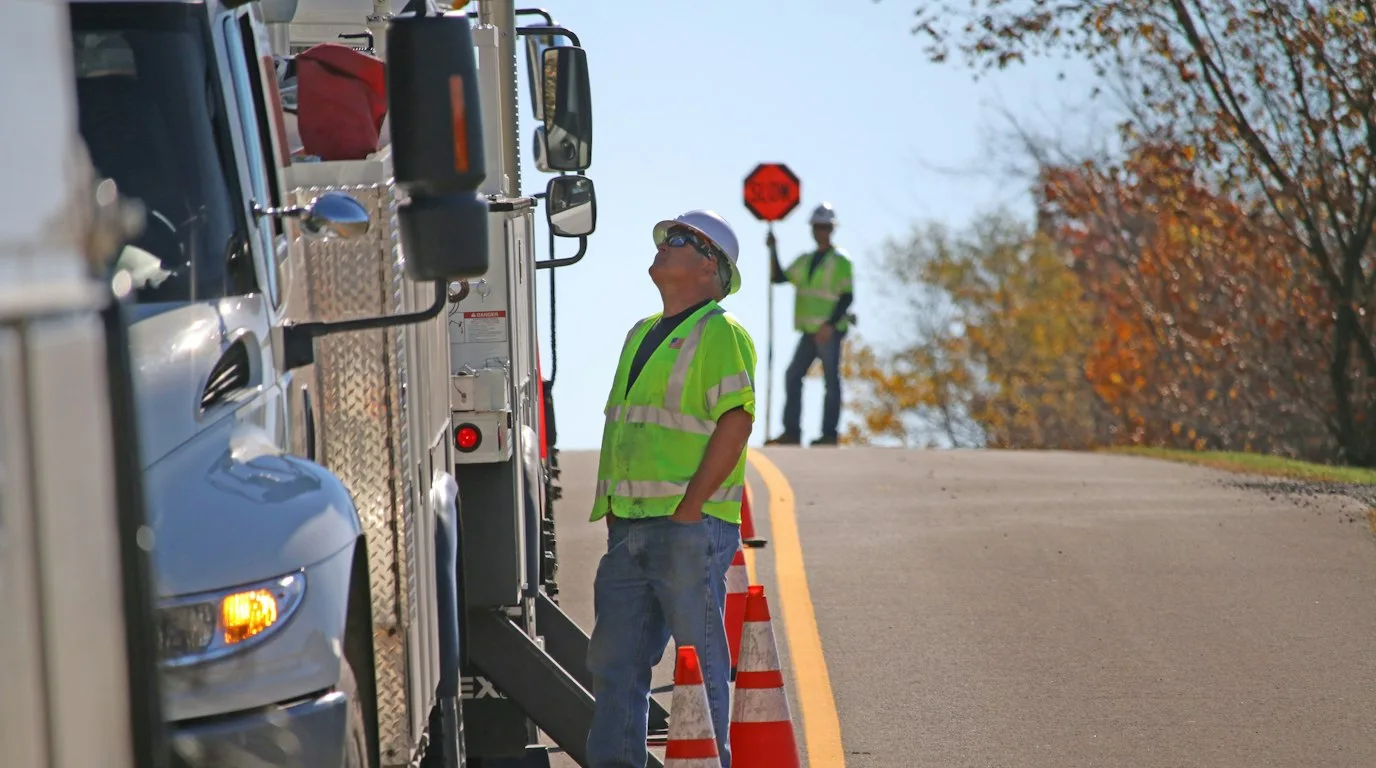
Hazmat truck financing involves two separate costs, not one. As of 2026, the driver pays TSA $85.25 for a fingerprint-based background check that stays valid for five years (TSA, Hazmat Endorsement, retrieved 2026-10-06). A carrier that hauls qualifying hazmat also registers the business separately with PHMSA, and that is the filing that surprises most people applying for truck financing.
Most carriers budget for the single TSA fee. Then they get asked for a PHMSA registration number they never planned for. Still, neither cost changes what the truck is worth. Both show up in the compliance file a lender reviews before deciding anything about the purchase.
Here is each cost layer, what the background check screens for, and how a hazmat-authorized file gets reviewed when you apply.
> Key Takeaways
> - TSA's Security Threat Assessment for a hazmat endorsement costs $85.25 and stays valid for five years (TSA, 2026).
> - That fee covers the driver's credential only. A carrier that must register under PHMSA pays a separate business fee, $275 a year for a small business in the 2026-2027 cycle (PHMSA, 2026).
> - Financing the truck itself does not change because of hazmat. A lender checks endorsement status and PHMSA registration alongside the usual file, subject to approval and eligibility.
> - Annualized over a 100,000-mile year, both fees together come to about 0.29 cents per mile, against an industry-average operating cost of $2.336 per mile in 2025 (ATRI, 2026).
See what financing a fleet expansion could look like
How much does a hazmat endorsement cost the driver?
The federal cost is TSA's Security Threat Assessment. For new and renewing applicants, the fee has been $85.25 since January 1, 2025 (TSA, Hazmat Endorsement, retrieved 2026-10-06). A driver who already holds a valid TWIC card, and who is licensed in a state that accepts the TWIC assessment, pays a reduced $41.00.
Since that federal fee is fixed, it makes a stable starting point for any budget. On top of it, each state charges its own CDL endorsement and knowledge-test fees, and those vary by state and by testing provider. As a result, the state layer is the reason online "hazmat endorsement cost" figures disagree so much. The federal number stays the same everywhere, so start your budget there and then add the state line from the driver's own DMV.
The endorsement is also a question of which freight a carrier plans to haul. It applies when a driver moves placarded hazardous materials, so the first decision is the load mix, not the truck. For example, a carrier that expects to accept placarded loads only occasionally still needs the endorsement in place before the first one moves.
!A driver reviewing endorsement paperwork beside a parked Class 8 tractor in a daylight carrier yard.
Who pays the fee is a business decision. Federal rules do not require a carrier to reimburse a driver's endorsement, though some carriers cover it as a recruiting perk. Either way, the cost belongs in the driver's file, not in the truck's purchase price.
What does the TSA background check screen for?
A Security Threat Assessment is the federal screening TSA runs on a driver before issuing a hazmat endorsement, under 49 CFR Part 1572. It covers criminal history, immigration status, and terrorism-related screening (eCFR, 49 CFR Part 1572). The result is a credential tied to one person. It follows the driver from carrier to carrier, so it says nothing about any business.
Also, the assessment is valid for five years, a cycle that lines up with the typical CDL renewal. TSA requires new fingerprints at renewal, so a driver cannot simply carry forward the original set (TSA, Hazmat Endorsement, retrieved 2026-10-06).
Still, the TSA check answers one question: can this person be trusted to haul regulated freight. It does not answer whether the carrier is registered to ship that freight at all. That second question belongs to a different agency, with a different fee, and it is where most hazmat-curious carriers get caught off guard.
What does the carrier-level PHMSA registration cost?
Carriers that transport hazardous materials in the quantities that trigger registration must register the business under 49 CFR Part 107, Subpart G, with the Pipeline and Hazardous Materials Safety Administration (PHMSA, Registration Overview, 2026). A PHMSA registration is that business-level filing, and it is separate from the driver's endorsement. For the 2026-2027 cycle, the published fee is $275 per year for a small business or non-profit and $2,600 per year for other registrants, and each figure includes a $25 processing fee.
In addition, PHMSA reported 35,181 hazardous materials registrations in fiscal year 2023 (PHMSA, FY 2023 Registration Fee Program Summary, FY2023). That is a small count next to the nation's motor carrier population, so most carriers never file it. The carriers that do need it should confirm their status before the lender asks.
!Class 8 tractors lined up in a small carrier's yard in bright daylight.
Registered carriers also need a written security plan under 49 CFR Part 172, Subpart I (eCFR, 49 CFR Part 172, Subpart I). The plan has no filing fee. However, it takes staff time to draft and keep current, and a lender or insurer may ask to see it.
In practice, the split for a small carrier looks like this. The driver's cost is a fixed federal fee plus a state layer, and it is paid once every five years. The carrier's cost, by contrast, is an annual business registration plus the time to maintain a written plan. Owners who budget only for the driver's fee are usually surprised by the second line, which renews every year rather than every five.
Does hazmat truck financing get reviewed differently?
The truck itself is underwritten the same way. Likewise, the tractor and trailer get the same review whether the freight behind them is dry van or placarded hazmat. What can change is the compliance documentation a reviewer asks to see alongside the standard file. That usually includes active DOT authority, the driver's current endorsement status, and PHMSA registration when the carrier's volumes require it.
A practical way to read this: the lender is not scoring the hazmat freight itself. It is confirming that the driver and the business are authorized to haul what the truck will carry. A truck financed for work its operator cannot legally perform is a problem for both the carrier and the lender. Therefore, the compliance file is part of the collateral story.
Hazmat carrier compliance financing is not a separate product at Eos Loan. We finance the truck, and the compliance file is the documentation a reviewer reads around it.
For the baseline checklist that applies to every carrier, hazmat or not, see DOT authority and fleet financing readiness. This post stays on the hazmat-specific layers that sit on top of that baseline. Credit is a separate track, covered in credit requirements for carriers.
> What a reviewer checks first on a hazmat file: in our experience, the two items that get looked at first are the endorsement's expiration date and whether the PHMSA registration, if it applies, is current. That is an observation about what gets reviewed, not a rule about what gets approved. Eos Loan is a direct lender, and every application is subject to approval and eligibility.
Talk to our team about financing your next truck
Does the compliance cost move the economics of a hazmat truck?
Barely, once you annualize it. Spread the driver's $85.25 TSA fee over its five-year validity and it comes to about $17.05 a year. Over a 100,000-mile year, that is roughly 0.017 cents per mile. A small-business PHMSA registration at $275 a year adds about 0.275 cents per mile over the same mileage. Overall, the two federal layers come to about 0.29 cents per mile.
That calculation is Eos Loan's own arithmetic, built on the TSA and PHMSA fees above and a round 100,000-mile assumption. It is not a reported industry statistic. Set it against the American Transportation Research Institute's figure for the industry-average cost to operate a truck in 2025. That figure was $2.336 per mile, the highest in that report's history (ATRI, 2026 Analysis of the Operational Costs of Trucking, 2026). Compared with that total, the federal fees come to about an eighth of one percent.
!A row of Class 8 sleeper tractors parked side by side in a carrier yard under daylight.
The dollar cost of hazmat compliance is not what should give a carrier pause. The real cost is time: the fingerprinting appointment, the registration paperwork, and keeping the security plan current.
Time has a cash cost too. If a driver's endorsement lapses before the renewal assessment clears, that driver cannot take placarded loads. Meanwhile, a truck that is still making loan payments can sit idle while the paperwork catches up. Tracking the expiration date on a calendar, months ahead, costs nothing and protects the monthly payment. That is the part of hazmat compliance that most often shows up in a carrier's cash flow, and it is why the endorsement date sits near the top of the checklist below.
What are the hazmat truck loan requirements to prepare?
Gather these before you apply, whether the truck is new to the fleet or you are adding hazmat authorization to one you already run:
1. A current hazmat endorsement, with the expiration date written down and enough runway before it lapses.
2. State CDL endorsement fees and any required knowledge test completed for the state of licensure.
3. PHMSA registration current for the business, if your hazmat volumes meet the registration threshold.
4. A written security plan on file and up to date, if PHMSA registration applies.
5. Active DOT authority, the baseline checklist linked in the lender review section above.
6. A credit file in order, since credit requirements for carriers run on their own track from compliance status.
None of this guarantees an outcome. Instead, it is readiness: the paperwork that lets a reviewer move to the truck and the freight behind it. For how the purchase itself gets structured, read truck fleet financing for owner-operators and carriers. Carriers still weighing a first purchase can start with first truck financing for new carriers, and anyone choosing between trailer types should review reefer and specialty trailer financing before this post. For the product itself, see truck fleet financing.
Frequently Asked Questions
How much does a hazmat endorsement cost in total?
The federal piece is TSA's $85.25 Security Threat Assessment fee, valid for five years. Drivers with a valid TWIC card in a state that accepts it pay $41.00 instead (TSA, Hazmat Endorsement, 2026). State CDL endorsement and knowledge-test fees add a state-specific amount on top, so the driver's DMV sets the final total.
How often does the hazmat background check need renewal?
Every five years. The Security Threat Assessment under 49 CFR Part 1572 stays valid for five years, and TSA requires new fingerprints at renewal rather than carrying forward the original set (TSA, 2026). Because the cycle lines up with the typical CDL renewal, many drivers handle both on the same calendar.
Does a hazmat endorsement affect truck financing approval?
The truck is underwritten the same way whether it hauls dry van or placarded hazmat. A lender may review endorsement status and PHMSA registration, where it applies, alongside the usual DOT authority and credit file. Every application is subject to approval and eligibility, and no endorsement guarantees a funding decision.
Who needs PHMSA registration?
Carriers that transport hazardous materials in quantities that trigger registration under 49 CFR Part 107, Subpart G must register with PHMSA (PHMSA, Registration Overview, 2026). It is a business filing that renews every year, separate from the driver's endorsement, and it should be confirmed before a lender asks for it.
{ question: "How much does a hazmat endorsement cost in total?", answer: "The federal piece is TSA's $85.25 Security Threat Assessment fee, valid for five years. Drivers with a valid TWIC card in a state that accepts it pay $41.00 instead (TSA, Hazmat Endorsement, 2026). State CDL endorsement and knowledge-test fees add a state-specific amount on top, so the driver's DMV sets the final total." }, { question: "How often does the hazmat background check need renewal?", answer: "Every five years. The Security Threat Assessment under 49 CFR Part 1572 stays valid for five years, and TSA requires new fingerprints at renewal rather than carrying forward the original set (TSA, Hazmat Endorsement, 2026). Because the cycle lines up with the typical CDL renewal, many drivers handle both on the same calendar." }, { question: "Does a hazmat endorsement affect truck financing approval?", answer: "The truck is underwritten the same way whether it hauls dry van or placarded hazmat. A lender may review endorsement status and PHMSA registration, where it applies, alongside the usual DOT authority and credit file. Every application is subject to approval and eligibility, and no endorsement guarantees a funding decision." }, { question: "Who needs PHMSA registration?", answer: "Carriers that transport hazardous materials in quantities that trigger registration under 49 CFR Part 107, Subpart G must register with PHMSA (PHMSA, Registration Overview, 2026). It is a business filing that renews every year, separate from the driver's endorsement, and it should be confirmed before a lender asks for it." } ]} />The two layers, in one sentence
Put simply, a hazmat endorsement is a driver's background check. PHMSA registration, when it applies, is a business filing. Both are small line items next to the cost of running a truck, and a lender reviewing a hazmat-authorized file is checking that both are current, not pricing them into the deal. Finally, Eos Loan is a direct lender, and we finance the truck itself with flexible terms and no dealer fee, subject to approval and eligibility.
Ask about flexible terms on a truck purchase
Prefer to talk it through? Call +1 833-989-3737. Common questions about how our financing works are also answered on our FAQ page.
---
About the author: Eduardo Donadi is the CEO of Eos Loan, a US direct lender financing essential projects including truck fleet expansion, battery energy storage, EV chargers, and water filtration. He works directly with carriers, owner-operators, and distributors on how equipment purchases get structured and funded.
---
Sources
1. Transportation Security Administration. "HAZMAT Endorsement." 2026. Retrieved 2026-10-06. https://www.tsa.gov/for-industry/hazmat-endorsement
2. Electronic Code of Federal Regulations. "49 CFR Part 1572, Credentialing and Security Threat Assessments." Retrieved 2026-10-06. https://www.ecfr.gov/current/title-49/subtitle-B/chapter-XII/subchapter-D/part-1572
3. Pipeline and Hazardous Materials Safety Administration. "Registration Overview." 2026. Retrieved 2026-10-06. https://www.phmsa.dot.gov/registration/registration-overview
4. Pipeline and Hazardous Materials Safety Administration. "FY 2023 Registration Fee Program Summary." Retrieved 2026-10-06. https://www.phmsa.dot.gov/sites/phmsa.dot.gov/files/2025-04/FY%202023%20Registration%20Fee%20Program%20Summary_final.pdf
5. Electronic Code of Federal Regulations. "49 CFR Part 172, Subpart I, Security Plans." Retrieved 2026-10-06. https://www.ecfr.gov/current/title-49/subtitle-B/chapter-I/subchapter-C/part-172/subpart-I
6. American Transportation Research Institute. "2026 Analysis of the Operational Costs of Trucking," July 2026. Retrieved 2026-10-06. https://truckingresearch.org/2026/07/new-atri-report-details-accelerating-costs-and-low-profitability-despite-cuts/