

Reefer and Specialty Trailer Financing: What Changes vs a Dry Van
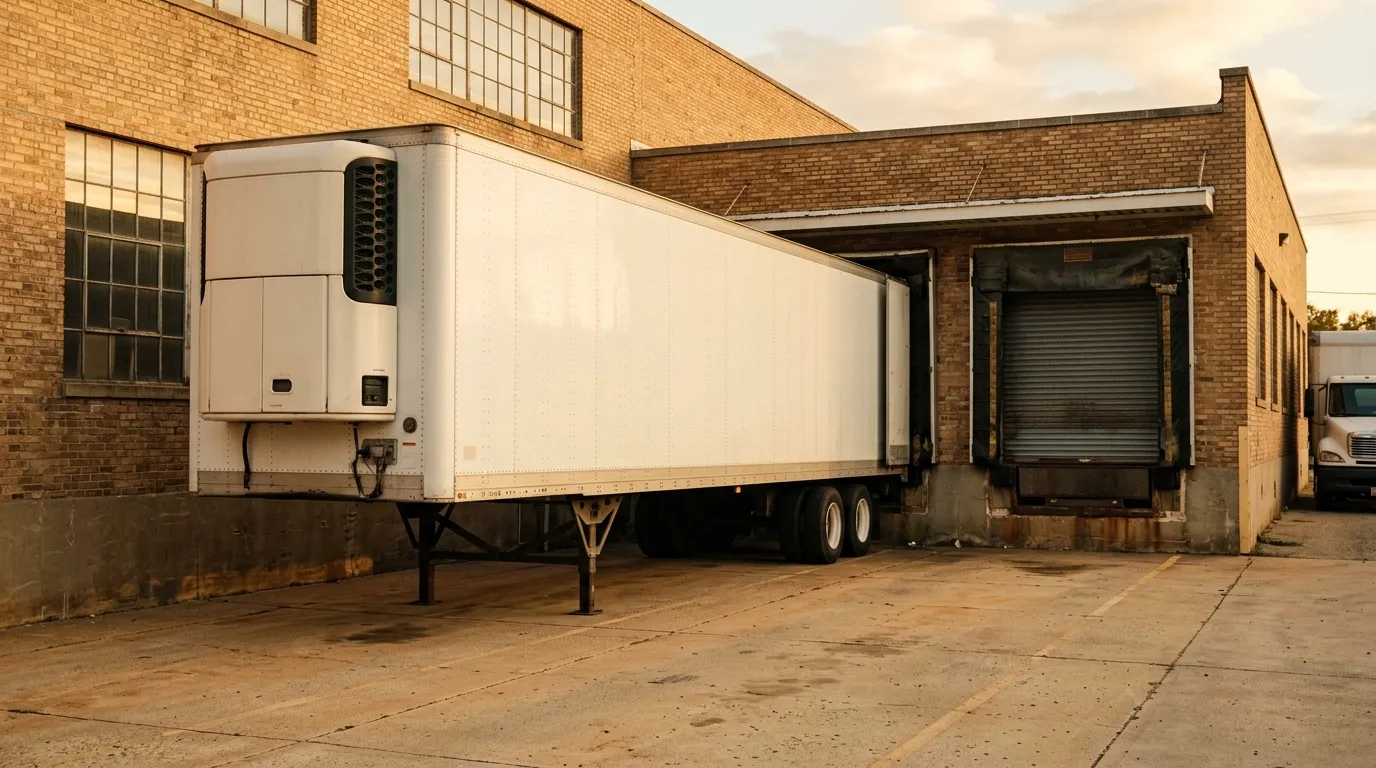
A refrigerated trailer is two purchases wearing one price tag. When you finance a reefer, you are buying the insulated trailer and the refrigeration unit bolted to its nose, a diesel engine that keeps its own hours and its own service schedule. That second machine is the whole difference.
In March 2026, DAT put refrigerated spot rates at $2.97 a mile against $2.52 for dry van (DAT data reported by Transport Topics, April 2026). The premium is real. So is the cost stack under it.
Here is what actually changes when the trailer stops being a plain box: what you are buying, which clock the asset ages on, what the freight pays, what the equipment costs to run, and what a lender wants to see on the unit itself.
> Key Takeaways
> - Reefer spot rates averaged $2.69 a mile excluding fuel in June 2026, up 39% year over year, and moved above contract rates for the first time since February 2022 (ACT Research, June 2026).
> - Industry-average operating cost hit a record $2.336 a mile in 2025, and refrigerated carriers still averaged operating margins below 1.0% (ATRI, July 2026).
> - The refrigeration unit ages on engine hours, not odometer miles, so the hour reading describes the asset better than the trailer's model year does.
> - Eos Loan is a direct lender for trucks and trailers, with flexible terms and no dealer fee, subject to approval and eligibility.
See what financing a fleet expansion could look like
What makes a reefer trailer a different financing question than a dry van?
Two assets, one invoice. In March 2026, DAT measured refrigerated spot rates at $2.97 a mile and dry van at $2.52 (DAT data reported by Transport Topics, April 2026). That 45 cent gap exists because the refrigerated trailer carries a second machine the dry van does not have.
Most pages that cover this treat a reefer as a dry van that costs more. It isn't. The shell is one asset: insulation, duct flooring, air chutes, door seals, a bulkhead. It ages on years and road miles. The transport refrigeration unit is a separate asset with a separate life, bolted to the first one.
!Class 8 tractors parked side by side in a small carrier yard under daylight.
"Specialty trailer" widens the same idea. A flatbed, a step-deck, a lowboy, a tanker or a car hauler each carry gear a dry van does not, and each serve a narrower slice of freight. The question keeps its shape: what am I buying, and what does it earn?
If you want the general mechanics first, we covered how truck fleet financing works overall in the pillar guide. The product side lives on our page for financing for trucks and trailers.
Why does the refrigeration unit age on its own clock?
Because it runs on an hour meter, not an odometer. Maintenance is already the pressure point in trucking: in 2025, repair and maintenance rose 8.6%, the second-largest line-item increase in the industry cost base (ATRI, July 2026). On a reefer you carry two of those streams, not one.
A trailer parked at a dock overnight adds zero miles and plenty of unit hours. Pre-cool a load, sit in a receiver's yard six hours, run a multi-stop day, and the trailer barely moves while the engine on the nose works throughout. Two reefers of the same model year can be years apart in remaining unit life.
!A Class 8 tractor inside a maintenance bay during a daytime service check.
That is why the hour reading matters more than the model year when you size a purchase against the runway you get from it. The shell may have another decade in it. The unit may be closer to a major service than the odometer suggests.
> What I see: the refrigerated equipment requests that move cleanly are almost always the ones where the operator already knows the unit's hour reading and can produce the service history without hunting for it. That number says more about the next two years of the asset than the build year does. It's a pattern I have watched, not an approval rule, and every file is still subject to approval and eligibility.
Do refrigerated loads pay enough more to carry the extra equipment?
They pay more, and right now they pay considerably more. In June 2026, ACT Research put reefer spot rates at $2.69 a mile excluding fuel, up 39% year over year, against a contract average of $2.59, up 12% (ACT Research, June 2026). Spot moved above contract for the first time since February 2022.
ACT reads that crossover as acute near-term capacity tightness. Shippers who normally move freight on contract are paying up in the spot market to get it covered, which is the market telling you it is short of reefers.
Read the spread carefully, though. A 45 cent premium is gross revenue, not margin. Before any of it reaches the payment, it has to cover the fuel the unit burns, the second maintenance stream, washouts between loads, and the claim exposure of hauling something that spoils.
Ask about flexible terms on a truck purchase
What does a reefer add to your cost per mile?
Everything the second engine touches. In 2025, ATRI measured industry-average operating cost at a record $2.336 a mile, up 3.4%, with non-fuel cost at $1.854 a mile, up 4.2% (ATRI, July 2026). A reefer stacks unit fuel and unit maintenance on that baseline.
Start with fuel. The tractor burns by the mile, the unit burns by the hour, and the two do not track each other. A short produce run with long dwell at both ends can work the unit harder than a 600 mile dry van turn works the tractor.
Then add the drag a dry van never sees: washouts between commodities, pre-cooling before a pickup, temperature monitoring, and cargo claims when a load runs out of temperature. None of it is exotic. All of it is money.
Now the honest part. ATRI found truckload and refrigerated operating margins still below 1.0% in 2025. A 45 cent premium and a sub-1.0% margin coexist because the premium is being consumed. The payment has to fit inside what survives, which is why term structure matters here more than the sticker does. If the vocabulary is new, start with how term length and monthly payment relate.
Which compliance requirements ride along with a temperature-controlled trailer?
Documentation you have to keep. Under the FDA's Sanitary Transportation of Human and Animal Food rule, carriers must maintain records of written procedures, agreements and training, with retention that does not exceed 12 months (FDA). Vehicles and equipment must be capable of maintaining the temperatures the food needs.
The rule reaches transportation operations directly: adequate temperature controls in transit, protection from contamination and cross-contact, and food safety training where the carrier and shipper agree the carrier holds responsibility for sanitary conditions. Training has to be documented, not just delivered.
!A truck operator standing beside a parked tractor in a daylight yard, reviewing paperwork.
Emissions rules attach to the unit itself in some states. California regulates transport refrigeration units operating in the state through the California Air Resources Board, worth checking against any unit you are considering if you run those lanes (CARB).
Why does this belong on a financing page? Because compliance status travels with the equipment, and it does not reset when the title changes hands.
How do flatbeds, tankers and other specialty trailers change the picture?
Specialty equipment is a utilization bet, not only an equipment bet. Flatbed posted the highest spot rate of the three main types in March 2026 at $3.09 a mile (DAT data reported by Transport Topics, April 2026), and flatbed carriers still averaged an operating loss of -0.5% in 2025 (ATRI, July 2026).
Tank carriers went the other way at 4.0%, the healthiest segment ATRI named. So the equipment with the best rate per mile ran a loss, and a segment nobody quotes rate headlines about ran the best margin. Rate per mile is not a proxy for profitability.
Utilization drives the difference, along with the work around the load. Flatbed adds securement, tarping, oversize permits, and a narrower freight base. Tanker adds washouts, endorsements and dedicated commodity relationships. A specialty trailer sitting idle still carries its payment, so answer one question first: how many days a month does it move?
What should you have ready on the trailer itself before you apply?
The equipment file. Reefer contract rates averaged $2.59 a mile excluding fuel in June 2026, up 12% year over year (ACT Research, June 2026), so committed cold-chain freight is worth documenting. On a temperature-controlled asset, the file describes the equipment better than the listing does.
Have these ready before you start shopping:
- The trailer's year, make, VIN and spec, including insulation package and flooring.
- The refrigeration unit's make, model, serial number and current hour meter reading.
- Service history on the unit, not just on the trailer.
- Compliance status for the states you run.
- Your shipper temperature agreements and the committed freight behind the purchase.
- A reefer is two assets on one invoice, and they age on different clocks.
- The unit's hour reading describes the asset better than the trailer's model year.
- Refrigerated freight carries a real rate premium, and the premium is gross revenue, not margin.
- Specialty equipment can post the best rate per mile and the worst margin at once.
- Bring the equipment file, hour meter and service history included, before you shop.
The broader credit review is covered in the pillar guide linked earlier. This list is about the equipment.
Eos Loan is a direct lender. We originate, underwrite and service the credit ourselves, so you work with one team from application to funding. To date we have originated $4B+ and processed 30k+ proposals across our lending programs, and Eos Loan charges no dealer fee.
If the distinction between lender types is fuzzy, we explained the difference between a direct lender and a marketplace in detail, and you can read who we are before sending anything over. Terms are flexible and sized to the equipment and the operation, subject to approval and eligibility.
---
Talk to our team about financing your next truck
Or call +1 833-989-3737 to talk through a trailer purchase with our team. More common financing questions are answered on our FAQ page.
---
{ question: "Is a reefer trailer harder to finance than a dry van?", answer: "It is a different file, not a harder one. A reefer is two assets on one invoice, the insulated shell and the refrigeration unit, so underwriting reads both, including the unit's hour meter and service record. Every request is subject to approval and eligibility." }, { question: "Is the refrigeration unit financed separately from the trailer?", answer: "Normally it is bought and financed as one asset, since the unit comes mounted on the trailer. It still depreciates on its own clock, because it is scheduled by engine hours rather than road miles. That is exactly why the hour reading belongs in the equipment file." }, { question: "Do reefer loads pay more than dry van loads?", answer: "Yes. In March 2026, DAT measured refrigerated spot rates at $2.97 a mile against $2.52 for dry van (via Transport Topics, April 2026). ACT Research put reefer spot at $2.69 a mile excluding fuel in June 2026, up 39% year over year, above contract for the first time since February 2022." }, { question: "What does the FSMA sanitary transport rule require of a carrier?", answer: "Carriers must keep records of written procedures, agreements and training, with retention that does not exceed 12 months (FDA). Equipment must be capable of maintaining the temperatures the food needs, and transport operations must include adequate temperature controls." }, { question: "Why does the hour meter matter on a used refrigerated trailer?", answer: "Because the refrigeration unit is serviced on engine hours, not odometer miles, and a trailer parked at a dock still adds hours. Two units of the same model year can be far apart in remaining life. Repair and maintenance rose 8.6% across trucking in 2025 (ATRI, July 2026)." } ]} />Two assets, two clocks, one payment
The dry van question is what the trailer costs. The reefer question is what the trailer plus the unit costs, how many hours that unit has already run, and whether the freight behind the purchase covers both.
When the freight and the numbers line up, financing for trucks and trailers is a conversation, not a form.
---
About the author: Eduardo Donadi is the CEO of Eos Loan, a US direct lender financing essential projects including truck fleet expansion, battery energy storage, EV chargers, and water filtration. He works directly with carriers, owner-operators, and food distributors on how equipment purchases get structured and funded.
---
Sources
1. ACT Research. "Reefer Rates." June 2026. Retrieved 2026-08-27. https://www.actresearch.net/resources/data-tracking/reefer-rates
2. American Transportation Research Institute. "New ATRI Report Details Accelerating Costs and Low Profitability Despite Cuts." July 2026. Retrieved 2026-08-27. https://truckingresearch.org/2026/07/new-atri-report-details-accelerating-costs-and-low-profitability-despite-cuts/
3. Transport Topics. "DAT: Truckload Spot Rates." April 2026, reporting DAT Freight and Analytics data for March 2026. Retrieved 2026-08-27. https://www.ttnews.com/articles/dat-truckload-spot-rates
4. US Food and Drug Administration. "FSMA Final Rule on Sanitary Transportation of Human and Animal Food." Retrieved 2026-08-27. https://www.fda.gov/food/food-safety-modernization-act-fsma/fsma-final-rule-sanitary-transportation-human-and-animal-food
5. California Air Resources Board. "Transport Refrigeration Unit (TRU) or Reefer Regulation." Retrieved 2026-08-27. https://ww2.arb.ca.gov/transport-refrigeration-unit-tru-or-reefer-regulation-truckstop