

EV Charger Warranty and Maintenance Financing: A 2026 Contractor's Guide
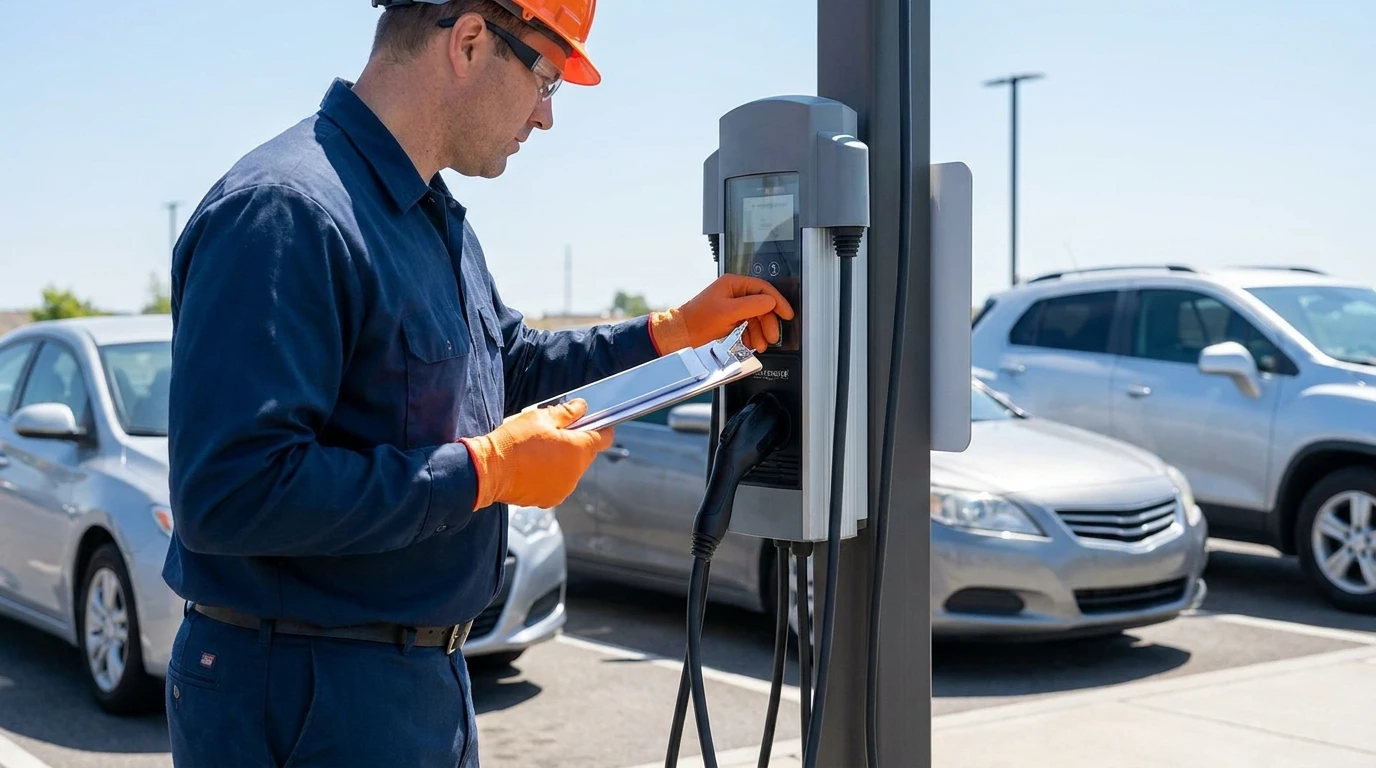
Annual EV charger maintenance runs roughly $400 to $1,200 per charger. Extended warranty coverage on top of the manufacturer's standard term adds another $300 to $800 per charger per year (Qmerit, 2026). EV charger warranty and maintenance financing is what lets a contractor roll both of those costs into the same loan as the hardware and install, instead of pitching protection as a separate, harder sell. Most installers skip pitching that coverage entirely. Others quote it as a standalone upfront cost, after the customer has already stretched to afford the install.
Neither approach captures the revenue sitting in plain sight. This guide covers four things: what a standard EV charger warranty actually covers, and what maintenance and extended coverage cost per year. It also covers why reliability data makes the pitch legitimate rather than an upsell, and how to fold both into one financed monthly number instead of a second sales conversation.
> Key Takeaways
> - Annual EV charger maintenance and extended warranty coverage together typically run $700 to $2,000 per charger, depending on charger type and coverage tier (Qmerit, 2026).
> - A paid extended warranty or maintenance plan can be rolled into the same financed amount as hardware and install, one monthly payment instead of a separate upfront charge, subject to approval.
> - Bundling protection plans into financing lifts attach rate 18-33% versus selling them separately, based on the adjacent HVAC/appliance category (JB Warranties, 2026).
> - Pitching at the point of quote beats a post-sale follow-up call; post-sale recovery reclaims only up to 15% of missed protection-plan sales (Consumer Priority Service, 2026).
Add financing to your installs, talk to our team
What Does a Standard EV Charger Warranty Actually Cover?
Most Level 2 home EV chargers ship with a 3-year manufacturer's warranty, longer than the 1-2 year limited-warranty floor common elsewhere in the broader EVSE category (ChargePoint / Enel X JuiceBox product documentation, 2026). That coverage is free, and it's already baked into the price of the unit.
What it typically includes: defective hardware and workmanship on covered internal components. What it typically excludes: labor for a repair visit, damage from misuse, and normal connector wear-and-tear. DC fast charger commercial warranties are structured differently, usually shorter relative to the unit's expected duty cycle, since a commercial DCFC sees far more charge cycles per year than a home wallbox ever will.
!Installer reviewing a warranty document next to a mounted Level 2 EV charger in a residential garage
That gap between "hardware is covered" and "the visit to fix it is covered" is exactly where a paid maintenance plan or extended warranty earns its cost. An extended warranty is a paid service contract that covers repair labor, travel, and often parts beyond what the free manufacturer warranty includes. It isn't duplicate coverage. It's filling in what the free warranty was never designed to include.
Citation capsule: Standard Level 2 home EV chargers commonly carry a 3-year manufacturer warranty, ahead of the 1-2 year floor typical elsewhere in the EVSE category (ChargePoint / Enel X JuiceBox, 2026). Coverage excludes repair-visit labor and misuse damage, which is the gap a paid maintenance plan or extended warranty is built to close.
For the underlying install economics this warranty conversation sits on top of, see our full guide to EV charger financing for installers.
How Much Does EV Charger Maintenance and an Extended Warranty Cost Per Year?
In 2026, annual maintenance averages roughly $400 per Level 1/2 charger, close to double that for DC fast chargers (EVConnect, 2026). Extended warranty coverage layered on top runs an additional $300 to $800 per charger per year (Qmerit, 2026). Together, that's a real annual cost, not a rounding error on the quote.
What drives the price: preventive visit frequency, the parts-coverage tier, and, for commercial sites, the response-time SLA attached to the contract. A single-charger homeowner and a fleet operator running a dozen DC fast chargers weigh this very differently; the fleet operator is pricing in downtime risk, not just a repair bill.
Skipping coverage has its own price tag. Emergency or unscheduled repairs average $500 to $2,000 per incident, with roughly 0.5 to 1.5 incidents per charger annually in commercial deployments (Qmerit / EVConnect maintenance cost aggregation, 2026). Run that math for a customer once and the maintenance-plan pitch tends to sell itself.
Citation capsule: Annual EV charger maintenance and extended warranty coverage together typically run $700 to $2,000 per charger. That combines roughly $400 in maintenance (EVConnect, 2026) with $300 to $800 in extended warranty coverage (Qmerit, 2026), a cost band worth naming out loud at the point of quote.
See how Eos Loan financing helps you close more projects
Why Does Charger Reliability Make a Maintenance Plan Worth Pitching?
The federal NEVI program requires DC fast charging ports to maintain greater than 97% average annual uptime to keep funding eligibility. Even at that standard, roughly 11 days of downtime a year are technically allowed (23 CFR Part 680, eCFR, 2026). Real-world averages run lower than the mandate in practice.
In 2025, J.D. Power found that 14% of EV owners who visited a public charger couldn't successfully complete a charge. That's down from 19% the year before, a real improvement but still a meaningful failure rate (J.D. Power via Utility Dive, 2025). By Q1 2026, US average charger reliability sat around 93.5%, with most states clustering in the 90-95% range (Electrek, 2026).
In our conversations with installers financing these projects, the reliability numbers rarely surprise them. What surprises them is how often a customer brings up a friend's bad charging experience unprompted, right at the quote table. That's the opening a maintenance-plan pitch is built for.
!Technician servicing an outdoor Level 2 EV charging unit in daylight
Isn't that the actual pitch? Not "buy extra coverage just in case," but "here's the documented failure rate on chargers without a maintenance relationship in place." That reframes a maintenance plan from an upsell into a legitimate risk-reduction purchase, backed by regulatory and syndicated research data, not installer sales talk.
Citation capsule: Federal NEVI funding requires DC fast charging ports to hit greater than 97% average annual uptime (23 CFR Part 680, eCFR, 2026). Yet 14% of EV owners still hit a public charger that wouldn't deliver a charge in 2025 (J.D. Power via Utility Dive, 2025), the real-world case for pitching a maintenance plan.
Can You Finance an EV Charger Warranty or Maintenance Plan?
Yes. EV charger warranty and maintenance financing means an extended warranty or maintenance plan can be included as a line item in the total financed amount, right alongside the hardware and install labor. The customer makes one monthly payment instead of a separate upfront charge for coverage, subject to approval and eligibility. That's a structural difference from the free warranty, not a substitute for it. The manufacturer's standard warranty is already included at no cost, so there's nothing to finance there. A paid extended warranty or third-party maintenance contract is a real dollar cost, and that's the piece that rides inside the loan. Eos Loan funds these projects as a direct lender: one party underwrites and funds the loan, rather than routing the customer to a marketplace of third-party lenders, and Eos Loan charges no dealer fee.
Financing terms stay flexible. Unlike battery energy storage, which has a confirmed 6 to 240 month range, EV charger financing terms are set at underwriting. Confirm the specific term at application rather than assuming a fixed range.
Eos Loan doesn't yet have a published internal figure on what share of financed EV charger applications include a warranty or maintenance line item versus hardware-and-install only. That's a data point worth tracking as more installers adopt the bundled-quote approach described here, and we'll update this post if that internal benchmark becomes available.
For a deeper look at how battery storage warranty terms line up against a financing term, since the same logic applies across product lines, see how battery storage warranties line up with financing terms.
Citation capsule: An extended warranty or maintenance plan can be financed inside the same loan amount as hardware and install, producing one monthly payment instead of a separate upfront coverage charge, subject to approval and eligibility. The manufacturer's included warranty remains free and unaffected; only a paid add-on is what actually gets financed.
How Do Maintenance-Plan Attach Rates Affect a Contractor's Revenue?
Attach rate is the share of customers who buy an add-on, like a protection plan, alongside a primary purchase such as a charger install. In the adjacent HVAC and appliance service category, bundling a protection plan into financing lifts attach rate 18-33% compared with pitching it as a standalone add-on (JB Warranties, 2026). Protection plans also drive 10-25% additional gross profit per sale (Consumer Priority Service, 2026). These figures come from HVAC and appliance dealers, not EV charger installers specifically. Even so, the sales mechanics of bundling a service contract into a financed purchase transfer directly.
That renewal-rate gap, 72% with an agreement versus 38% without, is a proxy for something bigger than one repair visit. A maintenance relationship keeps the customer coming back for the next essential project, whether that's a second charger, a battery storage add-on, or a future service upgrade.
Citation capsule: Bundling protection plans into financing instead of selling them separately lifts attach rate 18-33% and adds 10-25% gross profit per sale in the adjacent HVAC and appliance category (JB Warranties, 2026; Consumer Priority Service, 2026). It's a pattern that transfers directly to EV charger installs, even though the source data isn't EV-specific.
Offer your customers flexible financing on essential projects
Or call +1 833-989-3737 to talk through a financing program for your business.
For the bundle angle across product lines, see bundling EV charger and battery storage financing, and for site hosts weighing the NEVI uptime standard directly, see financing for commercial EV charging sites.
How Should You Pitch a Warranty or Maintenance Plan at the Quote?
Present the maintenance or warranty line inside the same financed monthly number at the point of quote, not as a follow-up call after the install is finished. Post-sale recovery only reclaims up to 15% of missed protection-plan sales compared with pitching at the point of sale (Consumer Priority Service, 2026). That means a skipped pitch at the quote stage is close to a permanently lost sale, not a deferred one.
!Contractor presenting a financing quote on a tablet to a homeowner at a kitchen table in daylight
> "Contractors who bundle the maintenance plan into the same monthly payment as the install almost never have to make a separate sales pitch. It's already part of the number the customer already agreed to." - Eduardo Donadi, CEO, Eos Loan
The practical script: quote hardware, install, and an optional maintenance tier as one combined monthly figure, and offer a tiered choice rather than a single take-it-or-leave-it option. Three-tier service offers capture roughly 40% more revenue than single-option agreements in the HVAC/appliance category (JB Warranties, 2026). A basic tier, a standard tier, and an extended tier give the customer a decision to make instead of a yes-or-no answer they're more likely to decline.
Consider a hypothetical, illustrative example: a $2,200 Level 2 install with a $600-per-year maintenance plan. Quoted separately, that's a second $600 ask after the customer already committed to the install cost, an awkward conversation that often gets skipped entirely. Quoted as one financed number instead, hardware, install, and the first year of coverage become a single monthly payment the customer already said yes to. This is an illustrative figure only, not a specific loan quote or promised rate.
Eos Loan funds that combined amount as the direct lender behind the loan, which is what makes quoting one number instead of two possible in the first place.
Citation capsule: Pitching the maintenance plan at the point of quote outperforms a post-sale follow-up, since post-sale recovery reclaims only up to 15% of missed sales (Consumer Priority Service, 2026). Three-tier service offers also capture roughly 40% more revenue than single-option agreements (JB Warranties, 2026).
For the broader case on why offering financing at all raises close rates, see how financing increases close rates, and for the fuller playbook on structuring these conversations, see our guide to offering customer financing.
---
A standard EV charger warranty covers hardware defects for free, typically 3 years on premium Level 2 units, but excludes repair labor and wear-and-tear. Maintenance and extended coverage on top of that run $700 to $2,000 per charger per year, and can be rolled into the same financed loan amount as hardware and install rather than billed separately, subject to approval and eligibility. Attach-rate data from the adjacent HVAC and appliance category argues strongly for pitching that coverage at the point of quote, in tiers, not as a post-sale afterthought.
This is general information, not tax advice. Consult a qualified tax professional for guidance specific to your situation.
Frequently Asked Questions
{ question: "Can a maintenance plan be included in an EV charger loan?", answer: "Yes. When the plan cost is quoted as part of the total project amount, it can be financed alongside hardware and install labor in one monthly payment, subject to approval and eligibility. The manufacturer's included warranty is already free and isn't what gets financed; a paid extended warranty or maintenance contract is." }, { question: "How long is a typical EV charger warranty?", answer: "Standard manufacturer warranties on premium home Level 2 chargers commonly run 3 years (ChargePoint Home Flex, Enel X JuiceBox product documentation, 2026), longer than the 1-2 year floor common elsewhere in the category. DC fast charger commercial warranties are structured differently, usually shorter relative to duty cycle." }, { question: "How much does EV charger maintenance cost per year?", answer: "Roughly $400 to $1,200 annually per charger depending on charger type and service level, with DC fast chargers costing close to double a Level 2 unit (Qmerit / EVConnect, 2026). Extended warranty coverage on top typically adds another $300 to $800 per charger per year." }, { question: "Is an extended EV charger warranty worth the cost?", answer: "It depends on usage and site type. Commercial and fleet operators facing uptime requirements, like the federal NEVI 97% standard, tend to get the clearest return, since unplanned repairs average $500 to $2,000 per incident (Qmerit / EVConnect, 2026; 23 CFR Part 680, eCFR)." } ]} /> --- Sources