

Financing Water Treatment for Vacation and Second Homes
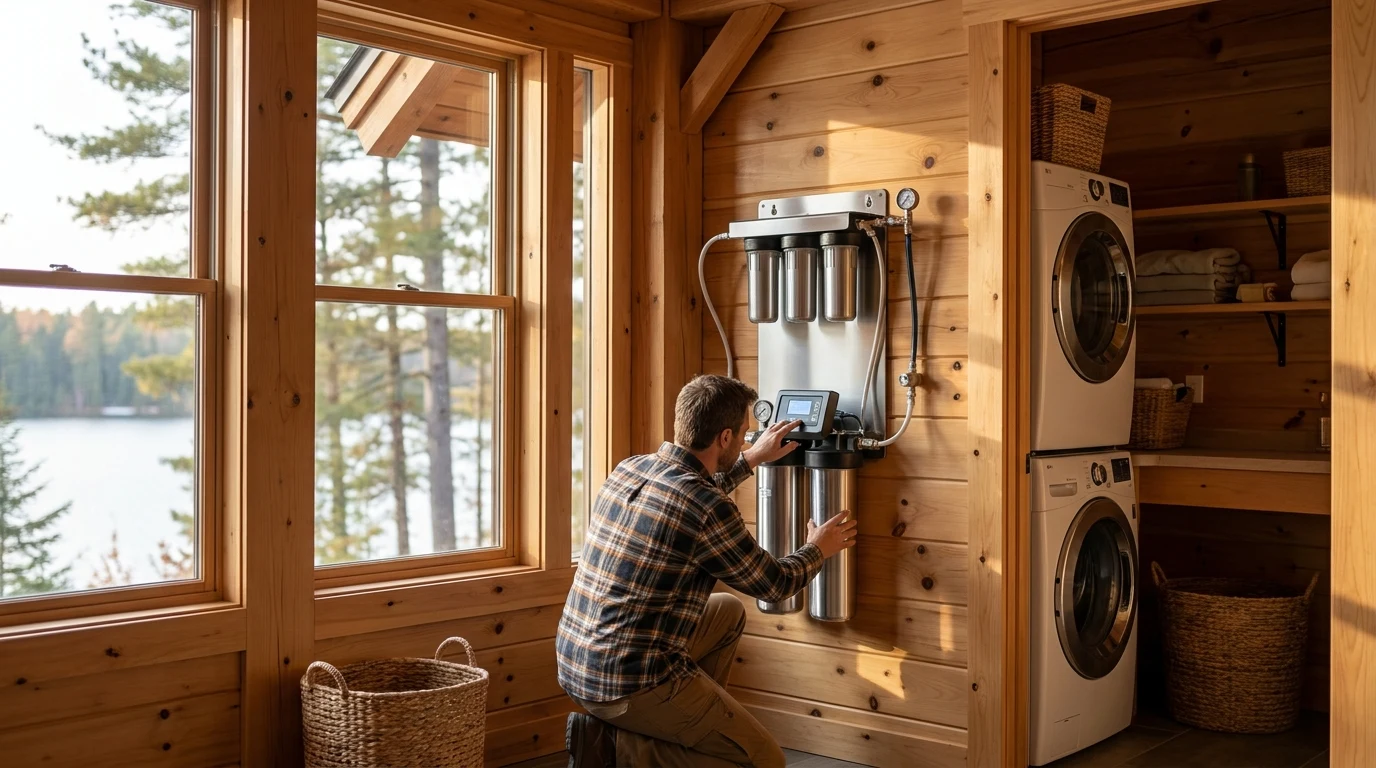
US second-home ownership reached about 10.2 million properties in 2023, more than double the 5 million recorded in 2000 (Redfin/Point2 analysis of Census Bureau American Community Survey data, 2025). A property that sits empty for weeks or months between visits doesn't behave like a primary residence when it comes to water. Standing water in pipes and tanks can lose disinfectant residual and support bacterial growth, and supply issues a full-time resident would catch early can go unnoticed for an entire off-season.
This guide covers why seasonal use changes the water treatment equation, what systems and costs make sense for a second home, and how owners and their installers can finance the fix instead of paying cash on a property that already carries a second mortgage, HOA dues, or seasonal utility bills.
> Key Takeaways
> - US second-home ownership reached about 10.2 million properties in 2023, up from 5 million in 2000 (Redfin/Point2 analysis, 2025).
> - Homes left vacant for weeks or months can develop stagnant-water conditions that raise bacterial growth risk (CDC, Building Water System Guidance, 2026).
> - Whole-home systems for a seasonal property typically run $800 to $5,000+ installed (Angi, 2024).
> - Financing works the same way regardless of occupancy status, subject to approval and eligibility.
See how Eos Loan financing helps you close more projects
What Is Water Treatment Financing for a Second Home?
Water treatment financing for a second or vacation home works the same way it does for a primary residence: a homeowner pays for the system, whole-home filtration, a softener, UV disinfection, or a combination, in monthly installments while the installer gets paid promptly. It's the same dealer-financing mechanism used across the water treatment category, applied to a property the owner may only occupy part of the year.
Both primary and secondary properties qualify, subject to approval and eligibility. Second-home owners often prefer financing specifically because they're already carrying a second set of housing costs, mortgage, insurance, HOA dues, seasonal utilities, and want to keep cash reserves free rather than write one large check for a property they visit a handful of weekends a year.
That growth isn't slowing down evenly across every market, though. US vacation-home mortgage purchases actually fell 65.8% between 2021 and 2025, from 257,549 to 88,158, as higher rates cooled new purchase activity (Redfin, 2025). The existing stock of roughly 10.2 million second homes still needs maintenance and system upgrades regardless of how new purchases trend, which keeps the addressable market for a seasonal-property job steady even in a slower buying year. For the full mechanics of dealer fees and funding across the category, see our water treatment dealer financing guide.
Why Does a Vacation or Second Home Need Different Water Treatment Planning?
Water systems in buildings left vacant or sparsely used for weeks or months can develop stagnant conditions: water sitting still loses disinfectant residual like chlorine, and hot-water temperatures can drift into the 77 to 113°F range where Legionella and other biofilm-forming bacteria grow (CDC, Building Water System Guidance, 2026).
That guidance is written for commercial and institutional buildings, but the underlying mechanism, stagnant water, disinfectant loss, a favorable bacterial temperature range, applies to any structure that sits unused for an extended stretch, including a seasonal residence. Recommended practice is to flush a system before returning it to regular use. Well systems carry an added layer of risk since they aren't chlorinated by a municipal utility to begin with, so there's no residual protection to lose in the first place.
Almost none of the existing "vacation home water" content applies this science to residential seasonal properties. Search results for that phrase return winterizing guides, how to keep pipes from freezing, again and again. Winterizing protects the plumbing. It says nothing about what happens to water quality and disinfectant protection during the months a system sits idle, and that's the gap this guide is built to close.
Is that risk really different from a home that's just quiet for a week during a normal family vacation? Not meaningfully; short absences rarely change much. The concern scales with how long the system actually sits idle, which is why a property visited a few weekends a year carries more of this risk than one left empty for two weeks. This section is general information about water system science, not a medical or engineering directive; a qualified water treatment professional should assess any specific property.
What Systems Make Sense for a Property Used Only Part of the Year?
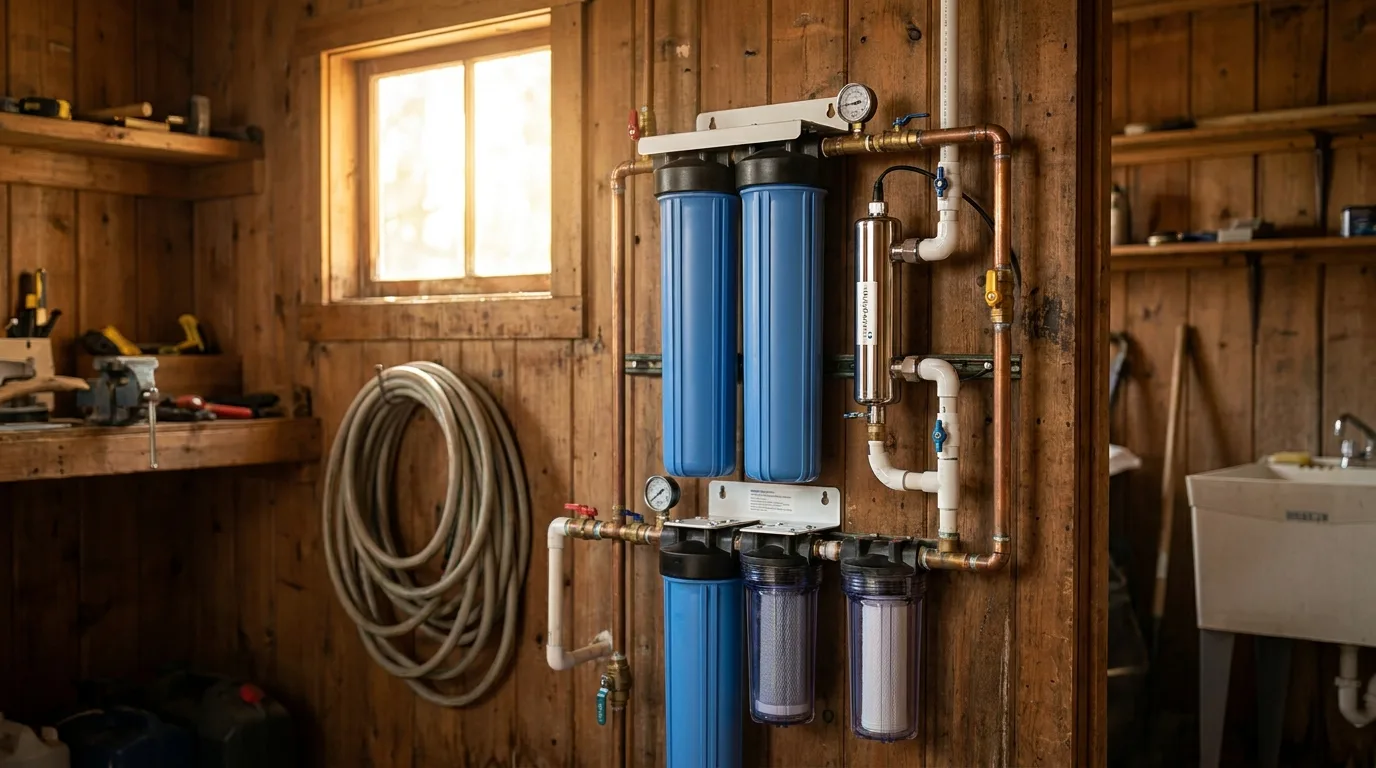
Seasonal properties generally benefit from a combination of a sediment pre-filter, a whole-home carbon or multi-stage system to handle water that's sat idle, and, on well-supplied properties, UV disinfection, since there's no municipal chlorination between visits to keep bacteria in check.
Whole-home (point-of-entry) systems make the most sense for properties on well water or with unknown or variable water quality between visits. Point-of-use filters at the kitchen tap work as a lower-cost add-on for taste and odor once the bigger risk is covered. Pairing either setup with a simple flush-and-recirculate routine at the start of each stay closes the gap that equipment alone can't solve; a system can't protect water that's been sitting in the pipes since the last visit.
For readers weighing how much coverage they actually need, our point-of-use vs whole-home filtration comparison walks through the tradeoffs in more depth. Properties on a private well should also see our well water treatment financing guide, since well-supplied second homes stack the seasonal-use risk on top of the usual well-water testing burden.
How Much Does Water Treatment Cost for a Vacation or Second Home?
Costs mirror primary-residence system pricing: point-of-use filters run $200 to $1,000 installed, while whole-home systems range from $800 to $5,000 or more, with the total often landing higher on seasonal properties that need a fuller system to handle water quality swings between visits (Angi, 2024).
What pushes a seasonal-property job toward the higher end of these ranges? Well versus municipal supply is the biggest driver, followed by distance from a full-time service technician; many lake, mountain, and coastal markets are remote enough that labor and travel add meaningfully to the install cost. Owners often bundle a water system with plumbing or well-pump work already scheduled for the season, which spreads the technician's trip cost across more than one job.
How Does Financing a Second-Home Water System Actually Work?
The owner applies through the installer, a direct lender funds the loan, the installer gets paid after the job is done, and the owner repays over a flexible term, the same mechanism used across other essential-project financing, whether the property is a primary residence or a seasonal one.
Approval is always subject to eligibility, and no responsible lender promises a guaranteed decision. Water treatment terms are described as flexible rather than fixed to one length, since the right term depends on system cost and budget. A direct lender like Eos Loan charges no dealer fee, which matters here specifically because financing a second home's system doesn't require the property to be the owner's primary residence; approval is based on the applicant's credit profile, not occupancy status.
Add financing to your installs, talk to our team
Why Should Installers Treat Seasonal-Property Customers as a Distinct Segment?
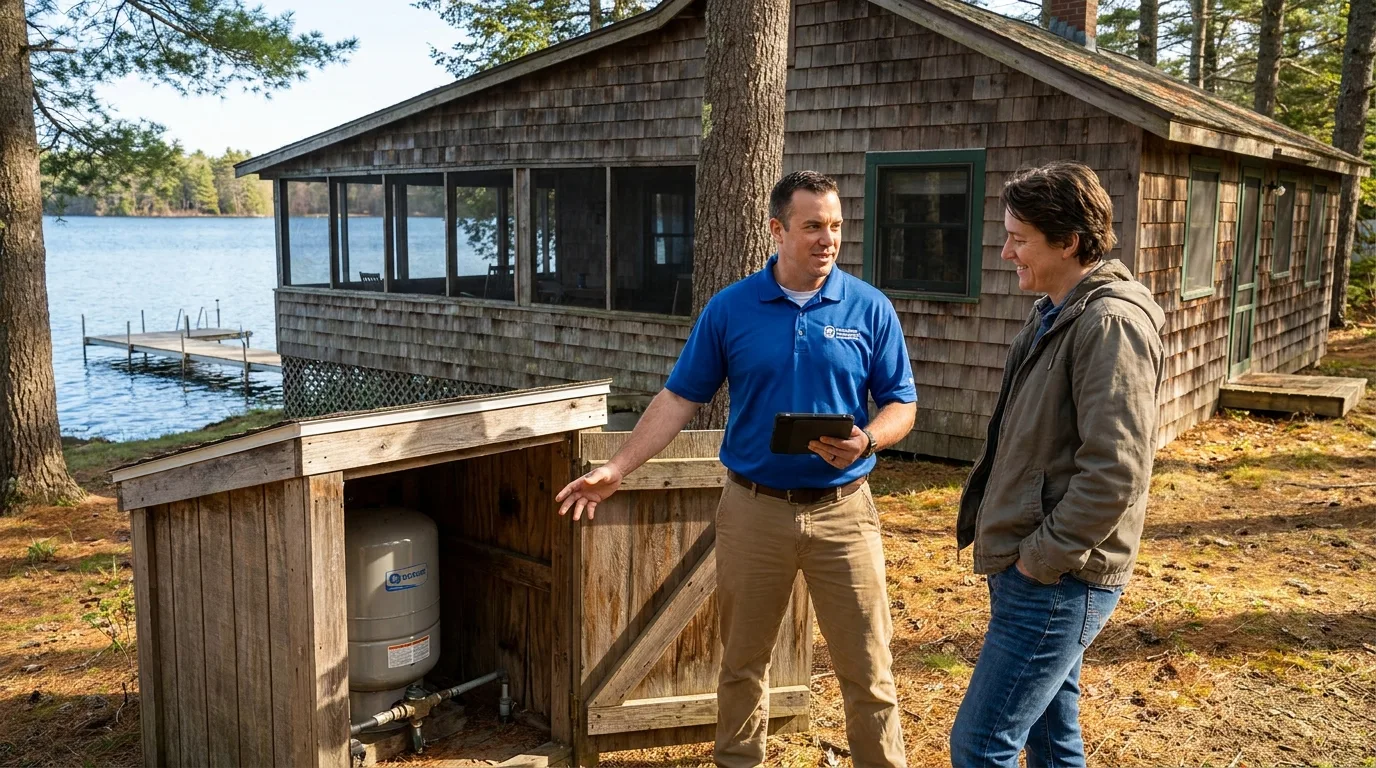
Installers who work lake, mountain, coastal, or other second-home markets see a predictable spring "opening season" surge of smell, taste, or discoloration complaints from systems that sat idle over the off-season, and presenting a financed whole-home solution at that moment, instead of a patchwork of point-of-use fixes, raises average ticket size on a customer who's already comparing this cost against other seasonal-property maintenance bills.
Installers who service vacation-home territory tell us the first call each spring is almost always a smell or color complaint from a system that sat idle all winter. The homeowner usually asks for a single fix, a new filter cartridge, a quick flush, but the underlying issue is almost always bigger: a system that was never sized for months of inactivity between visits. That's the moment to present a bundled whole-home solution instead of a one-off patch, and it's exactly the kind of ticket size a monthly payment plan makes easier to close.
Bundling a full system, pre-filter, whole-home unit, UV where relevant, instead of selling only a single fix keeps the pitch consistent with how the underlying risk actually works. Positioning Eos Loan as a direct lender with no dealer fee keeps margin math clean on that bundle. Households earning over $100,000 are about 12 times more likely to own a second home than households under $50,000 (Redfin/Point2 analysis, 2025), a relevant signal for installers sizing the financed-ticket opportunity in this segment; a higher-income customer base can typically support a larger project without the payment feeling like a stretch.
> Our finding: What installers tell us most consistently is that framing the pitch as "here's what your water's been doing all winter," rather than leading with price, gets a faster yes from a customer who's already primed by the smell or color they just noticed.
For the full playbook on presenting financing across project types, see our contractor guide to offering customer financing.
Offer your customers flexible financing on essential projects
Or call +1 833-989-3737 to talk through a financing program for your business.
Frequently Asked Questions
Can you finance a water treatment system for a second home?
Yes. Water treatment financing through a direct lender applies to any qualifying property, including a second or vacation home. Approval is based on the applicant's credit profile, not occupancy status, subject to approval and eligibility.
Does a vacation home need different water treatment than a full-time residence?
Often yes. A property left vacant for weeks or months can develop stagnant-water conditions, disinfectant residual loss, and bacterial growth risk that a continuously occupied home doesn't face the same way (CDC, 2026).
How much does water treatment cost for a second home?
Point-of-use filters run $200 to $1,000 installed; whole-home systems range from $800 to $5,000 or more, depending on technology, water source, and home size (Angi, 2024).
Should I flush my system before opening a seasonal property for the year?
General guidance for buildings that sit vacant recommends flushing water systems before returning them to regular use. A qualified water treatment professional should evaluate any specific property's needs before the season starts.
Is water treatment eligible for a tax credit?
No. Water treatment systems generally aren't eligible for clean-energy tax credits. This is general information, not tax advice; consult a qualified tax professional for guidance specific to your situation.
The Bottom Line
Second-home ownership has roughly doubled since 2000, and a property that sits empty for weeks or months carries a water-quality risk a primary residence doesn't face the same way. Whole-home systems commonly run $800 to $5,000 or more, and financing works the same way regardless of occupancy status, subject to approval and eligibility. Installers who treat seasonal-market customers as a distinct segment, and pitch a full system instead of a single patch, tend to see a higher average ticket on exactly the jobs this guide describes.
If you serve lake, mountain, or coastal territory and want to add financing to your installs, talk to our team about a program built for essential projects like these.
Or call +1 833-989-3737 to talk through a financing program for your business.
---
Sources
- Redfin, Second-Home Mortgages Drop as High Rates and Remote-Work Shifts Cool Demand (Redfin/Point2 analysis of US Census Bureau American Community Survey data: ~10.2 million US second homes in 2023 vs. 5 million in 2000; households over $100,000 income about 12x more likely to own a second home than those under $50,000; vacation-home mortgage purchases fell 65.8% from 257,549 in 2021 to 88,158 in 2025), retrieved 2026-08-14, https://www.redfin.com/news/second-home-mortgages-drop-2024/
- Centers for Disease Control and Prevention, Building Water System Guidance for Reopening Buildings (stagnant water, disinfectant residual loss, 77-113°F Legionella growth range, flushing recommendation), retrieved 2026-08-14, https://www.cdc.gov/control-legionella/php/guidance/building-water-system.html
- Angi, How Much Does Water Filtration System Installation Cost (point-of-use $200-$1,000; whole-home/point-of-entry $800-$5,000+; softener and UV add-on ranges), retrieved 2026-08-14, https://www.angi.com/articles/how-much-does-water-filtration-system-installation-cost.htm
About the author: Eduardo Donadi is the CEO of Eos Loan, the fintech built to finance essential projects (battery energy storage, EV chargers, and water filtration) for installers, contractors, and resellers across the United States.