

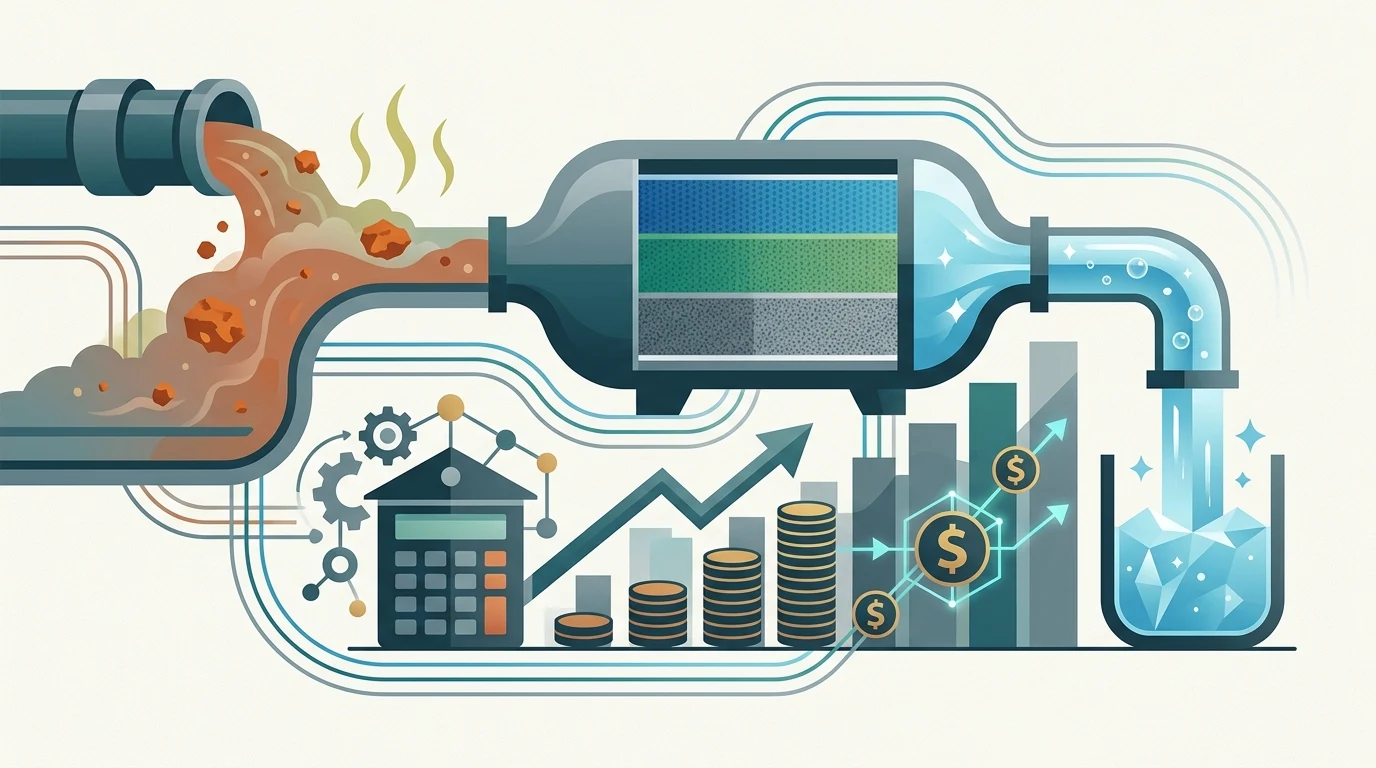
A homeowner notices orange rings in the toilet bowl. Or a guest mentions the water smells like rotten eggs. Iron and hydrogen sulfide are the two most common aesthetic problems in private well water. Secondary contaminants are substances the EPA regulates for their effect on taste, smell, and staining, not because they pose a direct health hazard, and iron and hydrogen sulfide both fall into that category (EPA, Secondary Drinking Water Standards, 2026). Even so, that classification doesn't make the problem optional to fix. It just means the homeowner decides when to fix it, not a regulator.
This guide covers what causes iron staining and sulfur odor, what equipment actually treats each one, what a system costs installed, and how financing turns a $900 to $4,500 job into a payment a homeowner can approve on the spot instead of putting off for another season.
> Key Takeaways
> - Iron and hydrogen sulfide are EPA secondary (aesthetic) contaminants, not directly health-regulated, but they stain fixtures and smell bad enough that homeowners rarely ignore them for long (EPA, 2026).
> - More than 43 million people, about 15% of the US population, rely on private wells and manage testing and treatment entirely on their own (USGS, 2026).
> - Iron and sulfur filtration systems typically cost $900 to $4,500 installed, depending on water chemistry and treatment technology (HomeAdvisor, 2025).
> - A standard water softener doesn't remove iron or hydrogen sulfide, so financing the right equipment (not just "a softener") matters for the fix to actually work.
See how Eos Loan financing helps you close more projects
What Causes Iron and Sulfur Problems in Well Water?
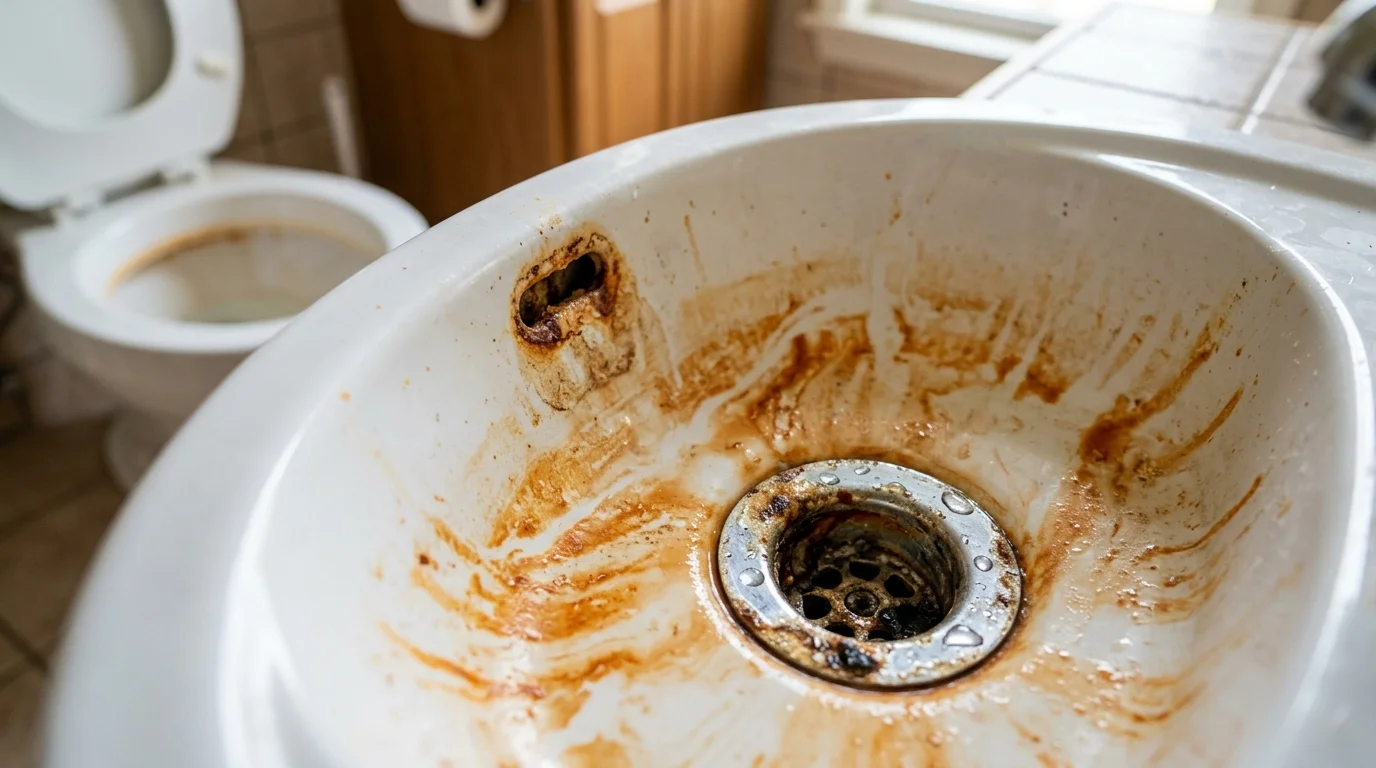
Iron causes reddish-orange staining on fixtures, laundry, and glassware. Hydrogen sulfide is a gas produced by sulfur bacteria in groundwater or plumbing, and it's the source of the rotten-egg smell. The EPA classifies both as secondary, aesthetic, non-regulated contaminants rather than direct health hazards at typical residential levels (EPA, 2026).
Iron dissolves into groundwater as it passes through iron-bearing rock and soil. It then oxidizes on contact with air, which is why it shows up as rust-colored staining on sinks, tubs, and white laundry rather than as a taste problem alone. Hydrogen sulfide gas, meanwhile, typically forms when sulfur bacteria interact with well components, plumbing, or the water heater's anode rod. That's the reason the smell often gets worse from the hot tap (Minnesota Department of Health, Hydrogen Sulfide and Sulfur Bacteria, 2026).
!Reddish-orange iron staining around a well water fixture and drain in a residential setting.
In our experience, the two problems show up together often enough that installers treat them as a pair, not a coincidence. Groundwater chemistry that produces iron staining tends to produce the anaerobic conditions sulfur bacteria need. So a homeowner reporting one symptom should expect the technician to test for both before writing a quote.
How Common Are Iron and Sulfur Issues in Private Wells?
More than 43 million people, roughly 15% of the US population, get their drinking water from private wells (USGS, Domestic Supply Wells, 2026). Private wells fall outside the Safe Drinking Water Act. As a result, testing and treatment for iron and sulfur issues land entirely on the homeowner.
By contrast, municipal water customers rarely deal with iron staining or sulfur odor because a city treatment plant intercepts both before water reaches the tap. Well owners get no such upstream step. Whatever is in the aquifer arrives at the faucet unless the homeowner installs equipment to catch it first.
A related mineral worth noting separately: about 7% of domestic wells carry manganese above the human-health benchmark, affecting an estimated 2.6 million people (USGS NAWQA, 2026). Still, that's a different mineral than iron with its own treatment path. It's another reason a full water test, not a guess based on symptoms alone, should come before any equipment purchase.
How Much Does Iron and Sulfur Water Treatment Cost?
A dedicated iron and sulfur filtration or oxidation system typically costs $900 to $4,500 installed, with the price driven by water chemistry, household water use, and which technology the job calls for (HomeAdvisor, Well Water Treatment Systems Cost, 2025). That range sits inside the broader $200 to $10,000+ span covered in our full well water treatment equipment stack guide, narrowed here to iron and sulfur equipment alone.
Several variables push a quote toward the low or high end of that range. Iron concentration, measured in parts per million, is the biggest driver: light staining under 3 ppm often clears with a smaller oxidizing filter, while iron above 10 ppm typically calls for a larger media bed or a chemical injection system to keep up. Household water use matters too, since a family running multiple bathrooms and a washing machine needs a higher flow-rate system than a single occupant does. Sulfur bacteria severity plays a role as well: a faint odor from the hot tap alone is a smaller fix than a strong smell present at every faucet, cold included. Finally, the technology itself carries a price spread. Oxidizing media filters sit at the lower end. Chemical injection and air injection systems cost more upfront but handle heavier contamination. Combination systems that tackle iron, sulfur, and carbon filtration together land at the top of the range.
Before any of these numbers apply, though, a $50 to $200 water test should confirm what's actually in the water (HomeAdvisor, 2025). Sizing equipment off a guess, "the water smells bad so we need the big tank," is the single most common cause of an undersized system that fails within a year. It's also how a homeowner ends up overpaying for an oversized one.
Add financing to your installs, talk to our team
Will a Water Softener Fix Iron or Sulfur Problems?
A standard water softener is built to remove hardness minerals like calcium and magnesium, not iron or hydrogen sulfide. Untreated iron will also foul a softener's resin bed over time. So the two problems generally need separate, or combined-but-distinct, equipment.
In our experience, the same misdiagnosis shows up on the phone constantly. A homeowner calls asking for "a water softener" because that's the term they know, when the actual complaint, staining or a rotten-egg smell, points to iron or sulfur instead. We've found that quoting the wrong equipment based on what the customer asked for, rather than what the water test shows, is how a job gets returned or redone. The fix is simple but has to happen every time: test first, diagnose the specific contaminant, then explain why the requested equipment won't solve the actual complaint.
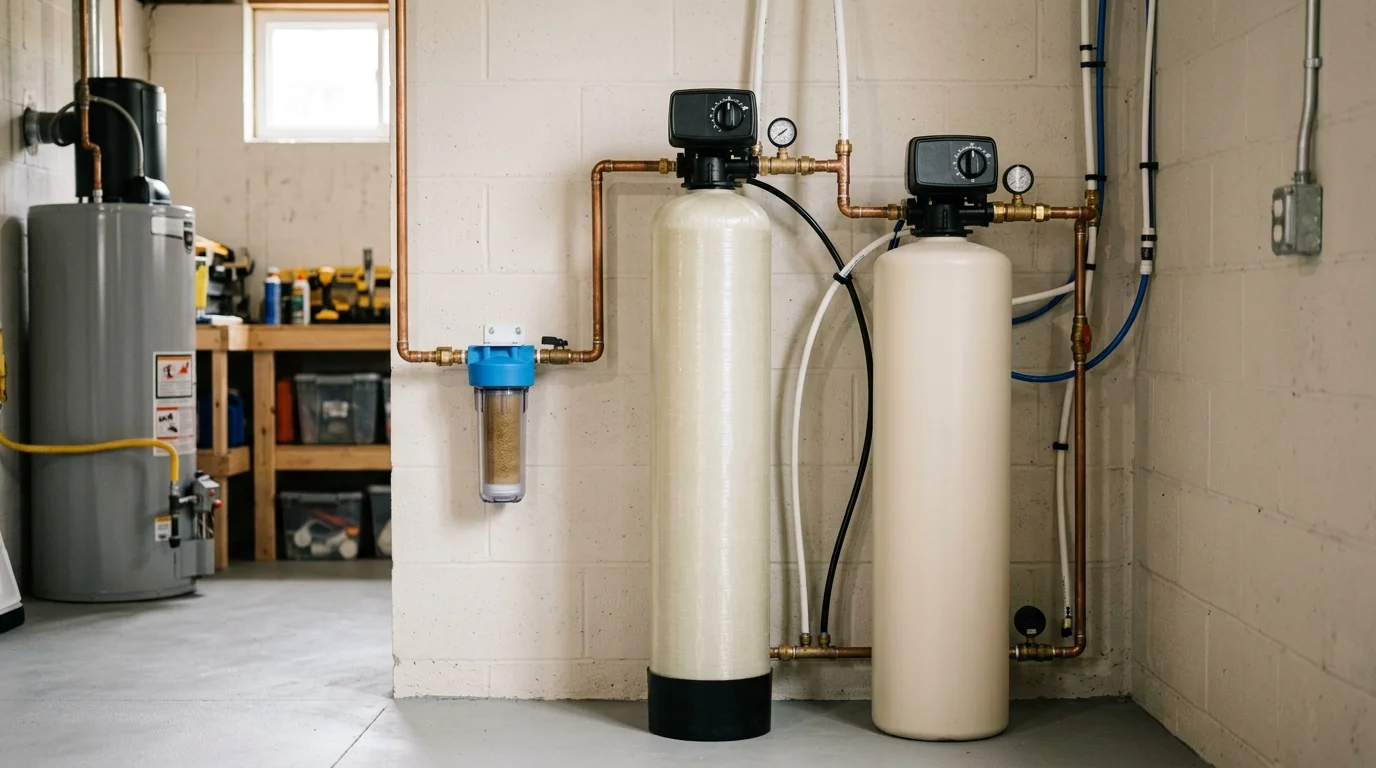
An oxidizing media filter converts dissolved iron and hydrogen sulfide into solid particles a filter bed can trap, and it's the core component in most combination systems. A sediment pre-filter ahead of that oxidation stage protects everything downstream. In many cases, a combination iron, sulfur, and carbon system handles both problems in one unit rather than requiring two separate tanks. For the mechanics of hardness-specific equipment and cost, see our whole-home water softener financing guide.
How Does Financing an Iron and Sulfur Water Treatment System Work?
The homeowner applies through the installer. A direct lender funds the loan, the installer gets paid once the job is done, and the homeowner repays over a flexible term, subject to approval and eligibility. That's the same mechanism used across water treatment financing generally.
Financing matters most at the $2,800 to $4,500 end of the iron and sulfur range, where a combination system starts to feel like a big ask against a cash budget. A monthly number changes that math for a lot of homeowners who would otherwise delay the job another season. Eos Loan is a direct lender, not a broker or marketplace, and charges no dealer fee, which keeps an installer's quote math straightforward from the first conversation.
The moment that matters most is timing, not messaging. Presenting financing at the same time as the water test results, rather than after the equipment quote, changes the comparison the homeowner makes. Instead of weighing "fix it" against "not fix it," they're weighing "fix it now" against "fix it now, monthly." That's a meaningfully easier decision. It's also a sequencing detail most competing content on iron and sulfur treatment skips entirely, in favor of explaining the equipment alone.
Offer your customers flexible financing on essential projects
What Should Homeowners Ask Before Financing an Iron or Sulfur System?
Before financing an iron or sulfur system, a homeowner should confirm three things. First, the equipment matches a recent water test rather than a guess. Second, the installer discloses total system cost, including any dealer fee the installer's lender might charge. Third, the loan term fits the monthly budget, since water treatment financing terms are described as flexible rather than fixed to one standard length.
A few more questions worth asking before signing anything: Is this quote for iron and sulfur treatment alone, or is it bundled with a softener or UV disinfection the water test didn't call for? What's the expected media life on the oxidizing filter, and what does replacement cost down the road? Does the loan allow early payoff without a penalty? None of these have a universal answer, since terms vary by lender and by the specifics of the job, but asking them before signing avoids surprises later.
For a walkthrough of how the test-to-install sequence typically runs, see from water test to financed install. If the staining or odor surfaced during a home sale, our guide on water filtration financing after a failed well inspection covers that specific trigger.
Frequently Asked Questions
Why does my well water smell like rotten eggs?
Hydrogen sulfide gas, produced by sulfur bacteria in groundwater or plumbing, causes the odor. The EPA classifies it as a secondary (aesthetic) contaminant rather than a direct health hazard, though it can corrode plumbing fixtures and appliances over time (EPA, 2026).
How much does an iron filter for well water cost?
Iron and sulfur filtration systems typically run $900 to $4,500 installed, depending on water chemistry and treatment technology (HomeAdvisor, 2025). A water test, usually $50 to $200 (HomeAdvisor, 2025), should come first to size the equipment correctly.
Can you finance an iron and sulfur water treatment system?
Yes. Dealer financing through a direct lender lets homeowners pay monthly instead of the full amount upfront, subject to approval and eligibility. Eos Loan charges no dealer fee, which keeps installer quotes straightforward.
Is iron or sulfur in water dangerous?
Both are regulated by the EPA as secondary (aesthetic) contaminants, meaning they primarily affect taste, smell, and staining rather than posing a direct, regulated health risk at typical residential levels (EPA, 2026). Left untreated, they can still corrode plumbing and fixtures over time.
Do I need a water softener or an iron filter?
They solve different problems. A softener removes hardness minerals like calcium and magnesium, while an iron/sulfur filter removes iron and hydrogen sulfide. Many wells need both, but neither substitutes for the other, and untreated iron can foul a softener's resin bed.
The Bottom Line
Iron staining and sulfur odor are the two most common complaints in private well water. Roughly 43 million people, about 15% of the US population, manage the testing and treatment on their own (USGS, 2026). A dedicated system typically runs $900 to $4,500 installed, and a softener alone won't fix either problem. Financing, though, turns that range into a monthly payment most homeowners can approve without delay. Approval is always subject to eligibility, and Eos Loan charges no dealer fee.
If you install iron and sulfur treatment equipment and want to add financing to the job, talk to our team about a program built for essential projects like these.
Or call +1 833-989-3737 to talk through a financing program for your business.
---
Sources
- US Environmental Protection Agency, Secondary Drinking Water Standards: Guidance for Nuisance Chemicals (iron and hydrogen sulfide classified as secondary, aesthetic contaminants), retrieved 2026-08-10, https://www.epa.gov/sdwa/secondary-drinking-water-standards-guidance-nuisance-chemicals
- US Geological Survey, Domestic (Private) Supply Wells (43+ million people, about 15% of the US population, rely on private wells; about 7% of domestic wells exceed the manganese health benchmark, affecting roughly 2.6 million people), retrieved 2026-08-10, https://www.usgs.gov/mission-areas/water-resources/science/domestic-private-supply-wells
- Minnesota Department of Health, Hydrogen Sulfide and Sulfur Bacteria in Well Water, retrieved 2026-08-10, https://www.health.state.mn.us/communities/environment/water/wells/waterquality/hydrosulfide.html
- HomeAdvisor, Well Water Treatment Systems Cost (iron/sulfur systems $900-$4,500 installed; water test $50-$200), retrieved 2026-08-10, https://www.homeadvisor.com/cost/plumbing/well-water-treatment-systems-cost/
About the author: Eduardo Donadi is the CEO of Eos Loan, the fintech built to finance essential projects (battery energy storage, EV chargers, and water filtration) for installers, contractors, and resellers across the United States.