

How Do Marinas Finance Battery Storage for Shore Power?
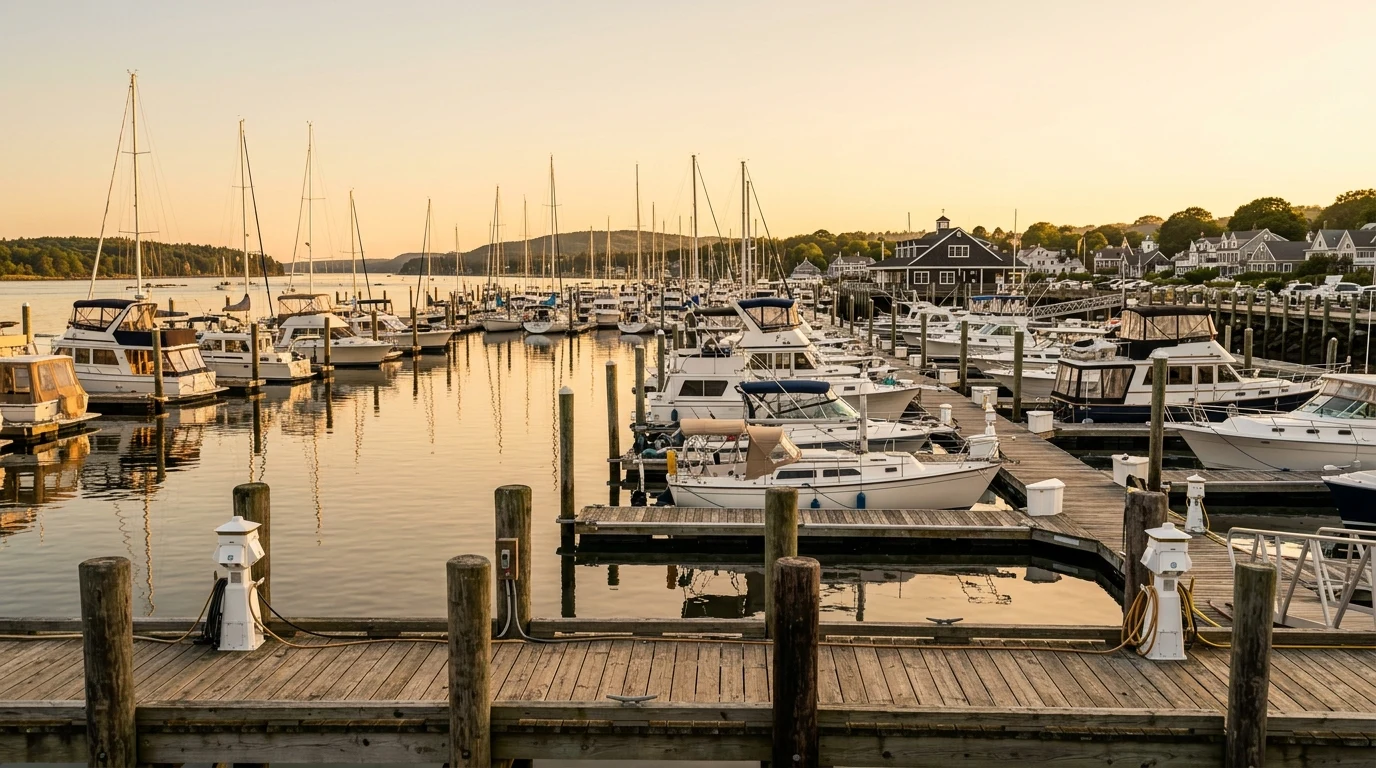
US marinas hit a median occupancy rate of 92% in 2024, and more than a quarter reported full docks (Marina Dockage, 2025 Annual Survey, retrieved 2026-09-30). That kind of demand means a marina's shore power pedestals, fuel dock pumps, and live-well tanks rarely sit idle. When the grid drops, none of them do either. Marinas and waterfront commercial properties carry a load profile and a risk profile that general commercial battery storage content does not address.
This guide covers why shore power needs battery backup, how financing actually works for a marina or waterfront property, what makes sizing different from a standard commercial project, and how both peak boating season and storm season factor into the same financing decision.
> Key Takeaways
> - US marinas averaged 92% occupancy in 2024, with 26% of marinas reporting full docks (Marina Dockage, 2025).
> - Recreational boating supports an estimated $230 billion in annual US economic impact and over 812,000 jobs (National Marine Manufacturers Association, 2026).
> - Eos Loan finances marina and waterfront battery storage as a direct lender, with flexible terms from 6 to 240 months, subject to approval and eligibility.
> - Marina sizing starts with shore power pedestal load and critical refrigeration, not a generic commercial demand-charge worksheet.
See how Eos Loan financing helps you close more projects
Why does shore power at a marina need battery backup?
A marina outage does not just cut the dock lights. It cuts shore power pedestals, fuel dock pumps, bait and live-well tanks, and ship store refrigeration, all at once. In 2026, recreational boating and fishing support an estimated $230 billion in annual US economic impact, more than 36,000 businesses, and over 812,000 jobs (National Marine Manufacturers Association, 2026). A marina sitting at or near full occupancy, which is common given the industry's 92% median occupancy in 2024, has almost no slack to absorb a multi-hour outage without losing revenue somewhere on the property.
The broader US marine economy, which includes marinas, boatbuilding, and waterfront tourism and recreation, contributed $511 billion to GDP in 2023 and supported 2.6 million jobs, with tourism and recreation alone adding $179 billion (NOAA and the Bureau of Economic Analysis, Marine Economy Satellite Account, 2025). That scale is why battery backup at a marina is not a niche request. It is a financeable, well-understood commercial category once the load profile is framed correctly.
For the full mechanics of how battery storage financing works across residential and commercial projects alike, see the complete 2026 guide to battery storage financing.
How does battery storage financing work for a marina or waterfront property?
Eos Loan finances battery storage for marinas and waterfront properties as a direct lender, with flexible terms from 6 to 240 months, subject to approval and eligibility (Eos Loan product data, 2026). Eos Loan funds the loan itself. It never routes a marina owner through a marketplace or a broker that hands the deal to outside bidders, the same structure that applies across every other commercial vertical this company finances.
The point-of-sale flow looks the same as it does for any other essential project: the contractor proposes the system and the financing together, the marina or waterfront property owner applies during that conversation, the contractor gets paid at project completion, and the owner repays over the agreed term. No specific rate or APR is quoted here. Final terms always depend on underwriting and are subject to approval and eligibility.
Eos Loan has originated more than $4B and processed over 30,000 proposals (Eos Loan, 2026) as a direct lender, never a marketplace, broker, or platform that connects a property owner to outside lenders. That single point of accountability matters more at a coastal property, where flood zone and corrosion documentation already add review steps a standard commercial deal skips.
Add financing to your installs, talk to our team
What makes marina battery storage sizing different from a standard commercial project?
Marina sizing starts with shore power pedestal amperage and critical refrigeration or live-well load, not a generic demand-charge worksheet built for a retail or office account. A shore power pedestal supplies electrical service directly to a docked boat, and a marina with dozens of occupied slips can be drawing meaningful continuous load from those pedestals alone before a fuel dock, ship store, or on-site restaurant is even counted.
Flood zone siting, corrosion-rated enclosures, and dockside electrical permitting are underwriting documentation items the lender reviews, not engineering advice. A marina applicant should still work with a licensed electrician and its installer to finalize equipment placement and specifications; the loan itself is sized against the project cost and the applicant's underwriting profile, not against a specific engineering outcome.
For the general commercial sizing approach this vertical builds on, see commercial battery storage financing for businesses.
How do storm season and peak boating season both factor into marina battery financing?
Marinas carry two stacked outage-risk windows on the same physical asset, and most generic commercial battery content only models one. Peak boating season brings the highest shore power, fuel dock, and live-well load of the year, which means an outage during that window hits revenue hardest. Storm season, which NOAA's Atlantic hurricane season runs June 1 through November 30 (National Hurricane Center, 2026), adds structural risk and extended outage exposure on top of that same peak-demand period in most coastal states.
!Boats docked in a harbor on a sunny day with calm water and clear skies.
Neither risk window alone tells the full story a marina owner is underwriting against. A battery system sized only for peak-season demand charges may undersize the backup duration a storm-season outage requires, while a system sized purely for storm resilience can leave peak-season shore power and refrigeration loads under-served the rest of the year. For the install-timeline math behind why this financing conversation should start well before the first named storm, see battery storage financing before hurricane season. For the avoided-outage-cost framework this section borrows structurally, built around pricing downtime in dollars rather than hours, see avoided-outage cost framing for critical-load businesses.
What does financing a marina battery storage system actually cost?
No specific rate or APR is quoted here. Eos Loan describes marina and waterfront battery storage financing as flexible terms from 6 to 240 months, subject to approval and eligibility, and charges no dealer fee. Ticket size on these projects is driven by the number of docks and slips, the shore power pedestal count, and whether a fuel dock or restaurant load is part of the scope.
The commercial 48E clean-electricity investment credit generally remains available through 2032 for qualifying entities, per the IRS and the underlying statute (IRS, Clean Electricity Investment Credit, 2026). Eligibility depends on entity type and project specifications the IRS and statute define, which is not something a contractor or lender can determine on a marina owner's behalf. This is general information, not tax advice. Consult a qualified tax professional. For the full breakdown of what qualifies, see the 48E commercial credit guide.
Who is financing a marina or waterfront battery storage project, the property owner or the installer?
The marina or waterfront property owner is the buyer who applies for financing, and the contractor or installer who proposes the project is the one who brings that financing option into the room. That installer-first framing is how this vertical closes: a marina owner evaluating a shore power battery backup system rarely goes looking for financing on its own; the contractor positions it alongside the equipment proposal, the same way it works across every other essential project Eos Loan finances.
For contractors selling into this vertical, leading with the occupancy and revenue-exposure numbers, not a generic demand-charge pitch, tends to shorten the sales cycle with a marina or waterfront operator who already knows what a full dock in peak season is worth. See the full product overview at battery storage financing solutions.
Become an Eos Loan financing partner
Or call +1 833-989-3737 to talk through a financing program for your marina or waterfront property.
Frequently Asked Questions
Do marinas qualify for commercial battery storage financing?
Yes. Eos Loan finances marinas and waterfront commercial properties as a direct lender, with flexible terms from 6 to 240 months, subject to approval and eligibility. No specific rate or APR is quoted here, and Eos Loan charges no dealer fee.
What is shore power and why does it matter for battery backup?
Shore power is the dockside electrical service that supplies power to a boat while it is docked, delivered through pedestals along the pier. When shore power drops during an outage, docked boats, fuel dock equipment, and ship store refrigeration can all lose power at once, which is the core reason marinas evaluate battery backup.
How long does it take to finance a battery storage system for a marina?
Timelines depend on underwriting and project scope, the same as any commercial battery storage deal. For the install-timeline math specific to storm-season planning, see battery storage financing before hurricane season, which covers why contractors should start this conversation well before a named storm.
Does Eos Loan charge a dealer fee on marina battery storage financing?
No. Eos Loan does not charge or disclose a dealer fee on marina or waterfront battery storage financing, or on any other essential project it finances.
Can a waterfront restaurant or resort finance battery backup the same way a marina does?
Yes. A waterfront restaurant or resort follows the same commercial battery storage financing path as a marina: flexible terms from 6 to 240 months, subject to approval and eligibility, with sizing built around its specific refrigeration, kitchen, and dockside load rather than a generic worksheet.
The bottom line for marina and waterfront battery storage financing
Marinas and waterfront properties carry a load profile and a risk profile that generic commercial battery storage content does not address. Here is what to carry into a marina financing conversation:
- US marinas averaged 92% occupancy in 2024, leaving little slack to absorb an outage without losing revenue (Marina Dockage, 2025).
- Eos Loan finances these projects as a direct lender, with flexible terms from 6 to 240 months, subject to approval and eligibility, and no dealer fee.
- Sizing starts with shore power pedestal load and critical refrigeration, not a generic demand-charge worksheet.
- Peak boating season and storm season stack on the same asset, so financing should account for both, not just one.
- The commercial 48E credit generally remains through 2032 for qualifying projects. This is general information, not tax advice.
Lead with occupancy and revenue exposure, not a generic demand-charge pitch, and a marina financing conversation moves faster.
About the author: Eduardo Donadi is CEO of Eos Loan, a US fintech direct lender that helps installers and contractors offer point-of-sale financing on essential projects, including battery energy storage, EV chargers, and water filtration.