

2026 Electrification Financing Trends: Storage, EV, and Water in One Market View
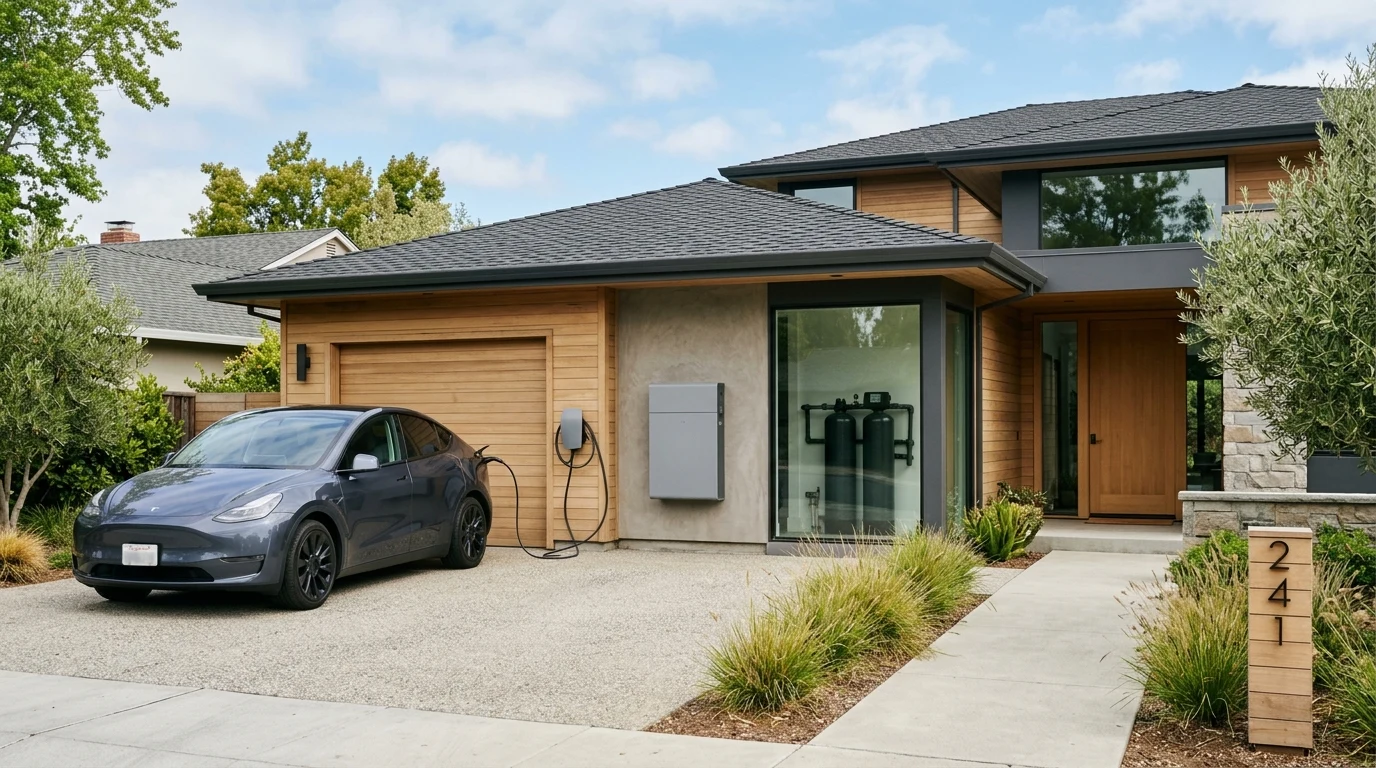
US battery storage just posted a record Q1 2026: 3.3 GW and 8.4 GWh installed, up 54% year over year (Wood Mackenzie, 2026). At the same time, EV charging infrastructure revenue has passed $5.92 billion and the US water purifier market has passed $7.30 billion, each growing under its own momentum (Grand View Research, 2025; Fortune Business Insights, 2025).
Contractors who watch only their own vertical miss the bigger pattern. This is not three isolated product trends. It is one electrification wave, and it changes how you should plan capacity, staffing, and financing partnerships heading into the second half of 2026.
> Key Takeaways
> - US battery storage installed a record 3.3 GW/8.4 GWh in Q1 2026, up 54% year over year (Wood Mackenzie, 2026).
> - EV charging infrastructure revenue reached $5.92 billion in 2025 (Grand View Research, 2025), and the US water purifier market reached $7.30 billion (Fortune Business Insights, 2025).
> - None of the three categories is being driven by a residential federal tax credit. Section 25D expired December 31, 2025 (IRS, 2025), and EV chargers and water filtration were never covered by it.
> - Consumer installment financing adoption is broadly rising too: CFPB reports Pay-in-4 loan volume up 23% year over year (CFPB, December 2025).
See how Eos Loan financing helps you close more projects
How big is the electrification financing market in 2026?
Three separate 2026 data points tell one story: US battery storage set a Q1 2026 installation record of 3.3 GW/8.4 GWh, EV charging infrastructure revenue topped $5.92 billion, and the US water purifier market topped $7.30 billion (Wood Mackenzie, 2026; Grand View Research, 2025; Fortune Business Insights, 2025). All three essential-project categories are expanding at once.
Treating these as one "electrification financing" market isn't an academic exercise. It's a planning signal. A contractor who sells only battery storage, only EV chargers, or only water filtration is competing in a market where the other two verticals are growing right alongside their own, often inside the same household.
That overlap matters more than any single number. A homeowner financing a battery this year is statistically more likely to also be shopping for an EV charger or reacting to a water-quality concern than a homeowner from five years ago, when these categories moved independently and on separate sales calendars.
How fast is the battery storage market growing in 2026?
In Q1 2026, US battery storage installed 3.3 GW and 8.4 GWh, up 54% year over year, with utility, commercial and industrial, and residential segments all setting new highs (Wood Mackenzie, 2026). Utility-scale led at 2.3 GW/6.8 GWh, residential hit a record 1.3 GWh, and C&I grew 27% quarter over quarter to 97.7 MW.
That residential number is the one worth sitting with. It's a record, and it landed in the first full quarter after the Section 25D residential clean-energy credit expired on December 31, 2025 (IRS, 2025). Demand didn't pause to wait for a new incentive. It kept moving.
The strategic read is straightforward: a market that sets a volume record the same quarter its main incentive disappears is not an incentive-driven market anymore. It's a resilience and utility-cost market, and that reframes how you should sell it.
EIA still projects roughly 24.3 GW of new US storage additions for full-year 2026 (EIA, Electricity Monthly, 2025), the closest thing to a full-year planning anchor available right now. For a deeper breakdown of segment-level 2026 storage data, see our 2026 battery storage market data for installers.
How fast is the EV charger market growing in 2026?
US EV charging infrastructure generated $5.92 billion in revenue in 2025 and is projected to reach $36.99 billion by 2033, a 25.7% compound annual growth rate from 2026 forward (Grand View Research, 2025). Fast chargers alone held 81.12% of that 2025 revenue share.
The residential buildout underneath that headline is what matters for installers. Federal charging-infrastructure data projects US charge points growing from roughly 4 million today to 35 million by 2030, with single- and multi-unit residential accounting for about 80% of that total (DriveElectric.gov, 2026). Most of the coming EV charger growth is happening in homes, not public fast-charging corridors.
!An electrician mounting a Level 2 wallbox EV charger on a residential garage wall in daylight.
That 80% residential share is a direct opportunity for anyone already doing home electrical or battery work. The customer buying a home EV charger is frequently the same customer you're already talking to about storage. For the financing side of that conversation, see our EV charger financing guide for installers.
Is water filtration financing keeping pace with storage and EV?
Yes. The US water purifier market reached $7.30 billion in 2025 and is projected to reach $10.81 billion by 2034, a 4.45% compound annual growth rate (Fortune Business Insights, 2025). Reverse osmosis systems hold 44% of that market share.
A separate estimate from Custom Market Insights puts the broader US water filtration market at $6.89 billion in 2024, projected to reach $11.80 billion by 2033 at roughly 5.5% CAGR (Custom Market Insights, 2024). These are two different firms' estimates of related but not identical market definitions, so treat them as directionally aligned rather than as one confirmed number.
!A water softener and whole-home filtration unit installed in a clean, daylight-lit utility room.
Water filtration's growth rate is slower than storage or EV charging, and that's worth naming honestly rather than smoothing over. It's still real, sustained growth in a category with no residential tax credit behind it at all, which is arguably the cleanest evidence that health and contamination concerns, not incentives, are driving this vertical. See how to offer water filtration financing for the program side of this category.
Why is financing demand rising across all three categories at once?
The tax-credit angle explains part of it: Section 25D, the residential clean-energy credit, expired December 31, 2025 (IRS, 2025), yet storage still posted a Q1 2026 installation record. Incentive expiration did not stop demand in the one vertical that actually had a residential credit to lose.
The financing-adoption angle explains the rest. Consumers are using installment and point-of-sale financing for large purchases at a rising rate broadly, not just in home electrification. CFPB's December 2025 BNPL market report found Pay-in-4 loan volume grew 23% year over year to 335.8 million loans totaling $45.2 billion, with users up 12% to 53.6 million consumers (CFPB, December 2025). That's evidence of a broader financing-adoption trend among consumers making large purchases, not a claim specific to any one product category.
Directional trend from Eos Loan's own funded-project mix in H1 2026: the share of applications naming more than one essential-project category on the same intake has been rising quarter over quarter. We're not publishing an exact figure here, but the direction matches what the market data above would predict.
For the commercial side of the storage incentive picture, which still applies where residential 25D does not, see our post on the 48E commercial storage credit through 2032.
What does this mean for contractors running one product line vs. three?
Contractors who offer financing report closing large projects at up to 3x higher rates, according to a vendor estimate from finmkt.io's 2026 home improvement financing research (finmkt.io, 2026). That's a single firm's estimate, not an independently replicated academic finding, but it lines up with the operational logic below.
Running one financing relationship per vertical means inconsistent approval flows, mismatched terms, and three separate lender conversations for the same household. For a contractor deciding whether to add a second or third essential-project line in H2 2026, the operational cost of a fragmented lender stack is a real input into that decision, not a side detail.
Offer your customers flexible financing on essential projects
That residential-heavy 2030 mix reinforces the same point the market data makes: most of the coming EV charger growth sits in the same homes where you're already installing storage or filtration systems. See our single financing partner for battery, EV charger, and water filtration for how a consolidated program addresses this.
How should installers plan financing for H2 2026?
Here's the practical synthesis: three growing markets, no residential tax credit backstopping any of them, and consumer financing adoption broadly rising. The strategic variable for H2 2026 planning is financing readiness, not incentive timing.
Before H2 2026, check three things: whether your financing partner covers every product line you sell, how fast approvals actually move, and whether the terms fit the project type rather than a generic one-size number. Battery storage terms commonly run 6 to 240 months; EV charger and water filtration terms should be flexible to the ticket size, subject to approval and eligibility.
What I'm seeing across our installer partners in H1 2026: more of them are telling us their pipeline is shifting toward multi-product households, not single-product ones. A customer who financed a battery last year is now the same one asking about an EV charger this year. Installers who treat that as one relationship, not three separate sales, are the ones scaling fastest right now.
EIA's roughly 24.3 GW full-year 2026 storage forecast remains the closest thing to a full-year cross-vertical planning anchor available today, and it's worth revisiting once Q2 and Q3 2026 data lands.
Become an Eos Loan financing partner
Or call +1 833-989-3737 to talk through a financing program for your business.
Frequently Asked Questions
Is the battery storage market still growing after the tax credit expired?
Yes. US storage installed a record 3.3 GW/8.4 GWh in Q1 2026, up 54% year over year, after the Section 25D residential credit expired December 31, 2025 (Wood Mackenzie, 2026; IRS, 2025).
How big is the EV charging market in 2026?
The US EV charging infrastructure market generated $5.92 billion in revenue in 2025 and is projected to grow at a 25.7% CAGR from 2026 to 2033 (Grand View Research, 2025).
Is water filtration a growing category for contractor financing?
Yes. The US water purifier market reached $7.30 billion in 2025 and is projected to grow at a 4.45% CAGR through 2034 (Fortune Business Insights, 2025).
Does Eos Loan finance all three project types under one program?
Yes, subject to approval and eligibility. Eos Loan is a direct lender financing battery energy storage, EV chargers, and water filtration, with no dealer fee in any vertical. Battery storage terms range 6 to 240 months; EV charger and water filtration terms are flexible.
Is now a good time for installers to add a second or third product line?
The sourced 2026 data above shows demand is broad-based across all three categories rather than concentrated in one. Each contractor's decision should still weigh local market conditions alongside these national trends.
question: "Is the battery storage market still growing after the tax credit expired?",
answer: "Yes. US storage installed a record 3.3 GW/8.4 GWh in Q1 2026, up 54% year over year, after the Section 25D residential credit expired December 31, 2025 (Wood Mackenzie, 2026; IRS, 2025)."
},
{
question: "How big is the EV charging market in 2026?",
answer: "The US EV charging infrastructure market generated $5.92 billion in revenue in 2025 and is projected to grow at a 25.7% CAGR from 2026 to 2033 (Grand View Research, 2025)."
},
{
question: "Is water filtration a growing category for contractor financing?",
answer: "Yes. The US water purifier market reached $7.30 billion in 2025 and is projected to grow at a 4.45% CAGR through 2034 (Fortune Business Insights, 2025)."
},
{
question: "Does Eos Loan finance all three project types under one program?",
answer: "Yes, subject to approval and eligibility. Eos Loan is a direct lender financing battery energy storage, EV chargers, and water filtration, with no dealer fee in any vertical. Battery storage terms range 6 to 240 months; EV charger and water filtration terms are flexible."
},
{
question: "Is now a good time for installers to add a second or third product line?",
answer: "The sourced 2026 data shows demand is broad-based across all three categories rather than concentrated in one. Each contractor's decision should still weigh local market conditions alongside these national trends."
}
]} />
The 2026 Electrification Market, In One View
Three separate categories, three separate data sources, one pattern: battery storage set a Q1 2026 record, EV charging and water filtration are independently expanding, and none of it is being driven by a residential federal tax credit anymore.
Add to that a broader rise in consumer installment financing adoption, and the read for H2 2026 planning is clear. Financing readiness across every essential project you sell, not any single incentive deadline, is the variable that determines how much of this growth you capture.
Talk to Eos Loan about a financing program that covers whichever essential projects your business sells, battery storage, EV chargers, water filtration, or all three under one relationship.
For the next data checkpoint after this one, see our Q4 2026 outlook covering battery storage, EV chargers, water filtration, fleets, and business-purpose real estate heading into year-end.
---
Sources:
- Wood Mackenzie, Q1 2026 U.S. Energy Storage Monitor, 2026. Retrieved 2026-08-05. https://www.woodmac.com/press-releases/u.s.-energy-storage-market-sets-q1-2026-records-across-sectors
- EIA, Electricity Monthly, 2025. Retrieved 2026-08-05. https://www.eia.gov/electricity/monthly/
- Grand View Research, US Electric Vehicle Charging Infrastructure (EVCI) Market, 2025. Retrieved 2026-08-05. https://www.grandviewresearch.com/industry-analysis/us-electric-vehicle-charging-infrastructure-evci-market
- DriveElectric.gov, Charging Infrastructure Station Growth Data, 2026. Retrieved 2026-08-05. https://driveelectric.gov/stations-growth
- Fortune Business Insights, US Water Purifier Market, 2025. Retrieved 2026-08-05. https://www.fortunebusinessinsights.com/us-water-purifier-market-104696
- Custom Market Insights, US Water Filtration Market, 2024. Retrieved 2026-08-05. https://www.custommarketinsights.com/report/us-water-filtration-market/
- IRS, Residential Clean Energy Credit (Section 25D), 2025. Retrieved 2026-08-05. https://www.irs.gov/credits-deductions/residential-clean-energy-credit
- CFPB, BNPL Market Report, December 2025. Retrieved 2026-08-05. https://files.consumerfinance.gov/f/documents/cfpb_bnpl-market-report_2025-12.pdf
- finmkt.io, AI, AR, and POS Financing: The Home Improvement Trifecta of 2026, 2026. Retrieved 2026-08-05. https://www.finmkt.io/blog-posts/ai-ar-and-pos-financing-the-home-improvement-trifecta-of-2026