

2026 US Battery Storage Market: What Installers Should Plan For
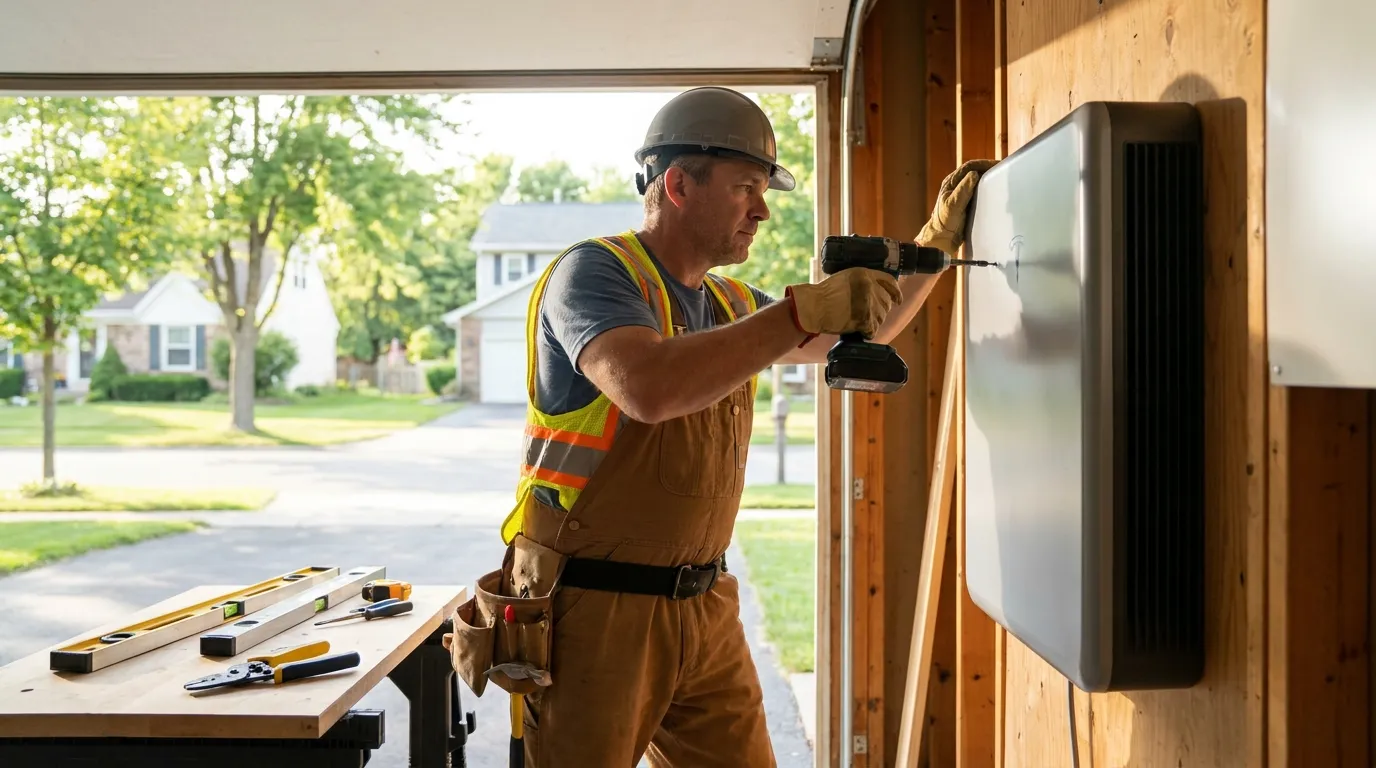
US battery storage had its biggest year on record in 2025, and the headline numbers are not slowing in 2026. What is shifting is the composition of growth, and that composition matters far more for your pipeline planning than the top-line figure. The residential segment hit 2.7 GW in 2025, up 92% year over year (Wood Mackenzie, US Energy Storage Monitor, 2025). That record arrived in the same year the residential clean-energy credit expired. Demand outlasted the incentive.
This post breaks down the verified 2025 actuals, the 2026 forecast from EIA and Wood Mackenzie, what the residential versus utility split means for installers, and how to use market timing to position financing as your close lever heading into H2 2026.
> Key Takeaways
> - US energy storage installations reached 18.9 GW in 2025, up 52% year over year (Wood Mackenzie, US Energy Storage Monitor, 2025).
> - Residential battery storage hit 2.7 GW in 2025, a 92% annual increase, even as the 25D credit ran out.
> - EIA projects roughly 24.3 GW of new storage additions in 2026 (EIA, Electricity Monthly, 2025).
> - Residential 2026 shows only modest softening (~2%) from the 2025 peak. The market is not retreating; the sales motion is shifting from incentive-led to financing-led.
See how Eos Loan financing helps you close more projects
How big was the US battery storage market in 2025?
In 2025, total US energy storage installations reached 18.9 GW, a 52% jump year over year, with residential battery storage growing 92% to 2.7 GW (Wood Mackenzie, US Energy Storage Monitor, 2025). Those are the largest annual figures on record for both total and residential storage in the United States.
The residential number deserves a closer look. A 92% year-over-year gain does not happen without strong consumer pull, and it happened in a year when the Section 25D residential credit was winding down to its December 31, 2025 expiration (IRS, 2025). That timing tells you something important: homeowners were not buying storage because of the tax credit alone. They were buying because battery storage solves a real problem, grid outages, rising utility rates, and the need to keep solar production working overnight.
Utility-scale accounted for the majority of the 18.9 GW total. Residential was 2.7 GW of that figure, meaning the segment is large but not dominant in raw gigawatt terms. Where residential matters for your business is in deal count and geographic spread: utility-scale projects are concentrated among a handful of developers, while residential installations are spread across the installer ecosystem you operate in.
The strategic read for installers is that 2025 proved the market does not need a federal tax credit to sustain itself. The 25D credit was a catalyst, not the cause, of residential storage demand. That distinction changes how you frame the value conversation in 2026.
According to Wood Mackenzie's US Energy Storage Monitor, total US energy storage hit 18.9 GW in 2025, up 52% from the prior year, with the residential segment alone growing 92% to 2.7 GW. This record growth arrived as the residential 25D clean-energy credit approached its December 31, 2025 expiration, demonstrating that installer-driven demand for battery storage is structurally independent of the incentive.
What does the 2026 US battery storage forecast show?
In 2026, EIA projects roughly 24.3 GW of new utility-scale and distributed storage additions in the United States (EIA, Electricity Monthly / Annual Energy Outlook, 2025). That is a roughly 28% increase over 2025 total installed capacity at the headline level, driven mainly by utility-scale procurement. On the residential side, Wood Mackenzie's forecast indicates a modest softening of approximately 2% from the 2025 peak as the post-credit market stabilizes.
A 2% residential moderation does not look like a market collapse. In absolute terms, 2% off 2.7 GW is roughly 2.65 GW, still the second-largest residential storage year on record. The fear that the credit's expiration would crater the segment has not materialized in the forward data.
Why does utility-scale pull the 2026 headline? Three factors: procurement mandates in California, Texas, and other large states require utilities to hold storage capacity targets; grid reliability events in 2024 and 2025 accelerated emergency storage contracts; and battery cost declines continue to make large-scale projects economically attractive without subsidies. For you as a residential or light-commercial installer, these forces are background conditions that validate the technology and keep customer awareness high, even if you are not the one installing megawatt-scale systems.
What the 2% residential softening actually signals is not cooling demand. It is the market finding its floor after the acceleration driven by credit-deadline buying in 2024-2025. When customers rush to capture an expiring incentive, some of that demand is borrowed from future years. The 2026 moderation reflects a return to structurally driven buying, not a retreat from storage altogether.
EIA's 2026 projection of roughly 24.3 GW in new US storage additions, combined with Wood Mackenzie's residential-only softening of approximately 2% from the record 2025 peak, shows a market that is growing at the total level while the residential segment stabilizes after credit-deadline acceleration. For installers, this is an expanding pipeline with a changed close conversation.
What is driving 2026 storage growth, and what are the headwinds?
Three forces sustain 2026 battery storage demand: grid reliability pressure from severe weather events, continued battery cost declines, and state utility procurement mandates. The primary headwind is the loss of the Section 25D residential credit, which ended December 31, 2025 (IRS, 2025).
Grid reliability is now the top driver in residential conversations. Hurricanes, winter freeze events, and summer heat-grid stress made "will my power stay on?" a first-tier homeowner concern. Battery storage addresses that directly, without any credit required to make the value case.
Battery cost declines are structural, not cyclical. Manufacturing scale continues to push cell costs down, which means system prices drop year over year even without federal subsidy support. Lower system prices benefit your proposal: the number the customer is financing shrinks, or the storage capacity per dollar rises.
State mandates and incentives are filling part of the federal policy gap. California's storage incentive programs, Texas grid resiliency contracts, and Florida's rate structure create state-level demand floors that exist independent of 25D.
The headwind for residential is real but bounded. The 25D credit gave installers a 30% price offset to put in front of customers. That tool is gone. What replaces it is a financing payment that delivers the same affordability result over a different time horizon. The math still works for the homeowner; the sales conversation just changed.
On the commercial side, the picture is different. The commercial investment tax credit under Section 48E generally remains available for eligible projects through 2032 (IRS and 26 U.S.C. § 48E). Contractors selling into businesses, schools, or municipalities have a credit-eligible path for qualifying installations. This is general information, not tax advice. Consult a qualified tax professional. For a deeper look at the commercial credit path, see our post on the 48E commercial storage credit still available through 2032.
Which states and segments lead US battery storage in 2026?
California, Texas, and Florida account for a disproportionate share of both utility-scale and residential battery storage deployment in the United States, driven by grid reliability events, state storage policy, and high solar attachment rates (EIA, state-level electricity data, 2025; SEIA, state solar and storage market data, 2025).
California leads in residential storage by a significant margin. The state's self-generation incentive program (SGIP), net metering structure, and frequent Public Safety Power Shutoff events create persistent consumer demand. Installers in California have had years to build financing-led sales processes, which is why the post-credit transition is less disruptive there than in states with less established storage markets.
Texas is the fast-growing second market, driven by ERCOT grid events like Winter Storm Uri and increasingly severe summer peak demand. Residential buyers in Texas are motivated by genuine grid unreliability, not primarily by incentives. That motivation does not require a tax credit to convert to a sale.
Florida rounds out the top three, with hurricane season as the persistent demand driver. The standalone battery retrofit segment, customers adding battery storage to an existing solar system without a new solar installation, is particularly strong in Florida because many homeowners already have solar and simply need storage added.
The standalone retrofit segment is worth calling out separately. It is growing faster than new solar-plus-storage installations in percentage terms, because the installed base of solar homes with no storage is large and the motivation to add battery backup is high. Standalone battery financing works differently from a solar-plus-storage bundled loan, and installers who understand that distinction can serve this segment without needing to sell a new solar system. See how standalone battery financing differs from solar-plus-storage loans for the breakdown.
What does this market data mean for installer pipeline planning?
The headline takeaway is straightforward: 2026 is a larger-volume market than 2025, the residential softening is modest in absolute terms, and the single highest-value practice change for installers is replacing the tax-credit pitch with a financing-led pitch. Demand outlasted the incentive; the sales process needs to catch up.
Here are the four practical implications for your business heading into H2 2026.
Pipeline volume: The total US storage market is growing, not contracting. If you are making staffing, subcontractor, or inventory decisions based on the fear that credit expiration means market contraction, the data does not support that. Plan for a larger number of financed deals, not a smaller number of credit-supported ones.
Sales motion: The 25D close argument is done for residential. The replacement is a monthly-payment conversation. Installers who present a financing payment on the proposal at the first visit, rather than quoting a lump sum and hoping the customer self-finances, are the ones converting 2026 demand. This is not a soft observation. It is the structural logic of why close rates increase when financing is offered at the point of sale. See how offering financing increases contractor close rates for the data behind this.
Product mix: The standalone storage retrofit is an underserved segment with strong demand and no credit dependency. If you have not built a standalone battery offering into your sales process, H2 2026 is the time to do it. This segment's customers are motivated by grid reliability, not incentives.
Financing partner: Having a financing partner in place before the customer conversation starts is now table stakes. In the credit era, some customers closed on cash because the net price after the credit felt manageable. That option is gone for most residential buyers. A financing partner with flexible terms gives you the payment conversation you need before you walk into the proposal meeting.
> What I'm seeing across our installer partners: Since the 25D credit expired at year-end 2025, the shift from incentive-driven to payment-driven selling has been clear. Installers who already had financing in the proposal from day one are seeing their pipeline hold up. Those still anchoring on the credit loss as an objection are having a harder time. The market is there. The sales conversation is the variable.
Add financing to your installs, talk to our team
For the complete playbook on structuring your battery storage financing offer, see our complete 2026 guide to battery storage financing for installers.
How should installers use financing to capture 2026 market growth?
Installers who position financing in the first conversation, not as a fallback when cash is declined, close more of the available 2026 demand. The market is growing into a post-credit era where monthly-payment framing is the primary affordability tool an installer can control.
Here is what payment-led selling looks like in practice. You present the system, you present the monthly payment at a term that fits the customer's budget, and you ask for the job. You do not wait for the customer to ask about financing. You do not send them to a bank after the visit. You bring the number to the table.
Eos Loan operates as a direct lender, which means it funds loans directly rather than routing customers through a marketplace of competing lenders. There is no dealer fee. Terms on battery storage financing range from 6 to 240 months, subject to approval and eligibility. Longer terms lower the monthly payment, which makes a larger system feel accessible. A 240-month term on a whole-home battery setup creates a monthly figure that competes with a utility bill, not a lump sum that competes with a car purchase.
The installer advantage is that this payment exists before the customer sees the total price. You are not asking the customer to process a large number and then consider whether financing helps. You are starting with the monthly number and letting them say yes to that. The full guide linked above walks through how to structure this from proposal through close.
For installers building out their post-credit close playbook, see how to close storage deals without the residential credit for step-by-step guidance.
The installers I talk to who are winning in 2026 are not waiting for market conditions to get easier. They are treating the financing conversation as the product. The system is the thing you install. The financing is the thing you sell.
Offer your customers flexible financing on essential projects
Or call +1 833-989-3737 to talk through a financing program for your business.
{ question: "How big is the US battery storage market in 2026?", answer: "EIA projects roughly 24.3 GW of new storage additions in the United States in 2026, up from 18.9 GW total installed in 2025 (Wood Mackenzie, US Energy Storage Monitor, 2025). The 2026 growth is driven primarily by utility-scale procurement. Residential is expected to see a modest 2% moderation from the record 2025 pace." }, { question: "Did residential battery storage keep growing after the tax credit ended?", answer: "Yes. In 2025, US residential battery storage grew 92% to 2.7 GW (Wood Mackenzie, 2025) even as the Section 25D credit approached its December 31, 2025 expiration (IRS). The 2026 forecast shows only a modest ~2% softening from that record, not a collapse. Demand has proven to be structurally independent of the incentive." }, { question: "Which states lead US battery storage installations in 2026?", answer: "California, Texas, and Florida lead both utility-scale and residential battery storage deployment, driven by grid reliability events, state incentive programs, and high solar penetration (EIA, SEIA, 2025). California leads on residential volume. Texas is the fastest-growing major market. Florida is powered largely by hurricane-season demand for backup capacity." }, { question: "How can an installer close battery storage deals without the residential tax credit?", answer: "By leading with a monthly-payment proposal backed by a financing partner with flexible terms. Presenting a payment at the first conversation, rather than a lump sum, is the affordability tool that replaces the credit. Eos Loan finances battery storage as a direct lender with terms from 6 to 240 months. Approval is subject to eligibility. This is general information, not tax advice. Consult a qualified tax professional." }, { question: "Is the commercial storage credit still available in 2026?", answer: "The commercial investment tax credit under Section 48E generally remains available for eligible projects through 2032 (IRS and 26 U.S.C. § 48E). Installers serving commercial, industrial, or municipal customers should confirm project eligibility with a qualified tax professional. This is general information, not tax advice. Consult a qualified tax professional." } ]} />Where US Battery Storage Stands Heading Into H2 2026
The market data is clear, and it points in a single direction: more storage installations, a larger financing opportunity, and a changed sales conversation.
US total storage hit 18.9 GW in 2025, up 52% year over year. Residential grew 92% to 2.7 GW in the same period, demonstrating demand that does not depend on federal incentives to sustain itself. EIA projects roughly 24.3 GW of new storage additions in 2026, making it the largest year on record for the broader market even as residential finds its post-credit floor.
For your business, the data translates to four priorities for H2 2026. First, plan for pipeline growth, not contraction. Second, replace the 25D pitch with a payment pitch. Third, build a standalone battery retrofit offering if you do not have one. Fourth, have a financing partner with flexible terms in the proposal before you walk into the first conversation.
The installers who treat financing as the product they sell, not the afterthought they offer when cash stalls, are positioned to capture the 2026 market that the data shows is there.
---
Sources:
- Wood Mackenzie, US Energy Storage Monitor, 2025. Retrieved 2026-06-18. https://www.woodmac.com/
- EIA, Electricity Monthly / Annual Energy Outlook, 2025. Retrieved 2026-06-18. https://www.eia.gov/electricity/monthly/
- IRS, Residential Clean Energy Credit (Section 25D), 2025. Retrieved 2026-06-18. https://www.irs.gov/credits-deductions/residential-clean-energy-credit
- SEIA, State Solar and Storage Market Data, 2025. Retrieved 2026-06-18. https://www.seia.org/