

Virtual Power Plants and Storage Financing: The Emerging Revenue Angle
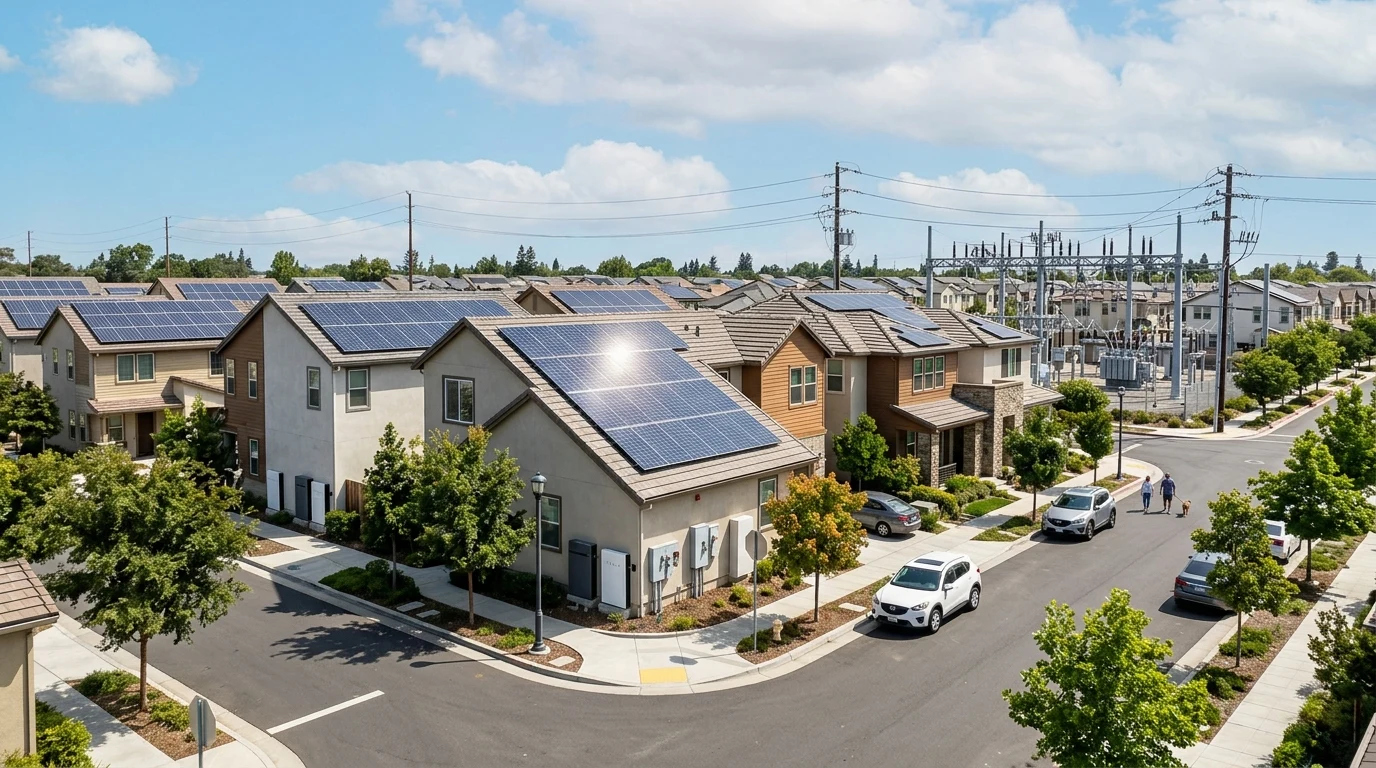
US virtual power plant capacity hit 37.5 GW in 2025, up from 33 GW the year before, according to Electrek and the Rocky Mountain Institute. That capacity, spread across homes and businesses, already saves utilities billions in avoided grid costs each year. A growing share of it lives in homeowners' garages.
For installers selling battery storage after the residential clean-energy credit ended December 31, 2025 (IRS, 2025), price objections are back. The sticker shock is real. Virtual power plant enrollment changes that conversation. It reframes the battery from a cost the customer absorbs to an asset that generates income, and that shift makes financed projects easier to close. This post explains the math, names the programs, and shows you how financing and VPP enrollment work together at the kitchen table.
> Key Takeaways
> - In 2025, US VPP capacity reached 37.5 GW (Electrek, 2025), with the DOE targeting 80-160 GW by 2030 to cover 10-20% of peak load.
> - Homeowners enrolled in active VPP programs earned $700 to $3,000 per year in 2025 depending on state and program (Boston Solar, 2026).
> - A direct-lender loan (not a lease) means the homeowner owns the battery and keeps 100% of VPP payments, which is a stronger close argument than a TPO structure.
> - Eos Loan is a direct lender with no dealer fee, offering battery storage financing with flexible terms from 6 to 240 months, subject to approval and eligibility.
See how Eos Loan financing helps you close more projects
What Is a Virtual Power Plant, and Why Does It Matter for Battery Installers?
A virtual power plant is a network of distributed energy resources, mostly residential and commercial batteries, that a utility or aggregator coordinates to deliver grid services during peak demand. In 2025, US VPP capacity stood at 37.5 GW (Electrek, 2025), and the DOE's 2025 VPP Liftoff Report projects that figure must reach 80-160 GW by 2030 to cover 10-20% of peak load and save approximately $10 billion per year in grid costs. More than doubling from 37.5 GW to that target band requires a lot of residential batteries, which means a lot of installer-driven enrollments.
!Residential battery storage unit installed on an exterior wall with a technician in bright daylight
The installer is the highest-leverage point in the VPP supply chain. Most homeowners learn about VPP programs from their installer, not from a utility mailer. When you propose a battery, you are also the de facto enrollment onramp for the customer. Utilities and aggregators know this and they structure programs to make enrollment simple at commissioning.
The basic mechanics work like this: an aggregator, such as Olivine (which runs California's DSGS program) or a utility's own demand response team, contracts with homeowners to dispatch part of their battery's stored energy back to the grid during high-demand events. The homeowner is paid per kilowatt-hour dispatched or per kilowatt of capacity made available. The battery still provides backup power during non-dispatch windows.
BYOD, or "Bring Your Own Device," programs are the most installer-friendly. They accept a range of compatible hardware rather than requiring a proprietary system. ConnectedSolutions in Massachusetts, Rhode Island, and New York is a BYOD program. So are most utility demand response programs. Understanding what a virtual power plant is and how it works is the first step; understanding the VPP business models from aggregators to utilities is the second. This post focuses on the third: what it means for the financing conversation.
According to the DOE Liftoff 2025 report, tripling VPP capacity could save $10 billion in annual grid costs while reducing the need for expensive peaker plant construction. Every residential battery enrolled in a VPP program contributes directly to that math, making the installer's role more consequential than it appears on a single proposal.
> The ownership distinction most installers miss: Under a direct-lender loan, the homeowner owns the battery from day one and keeps 100% of VPP program payments. Under a lease or power purchase agreement (TPO model), the system owner, typically the company, often controls VPP enrollment and retains some or all of the revenue. This means Eos Loan's direct-lender structure is not just a financing feature; it is a VPP revenue feature that competitors using TPO can't match.
How Much Do VPP Programs Actually Pay?
US homeowners enrolled in active VPP programs earned $700 to $3,000 per year in 2025, depending on the program, state, and battery size (Boston Solar, 2026; NACLEANENERGY, 2025). The range is wide because programs vary significantly in payment structure, dispatch frequency, and per-kilowatt rates. Here is the breakdown by major program.
ConnectedSolutions (MA, RI, NY): ConnectedSolutions pays approximately $225 per average kilowatt performed each summer (Boston Solar, 2026). A typical two-unit residential setup earns $1,000 to $3,000 per year. New York's version also includes a $300 per kilowatt-hour upfront incentive (up to $3,000 for a 10 kWh battery) plus a 0% installation loan for program enrollees, which is an additional affordability tool you can layer into the proposal.
California DSGS (Demand Side Grid Support): In 2025, California's DSGS program paid $7,200 to $19,200 per battery per year depending on capacity delivered, with a 30% bonus payment for 2025 enrollees (CALSSA, 2025). However, Participation Option 1 (the highest-earning tier) is suspended for 2026 due to California budget constraints. Responsible framing requires noting this suspension when presenting DSGS earnings to California customers. It is a genuine caveat, and calling it out builds trust.
Texas ERCOT VPP (NRG/Sunrun): Texas programs tied to ERCOT dispatch events are among the most financially lucrative per event. In 2025, NRG expanded its Texas VPP target from 20 MW to 150 MW (mgrid.org, 2025), a signal that program capacity is growing fast. Earnings are variable and event-driven rather than seasonal.
Duke Energy and Xcel Energy: Duke Energy offers approximately $6.50 per kilowatt per month in bill credits for enrolled residential batteries. Xcel runs a $100 per year for five years program for limited dispatch participation. These programs are more modest but involve minimal dispatch obligations.
The Financing-Plus-VPP Math: How to Present It to a Customer
When VPP revenue offsets part of the monthly loan payment, the net cost of owning a battery drops materially, often to single digits per day. That is the number worth putting on the proposal. Here is how to frame it without overstating anything.
Take a 13.5 kWh battery financed over 120 months. The customer can confirm their monthly payment directly with Eos Loan, subject to approval and eligibility. Now subtract estimated annual VPP earnings using the ConnectedSolutions midpoint: approximately $1,500 per year, or about $125 per month. The net effective monthly cost falls by that amount. You are not quoting Eos Loan's rate (which is underwriting-based and not fixed publicly), and you are not guaranteeing the VPP payment. You are showing the customer a math structure and asking them to evaluate the range.
The framing that works: "Before VPP enrollment, your monthly payment is whatever Eos Loan confirms with you. If your battery qualifies for ConnectedSolutions and earns at the program midpoint, your net effective cost could be meaningfully lower. Actual earnings depend on program availability, dispatch frequency, and your utility." That sentence gives the customer a concrete picture without making a promise you can't keep.
> What I hear from our installer partners: The installers who close more battery deals aren't discounting the system. They're showing the customer a simple two-line math on a tablet: the monthly payment from Eos Loan, then the potential VPP offset from a named source like ConnectedSolutions or CESA's table. When the customer can see both numbers at once, they evaluate the battery as a net cost, not a gross price. That shift changes the conversation.
The direct-lender structure matters here in a way that the installer should explain clearly. Under an Eos Loan direct-lender loan, the homeowner owns the battery and keeps 100% of VPP payments. Under a lease or PPA (TPO structure), the system owner, typically the company, often controls VPP enrollment and retains some or all of the revenue. For a customer who wants to capture the full earning potential of their battery, ownership through a direct lender is the better structure.
Learn more about battery storage financing with flexible terms from 6 to 240 months and standalone battery financing vs. bundled solar-plus-storage options before building your proposal.
Required disclaimers: Financing is subject to approval and eligibility. Eos Loan does not quote specific APRs or rates publicly; those are determined through underwriting. VPP earnings vary by program, utility, and dispatch frequency. This is general information, not tax advice. Consult a qualified tax professional.
Add financing to your installs, talk to our team
Which Batteries Qualify for VPP Programs?
Most grid-interactive lithium-ion batteries qualify for BYOD VPP programs if they have bidirectional communication capability and meet minimum capacity requirements, typically 5 kWh or more (CALSSA, 2025). The most widely accepted models include Tesla Powerwall, Enphase IQ Battery, Franklin WH, Panasonic EverVolt, and Sonnen. As of 2025, California's DSGS program alone had over 720 MW of customer battery capacity enrolled, making it the largest VPP in the world by residential battery participation.
BYOD programs like ConnectedSolutions accept a broad range of compatible hardware without requiring a specific brand. Other programs, such as Tesla's Powerwall-specific DSGS path, are brand-locked. When you select the battery for a customer who wants VPP enrollment, confirm program compatibility at the point of hardware selection, not at commissioning.
The installer's role at the hardware selection stage is straightforward: choose a VPP-eligible battery (check the program's current approved hardware list), explain that BYOD programs accept it, and include VPP enrollment in the commissioning checklist. This is a 10-minute conversation that can meaningfully change how the customer evaluates the project.
The gap between 37.5 GW today and 80 GW at the bottom of the DOE's 2030 target band is more than twice current capacity. That gap does not close without residential installers enrolling batteries at scale. Installers who build VPP enrollment into their commissioning process are directly accelerating a national infrastructure goal, and their customers benefit financially for doing it.
What Is the Installer's Role in VPP Enrollment?
The installer is the highest-leverage VPP enrollment touchpoint in the US residential market. Most homeowners learn about VPP programs from their installer, not from a utility mailer, and the studies that track this consistently show that installer-explained programs have materially higher enrollment rates than utility-marketed programs. Installers who explain the enrollment process in the proposal stage close more battery projects, because the customer is evaluating total value, not just sticker price.
Here is how the process works in practice. First, you propose VPP-eligible hardware at the point of sale and verify compatibility with the relevant program in your state. Second, you explain the program mechanics: what a dispatch event is, how payments are calculated, and how often dispatches typically occur. Third, you assist with or handle utility enrollment at commissioning. The homeowner signs the program agreement (usually a short online form), and the aggregator takes it from there.
The Clean Energy States Alliance maintains a comprehensive, regularly updated summary of every active VPP program accepting enrollment by state. Bookmark it and share it with customers as a named third-party reference rather than quoting earnings as a commitment.
New program momentum gives installers more markets to work with. Illinois launched its VPP framework in January 2026. Virginia's pilot enrollment is expected in late 2026. Texas ERCOT programs are scaling rapidly, with NRG expanding capacity from 20 MW to 150 MW in 2025 (mgrid.org, 2025). The programs are getting bigger and spreading to more states each year.
For a broader understanding of what this market backdrop means for your business, see the foundational overview of how VPPs aggregate distributed energy resources and how to structure battery financing proposals that close. For market context, see the broader 2026 battery storage market outlook.
How to Talk About VPP Financing Without Overpromising
Program rules change. California suspended its highest-earning VPP option for 2026. Texas rates vary by dispatch event. Connecticut's ConnectedSolutions budget can cap enrollments in a given season. The safest framing for any installer is "potential to offset monthly payments" rather than "guaranteed income," and that framing also happens to be accurate.
What to say: present VPP earnings as a range drawn from a named source. "ConnectedSolutions in Massachusetts paid homeowners $700 to $3,000 last year, depending on battery size, according to Boston Solar's published program summary. Your utility can give you the current rate for this season." That sentence names the source, gives the range, and redirects the specific number to the utility, where the commitment actually lives.
What not to say: never quote a specific annual payment as a guarantee. Never imply that VPP enrollment is a feature of Eos Loan financing (it is a utility/aggregator program, separate from the loan). And never use California DSGS earnings figures for 2026 without the caveat that Option 1 is suspended this year.
The practical tool for responsible framing: give customers the CESA VPP Programs Summary Table and the link to their utility's own program page. That way the customer has a named, authoritative source they can verify independently, which protects you from oversell liability and builds trust in your proposal.
Eos Loan has no dealer fee and offers battery storage financing with flexible terms designed for installers who want to offer customers a clean, direct-lender loan without complexity. When the customer owns the battery through a direct lender and enrolls in a BYOD VPP program, they keep every dollar the program pays. That combination is the offer worth making.
Shared-property batteries can aggregate more dispatchable capacity behind one VPP enrollment than a single home. See our multifamily VPP and financing guide for how that works for HOA boards and property managers.
Offer your customers flexible financing on essential projects
Or call +1 833-989-3737 to talk through a financing program for your business.
---
{ question: "Can a homeowner join a VPP program with a financed battery?", answer: "Yes. When a battery is financed through a direct lender like Eos Loan, the homeowner owns the system and is eligible for BYOD programs such as ConnectedSolutions and most utility demand response programs. Under a lease or PPA, the system owner, not the homeowner, typically controls VPP enrollment and revenue. Financing is subject to approval and eligibility." }, { question: "How much can a homeowner earn from a VPP program in the US?", answer: "Earnings vary widely by state and program. ConnectedSolutions (MA/RI/NY) paid $700 to $3,000 per year for a standard residential setup in 2025 (Boston Solar, 2026). California's DSGS paid $7,200 to $19,200 per battery depending on capacity delivered, though Option 1 is suspended for 2026 due to budget constraints. Duke Energy and Xcel offer more modest bill credits. Actual earnings depend on dispatch frequency and program rules." }, { question: "What is the DOE's target for US VPP capacity by 2030?", answer: "The DOE's 2025 VPP Liftoff Report targets 80 to 160 GW of VPP capacity by 2030, which could cover 10 to 20% of US peak load and save approximately $10 billion per year in avoided grid costs. Current capacity is 37.5 GW (Electrek, 2025), meaning the country needs to more than double its VPP base in five years, largely through residential battery enrollments." }, { question: "Are VPP programs available in every state?", answer: "No. Programs are most developed in California, Massachusetts, Rhode Island, New York, and Texas. Illinois launched a VPP framework in January 2026, and Virginia's pilot enrollment is expected in late 2026. The Clean Energy States Alliance maintains a current summary table at cesa.org that covers every active program by state." }, { question: "Does Eos Loan finance batteries that qualify for VPP programs?", answer: "Yes. Eos Loan is a direct lender offering battery energy storage financing with flexible terms from 6 to 240 months and no dealer fee. Because the loan gives the homeowner full ownership of the battery (not a lease), they retain full eligibility for BYOD VPP programs and keep 100% of VPP program payments. Financing is subject to approval and eligibility." } ]} /> ---Sources
- Electrek, "EVs and batteries fuel US VPP boom in 2025," retrieved 2026-06-18, https://electrek.co/2025/09/19/evs-batteries-us-vpp-boom-2025/
- US Department of Energy, Virtual Power Plants 2025 Liftoff Update Report, retrieved 2026-06-18, https://liftoff.energy.gov/wp-content/uploads/2025/01/LIFTOFF_DOE_VirtualPowerPlants2025Update.pdf
- Boston Solar, "What Is the ConnectedSolutions Program? Massachusetts Battery Incentives Explained," retrieved 2026-06-18, https://www.bostonsolar.us/solar-blog-resource-center/blog/what-is-the-connectedsolutions-program-massachusetts-battery-incentives-explaine/
- NACLEANENERGY, "Residential VPPs Are Changing Home Battery Use," retrieved 2026-06-18, https://www.nacleanenergy.com/energy-storage/residential-vpps-are-changing-home-battery-use
- California Solar and Storage Association (CALSSA), "California Is Building the Biggest Virtual Power Plant in the World," retrieved 2026-06-18, https://calssa.org/press-releases/2025/9/8/california-is-building-the-biggest-virtual-power-plant-in-the-world
- mgrid.org, "NRG Sunrun Texas VPP 1GW Residential Battery ERCOT 2025," retrieved 2026-06-18, https://mgrid.org/2025/12/18/nrg-sunrun-texas-vpp-1gw-residential-battery-ercot-2025/
- Clean Energy States Alliance, VPP Programs Summary Table, retrieved 2026-06-18, https://www.cesa.org/projects/energy-storage-policy-for-states/virtual-power-plant-programs-summary-table/
- IRS, Residential Clean Energy Credit, retrieved 2026-06-18, https://www.irs.gov/credits-deductions/residential-clean-energy-credit