

Pitching a Multi-Product Deal: One Financing Conversation, Several Essential Projects
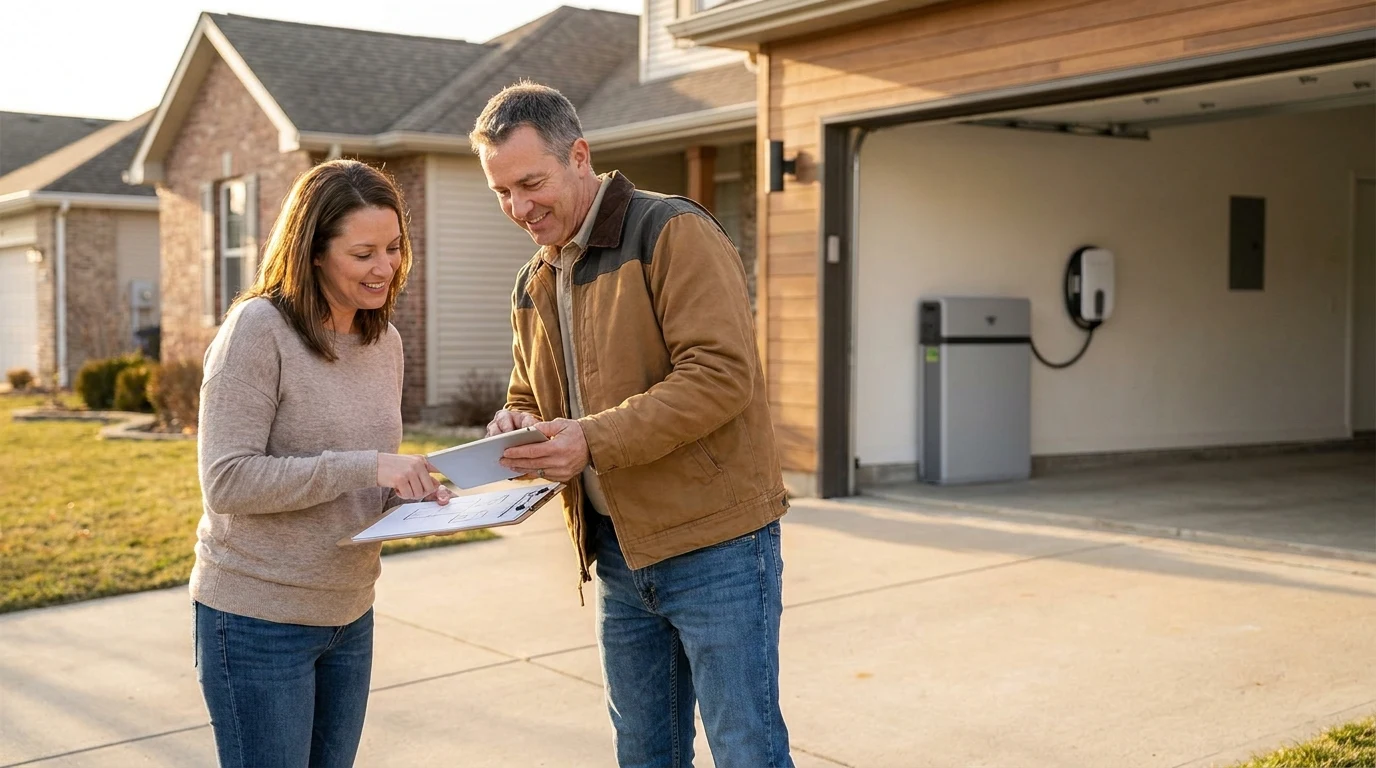
A rep finishes scoping a battery storage install, and the homeowner mentions they've also been meaning to look into an EV charger. Most reps say "let's circle back on that," write it down, and move on. That pause is the moment a second financed project quietly disappears into a follow-up call that never happens.
It doesn't have to work that way. The national residential solar-plus-storage attachment rate reached 45% in Q1 2026, up from 38% a year earlier (Wood Mackenzie U.S. Energy Storage Monitor, 2026). Nearly half of today's customers are already combining project categories before a rep raises the question. This guide gives a sequencing method and sample language for pitching battery storage, EV charger, and water filtration financing in one conversation, without it sounding like an upsell.
> Key Takeaways
> - The national solar-plus-storage attach rate hit 45% in Q1 2026, up from 38% a year earlier (Wood Mackenzie, 2026), meaning customers are already receptive to a second project before the pitch starts.
> - Jobs paid through financing run roughly 4.5 times larger than cash-paid jobs ($1,000 average versus $4,500 average), per Wisetack's 2026 home services report.
> - Sequence the second product by urgency and shared site work, not by margin, and present one combined monthly payment instead of two separate quotes.
> - Multi-trade operators report roughly 30% higher customer lifetime value than single-trade operators (CT Acquisitions 2026 Home Services M&A Multiples Report).
See how Eos Loan financing helps you close more projects
Why Pitch More Than One Essential Project at Once?
In 2026, nearly half of residential storage customers, 45% nationally, already attached a second project category to their primary purchase, up from 38% a year earlier (Wood Mackenzie U.S. Energy Storage Monitor, 2026). That shift means the customer in front of you is statistically more likely than not to already be thinking about a second project, whether or not they say so out loud.
Running two separate sales cycles for one customer is expensive in ways that rarely show up on a single deal's margin. Two site visits, two proposals, and two credit conversations each introduce a point where the customer can lose momentum, change their mind, or simply get busy and never follow up. A single combined conversation removes most of that drop-off because the customer never has to re-engage from zero. As of 2026, California's residential battery attachment rate has reached roughly 69% (Wood Mackenzie / SEIA, State of US Distributed Solar-Plus-Storage, 2026), which gives a sense of where other states are likely headed as attach behavior matures.
For dealers who haven't yet consolidated their battery, EV, and water filtration business under one financing partner, the case for one financing partner across every essential project covers why that decision has to come first. Once it's made, the conversation you're having in the room is the part that actually determines whether the second product gets financed at all.
When Should You Introduce the Second Product?
The right moment is after the primary project is scoped and priced, and before the proposal is signed, not as a follow-up call. Waiting until after the first deal closes loses the momentum of the visit, while leading with two unscoped products at once tends to overwhelm the customer before either one feels real.
Call this the "scope, then stack" rule: finish pricing project one first, let the customer see a real number, and only then introduce the second line as an addition to a conversation that's already underway. As of 2026, jobs paid through financing run roughly 4.5 times larger than cash-paid jobs, averaging around $4,500 versus $1,000 for cash, per Wisetack's home services report. That same report found that offering an optional add-on with 0% APR raised average job size by roughly 30%, which is close to what happens when a second essential project gets folded into a conversation the customer has already mentally committed to financing.
Add financing to your installs, talk to our team
How Do You Sequence Battery, EV Charger, and Water Filtration?
Sequence by urgency and shared site work, not by margin. Lead with whichever project solves the most immediate problem: an outage-prone site leads with battery storage, a property with a fleet depot or multiple tenants leads with an EV charger, and a hardness or contamination issue leads with water filtration. Then introduce the second project as a natural extension of work already happening on site, rather than a new pitch.
A simple three-question checklist keeps this consistent across a sales team. First, what problem is most urgent for this customer right now? Second, what work is already being done on site that a second project could share? Third, does the second project share infrastructure with the first, such as an electrical panel or an existing plumbing access point? A battery install that already requires a shared panel upgrade already on site is one of the easiest entry points for an EV charger pitch, because the electrician is already there and the panel capacity question is already answered.
Most reps still treat a second product as something to pitch after the first deal closes, on the assumption that customers need a break between financing decisions. The financed-job sizing data suggests the opposite. A customer who has just mentally committed to financing one large purchase is, in the same sitting, more receptive to folding a second project into the same monthly payment conversation, not less. The rule worth building into every site visit is "same sitting, one payment conversation," not "close one, then pitch the next."
What Does a Combined Financing Conversation Actually Sound Like?
It sounds like one question, not two pitches. Scope and price the first project, confirm the customer is comfortable with that payment, then ask a single problem-first question that surfaces the second need: "While we're upgrading the panel for the battery, is the water pressure in this building still an issue?" That lands differently than a generic "would you also like to finance an EV charger?"
Open-ended, problem-first questions outperform product-first pitches because they let the customer self-identify the need instead of reacting to a sales ask. Once they engage, present one combined monthly payment instead of two separate project costs, and make clear they can decline the second line without putting the first one at risk. As of 2026, top HVAC contractors finance roughly 70% of their topline residential sales, according to GreenSky VP of Sales Reid Benjamin, cited in ServiceTitan's financing best-practices playbook. That level of adoption doesn't happen by presenting financing as an afterthought. Nearly 90% of businesses surveyed in the same Wisetack dataset said they won a job specifically because they offered monthly payments, which is as true of the second product as it is of the first.
Not every customer will say yes to the second line, and that's fine. What matters is that the conversation about handling financing objections doesn't start from a defensive position, because the second product was introduced as a natural extension of work already in progress, not a surprise upsell.
How Do You Handle Objections to a Multi-Product Pitch?
Separate the objection from the product it's attached to. Most "no" responses to a second project are actually about payment size, not lack of interest, so the first move is to re-anchor on the combined monthly number before considering dropping the second line entirely.
Three objections come up most often, and each has a short reframe. "That's more than I wanted to spend" usually means the customer is reacting to two separate numbers rather than one combined payment; show the blended monthly figure again before responding further. "I didn't come here for this" means slow down and let the customer finish the first decision before returning to the second, rather than pushing both at once. "I don't have time to deal with two installs" is a scheduling objection, not a financing objection, and is best answered by confirming the second project can share the same crew visit as the first whenever the infrastructure allows it.
When a customer says yes to the second category but the dealer hasn't yet added that product line to their own financing program, that's a different problem than a sales objection. Adding a second product line to your existing dealer account covers the account-level setup mechanics for that situation, separate from the sales conversation covered here.
When a dealer calls Eos Loan's dealer-facing team after closing a combined deal, the pattern that comes up most often isn't a financing problem at all. It's that the rep waited for a natural pause in the first conversation, asked one specific question tied to the work already underway, and let the customer self-select into or out of the second line without a hard pitch.
Already Growing Beyond One Product Line Yourself?
Multi-trade and multi-product operators report meaningfully higher customer lifetime value than single-category operators as of 2026, which is the business case for building this pitch into every site visit instead of treating it as an occasional upsell. In 2026, multi-trade home-services platforms show roughly 30% higher customer lifetime value than single-trade operators, per CT Acquisitions' Home Services M&A Multiples Report.
Running battery storage, EV charger, and water filtration financing through one direct lender removes the friction that makes reps avoid the combined pitch in the first place: one credit relationship, one dealer agreement, and one payment experience for the customer across every product line. In 2026, one documented example shows the pattern: a contractor raised average ticket size from $23,000 to $37,000, a 62% increase, after combining financed project types under one program (Momnt / Braga Brothers case study, 2026). That's a single business's result, not a market average, but it illustrates the ceiling when the pitch, not just the paperwork, treats multiple products as one conversation.
For the full framework this pitch sits inside, the complete guide to offering customer financing covers everything from first-time setup to scaling a multi-product program across a sales team.
Pitching a multi-product deal comes down to four things:
- Attach rates are rising on their own: nearly half of today's customers are already open to a second essential project before you raise it.
- Sequence the second product by urgency and shared site work, not by margin.
- Present one combined monthly payment, and let an objection to one line stay separate from the other.
- Eos Loan finances battery energy storage, EV chargers, and water filtration under one direct-lender program with no dealer fee on any line, subject to approval and eligibility.
- Wood Mackenzie, U.S. Energy Storage Monitor, Q1 2026 Press Release, retrieved 2026-10-17, https://www.woodmac.com/press-releases/u.s.-energy-storage-market-sets-q1-2026-records-across-sectors
- Wood Mackenzie / SEIA, The State of US Distributed Solar-Plus-Storage, retrieved 2026-10-17, https://www.woodmac.com/news/opinion/the-state-of-us-distributed-solar-plus-storage/
- Wisetack, Home Services Businesses Can Win Jobs 4.5 Times Bigger by Offering Financing, 2026, retrieved 2026-10-17, https://www.wisetack.com/press/home-services-businesses-can-win-jobs-4-5-times-bigger-by-offering-financing-new-wisetack-report-shows
- ServiceTitan, Best Practices Playbook: Offer Financing with GreenSky, retrieved 2026-10-17, https://help.servicetitan.com/docs/best-practices-playbook-offer-financing-with-greensky
- CT Acquisitions, 2026 Home Services M&A Multiples Report, retrieved 2026-10-17, https://ctacquisitions.com/guides/home-services-ma-multiples-report-2026/
- Momnt, Scaling Success: How Braga Brothers Boosted Average Ticket 62% with Momnt Financing, 2026, retrieved 2026-10-17, https://www.momnt.com/blog/scaling-success-how-braga-brothers-boosted-average-ticket-62-with-momnt-financing
Offer your customers flexible financing on essential projects
Prefer to talk it through? Call +1 833-989-3737.
---
Frequently Asked Questions
question: "Should I pitch two products on the first visit or wait for a follow-up?",
answer: "Pitch it on the first visit, after the primary project is scoped and priced. The national solar-plus-storage attach rate hit 45% in Q1 2026 (Wood Mackenzie), meaning nearly half of customers are already receptive to a second product before you raise it, and a follow-up call loses that momentum."
},
{
question: "Does bundling multiple products confuse the customer about pricing?",
answer: "Not when it's presented as one combined monthly payment rather than two separate project costs. GreenSky data cited in ServiceTitan's financing playbook shows top HVAC contractors now finance roughly 70% of topline residential sales using this combined-payment framing."
},
{
question: "What if the customer only wants to finance one of the two products?",
answer: "Let them decline the second line without reopening the first. Offer the declined product as a phase-two follow-up instead of walking away from a signed deal; separating the two payment decisions protects the project the customer already agreed to."
},
{
question: "Do I need a separate financing application for each product I pitch together?",
answer: "No. Under one direct-lender dealer program, battery storage, EV charger, and water filtration financing share a single dealer relationship. See our guide to adding a second product line for the account-level setup mechanics once a customer says yes."
}
]} />
---