

What Is Battery Storage Add-On Financing? A Guide for Installers
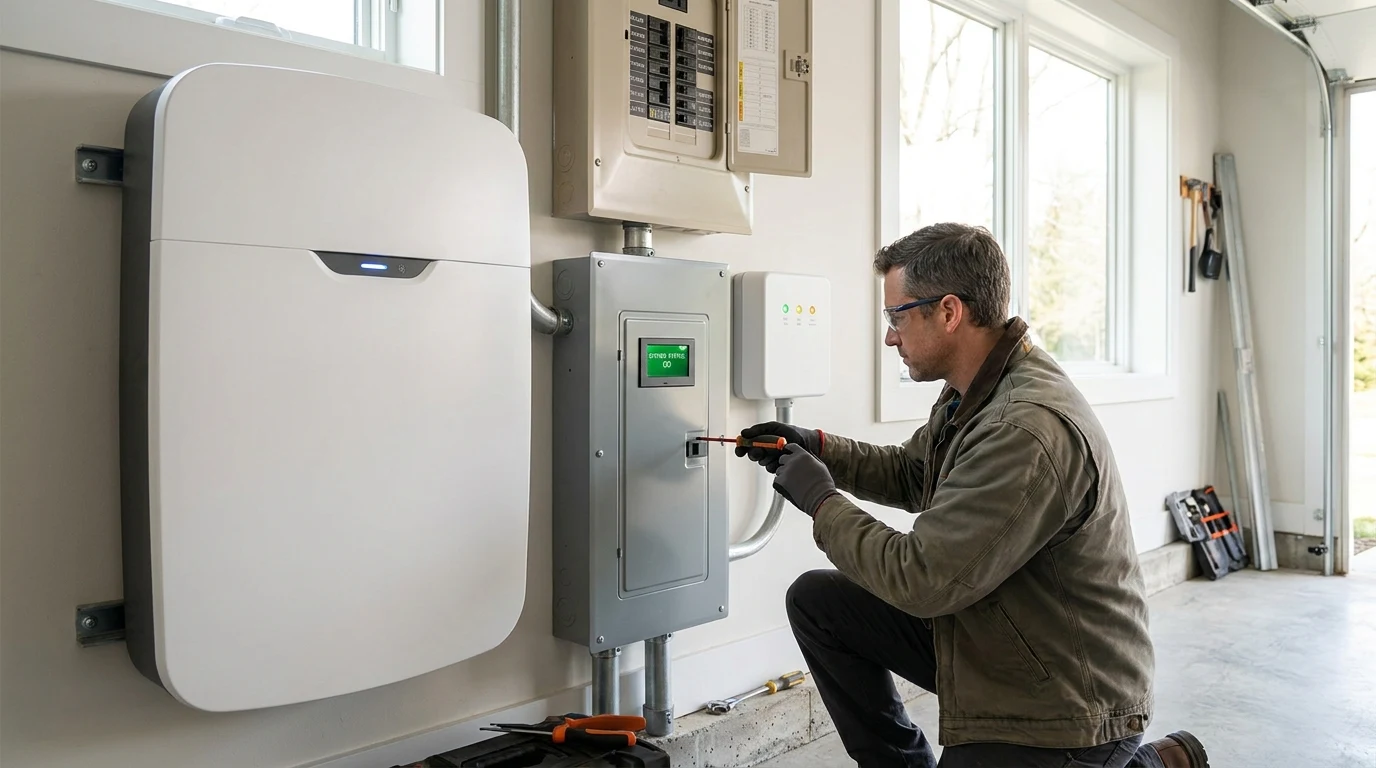
Residential solar-plus-storage attachment reached 45% in Q1 2026, up from 38% a year earlier (Wood Mackenzie, Q1 2026 U.S. Energy Storage Monitor). The battery itself is getting easier to sell and finance. What is not keeping pace is the add-on stack around it: the backup panel, the smart panel, the monitoring upgrade.
Those items usually show up as a second, separate line on the quote. And a separate line is a separate decision the customer can say no to. This guide covers what each add-on costs, why bundling it into the same battery loan protects the sale, and how to structure one proposal that carries all of it as a single monthly payment.
> Key Takeaways
> - Backup panels cost $500-$1,500 installed; smart panels like SPAN or Lumin run $5,000-$10,000 (EnergySage, 2026).
> - Folding an add-on into the battery loan preserves the roughly 15% average ticket-size lift that financing already produces (Financeit, 2024).
> - A good-better-best structure turns each add-on into an upgrade tier rather than a change order the customer has to approve twice.
> - Eos Loan's battery energy storage terms run 6 to 240 months, wide enough to absorb an add-on without restructuring the loan.
See how Eos Loan financing helps you close more projects
What counts as a battery storage add-on?
The three most common add-ons, together, typically add 15-40% on top of the core battery and inverter price (EnergySage, 2026). They are a critical load (backup) panel, a smart panel, and a monitoring or backup-gateway upgrade, and each solves a different problem for the homeowner.
A critical load panel is the simplest option: a small subset of circuits (refrigerator, well pump, a few outlets) gets wired to run during a grid outage. A smart panel, like SPAN or Lumin, replaces or layers onto the main panel and adds per-circuit app control, so the homeowner can see and manage load in real time, not just keep a few circuits alive. Monitoring hardware sits underneath both; it is the visibility layer, with or without a full panel swap.
Critical load sub-panels install for $500-$1,500 (EnergySage, Critical Load Panels, 2026). That is the entry point. Everything above it buys more circuits, more control, or more visibility, at a proportionally higher price.
How much do backup panels, smart panels, and monitoring cost?
SPAN installs for $6,500-$10,000 and Lumin runs $5,000-$8,000, versus $500-$1,500 for a traditional critical load panel (EnergySage, 2026). That is a wide spread, and it is the reason add-on pricing conversations stall when they happen separately from the battery quote.
Isn't a smart panel just a fancier breaker box? Not quite. Smart panel hardware carries at least a $1,000 premium over a traditional breaker box before labor is even added (EnergySage, Smart Electrical Panels, 2026). SPAN requires a full panel swap, which is why its installed price sits at the top of the range. Lumin and monitoring-only add-ons layer alongside the existing panel, which keeps labor lower.
Why does the same product carry such a wide range within its own category? Permitting requirements, panel capacity, and whether the crew needs to relocate the main disconnect all move the number within the band, not just brand choice. A home with a modern 200-amp panel and spare breaker slots costs less to fit a critical load panel or monitoring gateway into than one that needs a subpanel added first. A full smart panel swap also adds inspection time in most jurisdictions, which is part of why the top end of the SPAN range runs higher than Lumin's.
Feature depth explains the rest of the spread. SPAN and Lumin both deliver per-circuit app control, but SPAN's full panel replacement gives it native compatibility with future backup gateway and EV charger integrations, while Lumin's overlay approach keeps installation faster on homes that already have a serviceable panel. Neither is objectively better here. The installer's job is matching the add-on to the panel's condition and the homeowner's actual want (visibility versus full outage control), then pricing that match into the same proposal instead of treating it as an afterthought.
Add financing to your installs, talk to our team
Why finance the add-on with the battery instead of separately?
A business's average transaction size rises roughly 15% when it offers financing (Financeit, 2024). That lift depends on the customer seeing one number, not two. Quote the add-on separately and you are asking the customer to make a second buying decision on top of the first, right when their attention is already spent.
> What I see across the Eos Loan partner base: When a customer sees the backup panel as its own $1,200 line item, they cut it more often than not. When it's folded into the same $61-a-month figure as the battery, most keep it. I frame this as a common field pattern, not a guarantee for any individual shop.
Isn't that just a framing trick? Not really, it is a cash-flow trick, and the customer's actual preference does not change. Contractors presenting four or more financing options shift their premium-equipment mix from 26% to 42% of total sales (ACCA, 2025 Contractor of the Future study). The mechanism at work here is the same one that drives raising average ticket size with financing generally: a monthly delta clears a much lower mental bar than a new invoice total.
!Close-up of a smart electrical panel being installed on an exterior wall in daylight.
How do installers price add-ons into one proposal?
The good-better-best structure turns each add-on into an upgrade tier instead of a change order: base battery as "good," battery plus backup panel as "better," battery plus smart panel and monitoring as "best." Each tier shows a monthly delta, never a new total the customer has to mentally re-add.
The sequence in practice is simple. Quote the battery alone first, at its own monthly payment. Add the backup panel as the next tier, showing only the incremental monthly figure. Add the smart panel and monitoring as the top tier, again as a delta, not a fresh number. Contractors who present financing on every job finance 35% of sales, versus 17% when it is only offered as a rescue after hesitation (ACCA, 2025), and the same "show it every time" discipline applies to add-on tiers.
What does that sequence look like in an actual sales conversation? Walk the homeowner through the tiers in order: battery only, then plus backup panel, then plus smart panel and monitoring, checking after each step whether the extra circuits or control are worth the incremental payment shown. Don't present the top tier first and negotiate down. That reframes the deal as a discount instead of an upgrade path, and discounts erode margin faster than a clean base-to-best walkthrough does.
Timing matters as much as sequence. Presenting all three tiers at the point of sale, on the same proposal the customer signs, is what protects the installer from a change order later. A homeowner who decides to add a smart panel six months after the battery install is financing a standalone job, often at a higher blended cost, because it usually means a second site visit and, in many cases, reopening the same panel or wall the original crew already closed up.
What should go on the proposal line item?
Each add-on should list equipment plus labor as a single subtotal, folded into one blended monthly payment across the whole system, never a separately financed amount per component. Keep the disclosure language plain: no APR promises, no guaranteed approval language, only "subject to approval and eligibility."
Most competitor content treats backup panels, smart panels, and monitoring as three unrelated buying decisions, each compared on features and price alone. The more useful framing is that they are one financing decision: what changes is the loan structure, not the equipment. Eos Loan's battery energy storage terms run 6 to 240 months (Eos Loan battery storage financing, 2026), noticeably wider than the 24-84 month range typical of general personal loans (NerdWallet, 2025). That range absorbs an add-on without needing a different term structure, so scaling the loan up for a smart panel does not mean starting a new kind of conversation with the lender.
Is it worth financing a monitoring-only upgrade without a full panel?
Monitoring-only add-ons and backup gateway devices are a modest increment relative to a full panel swap, small enough that most installers roll them into the base battery loan rather than writing a separate contract. Backup gateway devices run $400-$800 installed, a fraction of what a full smart panel costs.
Monitoring-only makes sense when the homeowner just wants app-level visibility into battery performance and does not need a full panel swap or dedicated backup circuits. Step up to a full smart panel instead when the homeowner wants per-circuit control during an outage, not just data. Either way, the decision belongs on the same proposal, at the same monthly payment, as the battery itself.
Which homeowners fit which tier? A customer who plans to stay in the home long term, has a family member relying on medical equipment, or wants the whole house covered during multi-day outages is the clearest fit for a full smart panel. A customer who mainly wants to see how much stored energy is left, or who is financing the battery on a tighter budget, is usually well served by monitoring-only or a backup gateway, at a fraction of the smart panel cost.
There's a cost trap worth flagging to the homeowner directly: upgrading from monitoring-only to a full smart panel later almost always costs more than adding it at install time, since the crew has to come back for a second visit and, in many jobs, reopen the same panel or wall cavity it already closed. That's a good reason to walk the homeowner through the full tier ladder now, even if they land on the smallest option, so the decision is informed instead of deferred by default. The financing structure does not change either way: Eos Loan's battery energy storage terms of 6 to 240 months absorb a $400 gateway and a $10,000 smart panel the same way, subject to approval and eligibility.
Offer your customers flexible financing on essential projects
Or call +1 833-989-3737 to talk through a financing program for your business.
Frequently Asked Questions
{ question: "What is the difference between a critical load panel and a smart panel?", answer: "A critical load panel is a fixed subset of circuits wired for battery backup, installed for $500-$1,500. A smart panel like SPAN or Lumin adds per-circuit app control and real-time load management, at $5,000-$10,000 installed (EnergySage, 2026)." }, { question: "Can I finance a smart panel without financing the whole battery system?", answer: "Yes, in principle, but most installers see stronger approval outcomes and higher ticket size bundling it into the same loan as the battery. That avoids a second credit decision and a second monthly payment for the customer to weigh separately." }, { question: "Does financing an add-on change my battery loan term?", answer: "No. Eos Loan's battery energy storage terms run 6 to 240 months whether the loan covers the battery alone or the battery plus add-ons like a backup panel or smart panel (Eos Loan product data, 2026). All financing is subject to approval and eligibility." }, { question: "Are backup panels required with every battery installation?", answer: "No. A backup panel or smart panel is only needed if the homeowner wants selected circuits, or app-level control, to keep running during a grid outage. A battery can be installed and financed on its own without one." } ]} />The bottom line on add-on financing
Battery attach rates are climbing (45% in Q1 2026, per Wood Mackenzie), and the add-on stack around the battery, backup panels, smart panels, monitoring, is where installers are still leaving revenue on the table. Quoting it separately invites a second no. Folding it into one proposal at one monthly payment keeps the 15% ticket-size lift financing already earns you.
Three moves make this work: define the add-on tiers clearly, price them as monthly deltas in a good-better-best structure, and lean on term flexibility so scaling the loan up never means restructuring it. For the mechanics behind the loan itself, see how battery storage financing works for installers and how battery storage loan terms affect the monthly payment.
Become an Eos Loan financing partner
---
Sources
- Wood Mackenzie, U.S. Energy Storage Monitor (residential solar-plus-storage attachment reached 45% in Q1 2026, up from 38% in Q1 2025), retrieved 2026-08-11, https://www.woodmac.com/press-releases/u.s.-energy-storage-market-sets-q1-2026-records-across-sectors
- EnergySage, Critical Load Panels: What Should You Know? (critical load sub-panel $500-$1,500 installed), retrieved 2026-08-11, https://www.energysage.com/energy-storage/what-are-critical-load-panels/
- EnergySage, Span Smart Panel Review (SPAN $3,500 hardware, $6,500-$10,000 installed), retrieved 2026-08-11, https://www.energysage.com/energy-management/best-systems/span-smart-panel-review/
- EnergySage, Lumin Energy Overview (Lumin $2,500-$3,150 hardware, $5,000-$8,000 installed), retrieved 2026-08-11, https://www.energysage.com/energy-management/best-systems/lumin-energy-overview/
- EnergySage, Smart Electrical Panels: What You Should Know (smart panels carry at least a $1,000 equipment premium over a traditional breaker box before labor), retrieved 2026-08-11, https://www.energysage.com/energy-management/smart-panels/
- Financeit, Home Improvement Financing guide (average transaction size rises ~15% when financing is offered), retrieved 2026-08-11, https://www.financeit.io/home-improvement-financing/
- ACCA, Contractor of the Future study (premium-equipment mix shifts from 26% to 42% with four or more financing options; 35% of sales financed when offered on every job vs. 17% when offered reactively), retrieved 2026-08-11, https://hvac-blog.acca.org/inside-the-contractor-of-the-future-study-key-findings-from-1000-contractors/
- NerdWallet, Personal Loan Term Length (typical personal loans run 24-84 months), retrieved 2026-08-11, https://www.nerdwallet.com/personal-loans/learn/personal-loan-term-length
About the author: Eduardo Donadi is the CEO of Eos Loan, the fintech built to finance essential projects (battery energy storage, EV chargers, and water filtration) for installers, contractors, and resellers across the United States.